Language

Dead Metaphor


I stumbled across the concept of “dead” metaphors a while ago, and it has fascinated me ever since. My hunch is that our language is heavily littered with these terms (littered being an example) to the extent that we simply don’t notice them.
The most commonly accepted definition of a dead metaphor is that the source from which the term derives its meaning has become disassociated from the current meaning of the term.

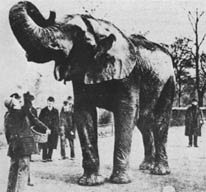
The phrase has been challenged in recent years by linguists, and I accept it is not precise – metaphors can retain their effectiveness even when remote from their original meaning, and therefore retain their claim to the status of metaphor. In fact, metaphors are often not truly dead, just dying. Arguably they start dying from the moment they are coined, and it is only the speed with which their inbuilt meaning decays that will vary. A metaphor tied to a specific cultural event or icon will die more quickly than something more universal. To illustrate this, the word “jumbo” originally drew its meaning form the elephant of the same name – see http://en.wikipedia.org/wiki/Jumbo. To most people the term no longer conjures up the mental image of a large elephant, as it must have once done. So jumbo the metaphor died in probably less than a hundred years.

Compare this with the range of ageing but definitely still active metaphors that derive from tools – sawing, chiselling, ploughing, hammering etc. The verb “to hammer” must have been used almost immediately the noun was adopted. The term would almost certainly have been used metaphorically to describe “behaving like a hammer” as in “rain hammering down” very quickly thereafter. My guess, although I have nothing to support this, is that the noun for hammer in most languages is also used as a verb, and in a wider sense than just “using the tool”. So is “rain hammering down” an example of a dead metaphor? Certainly we don’t use it to make the audience picture hammers beating on a roof or pavement, but it retains its force as a way of describing heavy rain – it means more than just raining, in a way that jumbo doesn’t mean more than big.

Not all tools turn into verbs, let alone metaphors – we don’t “mallet” things on the head, nor ladle anything other than liquid, but we do whisk things away, spoon together, and sieve evidence for clues. Is this a matter of scale – we drive cars, instead of “car” as a verb; we fly in or by planes, but don’t say “I am going to plane to Stockholm”, and so on? Interestingly scale is a rich source of dead metaphors. Gargantuan derives from a 16th century story by Rabelais, and there can be few listeners/readers who think of french giants when using the term. Colossal derives (surely) from Colossus, mammoth from the woolly elephants, and so on. Terms to describe the quality of being small do not appear to attract the same type of language behaviour – we don’t say “Tom Thumbian” and even Lilliputian is showing off rather than metaphorical. Brobdignagian never stuck, surprisingly.

Standard
Antony Beevor, Berlin, Book review, History, Second World War

Berlin by Antony Beevor, 2002

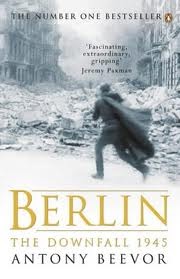
Berlin – The Downfall 1945 Antony Beevor, Penguin, 2002


You might get the impression from some of my recent posts that all I do is read German history, but it is fair to say that these entries are not entirely representative of my reading habits. Before I get to the book itself, a little gripe – this book’s cover includes the strap line “The Number One Bestseller”. It is amazing how often that line is used – I think it is largely devalued now. No doubt if challenged the publisher could justify it by selecting a very limited period of time, or category, or location. Number one in the non-fiction category on December 11th 2004 in Latvia doesn’t really count.


I am being overly cynical however, because this book is a highly authoritative account of the fall of Berlin. As you might expect, the horror is unrelenting, and while I now know more about this terrible period of history than I could possibly want, I confess the detail has not stuck – there is a long parade of generals with similar sounding names, battles across unknown terrain, without any clear overall picture of the progress of the war – there is simply too much detail for the non-academic reader.

What has stayed with me (as I usually find) are the images. History says that the fall of the Third Reich was a long but inevitable process. Where you start the beginning of the end from is a matter of choice – the Battle of Britain, Pearl Harbour (my choice, because after the USA joined the war there was really only one way it was going to end) D-Day or the end of the Battle of the Bulge, it all pointed to defeat for Germany at the end of the war. A negotiated peace was theoretically possible but the Nazis would never have let it happen. So the crushing of Berlin, principally by the Russians, was always going to be brutal. Despite this, it seems many Berliners tried to continue normal life right up to the end , rather than getting the hell out of there. They did not see the end as inevitable. The ability to deceive oneself despite all the appalling evidence to the contrary is quite chilling. Of course there were also many Berliners who could see what was coming but could do nothing about it.
 
When it was published I remember the book being controversial because of its focus on the systematic rape of German girls and women by the Red Army. While these accounts are hard to stomach, the context justifies their inclusion, and Beevor makes it clear that he is not taking sides or using this abuse as a justification for anti-Soviet propaganda, a pretty pointless exercise in any event. German atrocities are not the focus of this book but are referenced as part explanation for the brutalities of the Red Army.
 

This is “popular” history, that is history for the mass market, with half an eye on a TV series, but few concessions have been made to accessibility. It’s not an easy read, for many reasons, and even students of the period could probably find better, more digestible accounts. It is also one of those history texts that provide little in the way of food for thought. Compared to say When Money Dies, which can provide much to think about in the context of today’s society, all this book tells us is that when wars come to a bloody end there is an incalculable price to pay, which I think we knew.

Standard
Book review, Ian McEwan, On Chesil Beach

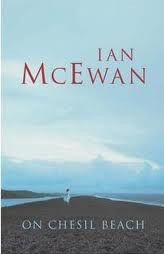
On Chesil Beach by Ian McEwan, 2007

I am going to break all my rules and say what I think this book is about, bearing in mind that I am not sure I even believe in the idea of books simply being “about” one thing.
The plot, such as it is, is quickly summarised in McEwan’s opening sentence:
They were young, educated, and both virgins on this, their wedding night, and they lived in a time when a conversation about sexual difficulties was plainly impossible”. 
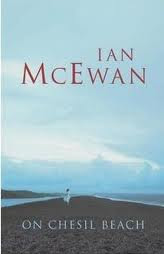
We go on to find out that the couple are named Edward and Florence, are in their early twenties, and that the novel is set in summer 1962. Florence is terrified of the imminent consummation of the marriage – which never actually occurs, Edward suffering a spectacular bout of “over-excitement”. After this traumatic start the marriage, indeed the honeymoon, never recovers, and scarred by disappointment and fear they part.
When I first read this novel, shortly after the splendid Atonement, I thought it was about those moments in people’s lives where roads part, and where a word at the right time could change the course of events. The narrator in closing the book explicitly invites the reader to view it in that way. A kind word or words by one or other of the main characters could have rescued their relationship. Fear of sex combined with first night nerves probably feature in many honeymooners’ experience, but love manages to bring couples through the other side.
So why is Florence – (echoes of Florence Nightingale perhaps?) – so scared of sexual contact with her husband. She is clearly torn between her love for him, and her fear of sex – McEwan describes this as a “secret affair between disgust and joy”(page 23). Even French kissing, portentously reminiscent of intercourse itself, makes her want to gag.
The author never tells us directly what causes this fear, but “clues” are scattered throughout the text. On the opening page we are told Florence is an old hand at staying in hotels (a strange expression) “after many trips with her father”. Not with her parents note. Later, when describing Florence’s childhood, we are told (page 54) “Florence found it harder to contradict Geoffrey (her father). She could never shake off a sense of awkward obligation to him. Among the privileges of her childhood was the keen attention that might have been directed at a brother, a son. …And then the journeys: just the two of them, hiking in the Alps, Sierra Nevada and Pyrenees, and the special treats, the one-night business trips to European cities where she and Geoffrey always stayed in the grandest hotels.
Where is her mother, very much still part of the family, when these jaunts are going on? We are not told. Why is it “Geoffrey”, not “her father”?  The omniscient narrator appears to be viewing these jaunts as unexceptional, nothing out of the ordinary, but this is clearly Florence’s flawed perspective rather than a reliable viewpoint. Her relationship with her mother on the other hand is fragile and unphysical “Violet had barely ever touched her daughter at all” (Page 55) – we are left to infer why, but the mother must have withdrawn affection from her daughter for a reason.
When the dreaded moment approaches, and Edward is about to “make his move”, Florence lies back and thinks herself elsewhere. Her mind takes her to an occasion when she
was twelve years old, lying still like this, waiting, shivering in the narrow bunk with polished mahogany sides….her father was moving about the dim cramped cabin, undressing, like Edward now. She remembered…the clink of a belt unfastened…her only task was to keep her eyes closed and to think of a tune she liked. Or any tune. She remembered the sweet scent of almost rotten food
It can’t be a coincidence surely that her memory of this scene is prompted by her imminent if ultimately unsuccessful “deflowering”.  McEwan has given Florence this memory for a reason. Something has traumatised her. In both scenarios she feels a passive victim of male lust. So when Edward finally gives out a wail “the sort of sound she had once hear in a comedy film when a waiter appeared to be about to drop a towering pile of soup plates” (candidate for simile of the year in my book) her revulsion, as well as the immediate visceral objection, has
another element, far worse in its way, and quite beyond her control, summoning memories she had long ago decided were not really hers. … She was incapable of repressing her primal disgust”. (My emphasis)
Why would this incident summon memories she had decided long ago were not hers? What memories, and why were they far worse than her already strong reaction?
Finally, when they are on the beach itself, discussing her reaction, she jokes “perhaps what I really need to do I kill my mother and marry my father” (page 153). Indeed.
I think we are being invited by McEwan, without being told to do so, to consider the distinct possibility that this is a novel about how sex abuse can happen in the best of families, and how it can ruin lives. The final paragraphs telling us to think of the novel as being about turning points in our lives is misdirection.
Of course this is just one element to the book. There are many carefully drawn scenes, and the sense of time and place, that precarious moment in the country’s history “between the end of the Chatterley ban, and the Beatles’ first LP”, where memories of the war are still strong, and national service is still in force, is exquisitely drawn. The writing is confident and precise, and although only 150 pages long I believe this is McEwan at his best.
P.S. One final point, to indulge my hobby of joining the dots between books – I spotted a strong echo of Lawrence in the scene (page 46) where Edward cycles, “at reckless speed, for the brakes barely worked” which reminded me of Paul Morel’s barrelling around the lanes of Sons and Lovers on a bicycle without brakes, risking life and limb and demonstrating his manly bravado.
 

Standard
20th century Literature

Sons and Lovers – D.H.Lawrence

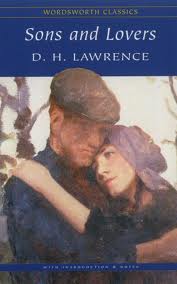
DH Lawrence Sons and Lovers, first published 1913.

How can you write about a novel such as Sons and Lovers without the weight of a hundred years of critical evaluation and response bearing down oppressively on you? Where do you start – with one’s own immediate personal reaction, or with some consideration of the novel in the context of its place in 20th century literature?
Lawrence famously was the first novelist to write openly and honestly about sexual relationships between men and women. This is a relatively early work however, and there is still much hesitation in his approach. While people have sexual urges, and subsequently sex, it is described largely through suggestion or inference, the literary equivalent of trains going into tunnels. People are deeply moved, feel their hot blood rising, and objects often stand in as representations of their erotic feelings. For example there is an extraordinary scene where Miriam, one of the lovers of the title, turns her attention to some daffodils thus: “To her (Miriam) flowers appealed with such strength she felt she must make them a part of herself. When she bent and breathed a flower it was as if she and the flower were loving one another. Paul hated her for it.” (Page 155). Not too much room for ambiguity to my jaded 21st century eyes there.

“Miriam went on her knees before one cluster, took a wild looking daffodil between her hands, turned up its face of gold to her, and bowed down, caressing it with her mouth and cheeks and brow. He stood aside with his hands in his pockets, watching her…..fondling them lavishly all the while” (page 198). Which I am sure was nice. Her approach to flowers, which decorate the book like a church in August, is summarised earlier:

People constantly behave in an extremely sexual way while continuing to avoid sex itself eg: 
“She (Miriam again) took her finger from her mouth with a little pop, and looked up at him almost challenging. But still her soul was naked in her great dark eyes, and there was the same yearning appeal upon her.” (page 169).
Or later 
“He (Paul) picked up a stick and began to stab the earth with it….He thrust, thrust, thrust at the ground with the pointed stick, digging up little clods of earth as if he were in a fever of irritation.” (page 200). One last example, when Paul is reading the bible to Miriam:
“She sat back on the sofa away from him, and yet feeling herself the very instrument his hand grasped. It gave her great pleasure.”
When the sex does finally arrive, which I can understand to a pre-Great War audience must surely have been shocking, not to mention titillating, it is usually presenting as the exercise of male lust against passive female acceptance. He conjures an extraordinary phrase to describe “married love” on this basis: Being the sons of mothers whose husbands had blundered rather brutally through their feminine sanctities”.

If I were to do a word count I am guessing one of the words that would crop up most frequently in this novel is “hate”. An example is cited above, where Paul, the principal son of the title, hates his girlfriend for liking flowers just a bit too much. But people hate others and things at the drop of a hat, and for apparently little or no reason. We can thus conclude that these are people who are moved to deep emotions signified by their quivering breasts and moody silences. Stella Gibbons parodies this all wonderfully in Cold Comfort farm of course, especially through the character of Cousin Judith, and Seth and his mollocking. And delightfully there is also a Miriam in CCF who bears the fruit of too much blundering through her feminine sanctities.
The handling of the Oedipal relationship between Paul and his mother, Gertrude to remind us of Hamlet’s problems with women no doubt, reminded me of Seth’s comments to Flora that he won’t let women eat him:
“She wants to absorb him. She wants to draw him out and absorb him till there is nothing left of him, even for himself. He will never be a man on his own feet – she will suck him up”. (As Larkin almost said, they suck you up, your mum and dad). (Page 173)

So what is missing from the novel? Well a plot would have been nice, or incidents that appeared connected to the lives of the characters. An ending would have rounded it off. I would have been interested in a description of the mines where Paul’s father works, with perhaps with a bit less about the surgical appliance factory. A believable female character that didn’t swoon over Paul, give in to his sexual desires without any of her own, and then walk away. Oh, and some indication that the world as described was going to come to an abrupt end 12 months later. (To be fair there is a very fleeting reference to the German attitude to war, and Paul’s younger brother, Arthur does join the army, but these hardly give you a feel for a country on the brink of war, and massive social change).
Would I read more Lawrence – I think I have to don’t I?
Standard
Uncategorized

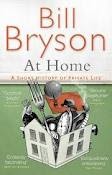
At Home – Bill Bryson

Bill Bryson is a wonderfully entertaining writer. His short book about Shakespeare was superbly written and erudite, and despite covering ground so well trodden he managed to bring new perspectives, as well as demolishing the “Shakespeare didn’t write Shakespeare” position devastatingly. I also enjoyed “Notes from a Small Island” and his book on Australia, unimaginatively titled “Down Under”. “A Short History of Everything” was however almost certainly over-reaching himself. So my expectations on approaching “At Home” were high. 
Bryson’s starting point is a history of his Norfolk home. Sadly, despite extensive research, he is unable to find anything particularly interesting to say about it. From this point he wanders through his home and uses each location as the starting point for a long digression on loosely themed ideas and thoughts prompted by the room. Sometimes there is some coherence to these, but often not. I was left with the impression of someone struggling to find a framework on which to drape a lot of quite interesting facts, and ultimately failing.
That’s not to say there is not much to divert one on the way through (goodness me) 700 pages. Every page bursts with detail and ideas, and even his asides are noteworthy – so much so that returning to the book today to refresh my memory led me to a re-reading of several sections. I was looking for, and found, the comments on infant mortality, and the attitudes of people in earlier times to children. The argument that because so many people died in childhood parents could not afford the emotional commitment to their children that we give ours today is neatly countered by Bryson.
Imagine an episode of QI without most of the jokes, extended over many days. You have undoubtedly been educated and entertained, and they have done their best to make things coherent, but ultimately it is all fairly superficial. I had a sneaking suspicion that like the QI “elves” Mr Bryson would have had a team of research assistants working with him on this book – pity it didn’t include an editor or two.
Standard
History

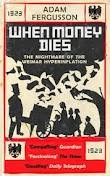
When Money Dies – Adam Fergusson

When Money Dies – the Nightmare of the Weimar Hyper-inflation
(First published in the 1970’s, although I read the 2010 version pictured here.)
First off, what a great title for a book. But the obvious question I need to address in the first instance is once again, “Why?” Although I studied Economics at A level in the (early) 1980’s my interest in the topic, faint though it was even at the time, has not been maintained.  I could pretend that I found the debate around how to control inflation in the face of spiralling public expenditure and falling revenue a particularly pertinent one given the financial times we find ourselves in in 2012. And I suppose that would be true, although with hindsight the behaviour of the German political establishment seems baffling – if we just print enough money it – all our economic woes – will all go away.  George Osborne doesn’t strike me as much of a reader, but he would love this book with its messages of controlling expenditure, maximising revenue, sacking lots of unnecessary public sector workers, etc.  However the parallels between Weimar Germany and 21st century UK can be overplayed – we aren’t being occupied by the French army for instance.
I could also argue that the rise of Hitler is inextricably linked with the series of crises in the German economy, and that would be closer to the truth, because in reality I read this book because I wanted to stay one step of my sons who was studying the rise of the Nazis in GCSE History. But as he will never read this far my secret is safe!
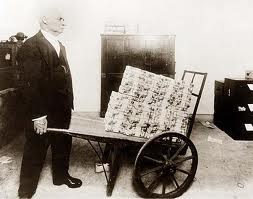
Incidentally, the QI theory of history – that everything we were ever taught in school is wrong – doesn’t really apply here. People really did have money worth less than the paper it was printed on, although whether the wheelbarrow stories are true is another matter. What I found interesting was how Germans managed to survive this period – for example rural Germans were much less affected than those in the cities, having access to their own food sources.
I can’t hand on heart recommend this (unless you are Danny Alexander or Ed Balls I suppose) because there are histories of the Weimar that tell the story with more “economy” (see what I did there?) and more context. I’ll write about one of these, by Richard J Evans, when I finally finish it!
(PS After I wrote this I saw this book recommended by an economist writing in the weekend newspapers!)
Standard
History

The Greatest Day in History – Nicholas Best

The Greatest Day in History – the 11th Hour of the 11th day of the 11th Month – How the Great War Really Ended by Nicholas Best (Phoenix 2008)
I am probably being pedantic here, but I see a bit of a contradiction between this book’s title and its sub-title: either the book is about the 11th November 1918 – the day – or the 11th hour of that day, or about how the war really ended, which is infinitely more complex than just the analysis of one hour or day.
Pedantry aside, what the author has done here is actually very interesting – he has gathered together a series or memoirs and recollection of the end of the First World War, and woven them together. Sensibly he hasn’t been dogmatic about the time span, and where the narrative requires it he has gone outside the 24 hour constraints.
The book is a curious mixture of these memoirs with some genuine historical analysis, charting hour by hour how the Germans came to sign the Armistice. Armistice not of course surrender, a detail which matter significantly for the later course of European history. The Nazi version of events, whereby the undefeated German army was betrayed by the politicians, is comprehensively demolished through this detail. The last hours of the Kaiser before the abdication is also minutely described. Other scenes are more impressionistic – what various famous or to be famous people were doing at the time of the Armistice.
Many scenes from this book stayed with me, including the account of how, when the news that an armistice and ceasefire was imminent, some troops rushed to the front so they could claim they had “seen action”, not wanting to miss the last chance to have a go at the “Boche”. Some men died minutes before 11, and of course some fighting went on after 11.
I was a little surprised that this approach worked – that a deep dive into one day could tell so much about broader European historical themes such as the end of the second Reich and the Austro-Hungarian empire, instead of a traditional, broad narrative sweep across the years. The use of so much raw material, especially the diaries and letters, gives the account an immediacy and urgency – you can share the elation, the relief, and the bitterness as the war ends.
For anyone who wants to read about the Great War but doesn’t want to lose the personal stories of those involved, this is highly recommended.
Standard
20th century Literature

Westwood – Stella Gibbons

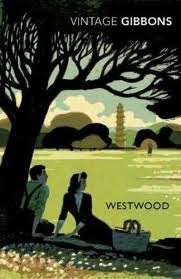
“If Cold Comfort Farm is Stella Gibbon’s Pride and Prejudice, then Westwood is her Persuasion,” says Lynne Truss, in her introduction. The observation is acute. It is intended as a positive comment, but I am not sure it does Gibbons or Westwood any favours – Persuasion is a book it is hard to love, the characters being largely unengaging and unsympathetic, all the more so when contrasted with the earlier work which inspires such devotion. Once the first bright flare of Cold Comfort farm had faded away, what was Gibbons to do –  keep silent like Harper Lee, or earn a modest living churning out uninspired and uninspiring stories that have dated horribly and never hint at the heights of achievement CCF achieved. There is some amusement in spotting traces of the DNA of Mr Mybug in the characterisation of Gerard Challis, the pompous and horny playwright gleefully exposed to his family as a “cad”, but the principal character, Margaret Steggles, is just the kind of self absorbed young woman whom Flora would have kindly said “yes dear” to and then got away from as quickly as possible. Her dilemma – of being a young, clever, but plain young women in a world where men are in short supply, and likely to continue thus, is one women of the time would be identified with, but today makes us just sigh with relief. Some reviewers have claimed that the description of a post blitz London provides some interest – Westwood was published in 1946, and the story takes place in London just after the Blitz; – but this is not enough to support the interest of a 21st century reader.

I quite understand the idea of mining the Gibbons back-catalogue – Vintage must have done quite well out of it, and have done the job respectfully, assembling some nicely designed editions with thoughtful introductions. But I can’t resist the thought that once the flurry of interest has died away these books will fade back out of print until the next rediscovery.

Standard
http://schemas.google.com/blogger/2008/kind#post

First Among Sequels – Jasper Fforde

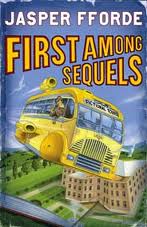
First Among Sequels is (I think, but I may have lost count) the fifth in the Thursday Next series. Halfway through this novel it would be fair to say I was disappointed. Not a lot had happened, and most of the text was a reiteration of the ideas of the earlier books in the series. While several years have elapsed since Something Rotten, Thursday has acquired several children, and is no longer a literary policewoman, despite all this ostensible change, everything felt very familiar.

Then about halfway the book seemed to wake up, sit upright, and give itself a good shake. In fact Fforde seems to have spotted what was happening himself, because he introduces a couple of very clever ways of stopping lazy reading – that is where the reader doesn’t really engage with the text, pays only partial attention, and doesn’t mind too much about the detail – like when taking a train ride you have been on many times before you don’t look out of the window. Spoiler alert – don’t read further if you don’t want to know how he does this. The first of these techniques is that one of Thursday’s children doesn’t exist – she is a mindworm implanted by Aeornis Hades, a mind controlling villain from an earlier book. Thursday is convinced she exists, and when told she doesn’t has only moments of lucidity before relapsing into the illusion again. It explains why the child is so under-written, and the reader realises with a jolt that they had not been paying enough attention to realise what had been happening. Later on this lesson is reinforced with a subtle, unflagged and very clever change of narrational point of view. I don’t mind admitting it had me tracking back a chapter or so to spot what I had missed at first.


This is confident playful writing by a writer at the top of his game. Fforde creates a deliciously dark villain in Thursday Next 1-4, and although she is killed off “textually” at the end of the novel, as we always knew she must be, I would not be at all surprised to see her return. In reading First Among Sequels I was reminded of some of the better episodes of Doctor Who, where time travelling allows just about anything to happen, including dead characters to reappear. There’s a wealth of other really funny and interesting ideas, plus an appearance of one of my favourite characters in literature, to make this a really worthwhile and valueable addition to the series. Fforde is in complete control of his material, despite sometimes juggling with concepts which in lesser hands would be simply silly (e.g. the recipe for unscrambled eggs), but definitely pulls it off.

Standard
http://schemas.google.com/blogger/2008/kind#post, Zombie

Feed – Mira Grant

By this week’s guest blogger, SRJ:

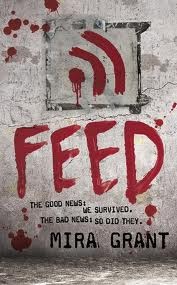
It is clear this book was written for a purpose, a message of some sort, because it is a zombie book – yet I feel zombies were not the focus. For a 550 page book there are surprisingly few zombie encounters; in fact I was relieved when the Eakly attack happened, since I was starting to wonder whether the zombies would actually feature again.
 
So if the focus isn’t zombies, what is? Is it the relationship between Shaun and Georgia? Is it the journey they make from beta journalists to alpha to national plot uncoverers? Or is it about the “truth” Georgia so vehemently pursues? If so then I feel the book did not mirror this enough; after all, we never find out who is really behind the big plan, nor their true reasons for it. We only find out about one man involved, who confesses practically nothing. We never even see or find out about the attackers.
 
I feel that the book spent too much time with background zombie-related things such as the blood tests rather than actual zombies to be one of those books that focus on action and excitement like most zombie books. So it must make a point somewhere, but it wasn’t clear enough. I might do a separate piece because I have some thoughts on the blood tests (watch this space!).
 

Nevertheless, it was a good book; I enjoyed the zombie attacks where they happened, and the story itself was enthralling. Maybe we find out more details of the plot in the sequel, but somehow it won’t be the same with the book ending the way it did.

Standard