100 Best Novels Guardian list, 19th Century literature, 20 Books of summer, Book review, Bronte

Jane Eyre, by Charlotte Bronte, 1847

jane Eyre

I think a case can be made for ‘Jane Eyre’ as the definitive nineteenth century novel. It has it all:

Romance – the scene in chapter 22 when Rochester teasingly proposes to Jane, and she slowly comes to realise he is serious, is as touching and effective as anything in Austen, and the final reconciliation in Ferndean House between Jane and the blinded Rochester would bring a tear to the eye of the hardest heart (but perhaps not St John Rivers);

Drama – spooky scenes in the middle of the night, the “I object” scene at the wedding, parties, house fires, tragic deaths and maiming, ‘Jane Eyre’ has pretty much got it all – although the only issue I have with the novel the extent to which it occasionally teeters into melodrama….

The supernatural – Jasper Fforde in the brilliant ‘The Eyre Affair’ has great fun with the ‘cosmic telephone’ that Rochester uses to communicate with Jane, but the novel just about gets away with this piece of nonsense without seeming too absurd;

Gothic elements – the spooky house, the mad woman in the attic, possession and long lost relatives appearing at inopportune moments;

Social commentary – education, the slave trade (tangentially), the condition of the poor; the emancipation of women;

Pathetic fallacy – after Rochester’s proposal the storm blows fiercely, the trees “writhed and groaned”, and thunder and lightening provide an ominous backdrop to the engagement;

A heroine to admire, with courage, principles, and determination, and a hero with a square jaw, deep-running passions, and a vulnerable side.

The novel is written in autobiographical form, and follows the eponymous heroine in five distinct phases of her life. An orphan, she is brought up by her abusive aunt, Mrs Reed. At the age of ten she is sent to a horrific boarding school, Lowood Grange, where she is lucky to survive. At eighteen she leaves Lowood to work at Thornfield Hall as a governess for Adele, the ward of the mysterious Mr Rochester. Running away from Thornfield to escape Rochester, who wants to marry her, but unfortunately already has a wife, albeit one who is mad and ineffectually imprisoned in his attic, Jane escapes to another secure refuge, Moor House, where she is taken in by St John Rivers and his sisters. Finally, Jane is reunited with the widowed but maimed Rochester at his back-up house, Ferndean, and “reader, I married him”.

At the heart of the novel is the relationship between the not-yet twenty governess Jane, and the almost twice her age Mr Rochester. They first meet in Chapter 12, when he falls from his horse. Despite struggling to help himself, he eventually has to rely on Jane for support: “I must beg of you to come here.” I came. “Excuse me,” he continued: “necessity compels me to make you useful.” He laid a heavy hand on my shoulder, and leaning on me with some stress, limped to his horse. Having once caught the bridle, he mastered it directly and sprang to his saddle; grimacing grimly as he made the effort, for it wrenched his sprain.” This incident, and in particular Rochester’s temporary disability, and his dependence on Jane, is not important for the plot, but it foreshadows the events later in the novel, first when Jane rescues him from his burning bed, and later when he is seriously injured, and depends on Jane more comprehensively.

Jane enjoys being helpful in this way, although it helps her calmness at their first meeting that Rochester is not particularly good looking:

“I traced the general points of middle height and considerable breadth of chest. He had a dark face, with stern features and a heavy brow; his eyes and gathered eyebrows looked ireful and thwarted just now; he was past youth, but had not reached middle-age; perhaps he might be thirty-five. I felt no fear of him, and but little shyness. Had he been a handsome, heroic-looking young gentleman, I should not have dared to stand thus questioning him against his will, and offering my services unasked”.

Their first conversation at Thornfield Hall is a little more relaxed, and although it largely takes the form of a cross-examination, it eventually warms to something closer to flirtation:

‘“Adele showed me some sketches this morning, which she said were yours. I don’t know whether they were entirely of your doing; probably a master aided you?” “No, indeed!” I interjected.

“Ah! that pricks pride. Well, fetch me your portfolio, if you can vouch for its contents being original; but don’t pass your word unless you are certain: I can recognise patchwork.”

“Then I will say nothing, and you shall judge for yourself, sir.”…..

He deliberately scrutinised each sketch and painting. Three he laid aside; the others, when he had examined them, he swept from him. “Take them off to the other table, Mrs. Fairfax,” said he, and look at them with Adele;–you” (glancing at me) “resume your seat, and answer my questions. I perceive those pictures were done by one hand: was that hand yours?”

“Yes.”. “And when did you find time to do them? They have taken much time, and some thought.”

“I did them in the last two vacations I spent at Lowood, when I had no other occupation.”

“Where did you get your copies?”  “Out of my head.”

“That head I see now on your shoulders?”  “Yes, sir.”

“Has it other furniture of the same kind within?”  “I should think it may have: I should hope–better.”

From this point conversations between Jane and Mr Rochester habitually adopt this teasing tone. Rochester clearly enjoys being stood up to by Jane, in contrast with the simpering women he is apparently used to. He constantly refers to Jane as something otherworldly – elf, fairy, sprite, and asks her for a spell to make him “a handsome man”. This playfulness continues to the end of the novel:

“Am I hideous, Jane?”

“Very, sir: you always were, you know

Jane’s gradual awareness of her feelings for Rochester, and her delight at coming to understand that her love is reciprocated, is done with a wonderful tenderness and lightness of touch.

This wouldn’t be an honest review if I did not mention the few reservations I have about the novel. At times it can be over-written, and some of the foreshadowing – constant references to fire, furnaces, burning etc for example – is heavy-handed. Mr Rochester’s behaviour, in retrospect, is absurd – he freely tells Jane about Adele’s illegitimacy and his affair with her mother, but hides the existence of his wife even when the evidence becomes overwhelming. The excuse offered for this – that knowledge of a madwoman in the house might deter prospective governesses from applying to look after Adele – doesn’t stand much scrutiny, when the resolution, to send her away to school, is readily at hand. The novel carries this all off with style – the romance at the heart of the novel is really all that matters, and that is done superbly.

‘Jane Eyre’ is much-loved, and understandably so. It is in the select group of novels one closes at the end with a satisfying sigh and is put somewhere safe in confident expectation of taking up again sometime soon.

Standard
20 Books of summer, Book review

Comment: 12 Books of Summer

I know I am coming to this a bit late, but having been encouraged by some fellow bloggers to join the 20 Books of summer challenge h20-books-summer-2016-746-booksosted by 746 books. I was hesitant about joining – 20 novels in three months might not seem too much of a tall order, but I am working my way through the Guardian’s ‘top 100 novels written in English’ list and most of the novels remaining on the list are challenging (‘Ulysses’, for example). But I have decided to give it a go, but revisted the target to dozen from the TBR list, as follows

  1. Jane Eyre by Charlotte Bronte – a re-read, but a novel that really rewards a careful read rather than a rushed approach;
  2. Zuleika Dobson by Max Beerbohm – I know nothing about this novel, but the whole point of the challenge is to get me reading things I wouldn’t have previously considered, so that’s a good thing;
  3. Of Human Bondage by W Somerset Maugham – I have bought my copy of this and sampled the first chapter – looks interesting
  4. As I Lay Dying by William Faulkner – I remember Faulkner being quite tough when I tried him a few decades ago, so about time I returned
  5. Party Going by Henry Green – Green is someone I have read a lot about, but never read. You can’t buy this novel in a standalone edition in the UK, so I think I will try to find it second hand.
  6. All the King’s Men by Robert Penn Warren – another one I know nothing about!
  7. Under the Volcano by Malcolm Lowry – I have tried to read this several times, and never got further than a few pages. Definitely time to do something about that.
  8. On the Road by Jack Kerouac – looking forward to re-reading this one.
  9. Catch-22 by Joseph Heller – and this one.
  10. A Bend in the River by VS Naipaul – I haven’t read any Naipaul before, so don’t know what to expect here.
  11. The Beginning of Spring by Penelope Fitzgerald – I am slightly worried that this might be a romance, to which I have an aversion, but only one way to find out.
  12. Breathing Lessons by Anne Tyler – it’s really about time I broke my Tyler duck as well.

I’ll keep you posted on progress, of course!


Standard
100 Best Novels Guardian list, 20th century Literature, Book review

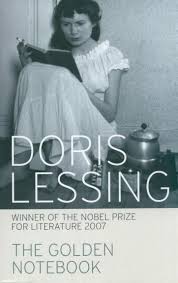
The Golden Notebook, by Doris Lessing, 1962

The Golden Notebook is a complex narrative. The writer, Anna Wulf, uses four notebooks to record different aspects of her life, and at the end of the novel attempts to unite them in a fifth, gold-coloured, notebook. The novel waves together several parallel narratives, and at times it can be hard to work out whether we are reading Anna’s personal account of her life, or her fictionalised version. In addition to the ‘realistic’ narrative of Anna’s life – Free Women— the four notebooks – black for her adventures in Africa before World War 2,  red for her time as a on/off member of the British Communist Party, yellow for a fictionalised account of her relationships, which sometimes run ahead of the real life telling of her story, and at others behind, and blue for her personal journal of memories and dreams.TGN

The non-linear narrative Lessing uses was ground breaking for its time – there is little in the way of conventional story telling. When the novel was first published the focus in many critical responses was on Lessing’s frankness in sexual matters, and what were seen at the time as her feminist characters. 50 years and more on, the presentation of sexual relationships in the novel seems dated – perhaps inevitably. As a feminist character Anna in particular is utterly defined by her relationships with men – and while she is sexually liberated, her emphasis on being sexually available to men who pay her very little regard shows her vulnerability. In the final section of the novel, the apparently unifying golden notebook, where the tale of her relationship with Saul Green is fictionalised, virtually every encounter with Green, however strained or disagreeable, almost always ends with the throwaway line “and then we made love”.

In a Guardian piece written to mark the fiftieth anniversary of the novel’s publication, Margaret Drabble put this point more clearly:

“As a feminist and a free woman, living a life of what was then striking promiscuity, her protagonist Anna Wulf displays some curiously traditional female behaviour, which is even more puzzling on rereading. On one page she can declare, shockingly but truthfully, that “every woman believes in her heart that if a man does not satisfy her she has a right to go to another. That is her first and strongest thought, regardless of how she might soften it later out of pity or expediency.” But this same woman (albeit writing in a different notebook, about a later period in her life) is discovered preparing a meal for the man she loves and knows she is about to lose. Much care is lavished on this memorable set piece describing a breaded veal escalope with mushroom in sour cream, a dish that the defaulting man never turns up to eat. Throughout the novel it is the women who do all the cooking and make all the cups of tea, even for men to whom they owe less than nothing. …. And yet it seemed liberating at the time.”

The novel has a number of other dominant themes: the Cold War and the decline of the British Communist Party, the end of Empire, and not least the personal breakdown of the central character. Often the novel seemed increasingly self-referential – so for example the novel’s opening lines are “The two women were alone in the London flat”; much later, to help relieve her writer’s block, Anna is given an opening line for her novel, which of course is “The two women…” etc. Novels which have as their central character novelists are always going to go down this road.

To be frank I found ‘The Golden Notebook’ very hard work. It is very long, very repetitive (to read about a dull relationship is one thing – to read about it twice, once in the central character’s diarised version, and then again in her fictionalised, slightly changed but essentially the same, version – is quite another. I doubt I would have troubled to finish were it not for a reluctance to admit doing so in this blog, which I think says it all. Lessing was awarded the Nobel Prize for literature in 2007, 45 years after ‘The Golden Notebook’ was published – 45 years in which Lessing published a great deal, but was never to repeat the critical or commercial success of her earlier work. It looks a little like a lifetime achievement award, which is understandable, but doesn’t make this novel any easier to read.


Standard
100 Best Novels Guardian list, adventure story, Book review, Daniel Defoe, http://schemas.google.com/blogger/2008/kind#post

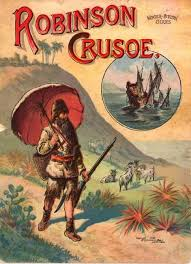
Robinson Crusoe by Daniel Defoe, 1719

Robinson Crusoe – or, as its amazing sub-title would have it ‘The Life and Strange Surprizing Adventures of Robinson Crusoe, Of York, Mariner: Who lived Eight and Twenty Years, all alone in an un-inhabited Island on the Coast of America, near the Mouth of the Great River of Oroonoque; Having been cast on Shore by Shipwreck, wherein all the Men perished but himself. With An Account how he was at last as strangely deliver’d by Pyrates’ is quite an extraordinary book. Published in 1719 at the very dawn of the novel, it was widely taken as a true story. It was wildly popular, running through four editions in its first year of publication, and according to Wikipedia, by the end of the 19th century no book in the history of Western literature had more editions, spin-offs and translations (even into languages such as Inuktitut, Coptic and Maltese), with more than 700 such alternative versions.

When you read a classic like this you hope you are going to discover something beyond the popular culture version you have absorbed since your childhood. Some of the novels I have read recently were slightly disappointing in that regard – ‘Alice’s Adventures in Wonderland‘ for example was everything I had been led to expect. ‘Dracula‘ and ‘Frankenstein‘ were probably the most remote or adrift from their origins. ‘Robinson Crusoe’ was in many ways very familiar, but there were some things I hadn’t expected to find. For example I had no idea that Defoe wrote a sequel, ‘The Farther Adventures of Robinson Crusoe’ which I must look out/download. Because I really enjoyed this novel.

Taking the novel as an adventure story for a minute and ignoring its importance as a cultural artefact, this was fun. After running away to sea, being enslaved and then escaping, Crusoe finally makes his way to Brazil, where he settles down and becomes prosperous. Greed tempts him into a voyage, where he is shipwrecked on the aforementioned deserted island. What isn’t well known is that his voyage was to purchase slaves to work on his plantation. The attitude to slavery is interestingly frank – slavery isn’t particularly nice for the slaves, Crusoe recognises – he knows even the cannibals he meets on ‘his’ island are still people – but then Christmas isn’t nice for turkeys. It’s just a fact of the world he lives in, and the thought of doing something about it doesn’t cross his mind, in the same way as we see suffering and misery in our own world and shrug and walk on by.  

Crusoe‘ can really only be read as a story of imperialism or colonialism. He goes about mastering his environment with a dogged determination, farming, building and learning skills such as pottery and basket weaving. The animals on the island are culled in a casual a way that helps the reader understand how 17th and 18th century sailors destroyed native populations of animals such as the dodo so wantonly. He slowly comes to a religious settlement with his situation, accepting that while God may have shipwrecked him alone on the island for decades, he also provided him with an Eden-like environment in which surviving is not a struggle.

“These reflections made me very sensible of the goodness of Providence to me, and very thankful for my present condition, with all its hardships and misfortunes ; and this part also I cannot but recommend to the reflection of those who are apt, in their misery, to say, Is any affliction like mine? Let them consider how much worse the cases of some people are, and their case might have been, if Providence had thought fit.”

Provisioned from the wreck of his ship with virtually every tool, seed, animal and material he could possibly need, he is able to construct a home, a farmstead, and a fortification against dangerous creatures (of which there are none) and savages, which only appear towards the end of the novel. This is inspired by the famous and mysterious ‘footprint on the sand’ scene, mysterious because Defoe stresses several times that there is only the one footprint. Where it comes from is never resolved, but leads Crusoe to discover the cannibals that periodically visit the other side of his island for their celebration feasts. He interrupts one such party to rescue his man Friday, who becomes a faithful friend. He teaches Friday all about Christianity. This generates one wonderful scene where Friday innocently asks Crusoe some difficult theological questions (specifically, If God is all powerful, why is his struggle with the Devil so protracted?) which lead to a bit of a tumbleweed moment – Crusoe has to evade the question by pretending not to hear it!

Having been quite slow paced while Crusoe explores his world and steadily turns it into a little England, the narrative accelerates when the cannibals arrive, swiftly followed by an English ship captured by mutineers and recaptured by Crusoe, on which he returns to England to reclaim his birthright and possessions. There is time for one last chase through the woods pursued by packs of wolves, before Defoe decides to let Crusoe rest and take a breather.

The impact of Defoe on the English novel was huge. Poe obviously borrows heavily from him in ‘The Narrative of Arthur Gordon Pym of Nantucket’, as do the later Victorian adventure novelists such as Verne and Wells. You can even see traces of Crusoe in ‘Coral Island‘, and its counterpart Lord of the Flies‘. This is the earliest novel I have reviewed to date, and its surprising modernity – there was no difficulty in language or style – is a tribute to Defoe’s innovation.

Standard
Book review

Comment: Sudden death

Why do so many novels, classic or otherwise, end with the sudden death of a main character? Is it just laziness? Or are there really only a limited number of plot lines out there, so authors have to choose ‘sudden death’, ‘happily ever after’ or ‘to be continued’?reaper

You may think I am exaggerating, so I thought I’d complete a quick survey. Let’s look at the last 20 books I have reviewed, and see which end in the sudden and possibly unexplained death of a major character. It goes without saying that this selection will contain some serious spoilers, but if you have read my blog before, or the warning at the top of the home page, you will know I have a cavalier attitude towards that issue at the best of times. I genuinely don’t know how this is going to turn out, although if course if nobody dies I might reconsider publishing this…..

  1. Wuthering Heights. Virtually everybody dies, including all the main characters. Heathcliff drops dead at the end of the novel from no obvious cause, but with an unpleasant smile on his face.
  2. Underworld. Hard to argue there are any major characters, but those that we come across seem to make it through.
  3. Gentlemen Prefer Blondes – definitely a ‘reader I married him’ ending.
  4. Voss. Almost everyone dies on Voss’s expedition into the Australian outback.
  5. Sybil ends with the death of several major characters in a rushed ending that suggests the author had something more important to do.
  6. Mrs Dalloway. A death plays a central part in the novel, but it is not of a major character, and doesn’t come at the end, so I don’t think I can count this one.
  7. Hadrian VII.. Hadrian is assassinated at the end of the novel.
  8. Tropic of Cancer. In keeping the novel’s breaking of conventions, Miller doesn’t provide any particular resolution at the end of Tropic of Cancer, let alone a death.
  9. Song of Solomon ends with Milkman’s leap of faith – whether it ends with his death or him learning how to fly, we aren’t told. I’m claiming this as a half!
  10. Beloved has an inconclusive ending, but no major deaths.
  11. To Kill a Mockingbird. I’m also calling this one a half – the novel ends with a death, but the character cannot be called major.
  12. The Way We Live Now. If ever there was a novel where the random death of the main character signals the author’s increasing boredom with his work, it is the utterly implausible suicide at the end of Trollope’s novel.
  13. The Rainbow. As you would expect with an inter-generational novel, there are some deaths, but they are not used as a plot ending device, so can’t count this one.
  14. Fiesta: The Sun Also Rises – just to prove this exercise isn’t rigged, no sudden deaths at the end for the named characters.
  15. Amongst Women ends with the passing of the Moran family patriarch.
  16. Lolly Willowes. An unusual ending, but no deaths.
  17. Rabbit Redux – Rabbit has further to run at the end of Redux, but his dysfunctional girlfriend dies in a house fire, so I am claiming this one.
  18. The Heat of the Day ends with the ‘was it suicide or was it an accident’ death of the protagonist, Robert Kelway.
  19. Gulliver’s Travels – ending with the promise (fulfilled) of a sequel.
  20. The Scarlet Letter ends with the expiration of Hester’s mystery partner, Reverend Dimmesdale.

Depending on how generous you are with the halves, I think that makes over 50% of this random list of classic novels ending with sudden deaths. In some cases the death is a natural conclusion to a story arc – in others (Sybil, The Way We Live Now) the deaths are hurried and unlikely, and used simply as a convenient way to draw the novel to a close. It seems as if a sudden death brings a finality that authors find hard to resist.


Standard
100 Best Novels Guardian list, 19th Century literature, Book review, Bronte

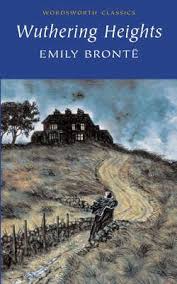
Wuthering Heights, by Emily Bronte, 1847

WH2

Wuthering Heights’ has over 22,000 reviews on Goodreads alone; one has to wonder what else I could possibly add to that overwhelming weight of opinion and consideration?

The dark and gothic tale is constructed with a complex variety of framing structures – at one point the narrative is told by Mr Lockwood, the tenant of Thrushcross Grange, recounting the story told him by Nelly Dean, the housekeeper of the Grange and the Heights, who in turn recounts details of a message from Isabella Heathcliff (nee Linton). People drop dead with alarming frequency, and nurture dark passions to the grave and beyond. The novel opens in 1801 with Lockwood’s neighbourly visit to the Heights, and the story is then told in a series of flashbacks/reprises. This means we have a clear picture of how things are going to end – until the final closing chapters, at least.

Continue reading
Standard
100 Best Novels Guardian list, 20th century Literature, American literature, Book review, Don Delillo, Underworld

Underworld, by Don Delillo, 1997

Some novels are easy reads – the pages roll past in a blur, the events have a pace and unity that keep you turning the page, but the reader sometimes feel a bit of a passenger, riding the tide of the novel without having to do any work. Chapters are as short as the reader’s attention span, and when the novel is put down at night it can be picked up again at any time without the need to remind oneself where one left off. ‘Underworld’ is the precise opposite of that kind of novel. It is complex, dense, extremely long (832 pages), and peopled with a large cast of characters. The narrative voice is evasive, jumping from character to character and often it is not until well into a paragraph that there is any clue as to who the “I” is – and the very next paragraph it could change once again. The Underworldlanguage Delillo uses is fractured and often very poetic; his characters usually speak in incomplete sentences and there is often no indication who is speaking. The time structure of the novel is equally fragmented and the jumps in time are mirrored by jumps around the globe. This all adds up to a challenging novel, from many different aspects – but the question is, was it worth it? Continue reading
Standard
Book review

Gentlemen Prefer Blondes, by Anita Loos, 1925

‘Gentlemen Prefer Blondes’ was published in the same year as ‘The Great Gatsby’, and provides an interesting contrast to that dazzling portrait of prohibition era America. ‘Laugh-out loud’ is an over-used expression but I genuinely (and slightly against my better judgment) found myself laughing out loud at this delightfully silly novel, which in diary form tells the story of Lorelei Lee’s uninhibited adventures in 1920’s New York and Europe. Continue reading

Standard
Book review

Voss, by Patrick White, 1957

Patrick White was awarded the Nobel Prize in Literature in 1973 “for an epic and psychological narrative art which has introduced a new continent into literature” (I think what this is saying is that White was the first great writer about rather than from Australia). Of ‘Voss’, the citation said it is “an intensive character study against the background of the fascinating Australian wilds”. Faint praise, don’t you think?Voss

Briefly, ‘Voss’ tells the story of Continue reading

Standard
100 Best Novels Guardian list, 19th Century literature, Book review

Sybil, by Benjamin Disraeli, 1845

“Would he have made the cut if he had not become prime minister?”

asks Robert McCrum in his Guardian article explaining why he chose ‘Sybil’ for his “top 100 novels written in English” list. He goes on:

”his literary contemporaries such as Dickens, Thackeray, George Eliot, and even Anthony Trollope are much greater novelists. Disraeli’s plots are far-fetched, and his characters balsa-wood. At the same time, he has flashes of brilliance that equal these greats at their best.”

This is where McCrum and I part company. I found no flashes of brilliance in ‘Sybil’ (and I did look carefully) and I don’t think anyone else would either. McCrum provides no quotes to support his contention, and if you look at this selection in Wikiquote I don’t think you will find anything there which justifies this description either. The weight of evidence to demonstrate the opposite, the wooden, flat, simply bad nature of Disraeli’s prose is overwhelming. I obviously can’t flood this review out with bad prose, but here are a couple of examples, from the 400 pages of possibilities:   Continue reading

Standard