Book review

Call for the Dead by John le Carre, 1961

Call for the Dead is the first novel in which George Smiley appears, which of course is the right order in which to read a novel series, not jumping straight in with the last one as I carelessly did recently. Carre
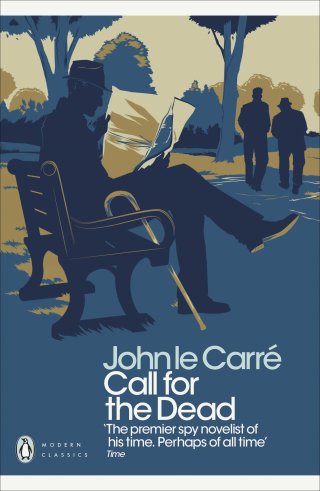
The novel opens with the suicide of civil servant Samuel Fennan following a routine security check, which in turn had been prompted by an anonymous accusation that Fennan had been leaking secrets to/working for the Russians. This is the novel’s central puzzle – why would Fennan kill himself when the review was going to clear him? But kill himself he has, and it begins to look as if the investigating officer, one George Smiley, is going to be blamed for his death.

This is the first of the novel’s many improbabilities – despite it being obvious that there is at least a chance that Smiley is going to be implicated in the suicide, he is asked to investigate it. He interviews Fennan’s wife Elsa in her home. While there he answers the telephone, expecting the call to be for him, (oh for the days before mobiles!) but it is an alarm call from the telephone exchange which Fennan had booked the night before. Why would someone book a call and then kill themselves? Could it possibly be that this is not a suicide, but a murder staged to look like one? It could.

A local policeman Inspector Mendel, the classic copper only days from retirement, conducting the investigation into the Fennan case, begins to work with Smiley. Smiley’s boss (rather late in the day) orders him to drop the case, but a letter posted by Fennan the night before arrives, requesting an urgent meeting that day, confirming his suspicion this is murder! Smiley hands in his badge to pursue the case. Of course these may not have been such tired police procedural cliches in the 1960’s, but that is of limited consolation to a modern reader.

Can you guess what happens next? I suspect you can. Yes, before he can make much progress with the case, Smiley is hit on the back of the head in an alley by a mysterious assailant, and goes out like a light. He has just had time to find the lead that will crack the case, and expose the sinister East German agent who is behind it all.

Yes, there’s a twist, of sorts, but by now you will have got there already. So why does this novel seem so tired and predictable when Le Carre is widely seen as a master of his craft, writer of novels of byzantine complexity where you only find out what really happened on the last page? The Guardian ran an excellent parody of the novel a while back which does a good job of pointing out its combination of cliche, predictability, and improbability. As soon as the long holidays to Austria the Fennan’s took every year (in an era when even everyday civil servants were prohibited from travelling to Eastern Europe) it is obvious they are guilty as hell. There is no way Smiley or anyone would have cleared Fennan on the basis of the cursory chat that passes for an investigation into the allegations against him. As well as being the first Smiley novel this was also Le Carre’s first novel of any kind, and it went on to generate a series that is widely loved and respected, so I shouldn’t be too harsh. Smiley himself is an anti-hero, fat, balding, aging, but becomes over time a formidable spymaster, not that you would necessarily know that from this work alone. I may have ruined my enjoyment of the later books in the series by reading the last one first, but at least I can say I have given Le Carre a run for his (my) money!

Standard
Book review

Smiley’s People by John le Carre 1979

Smiley’s People by John le Carre 1979

I’ve written previously about how I prefer not to read too much about a novel in advance of reading the novel itself – how it can prejudice the reader, shaping their expectations one way or another. But you can take that approach too far, and I think I did here. I knew Smiley’s People was one of le Carre’s series of novels about espionage during the Cold War, but it wasn’t until I glanced at the back cover after completing the novel that I found out it was the seventh in the Smiley series. Each of these novels are capable in theory of being read independently of one another, of course, but they accumulate a depth of background that over time makes the idea of them being stand-alone novels harder to sustain.

Smiley’s People, as well as being the seventh Smiley novel, is also the third and final novel in what is known as the Karla trilogy, the others being Tinker Tailor Soldier Spy and The Honourable SchoolboySmiley’s People presents itself as a novel of byzantine complexity, with plots within plots. But if you take a step back in some respects it is quite simple. Karla, Smiley’s Russian nemesis, has a daughter who needs psychiatric treatment not available inside the Soviet bloc. Through an admittedly complex route Smiley eventually discovers the identity of this daughter, and the rest is relatively simple –  Karla is blackmailed into defecting to the West, the alternative being the loss of both his and his daughter’s safety and security.

What I can’t be sure about is whether reading this novel out of order, as I did, would have made much difference to my appreciation and understanding of the complexities of the plot. I suspect it might have made things easier, although now I have committed this mistake I don’t think reading the earlier novels in the series would remedy the situation.

Is the novel any good? Did I enjoy reading it? Well Smiley is an enigmatic, closed down character – we really only get glimpses of his personality in, for example, his relationship with his ex-wife. He is not all-powerful – while he comes out on top in the struggle with Karla, there are avoidable losses along the way. Without giving too much away, there are deaths in the novel which are foreseeable and avoidable. If you enjoy complex novels where staying one step ahead of the protagonists is a challenge then this is one to definitely add to your TBR list. Stylistically I noticed little of the prose which made The Spy Who Came in from the Cold stand out. Here’s a scene setting from the later novel:

The café was the last in the street, if not in all Paris, to lack both a juke-box and neon lighting – and to remain open in August – though there were bagatelle tables that bumped and flashed from dawn till night. For the rest, there was the usual mid-morning hubbub, of grand politics, and horses, and whatever else Parisians talked; there was the usual trio of prostitutes murmuring among themselves, and a sullen young waiter in a soiled shirt who led them to a table in a corner that was reserved with a grimy Campari sign.

And this is from the earlier novel:

They walked to her flat through the rain and they might have been anywhere—Berlin, London, any town where paving stones turn to lakes of light in the evening rain, and the traffic shuffles despondently through wet streets.

For me there is no question as to which excerpt captures the atmosphere more effectively and concisely. I appreciate you could do the same with just about any two novels using selected quotes, but I think my point is that in the later novel le Carre gets bogged down with the procedural elements of the plot and overlooks the need to capture the moment.

To do le Carre justice I probably need to read more of his work, but one as always comes up against the conundrum of there being so many books, and so little time.

Standard
Book review

The Spy Who Came in From the Cold, by John Le Carre, 1963

I read ‘The Spy Who Came in From the Cold’, as a standalone novel, without realising that it is to all intents and purposes a sequel to A Call for the Dead, Le Carre’s 1961 debut novel. Reading the novels out of sequence meant that the central plot twist – which I won’t give away here even though I usually very relaxed about spoilers – was kept disguised for much of the novel, even if on reflection it was fairly guessable.

Why read a Cold War spy novel now? Is it in any way still relevant? Certainly the political context of the novel has changed dramatically – when The Spy was first published it had an immediacy and relevance it has now lost. It exposed the dark underside of the world of Cold War espionage, in which each side, East and West, were both morally equivalent and ambivalent, where murder was commonplace, and where the only justification for one’s actions was the final outcome. Now it is just a historically based adventure novel, with as much relevance as The 39 Steps or The Riddle of the Sands.

Alec Leamas runs the Berlin office of the British secret service. Berlin is divided between East and West by the recently constructed Wall (a landmark point was passed recently when the time the Wall has been down became longer than the time it stood).  The novel opens as Leamas’s operation loses its last double agent, shot whilst defecting from East Berlin. Leamas is recalled to London by his boss, ‘Control’ and is given one last mission: to fake his defection to East Germany and to undermine their ruthlessly efficient secret service. There is very little exposition setting all this out – we learn of this plot only gradually as it unfolds.

I am not sure Leamas would have made a convincing potential defector. Yes he is fired, starts drinking, has money problems and serves a short prison sentence. But there are surely flags that this is a trap. He falls into the clutches of the East Germans far too easily. A menial job in a library leads him to meet Liz Gold, who just happens to be secretary of her local cell of the Communist Party of Great Britain. This obviously isn’t a coincidence – Liz is unknowingly part of the plot. After his release from jail Leamas is approached by an East German recruiter and with little pause for breath he defects and sells all his country’s secrets – or what little he purports to know – for a few thousand pounds.

During his interrogation Leamas mentions British payments to a double agent in the East. This, we later come to understand, is part of the plot to sow discord among the East German spy operation, which culminates in a trial of the Communist spymaster Mundt. During the trial the British plot is exposed when Liz is called as a surprise witness, only for a secret underlying plot, to which Leamas has been oblivious, to be revealed. The novel’s tragic denouement comes swiftly thereafter with a degree of inevitability.

This is a well-written page-turner. Le Carre evokes the seediness of Leamas’s world with very precise prose and imagery:

“They walked to her flat through the rain and they might have been anywhere—Berlin, London, any town where paving stones turn to lakes of light in the evening rain, and the traffic shuffles despondently through wet streets.”

Although there is a moral ambivalence about the novel’s portrait of espionage, Le Carre still takes sides – he is disgusted by intellectual, moral and actual poverty of the East. Although the world Le Carre portrays is now gone, this didn’t feel like an anachronism (in the way the Buchan and Childers books now do). In part this is because of the enduring popularity of Le Carre’s work to film and television adaptations, which keep it current, and in part due to his cynicism and amorality which is very modern in its sensibility. I am glad I have now read Le Carre – he was a novelist I have skirted around many times but never quite got round to – but I suspect his other spy novels will be very similar to this one. But next time I am looking for a book to help pass a train journey I will know not to overlook Le Carre.

Standard