
Call for the Dead is the first novel in which George Smiley appears, which of course is the right order in which to read a novel series, not jumping straight in with the last one as I carelessly did recently. 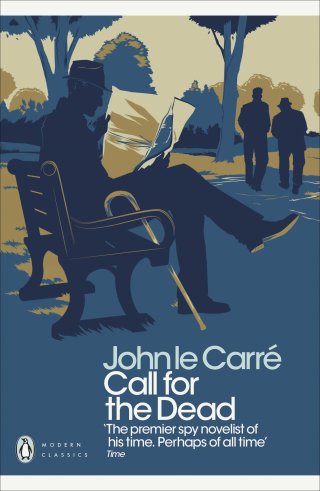
The novel opens with the suicide of civil servant Samuel Fennan following a routine security check, which in turn had been prompted by an anonymous accusation that Fennan had been leaking secrets to/working for the Russians. This is the novel’s central puzzle – why would Fennan kill himself when the review was going to clear him? But kill himself he has, and it begins to look as if the investigating officer, one George Smiley, is going to be blamed for his death.
This is the first of the novel’s many improbabilities – despite it being obvious that there is at least a chance that Smiley is going to be implicated in the suicide, he is asked to investigate it. He interviews Fennan’s wife Elsa in her home. While there he answers the telephone, expecting the call to be for him, (oh for the days before mobiles!) but it is an alarm call from the telephone exchange which Fennan had booked the night before. Why would someone book a call and then kill themselves? Could it possibly be that this is not a suicide, but a murder staged to look like one? It could.
A local policeman Inspector Mendel, the classic copper only days from retirement, conducting the investigation into the Fennan case, begins to work with Smiley. Smiley’s boss (rather late in the day) orders him to drop the case, but a letter posted by Fennan the night before arrives, requesting an urgent meeting that day, confirming his suspicion this is murder! Smiley hands in his badge to pursue the case. Of course these may not have been such tired police procedural cliches in the 1960’s, but that is of limited consolation to a modern reader.
Can you guess what happens next? I suspect you can. Yes, before he can make much progress with the case, Smiley is hit on the back of the head in an alley by a mysterious assailant, and goes out like a light. He has just had time to find the lead that will crack the case, and expose the sinister East German agent who is behind it all.
Yes, there’s a twist, of sorts, but by now you will have got there already. So why does this novel seem so tired and predictable when Le Carre is widely seen as a master of his craft, writer of novels of byzantine complexity where you only find out what really happened on the last page? The Guardian ran an excellent parody of the novel a while back which does a good job of pointing out its combination of cliche, predictability, and improbability. As soon as the long holidays to Austria the Fennan’s took every year (in an era when even everyday civil servants were prohibited from travelling to Eastern Europe) it is obvious they are guilty as hell. There is no way Smiley or anyone would have cleared Fennan on the basis of the cursory chat that passes for an investigation into the allegations against him. As well as being the first Smiley novel this was also Le Carre’s first novel of any kind, and it went on to generate a series that is widely loved and respected, so I shouldn’t be too harsh. Smiley himself is an anti-hero, fat, balding, aging, but becomes over time a formidable spymaster, not that you would necessarily know that from this work alone. I may have ruined my enjoyment of the later books in the series by reading the last one first, but at least I can say I have given Le Carre a run for his (my) money!

