100 Best Novels Guardian list, 20th century Literature, A Clockwork Orange, Anthony Burgess, Book review, Books made into films, Clockwork orange

A Clockwork Orange by Anthony Burgess, 1961

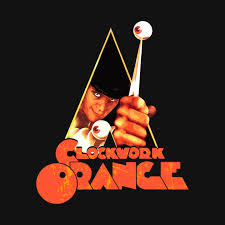
clockwork‘A Clockwork Orange’ is narrated by the main character, Alex, a teenage boy in a near future but very recognisable society. Alex leads a gang of ultra-violent thugs, who every evening rape, murder, steal, and commit crimes with impunity. Alex really enjoys this aspect of his life, and the casual nature with which he describes his crimes is chilling. This effect is compounded by several other features of the novel – his age, his love of classical music (which poses the question how could one love music and yet be a monster) – but principally through the use of nadsat, an invented teenage slang. Burgess had noticed that teenagers adopt a specialist argot to confirm membership of their tightly knit group (which of course is the whole point of slang) and writes almost exclusively in this language. Alex can speak conventional English, and does so when the occasion requires (when he is pretending to be civilised, usually in furtherance of a crime) but his language of choice is nadsat. Just to give a flavour of this:

“There was me, that is Alex, and my three droogs, that is Pete, Georgie, and Dim, Dim being really dim, and we sat in the Korova Milkbar making up rassoodocks what to do with the evening, a flip dark chill winter bastard though dry. The Korova Milkbar was a milk-plus mesto, and you may, O my brothers, have forgotten what these mestos were like, things changing so skorry these days”.

Don’t let the apparent impenetrability of the language put you off – most words can be understood from their context – droogs here being gang-members for example – and even where the exact meaning is not immediately apparent, the overall meaning is usually very clear. The use of an alternative language reinforces the sense of alienation Alex and his droogs feel for the oppressive society they live in.

Burgess tackles several big themes in this novel. Violence and the degeneration of society – Burgess looks at the gang culture of post-war Britain, and anticipates it getting more prevalent and extreme. Free will is another central theme – once imprisoned, Alex is treated, brainwashed, so that any attempt at violence makes him feel immediately unwell, reducing him to a clockwork orange i.e. something apparently natural, but not so). In an aside, it is mentioned that the Government needs this treatment to be effective, to create more prison space for an anticipated influx of political prisoners. Language is also central to the novel, not only to express Alex’s alienation, but also that of his peer group – teenagers literally talk a different language from their parents; Burgess also notes that some ten year old girls that Alex picks up and brutalises speak a different argot – so each group is developing its own language. Burgess isn’t critical of this – he seems to accept it as inevitable, and while nadsat may not be the language of Shakespeare, it is creative and very expressive, both in its adoption of new terms (I particularly like the term “horrorshow” for “extremely”) and rhetorical phrases such as “Oh my brothers”.

Burgess undoubtedly wrote better books than ‘A Clockwork Orange’ – I have written here previously about my love for the Enderby novels for example – but none made a bigger impact, either at the time of publication, or more infamously with Kubrick’s film adaptation. The principal accusation is that the novel (and the film) glamorised and celebrated violence. There are certainly aspects of the novel that could justify that claim. The language used to describe violence reflects Alex’s enjoyment of the same:

“And, my brothers, it was real satisfaction to me to waltz-left two three, right two three-and carve left cheeky and right cheeky, so that like two curtains of blood seemed to pour out at the same time, one on either side of his fat filthy oily snout in the winter starlight”

The novel ends with Alex recognising that he is growing up, and there might be a future for him in settling down, getting a normal job, and raising a family. It is a strange, downbeat note on which to end, and apparently this final chapter was omitted from the American version, and the film adaptation. While the novel positively fizzes with ideas it is not, however, didactic – I doubt if anyone ever had their ideas or lives changed by it. I recognise that this may not have been Burgess’s intention – he once described the novel as “a sort of tract, even a sermon, on the importance of the power of choice” – but if it is, it is an unconvincing one. Would we really prefer pre-treatment Alex in his raping, murdering, ultra-violent glory to compliance, obedient post-treatment Alex? Yes, the loss of freedom of choice is painful, but so is the lawlessness and anarchy Alex creates when free. That of course is an entirely academic debate – the Ludovico treatment is fictional – so it is hard to get too exercised by the issue. Instead, the film generated a more pressing debate on whether portraying violence in a glamorous way can incite it. The relationship between film violence and criminality is not actually raised in the book – Alex not once attempts to justify his behaviour by reference to anything he has watched – in fact his cultural interests are completely high-brow.

Given a choice between more time in the bleak, post-war urban landscapes of ‘A Clockwork Orange’ and the wit and erudition of Enderby, and I choose the lonesome poet every time.
Standard
100 Best Novels Guardian list, 20th century Literature, A Single Man, Book review, Christopher Isherwood, gay literature

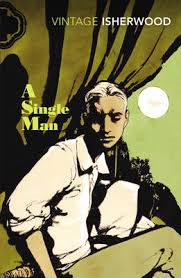
A Single Man by Christopher Isherwood, 1964

‘A Single Man’ is a portrait of a single day in the life of George, a lonely, late middle-aged Englishman living in Santa Monica and teaching at a university in LA. George is gay. Thus far, thus autobiographical. George has in the recent past lost his lover, Jim, in a car accident, and is slowly coming to terms with his loss. We follow him and his internal monologue through the course of a day as he gets up, drives to work, presents a lecture to a very diverse group of students, and then goes to the gym, all the while narrating his progress, and simply holding it together. One gets the impression of a man on the edge, terrified of growing old and being alone, conscious of the need to keep his sexuality, still taboo in America at this time, secret, but equally being struck by lust several times during the course of the day. He needs to grieve, but is unable to do so – indeed, he has told his neighbours that his ‘friend’, Jim, has simply moved away, rather than acknowledging his death and having to respond to their condolences.

This was brave stuff for a novel in the 1960’s. Homosexuality was illegal and while attitudes across America varied widely, and still do, Isherwood references some of the struggles gay men faced. (Remarkably, while gay marriage is not legal in the USA, “as of April 2014, 17 states either had not repealed their laws against sexual activity among consenting adults, or had not revised them to accurately reflect their true scope. Often, State laws were drafted to encompass other forms of sexual conduct such as bestiality, and no attempt has been made to separate them. Fourteen states’ statutes purport to ban all forms of sodomy regardless of the participants’ genders. Four states specifically target their statutes at same-sex relations only”) (With thanks to the wonderful Wikipedia, which knows all).
George is, in his grief, alienated from his environment. His students are “the male and female raw material which is fed daily into this factory” (ie the university) (page 32). He only really comes to life when sexually aroused, by the lithesome tennis players he sees, or when exercising in the gym next to a desirable if dangerously young man.  

There are some difficult scenes where Isherwood/George describes his disgust with the female body, including his dying ‘friend’, Doris, previously a short-term lover of his partner, Jim. He remembers her as:

“that big, arrogant animal of a girl…With that body which sprawled stark naked, gaping wide in shameless demand…gross insucking vulva, sly ruthless greedy flesh, in all the bloom and gloss and arrogant resilience of youth…I am Doris…I am Bitch-Mother nature.” (75)

There is plenty more in this vein. You could read this as George hitting out in his grief at someone who tried to steal his partner from him, but the visceral nature of the description reveals a nastier strain of misogyny. Heterosexuals generally get quite a hard time – children are described as appearing “litter after litter” (9) and even ‘Children at play’ traffic signs are seen as sinister. This is the interior narrative of a bitter sad, single man. His anger and resentment of the heterosexual families that encroach on his bohemian community is understandable, but nonetheless unpleasant.

George’s day, and the novel, concludes with a wild, improbable and drunken midnight swim, and finally with a heart attack, a gloomy, hopeless ending to a sad and bitter life. ‘A Single Man’ is an important landmark in gay literature, and is economically, sparsely written, but it has a sadness which made me quite glad to be leaving this world. Isherwood’s earlier novels may have been less polished that this, but they had an optimism and hope missing here.
Standard
100 Best Novels Guardian list, American literature, Book review, Sister Carrie, Theodore Dreisser

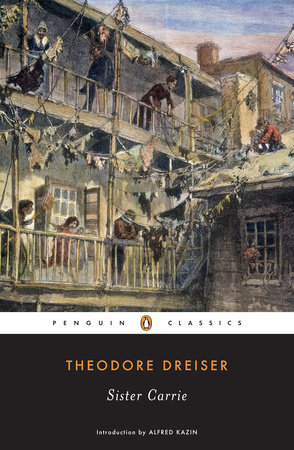
Sister Carrie by Theodore Dreisser, 1900

‘Sister Carrie’ follows a young woman as she travels from her small town life at the age of 18 to the big city. At first she lives with her sister and her sister’s husband. She struggles to find work, and succumbs, quite easily it has to be said, to the blandishments and an attractive and smooth talking young man, who sets her up in a small flat of her own. To provide this scandalous situation with a veneer of respectability they pretend to the neighbours that she is his wife. Bored with this arrangement she begins a secretive romantic liaison with another man. Dreisser loses interest at this point – I have read that he abandoned the novel several times before finishing it – and so injects some liveliness by having the second boyfriend, Hurstwood, rob his employers of $10,000, and flee across the border into Canada, taking Carrie with him. He almost immediately regrets this, pays back most of the money, and moves to New York in hope of finding an income. Carrie plays housewife, but when the money dries up she takes a job on the stage, eventually finding fame and fortune. Her boyfriend finds only poverty and destitution, and eventually kills himself in despair.

How this novel possibly found a place in the Guardian’s top 100 novels written in the English language I will never know. It has so many deficiencies, from the misleading title (the ambiguity between Carrie being a sister, and having nun-like tendencies, offers possibilities which are never explored); the tedium of the length at which poverty in Chicago and New York is unrelentingly described; and the almost complete lack of characterisation. After 500 pages we still know very little about Carrie’s thoughts and feelings, beyond a vague interest in shoes and clothes. She is a profoundly superficial and uninteresting person, and when her stage career takes off we share no delight on her behalf. This list just scratches the surface of the novel’s weaknesses, but there’s little to be gained from any further demolition of what he till now been a justly forgotten novel.


‘Sister Carrie’ caused a minor scandal on publication, because while she has affairs with men who are not her husband, she does not suffer any consequences from this, remaining unpunished by the fates. But her affairs are loveless, joyless things. Dreisser is unable to look too closely at the dynamics of these relationships – sex is barely hinted at, and the reader is simply left to infer that it probably happens at some point. She drifts into the relationships unenthusiastically, and they end with an equal lack of passion or drama.


Are there any redeeming features here? The portrait of urban America is convincing – you can certainly believe that Dreisser has walked the cold, dirty streets of Chicago and New York, looking hopelessly for work, queuing for handouts, and sleeping in filthy rented rooms for a few cents a night. There’s no hope offered for his characters – this is simply a portrait, not an analysis. There is no way out other than suicide. An interesting section clearly dropped into the novel follows a bus-drivers strike, shown from the perspective of a strike breaker. The strikers are portrayed sympathetically, but so are the scabs, and only the police get a hard time. This plot line is quietly dropped in favour of yet more street walking and hunger.


Standard
100 Best Novels Guardian list, Book review, gay literature, http://schemas.google.com/blogger/2008/kind#post, Oscar Wilde, The Picture of Dorian Gray

The Picture of Dorian Gray by Oscar Wilde, 1891

I know I don’t normally write about the publication history of the books I review, but the background to this one is more complex than usual, and quite relevant. It was published in full in Lippincott’s Monthly magazine in 1890 (in a significantly shorter version than the final novel). Wilde predicted “I think it will make a sensation” – which was a bit of an understatement. Prior to publication he made several edits to remove some of the more explicitly homo-erotic content, but he may as well not have bothered, because critics almost unanimously put two and two together, identified Wilde with his two main characters, and realised that some of the sins which they explore included gay sex. For the avoidance of any doubts Wilde drops clunking hints such as when he says “there are certain temperaments that marriage makes more complex…they are forced to have more than one life” (61) What can he mean? Later he refers to “such love as Michael Angelo had known, and Montaigne, and Winckelmann, and Shakespeare himself” (96). This was extraordinarily daring of Wilde – and his publishers – and he was of course to pay the price.

The plot is very familiar. Gorgeous, young, well-to-do and well-connected Dorian Gray has his portrait painted by a society painter, Basil Hallward. Dorian unknowingly makes a Mephistophilian pact to preserve his beauty, and for his portrait to bear the signs of aging and sin. He is taken in hand, and led astray, by Hallward’s friend, the dangerous Lord Henry Wotton. His treatment of a young actress, Sibyl Vane, who falls in love with him and who he brutally rejects, leading to her suicide, is the first time he notices a change in the painting. Gray is psychopathically narcissistic – everything is judged by its impact on him. He goes to the opera after hearing Sibyl has died, and when chastised for this says “Don’t talk about horrid subjects. If one doesn’t talk about a thing, it has never happened” (87) Accepting his fate, he hides the painting, eventually killing Hallward to avoid exposure, and dives into a life of excess, sin, and hedonism. Wilde goes as far as he can to describe this life, dropping hints about many of the elements, including some more conventional, heterosexual affairs, which frankly is fooling no-one.
There’s a unavoidable biographical element to this novel. Wilde’s own life followed the same self-destructive arc as Gray’s, although what is more remarkable is that the novel came first – Wilde was well aware where his recklessness would lead, but embraced his fate in any event. He foresees it all – the social ostracism (“when he used to reappear again in society, men would whisper to each other in corners, or pass him with a sneer, or look at him with cold, searching eyes, as though they were determined to discover his secret” (113) – the damage caused to friends and relatives – “Women who had wildly (note the choice of adjective) adored him, and for his sake had braved all social censure and set convention at defiance, were seen to grow pallid with shame or horror if Dorian Gray entered the room” (113), the damage to his health and (he believed) his soul, and yet could not steer a different course.
There are four great 19th century English horror novels (that is, novels written in English)  that explore identify and sexuality – ‘Frankenstein’, ‘Dracula’, ‘Dr Jekyll and Mr Hyde’, and ‘The Portrait of Dorian Gray.’ (In many ways ‘Dr Jekyll’ is probably the least flawed of this quartet, and I will aim to review it shortly to complete the set). All are in their different ways about the horror of the divided self. ‘Gray’ has many flaws – the sections where Wilde expanded the text for publication as a novel show strong signs of padding, for example, and the aphorisms, which individually are witty and clever, when they appear in such intensity have an artificial, false note. But despite these, this is a stunning novel, tragic in the light of what we now know about Wilde’s own fate, but also complex and brave. Superficially it is a parable about the price of sin, but in making Gray and Wotton such charismatic characters Wilde makes it clear where his sympathies and interests lie.
Standard
100 Best Novels Guardian list, 20th century Literature, American literature, Booker Prizewinner, Kurt Vonnegut, Second World War, Slaughterhouse 5

Slaughterhouse 5, by Kurt Vonnegut, 1969

I’ve written elsewhere on the mysterious process that is re-reading a novel. The experience ranges from a comforting stroll down memory lane, to the more common “I know I have read this, but for the life of me can’t remember a single thing about it”. Slaughterhouse 5 was for me definitely a re-read, and I had a dim recollection of the main elements of the plot, if you can call it that, but the primary experience was as close to a new read as makes no difference.

‘Slaughterhouse 5’ is a strange novel. It follows the life and times of time traveller, World War 2 survivor, and alien kidnapee, Billy Pilgrim. Billy experiences time as a continuum, and travels from point to point across it freely, making this an exceptionally fractured novel. “It is just an illusion here on Earth that one moment follows another one, like beads on a string, and that once a moment is gone, it is gone forever.”Breaking that down into a “what happened” narrative requires the imposition of a more formal, chronological time scheme and would be misleading; there is a collection of events spread across time that is revealed to us, the reader, but only a limited attempt to present this in any sort of order. In a classic post modernist manner, Vonnegut explains “There are almost no characters in this story, and almost no dramatic confrontations, because most of the people in it are so sick and so much the listless playthings of enormous forces. One of the main effects of war, after all, is that people are discouraged from being characters.”   On reflection, however, I think I may have overstated the impact of the fractured time scheme on the narrative flow of the novel – there is underneath all this jumping around in time nevertheless a reasonably steady progress of the central narrative, from Billy’s capture as a prisoner of war, his transport across Europe to Dresden, to the final horror of the fire-bombing.


There’s also an incongruous comic book silliness to much of the novel – at one point Billy is captured by aliens and displayed in a zoo, for example. However, the seriousness is never far away, giving the reader an unsettling experience of stepping from genre to genre in the space of a few lines.

The title of the novel refers to the refuge Vonnegut used to survive the Dresden firebombing of 1945. He unequivocally portrays this as an horrifying act of violence, but doesn’t take sides – the reader is left to draw their own conclusions about the morality of the raids. He quotes the figure of 135,000 deaths in the raid, which was accepted, to a point, at the time, but is now know to be a politically motivated exaggeration of what was nevertheless a massacre. Had the Allies lost the war the Dresden raids would undoubtedly have been treated as war crimes. Some of the horror of this event is shown, but it is mainly mitigated by insistence of the philosophy at the heart of the book, that bad things are best not dwelt upon, as they are always going to have happened; far better to focus on the good. This is best summarised in the fatalistic chant of the novel, “So it goes”.


As a classic post modern meta-narrative, Slaughterhouse 5 is as much about the process of writing a novel as the events described. As is now quite common, but at the time was much more original, the book contains its own review:
“There is no beginning, no middle, no end, no suspense, no moral, no causes, no effects. What we love in our books are the depths of many marvelous moments seen all at one time.”
Which is as good as a summary as I am going to find. One footnote – this novel contains a passing reference to “The Red Badge of Courage”, another American novel about war, and also one of the top 100 Guardian novels. So it goes.


Standard
100 Best Novels Guardian list, Book review, children's literature, http://schemas.google.com/blogger/2008/kind#post, Kidnapped, Robert Louis Stevenson

Kidnapped, by Robert Louis Stevenson, 1886

Read in a Penguin Classic edition

It’s about time I explained why I am reading what is essentially a children’s book, albeit a Victorian ‘classic’. A few months ago the Guardian completed a two year exercise to publish a list of the top 100 novels written in English. I’ve written previously about how irritating these lists can be, and this was no exception – it contains some strange choices (‘Emma’ over ‘Pride and Prejudice’?) and some books that stretch the definition of ‘novel’ to breaking point (‘Alice in Wonderland’?) I’ve been working my way around the list in recent months, not because of any completest tendencies, undeniable though they are, but simply as a guide for some interesting novels that I probably should have read. There have been some really interesting discoveries (for me) thus far (‘Money’, ‘Disgrace’), a few re-reads (‘The True History of the Kelly Gang’), and some stinkers. Sadly, this falls in the latter category.

The novel is set in the highlands of Scotland, shortly after the second Jacobite rebellion in 1745. The politics of this revolt are central to the novel, but knowledge of the issues is largely assumed, and not given any context. The principal character and narrator is 17-year-old David Balfour. His parents having recently died, he visits his evil uncle, Ebenezer, who arranges for him to be kidnapped and sold into slavery. The kidnappers are incompetent sailors, because after several days of journeying their boat is still off the islands of Scotland, where it collides with a row boat carrying Alan Breck, a leading Jacobite wanted by the British. Breck is a confused figure – pompous, short-tempered, and murderous, yet perceived by Davy as something of a glamorous, slightly heroic character. Alan is a Jacobite who supports the claim of the House of Stewart to Scotland’s throne; David is loyal to King George III, and the tension between them arises from these loyalties. Stevenson uses the Jacobite rebellion as a setting for this novel, but is clearly not that interested in the politics of the situation.  The relationship – a bromance if you like – between Breck and Balfour is at the heart of the novel – they argue, fall out, make up, and repeat, like an old married couple. If you don’t believe in the authenticity of this father/son-like relationship, then the rest of the novel holds few attractions.

The poor sailing continues, and after a short fight and siege over some money Breck is carrying, the ship capsizes. Breck and David are separated. David is stranded on a deserted ‘island’, which he eventually finds out is not an island but a spit of land joined to the mainland at low tide. He sets off to find Breck, but runs into the Red Fox, a real historical figure, who no sooner meets David but is killed by a hidden sniper. David is suspected of involvement in the murder, not unreasonably, and flees, by chance reuniting with Alan as he does so, lurking suspiciously in the woodland. The improbabilities involved here are skirted over.

We arrive at this point fairly briskly, but now the novel descends from here into an extraordinarily extended trudge across the Scottish Highlands. It rains, they walk, it is sunny, they walk, and so it goes on for chapter after chapter, with only the occasionally comically Scottish highlander to break the monotony. John Buchan clearly spent far too long reading this before writing ‘The 39 Steps’ as it contains similar scenes of prolonged walking in the rain – sadly ‘The Deathly Hallows’ has more than a touch of this affliction as well. Eventually they make their way back to the starting point and David’s uncle, who is confronted, confesses, and comes to financial settlement with David.
The parallels between this novel, written in 1886, (and published, like much Victorian fiction, in serial form in a magazine) and the earlier ‘Treasure Island’ (1881) are unavoidable. An impoverished, inexperienced, but self-respecting teenage hero goes to sea. Here he faces a crew of thugs. Supported by a strong role-model, he valiantly wins the day, following a siege scene very reminiscent of that at the island fort. A long voyage of wandering & discovery follows. Stevenson clearly knew a trustworthy model for a boy’s adventure story when he found one.

The novel is written with a large amount of colloquial scots. I am not sure whether the language is authentic, but it descends often into what reads like parody:
“Ye have a fine, hang-dog, rat-and-tatter, clappermaclaw kind of look to ye, as if ye had stolen the coat from a potato-bogle” (190)

Stevenson is a more interesting writer than this – Dr Jekyll and Mr Hyde is a fascinating portrait of the schizophrenic nature of Victorian society – but ultimately this is a tired children’s story no longer read by children.
Standard
100 Best Novels Guardian list, 21st century literature, Book review, Booker Prizewinner, Peter Carey, The true history of the Kelly gang

The True History of the Kelly Gang by Peter Carey, 2000

By coincidence, following on from my previous review of ‘In Cold Blood’, this is another novelisation of factual events. More specifically, this novel is (effectively) a biography of Ned Kelly, the famous Australian outlaw, written in the first person using Kelly’s own distinctive personal style.

Kelly was a first generation Australian, son of transported Irish Catholic parents. Part of a large family, Kelly’s life was troubled from the start, with his father being imprisoned and then dying when he was 12, and subsequently a long series of increasingly serious brushes with the law. If you establish a country peopled by former prisoners it is hardly surprising that there are one or two law and order challenges; add in nationalist resentments from the Irish community in Australia, the enmity between Catholics and Protestants, and the grinding poverty which characterised the settlement at the time (the 1880’s, chiefly) then it is hardly surprising that some people decided to live outside the law.
Carey follows what is known of Kelly’s early life with care. His descent into criminality is shown as being unavoidable – despite Kelly’s efforts to remain honest, his personal code doesn’t allow certain slights to go unrevenged. This is all portrayed from Kelly’s perspective, and the elements of self-justification are not hard to spot.
The main interest in Kelly’s story is how he became transformed from a horse thief to a national hero. There are many components to this transformation, and Carey captures them all. Kelly had a naïve belief in the power of the written word, and some of his attempts to justify his crimes have survived, such as the Jerilderie letter. Google this to see the original text – Carey has captured the spirit of Kelly’s style perfectly. Here’s a transcript of the first page of the Jerilderie letter from the Australian National Archives:
‘I wish to acquaint you with  some of the occurrences of the present past and future, In or about the Spring of 1870 the ground was very soft, a Hawker named Mr Gould got his waggon bogged, between Greta and my mother’s place house on the eleven mile creek, the ground was that rotten it would bog a duck in places so Mr Gould had to abandon his waggon for fear of losing his horses in the spewy ground he was stopping at my mother’s awaiting finer or dryer weather, Mr McCormack and his Wife, (Hawkers’ also) were camped in Greta and the mosquitoes were very bad which they generally are in a wet spring and to help them Mr Johns had a horse called Ruita Cruta, although a gelding was as clever as old Wombat or any other Stallion’
There are in this one page several wonderfully expressive phrases – that first line for example, or “as clever as old Wombat” (note, not anold wombat). All Carey had to do to copy this style was pretty much abandon punctuation, throw in lots of vernacular phrases, and plenty of seemingly irrelevant detail, and the job is done.
The other components of the national hero legend are equally obvious. Kelly had a wonderful turn of phrase – the letter ends ‘I am a Widow’s Son, outlawed and my orders must be obeyed’, and at his death it is claimed he said “Such is Life” – and very much in the Robin Hood tradition Kelly was the little guy fighting against an oppressive regime. The spectacular end to the story, when Kelly and his gang wearing their metal armour fight it out against a small army of armed police, gives the story the climax it deserves, although this ending is slightly thrown away in this novel, an inevitable consequence of the first person narrative. But Kelly emerges a charismatic leader, and it is entirely understandable that his legend is secured almost before his death. His crimes are not ignored, but the police murders/killings are shown in context as self defence.
There is a hunger in society for outlaw heroes. Bonnie and Clyde, immortalised in film but not, so far as I am aware, in a novel, are an example from American society. I wonder who will emerge as the outlaw hero of the early 21st century – Julian Assange, perhaps (perhaps not) or the more elusive hackers of the Internet movements?
Standard
100 Best Novels Guardian list, 20th century Literature, Booker Prizewinner, Crime, In Cold Blood, Truman Capote

In Cold Blood by Truman Capote, 1966

Read in Abacus edition.

This non-fiction novel (Capote’s term for it) describes the murder of the Clutter family, a mid-Western American family, and the subsequent arrest, conviction, and execution of their killers, Hickock and Smith.

It’s a banal and senseless murder, and despite the meticulous way it is reconstructed by Capote he never really gets close to explaining why the killing took place. The motive is one sense is quite simple – theft, and an attempt to cover their tracks – no witnesses – but it takes a certain deranged quality to murder four helpless people ‘in cold blood’, and it is that aspect of the killings that remains elusive. Towards the end of the book Capote hints at the possibility that Smith, the actual killer of all four family members, was triggered to commit the killings by some resemblance between the first of the family to die, the father, Herb, and an authority figure in his (Smith’s) past, but the idea is only mentioned in passing and is not followed through.

A non-fiction novel is arguably a contradiction in terms – novels are by their nature works of imagination. Of course many novels take as their starting point something factual, either in the public domain or the author’s personal lives, so in one sense Capote simply takes this idea and develops it. But the reader is left uncertain as to what extent the description of events – including detailed conversations, and accounts of the characters’ thought processes – are ‘as imagined’ by Capote, and which are based upon interviews with the participants and other research. The novel is sub-titled ‘A true account of a multiple murder and its consequences’, and in a short acknowledgements section Capote claims “All the material in this book not derived from my own observation is either taken from official records or is the result of interviews with the persons directly concerned, more often than not numerous interviews conducted over a considerable period of time”. But apart from this acknowledgement, Capote erases any trace of himself from this novel – there is never any mention of “when I spoke to him” or “later he told me that…”. In reality this invisibility is misleading – his presence would have had some impact, particularly long after the crime when the appeals process was coming to a conclusion. The ‘support’ of a celebrity writer would have had an impact, and of course people more cynical than me have pointed out that Capote had an interest in the final execution of Smith and Hickock, giving him the ending his novel needed.

My instinct is that wherever possible Capote stuck to the facts, as they could be verified. The killing is banal and there is no attempt to sensationalise it – in some ways quite the opposite, because Hickock’s sexual perversions are glossed over, the executions when they finally come, is over in three or four pages, and while the murders are described in detail, this is done with as much sensitivity as possible in the circumstances. Capote tells the story of the killings murders themselves through Smith’s confession – had the murders been described by anyone else the terror of the victim’s would have been unavoidable, but because he was simply unable to share any real empathy with them it is (slightly) easier to bear.

Without wishing to labour the point, I find the form of this novel uncomfortable. Documentary recreations of crimes, where the known events are supported by evidence of one form or another (‘according to a witness statement’, ‘in evidence, Smith said’, the coroner’s report said, etc.) allow the reader to judge for themselves the extent to which this the report is accurate. Similarly, imaginative recreations where the author attempts to step into the shoes of the characters and capture what it must have felt like to be present and involved in the crime, are another legitimate form. But this is a halfway house between these two forms, where some of the scenes are fictional (Dewey, the lead investigator, is shown at the end of the novel meeting one of Nancy Clutter’s friends at her grave – he subsequently denied that ever happened) and others likely to be based upon conversations and interviews with the participants where their accuracy can never be tested. If the end result gave us an insight into crimes of this kind then the effort could perhaps be justified – but eventually all we learn is the banality of evil.

Standard
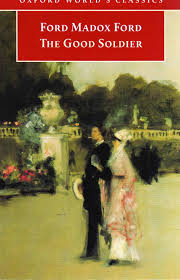
100 Best Novels Guardian list, 20th century Literature, Book review, First World War, Ford Madox Ford, The Good Soldier

The Good Soldier by Ford Madox Ford, 1915

This novel has an utterly misleading title. Ford claimed ‘The Good Soldier’ was his publisher’s idea, as an alternative to ‘The Saddest Story’, which may not have caught the public mood, but the commercial appeal of a novel published in 1915 about a ‘good soldier’ must have been hard to resist. Why not go the whole distance and call it “Brits beat the Hun”? It would have had as much relevance.

My main reaction while reading, and on completing, this novel, was one of irritation. The fallible narrator may have been innovative for its time (was it really?) and the fractured timescale may even have seemed daring, but 100 years on these features cannot disguise the novel’s many weaknesses. The characters are spoilt, deluded, and ignorant, yet we are invited to admire them despite their manifold flaws. The narrative lacks pace and interest, and the language plods.

To take a step back, this novel tells the “saddest story” of two couples who meet on vacation in Germany. The Dowell’s are wealthy Americans on what develops into a long-extended honeymoon – having married without her parent’s permission, Florence develops a spontaneous heart condition as soon as she boards her transAtlantic liner, a condition that conveniently means she is unable ot consumate her marriage without the exercise putting her life at risk. Her husband, our narrator, relates this all with a straight face, seemingly unaware that he has been duped. They meet the soldier of the title, Edward Ashburnham, and his wife Leonara. Edward’s occupation is incidental of the events of the novel; he seems to have one of those Army positions that involve minimal amounts of soldiering. He is wealthy, but profilgate, a drinker, gambler, and womaniser. His wife detests him, but is forbidden by her Catholic faith from divorcing him, so instead devotes herself to torturing him. Deeply unhappy, Edward and Florence eventually separately kill themselves. The narrator insists to the bitter end that Edward is a good man, but the evidence to the contrary is overwhelming.

This novel is about these two unhappy marriages. At the heart of their unhappiness is, inevitably, sex. Ford is unable to address this issue directly, so he employs a wide range of euphemisms to hint at the issue:

“It was the ship’s doctor who discreetly suggested to me that I had better refrain from manifestations of affection. (83)

“I must never enter her room without knocking, or her poor little heart might flutter away to its doom” (84)

“It will give you some idea of the extraordinary naiveté of Edward Ashburnham that, at the time of his marriage and for perhaps a couple of years after, he did not really know how children are produced” (136)

“he passed the night in her bed”. (147)

“From the moment of his unfaithfulness….she never acted the part of wife to Edward.” (163)

“Watching Edward more intently and with more straining of ears that that which a cat bestows upon a bird overhead, she was aware of the progress of his passion….She was aware of it from the way in which his eyes returned to doors and gateways; she knew from his tranquilities when he had received satisfactions.” (163)
I particularly like the last of these – note the plural ‘satisfactions’.  Our narrator seems unperturbed by his wife’s machinations to avoid sex with him, hinting that this is because he may discover that she is not a virgin, and later in the novel accepts her infidelity without complaint. He is a deeply unappealing character, and is rewarded at the end of the novel with another ‘partner’ he is unable to sleep with.
‘The Good Soldier is in many ways a transitional novel, bridging the gap between the Victorian novels where sex was never mentioned, and anticipating Lawrence and the other authors who finally shrug off this constraint. He is also a modernist in his style. He adopts a very conversational style, attempting to mimic the way Dowling may have written a personal narrative were he to have existed. He anticipates any criticism of this style by explaining it thus:
“I have, I am aware, told this story in a very rambling way, so that it may be difficult for anyone to find their path through what may be sort of a maze. …I console myself with thinking that this is a real story, and that, after all, real stories are probably told best in the way a person would tell hem. They will then seem most real” (167). Apart from being rambling, Ford obviously also though that repetition was key to this conversational style. (If he is right, conversations with him would have been pretty dull!) Time and again Dowling repeats himself without variation, as for example here:
“I should marry Nancy if her reason were ever sufficiently restored to let her appreciate the meaning of the Anglican marriage service. But it is probable that her reason will never be sufficiently restored to let her appreciate the meaning of the Anglican marriage service” (212). The difference between bad writing, and deliberately bad writing to convey character is of course important, but over the course of a whole novel the point is lost. The novel also uses the technique of telling the reader the eventual fate of the characters early on, rather than leading up to this, a technique which strangely seemed quite new when Muriel Spark used it in the “Prime of Miss Jean Brodie” fifty years later, but which here simply seems confused.
One last thought: there’s very little humour in this novel, but one line did stand out, when the narrator comments on Edward’s soldiering:
“Edward ought, I suppose, to have gone to the Transvaal. It would have done him a great deal of good to get killed”. (156/7)


Standard
100 Best Novels Guardian list, 20th century Literature, Book review, Booker Prizewinner, Disgrace, J M Coetzee

Disgrace, by J M Coetzee, 1999

Disgrace follows the downfall and disgrace of David Lurie, a lecturer in Communications at Cape Town University. He is 52 and twice divorced. His job at the university has recently been redefined, prefiguring some of the significant changes in South African society that form the backdrop to and context of this novel. Lurie has a brief affair with one of his students. The descriptions of the sex between them are carefully constructed to make it clear that this is an abusive relationship. They are shown from Lurie’s perspective, but even he, delusional about his attractiveness though he is, can still understand that what he does with Melanie, his student, is wrong. He sees her as “A child! No more than a child” (20). All the descriptions of Melanie emphasise her youth and immaturity, and her passivity towards a man old enough to be her grandfather. The descriptions of their sex, even though filtered through Lurie’s distorted perspective,  makes it utterly unambiguous that her consent is either not given, or given under pressure and protest:
“She is too surprised to resist the intruder who thrusts himself upon her… “No, not now!, she says, struggling” (20/21).
Lurie may fool himself that he is being a sexual adventure – “I’m going to invite you to do something reckless” (16) but the reader is left in no doubt that this is a sexual assault:
“She does not resist. All she does is avert herself; avert her lips, avert her eyes. She lets him lay her out on the bed and undress her… little shivers of cold run through her. Not rape, not quite that, but undesired nevertheless, undesired to the core. As though she had decided to go slack, die within herself”. (Interesting use of the phrase “lay her out” as opposed to “lay her” for example, with the suggestion of her being like a corpse, laid out by an undertaker.
As soon as the ‘relationship’ is exposed, an unrepentant Lurie is sacked. He goes to live in the South African countryside with his daughter, Lucy, who runs a small holding a dog kennel with the assistance of Petrus, a worker on her property. Petrus’s status changes during the course of the novel. South African was still in transition at this point, moving slowly away from being the country of apartheid where white people held all the positions of responsibility and own much of the land. This transition is embodied by the changes in the relationship between Lucy and Petrus. He starts the novel as her employee (“I am the gardener and the dog-man” (65) but by the end he is a landowner and has proposed a form of arranged marriage with Lucy, which she seems minded to accept, as a form of protection.
The dark centre of the novel is a disturbing and distressing attack on the Lurie family, where Lucy is raped by 3 black men during a home invasion. Her father is shamed by his inability to protect his daughter, and puzzled by her passive acceptance of what has happened to her. She refuses to report the rape, and appears to accept as inevitable that it will happen again, and that there is nothing she can do about it. Her father urges her to leave the smallholding, but she refuses. Coetzee doesn’t offer any simple explanations for this puzzling refusal. Lurie speculates that her response is an example of ‘white guilt’, where the sins of the apartheid era are expiated by the subsequent suffering of the white community: ‘


“But why did they hate me so? I had never set eyes on them.’
‘It was history speaking through them…A history of wrong. Think of it that way, if it helps. It may have seemed personal, but it wasn’t”.
The reader is invited to draw parallels between Lurie’s behaviour towards his students and the mixed race prostitutes he frequents at the start of the novel, and the subsequent rape of his daughter.


I get that. The parallels are pretty unavoidable and frankly heavy-handed. White people in apartheid South Africa (and of course elsewhere) abused black people, and the response of the black men who rape Ellen, while not excused, have to be seen in that historical context. That, anyway, has been the typical reading of the novel in most reviews and analysis. (For example, the London Review of Books review summarises this question thus:’ Lucy decides not to press charges, believing that this rape, in the South African context, is not ‘a public matter’. In the face of irresistible historical change – the collapse of a corrupt order – the claims of the individual are necessarily of secondary importance, even irrelevant. http://www.lrb.co.uk/v21/n20/elizabeth-lowry/like-a-dog)


But I am not buying that, not for one minute. Rape is rape, irrespective of race, and in creating a female character who appears to accept that being raped is the price she has to pay for retaining her home, Coetzee comes perilously close to suggesting that some forms of sexual assault can be understood if not condoned. There is no place for white people in South Africa unless they can come to terms with the retribution that is coming their way, Coetzee seems to imply when he puts these words into Lucy’s mouth:  


“What if rape is ‘the price one has to pay for staying on? Perhaps that is how they look at it; perhaps that is how I should look at it too. They see me as owing something. They see themselves as debt collectors, tax collectors. Why should I be allowed to live here without paying? Perhaps that is what they tell themselves.


This is not a didactic novel, far from it, but I have not found in any reviews any other explanation of Lucy’s response. But she is not a cardboard cut-out, allegorically representing white rule in South Africa; she is a strongly realised character, whose response to her attack is upsettingly realistic in all other respects.


There are two other important themes running through the novel which I ought to mention. Firstly, there is the question of human attitudes towards animals. Lurie volunteers in an animal shelter, in which his main role is in helping euthanize the unwanted dogs and cats brought into the refuge, and then disposing of their bodies. Coetzee suggests that a value of a society can be judged by the way it treats its pets; Lurie redeems himself by treating the dogs kindly, including respecting their bodies when they come to be incinerated. This echoes an earlier comment by Lucy when she foresees herself stripped of any status and value in South African society, “like a dog”. By this point in the novel we have come to treat sceptically anything Lurie says, so when he argues that “as for animals, by all means let us be kind to them. But let us not lose perspective. We are of a different order of creation from animals. Not higher necessarily, just different. So if we are going to be kind, let it be out of simple generosity, not because we feel guilty or fear retribution” (74).


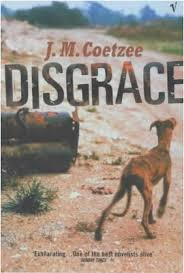
This is not just an argument about how people treat animals, of course – the phrase “different order of creation” was used by those who sought to justify slavery and apartheid.  In a final, deeply pessimistic scene, Lurie sacrifices a dog who he had formed an attachment to through an apparent shared enjoyment of music. It is not by accident that the cover illustration of most editions of this novel feature a picture of a dog.


The other less successful theme is Lurie’s plan to write about Byron, more specifically a light opera about Byron’s sexual adventures in Italy. He plans to orchestrate this using the banjo, which is obviously intended as a way of illustrating the absurd gap between his view of the world and reality. It sets up some uncomfortable contrasts between Lurie’s meditations of 19th century romantic womanising, and his own delusional view of himself.


I can admire the skill involved in constructing ‘Disgrace’. The carefully ambiguous title probably merits a separate blog entry all of its own, given the multiple things that are considered or treated as disgraces in this novel. But the central characters are unlikeable – Lurie in particular is something of a narcissistic monster (his reaction when told his daughter is pregnant is to consider the impact this will have on his sex life: “What pretty girl can he expect to be wooed into bed with a grandfather”) (217) or under-developed. Lucy is real enough, but trapped inside Lurie’s perspective we never get close to understanding what makes her tick.  There’s one ultimate test I always apply when evaluating a novel – would I read something else by this author? And my response here would be as of now, no, although I reserve the right to change my mind!
Standard