
“Every life is in many days, day after day. We walk through ourselves, meeting robbers, ghosts, giants, old men, young men, wives, widows, brothers-in-love, but always meeting ourselves.”
‘Ulysses’ was a hard read, 933 pages of 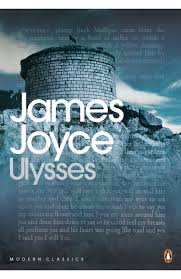 complex, allusive text, full of echoes, references, challenges and puzzles. Reading this novel passively, without paying full attention, is pretty pointless, and even with three weeks of concentrated reading, most readers, myself included, working without the benefit of one of the many guides available, will probably only scratch the surface of this novel’s complexity.
The novel’s reputation as being unreadable, on the other hand, is unjustified. A parallel with Shakespeare’s prose might help – Shakespeare is often described as being hard to follow, but if you take care and pay attention there is little in the canon that can’t be understood by a native speaker. ‘Ulysses’ is the same. (Incidentally, Shakespeare, and specifically Hamlet, echoes repeatedly throughout the novel)
Take Molly Bloom’s stream of consciousness chapter at the end of the novel. Joyce attempts to capture Molly’s thoughts as she drifts back off to sleep after being woken by Leopold, returning worse for wear from his adventures. Her thoughts range widely from her childhood memories to the events of the day. We all know that as we fall asleep our thoughts become incoherent and even bizarre. But the thread of Molly’s thoughts can almost always be followed, if one takes the time to do so.
“and Gibraltar as a girl where I was a Flower of the mountain yes when I put the rose in my hair like the Andalusian girls used or shall I wear a red yes and how he kissed me under the Moorish wall and I thought well as well him as another and then I asked him with my eyes to ask again yes and then he asked me would I yes to say yes my mountain flower and first I put my arms around him yes and drew him down to me so he could feel my breasts all perfume yes and his heart was going like mad and yes I said yes I will Yes.”
Remove some of the conjunctions, add in a full stop or two, and this is a simple memory of her first kiss and more. It is a lovely memory to close the novel, life affirming and positive.
I first read ‘Ulysses’ several decades ago, and had inevitably forgotten large chunks of it – although I was surprised at how much still remained familiar, most strikingly the chapter Nausicaa. Here Leopold watches poor lame Gerty MacDowell, on the rocks and on the shelf. This is a wonderful, tender portrait of a delusional young woman, affecting to feel superior to her friends, but sadly unable to wish away of her lameness, which is likely to make it difficult for her to marry and have children. Equally I little realised how much Stephen Dedalus’s thoughts on Shakespeare in chapter 9, Scylla and Charybdis had influenced much of my own thoughts (not really mine, Stephen’s/Joyce’s) on the subject.
Other chapters are less accessible. Chapter 12, Cyclops, includes streams of legal jargon, biblical passages, and elements of Irish mythology, and Chapter 14, Oxen of the Sun, is bravura attempt to capture the entire history of the English language, from latinate prose to Anglo-Saxon alliteration. It ends in a long paragraphs gibberish, which I will be kind and avoid quoting. I think Joyce is predicting the decline of the language into a yahooish form of slang, but I could be missing the point?
The character of Leopold Bloom is at the heart of the novel. He doesn’t appear until chapter 4, and often slips out of view, but is a likeable, easy going chap. His wife is being unfaithful to him, but he doesn’t seem to mind very much. His thoughts touchingly often wander back to the death of his baby son Rudy. He is subjected to anti-semitic abuse, but doesn’t let it get him down, and pursues his narrow life and interests with an amiable persistence. The drawer of memories and effects that he reflects on at the end of the novel is a little pathetic, but Poldy is an everyman who bounces back and survives, a humanist but puts up with being christened three times, a pacifist prepared to stick up for himself, and a bit of a dirty old man. He makes the novel ultimately worthwhile.
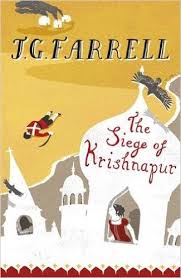 you would not know that from reading this novel. The narrative perspective is entirely from the point of view of the ‘plucky’ British settlers. The Indian people who appear in the novel are either cannon fodder, mown down in their thousands by the plucky British defenders, or ridiculous caricatures, such as the entirely dumb ‘Prime Minister’. Even the Sikhs who loyally refuse to join the rebellion are given non-speaking parts and diminutive nicknames.
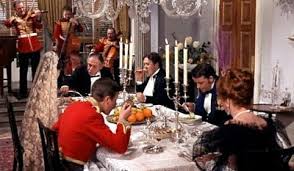 ulously in the Raj, keeping up the croquet on the lawn, tea parties, and cucumber sandwiches while the natives rebelled isn’t particularly original funny – Carry on Up the Khyber made the same point far more succinctly five years earlier.
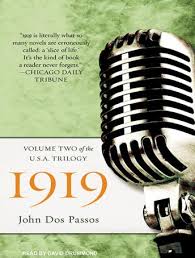 , I just don’t have the appetite for another 800 pages of this trilogy. The novels are intended to stand alone and I am going to take the author at his word on this (even though many online reviews argue that reading the whole trilogy is the only way to properly appreciate its constituent parts).
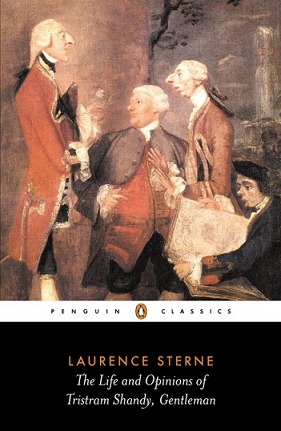 If you type ‘Tristram Shandy’ into the search field on WordPress’s “Reader” pages, you will be presented with a large number of results. Look more closely, and it turns out that for every review of Sterne’s ridiculous, extravagant, often nonsensical novel, there is another post lamenting its unreadability. I sympathise. ‘Tristram Shandy’ was published over the course of eight years (1759-1767), so reading it now over the course of a week is a very different experience. It is a pointedly experimental novel: if ‘Tristram Shandy’ was a radio programme, it would be The Goons; if it was a television show it would be The Mighty Boosh; if it was a painting it would be something by Dali or Magritte (whether these comparisons are compliments or criticisms is of course a matter of personal taste).
 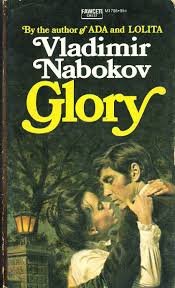 revolutionary Russia.to Switzerland and thence to England. In London he meets the Zilanov family, expatriate Russians like himself, and falls for their teenage daughter, Sonia. At Cambridge University he becomes friends with Darwin, a war hero and published author, now a fellow student. Cambridge is a period of restlessness for Martin – he finds it hard to settle on a field of academic study, or an occupation thereafter. His family is sufficiently wealthy for this to not be too much of a problem. A summer working as a farmhand in France does not quieten this restiveness. Slowly a plan forms in his mind – to return undercover to Soviet Russia. A search for glory will quieten his dissatisfaction with life. The precise purpose of this perilous journey is never articulated, and remains a mystery to Darwin even when Martin reveals his intended journey.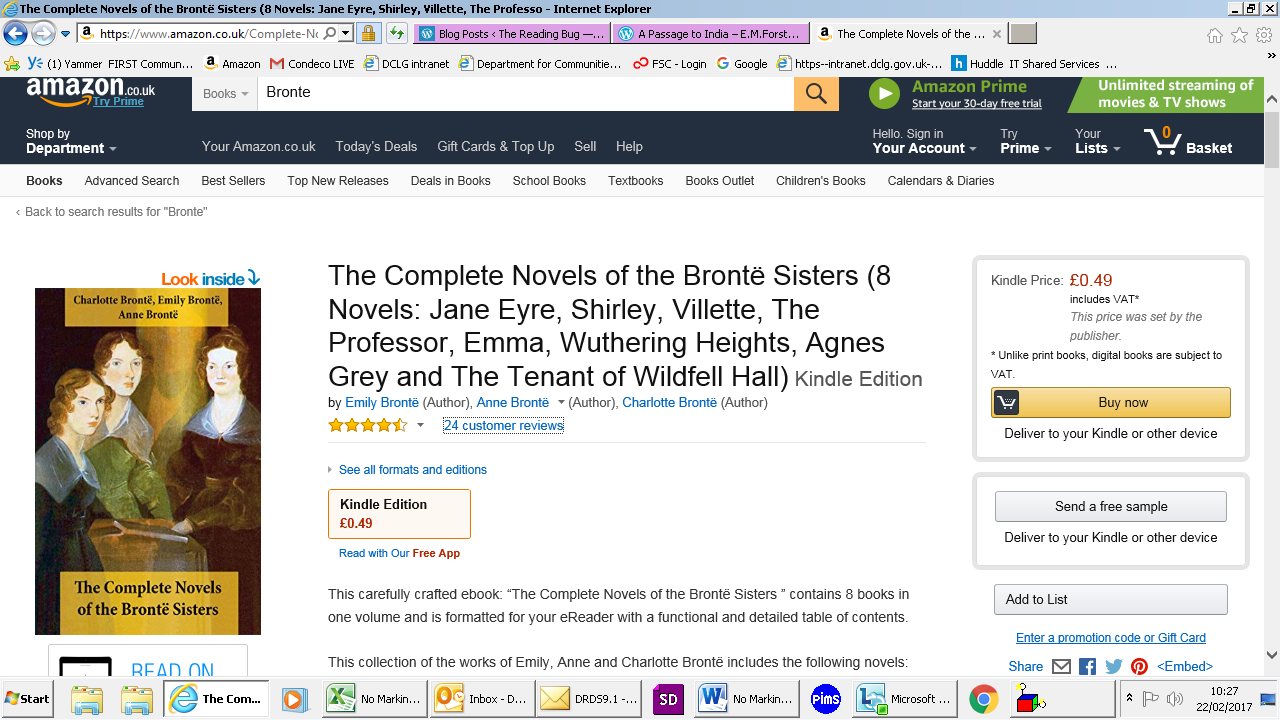
 The Reading Bug
What makes a novel unreadable? We all have our own breaking points – I may have just have found mine. This post explores the features of ‘The Golden Bowl’ that are making it, for me, almost unreadable.
“He found it convenient, oddly, even for his relation with himself—though not unmindful that there might still, as time went on, be others, including a more intimate degree of that one, that would seek, possibly with violence, the larger or the finer issue—which was it?—of the vernacular.“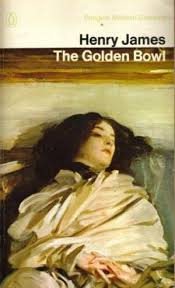
Here’s another example from the same novel:
‘The things, or many of them, that had made Mr. Verver what he was seemed practically to bring a charge of waste against the other things that, with the other people known to the young man, had failed of such a result.”
I am sure it is possible to parse these sentences, particularly with the benefit of the surrounding context, but this level of complexity made reading chapter after chapter exhausting.
2. Paragraphs
What makes some novels harder to read than others is often a matter of personal taste. For me, paragraphs are one such feature. Paragraphs are like decent broadband or clean tap water – something we usually take for granted, but boy we don’t half miss them when they aren’t there. ‘The Golden Bowl’ has some paragraphs, but far fewer than it needs. Reading page after page of text uninterrupted by a paragraph break, indeed uninterrupted by a change of thought or pause for breath, can be tiring and tiresome.
3. Subordinate clauses and qualifiers
Another question of personal taste involves the use of subordinate clauses and qualifiers. There’s nothing wrong with these in the right place, but James seems unable to write a single sentence without, as it were, a subordinate clause. In most cases they serve little purpose, as in the previous sentence. Take it out and the meaning is unchanged. Was this just a habit, a feature of his literary style that he found it hard to shake off, or was something more complex going on? I am usually keen to give authors the benefit of the doubt and assume that they will have noticed when they are doing something that might annoy the reader, and that they have good reason to do so. I assumed on that basis that James was using this style to tell us something about the equivocating, ambivalent character of Prince Amerigo: