
Read in Picador edition as part of “The Four Great Novels”
Dashiel Hammett’s “The Maltese Falcon” (1929) is a devastating critique of the American Dream. Often seen as a straightforward detective novel, a closer contextual reading reveals a damning indictment of American capitalism and society.
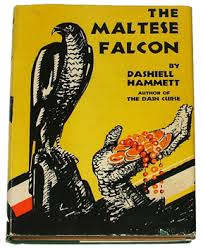 At the heart of the novel is the quest for the Maltese Falcon, an elusive golden statute encrusted with highly precious stones. The falcon is never seen, never found, always slipping through the hands of the pursuers and melting away, like the proverbial pot of gold at the end of the rainbow. There is little evidence it actually exists, but the treasure hunters seek it obsessively, and great financial and physical cost to themselves. What is this if not the perfect metaphor for the American Dream, the promise of wealth and happiness that so many Americans pursed (and pursue) but can never quite attain? When the gang think they have at one point found the statue, it turns out to be a fake, lead instead of gold. Hammett is surely saying that the American Dream, like the falcon, is a myth and a fake.
In Hammett’s prohibition-era America, society is unjust and intolerant. The police in Hammett’s novel are incompetent and corrupt, agents of a corrupt and unjust society. At one point Spade tells Iva, Archer’s widow, in relation to talking to the police “Maybe it’d be best to say “no” right across the board”. This was Hammett’s response (in effect) when question by the McCarthy investigation into communism in the arts in America in the 1950’s (to be precise, he pleaded his 5th Amendment rights to all questions”) a stance which eventually landed him in jail. The novel ends with Spade turning his lover into the police, and turning his back on love, another rejection of the romantic illusion of middle class life.

