
Some reasons for reading (or re-reading) Helen Fielding’s Bridget Jones’s Diary:
- it’s the perfect ‘guilty pleasure’ novel
- it doesn’t take itself seriously
- the pop culture references are fun
- the jokes work
- Bridget is highly believable and relatable.
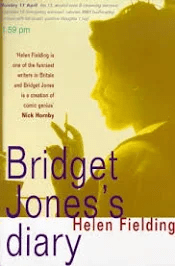
Bridget Jones’s Diary originally appeared as a weekly column in the Independent. Bridget is in her early thirties and when the novel opens she is single and looking for a partner. These are the mid-nineties, long before online dating, so she has to find a boyfriend the old-fashioned way – at work or through family and friends. While she rejects the concept of a ticking biological clock, being single into old age is something that preys on her mind.
She doesn’t remain single for long however. Her mother’s attempts to set her up with a family friend, Mark Darcy, at Una Alconbury’s New Year’s Day turkey curry buffet fall flat, but she succumbs instead to the charms of her lecherous boss Daniel Cleaver (the casting of the film version of the novel was inspired in giving this role to Hugh Grant, who is name-checked in the novel, and the role of Mark Darcy to Colin Firth, who of course played Darcy in the television adaptation of Pride and Prejudice, also mentioned in Bridget’s diaries). Daniel is the universal bad boy, who ignores Bridget, insults her, refuses to take their relationship seriously and unsurprisingly cheats on her. Mark is there to pick up the pieces, of course.
Bridget is an immensely likeable character. Her diaries chronicle her insecurities and her struggles with her various demons (jobs, weight, drinking and smoking), but she has a strong network of friends who support her through all her relationship and career crises. Bridget’s parent’s relationship struggles provide a form of chorus or background to her own. The novel’s parallels with Pride and Prejudice are not over-emphasised and are done just cleverly enough to be funny without being smug. Like many novels, films and programmes from the nineties, there are aspects of the diaries that haven’t aged well. Sexual harassment in the workplace is treated as a joke and Bridget’s gay friend Tom is referred to using a slur that is now widely considered offensive. There are no black characters despite the novel’s London setting, and some people have found Bridget’s focus on her weight problematic.
This is one of the small category of novels where the film adaptation is so superior to the original that it is hard to read the novel now without having the film scrolling in the background of one’s mind, hearing Bridget’s diary as voiced by Renee Zellweger, and envisaging the costumes, settings and minor characters as portrayed in the film. I don’t think that’s a problem at all – the novel gains from the film rather than suffering from the comparison, allowing the reader to skip over the bits that don’t work (for example Bridget has a redundant brother in the novel who is mentioned but doesn’t appear, so was rightly edited out of the film).
Bridget Jones’s Diary is sometimes credited as being the first ‘chick-lit’ novel (Wikipedia describes it as “the ‘ur text’ of chick lit”). But the term is a fairly dismissive not to mention sexist characterisation of a genre and the term is little used nowadays, thankfully. Usually reading the source novel of a film reveals some interesting differences, but in this isolated instance I think if you have limited time I would recommend the film over the book.


Very interesting… I thought the book was a lot better than the film! I thought the film made Bridget more of a bumbling character for comedy’s sake and the story was more of a conventional rom com.
LikeLiked by 1 person