
I make no claims to being an expert on the life and works of George Orwell, even though at one time or another I have read almost everything he wrote. And that’s saying something – he wrote a lot, earning his living from his journalism for much of his working life while at the same time writing novels, other books and endless letters to friends and relatives. But in reflecting on Orwell’s life and work it occurred to me that there was one distinctive feature across many periods of his life, and that was his tendency to remove himself from his social sphere and go into exile of one form or another.
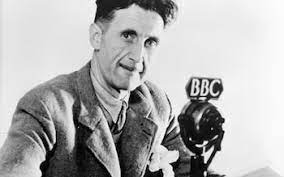
The most obvious example of this was his decision to join the Burmese Imperial Police when he left Eton, instead of following the more traditional path of university. The conventional wisdom behind this choice is that it was a combination of academic failure – his tutors simply thought he was not clever enough to go to Oxford or Cambridge, and it is implied that any other university would be beyond the pale – and parental pressure. Orwell father had worked as a Sub-Deputy Opium Agent in the Opium Department of the Indian Civil Service, overseeing the production and storage of opium for sale to China. There were other family connections to the far East – his mother had grown up in Burma and there were still relatives living out there. So the traditional of working in the service of the Empire was strong in Orwell’s family, and he succumbed to this pressure in the face of limited other options. A memoir by a childhood girlfriend, Jacintha Buddicom, (Eric and Us) suggests that a failed romance may have also played a part in this decision. However it came about, Orwell spent several years in Burma, years memorably recorded in fictional form in Burmese Days and in non-fictions essays such as A Hanging and Shooting an Elephant.
His return to the UK at the end of his service didn’t last long. Unable to settle he moved to Paris where he lived and made his early attempts to make a living out of being a writer, the main result being Down and Out in Paris and London. A blizzard of casual and temporary jobs followed for several years, as Orwell lived a fairly itinerant lifestyle, always having his parents home in Suffolk to fall back on when necessary.
His journey to the north of the UK to investigate the poverty that formed the core of The Road to Wigan Pier could be seen as another form of internal exile. Certainly his decision in 1936 to move to Wallington, a small village in Hertfordshire, and open a shop can only be seen as an attempt to escape the pressures of living and working in London, but must also have left Orwell and his wife isolated from friends and family. On a map Wallington may not look that far from London, but it is still a fairly remote village with a population of less than 200, and must have been all the more remote in the 1930s. I can’t be sure how much Orwell lived in Wallington and how much he used it as a base, but I think it was a sanctuary.
Jura, where Orwell wrote 1984 and spent the final years of his life following his first wife’s death in 1945, is as remote a place as you can find in the United Kingdom, and was clearly yet another attempt to remove himself from everyday associations and allow him time to write. In terms of his health it was of course a disastrous choice, but you could not ask for anywhere more remote.
What does this mean for our understanding of Orwell’s work. Was he just someone who was socially awkward and seeking isolation? Perhaps but I don’t think that’s the whole story. He spent so long trying to escape from his class, which marked him clearly by his accent, his dress, his manners, and never wholly succeeded. To be honest I am not sure whether this urge for isolation is reflected in his work at all. His main characters are often socially isolated – look for example at Winston Smith, trapped in his own private hell, having to maintain a façade of party loyalty to his neighbours and co-workers – but is that enough? Perhaps it was more a reflection of Orwell’s personality that wasn’t translated onto the page at all. But I don’t think other readers have highlighted this feature of his life before (I appreciate that is almost certainly wrong – what I should say more accurately that a short internet search hasn’t produced any likely looking results for ‘Orwell in Exile’) and it might be an interesting lens through which to look at his work.


I thought he went to Jura for the fresh air tohelp him recover from tuberculosis?
LikeLike
I think that was the plan but it didn’t work out for him sadly.
LikeLike
Sometimes retreating from society is a good thing.
LikeLike