In the second volume of his autobiography (although “reminiscences” would be a more accurate description) Fry mentions performing in “All’s Well that Ends Well” in Queen’s College, Cambridge. I saw that performance, and while I have no memory whatsoever of “our hero” I think the odds are I must have seen him in it too. So that’s my personal connection with this book, for what very little it is worth.
If you had asked me a few days ago what the title of this book was I would have fought you to the death in defence of it being “Moab was my washpot”. Why the mental auto-correct? Obviously it’s in part the visual echo between “was” and “washpot”, but also it’s in the past tense, which is where biographies and their titles belong, in the “As I Walked Out one Midsummer Morning” category. The biblical reference is kind of explained in this edition – I reread the quasi explanation a couple of times, but am still none the wiser, and the intended impression of look at me cleverness is clearly quite deliberate.
There isn’t really a criticism of the Stephen Fry aged approximately 4 to 20 you can make that he doesn’t make of himself in the book, in a way becoming immune to such criticisms as he goes. Of course he was insufferable, profoundly irritating, dishonest and despicable towards his loved ones. Guilty as charged and yet still quite pleased with himself. Fry had as you can imagine a very privileged childhood, although he portrays it as ordinary. This is in part defensible – to him it was ordinary – but he must have enough experience of normal life by now to know that having servants in the 60’s (for example) wasn’t normal. The prep and public school experiences dwelt in in this book are however banal, I’m sorry to say – the only remarkable thing about them being that this way of life was thought worth preserving into the 1970’s and beyond, and that he thinks we will find the arcane details of the schools’ invented languages and rituals in any way interesting. Similarly his numerous digressions, which give the impression of existing simply to fill the space available, are a soapbox on which he is able to argue for his various opinions, haranguing the reader without allowing any genuine room for dissent or doubt.
Autobiography that is a careful attempt to massage perceptions of a public figure are always going to happen – don’t hate me, I am ordinary really, look at these pictures of me in short trousers on the beach at Southend etc – but this book is more subtle than that. Describing at almost all times a rather unpleasant little oik is a strange way of garnering public affection, but we forgive him almost everything (as do his saint-like parents and family, and virtually every other authority figure he comes across). He had a QC to present his mitigation at his sentencing hearing in the Magistrates’ Court for goodness sake! This forgiveness is manipulated principally by the alchemy at the end of this book – somehow the A-level failing, prison-sentence serving, obsessive thieving has been transformed into a hard working genius who gets a scholarship into Cambridge after only one year’s study, a transformation which is his responsibility alone it seems. I don’t buy that. It is the one part of the book where there is obviously a whole lot more going on that we aren’t told about. At other points he is clear that he changes details to protect the innocent – maybe some journalist will one day dig out what really went on over those months.
I have managed to get this far without using the “national treasure” description, which is quite an achievement, so there you have it. As such Fry is immune from any criticism, and good luck to him for it – let’s just hope he uses his immense power for good, not to protect public schools, fox hunting and the royal family. I worry about a day in 20 years when he is in the House of Lords lecturing us on how things were better in his day, when schoolboys were taught Greek before breakfast, where sex abuse was seen as part of normal school boy development (the description of his “deflowering” even when sanitised in its description, is not for the faint hearted) and all good fun, and the poor knew their place, good for a comic turn now and again but not much more. You really want a happy ending for Fry, you really do, but does he deserve it?
I had to mark Terry’s passing last week. he went out in great style, tweeting a mini-short story featuring his greatest character (?), Death. It was just the perfect ending.
I’ve been reading Sir Terry since the mid 80’s, and pretty much everything he wrote. The DiscWorld series of some 40 novels is a comic creation of the highest order – I see back in the day he came 15th on my all time list of favourite writers, which isn’t bad but feels a bit low in hindsight.
Some memories of Discworld – on a train back from a union meeting or conference in the 80’s, god knows where, with several colleagues in their 20’s all getting drunk and being silly as you do. I got the Pratchett novel I was reading at the time, and one of the women in the group (yes, there were women trade unionists in the 80s) picked it up scornfully, as if it was toxic, and said “So you actually read this kind of stuff do you?”. Now to be fair in those days the paperbacks covers came illustrated in a fairly childish manic manner (see below) which suggested pretty strongly that these were children’s books – which I don’t agree with for one minute – so the reaction was understandable, if still a bit condescending. Fast forward ten years and a friend came to visit, him an Oxford PhD and all, and he got out his hardback copy of the latest TP, which happened to be “Hogfather”. At the time, having a young family I was saving a few quid by buying the novels in paperback, which were published when the latest hardback came out – so I was always about 6 months in arrears. A hardback Pratchett struck me as a single man’s indulgence, although I hope I had enough sense not to say so!
Reading TP was – and is – an interesting experience. Without any effort at all I can consume the books in a matter of hours, the rest of the world fading out for that space of time. But strangely the plots rarely stay with me. That means of course I can enjoy re-reading the novels, but I think it says more than that. I think with Pratchett the plots are not that important – the scenario, yes, but the details of who does what to who, less so. With Pratchett it will always be character that is king. And what a cast of characters he developed, captured simply in a line or two – Ook – each utterly distinctive. For Terry there seems never to have been such a thing as a minor character – almost everyone is developed with care and attention to detail, so that Foul Ole Ron for instance or CMOT Dibbler are easily remembered and with as much affection as Vimes or Veterinari.
Lastly his books entertained because they are bursting with ideas. Often the ideas are thrown away quickly enough, but there is always another along quickly to take its place. He created a wonderfully completely realised universe and tackled contemporary issues seriously and effectively. You never got the sense that Pratchett was dialling it in or just writing another Discworld novel, and even in less effective novels you can see what he is trying to do. With “Raising Steam” we see Discworld beginning to come to terms and be comfortable with modern technology, which was an optimistic was to end. I think there might be an unpublished 41st in the series to come, which will be bittersweet.
I hate to end on a down-note, but I have to say this. Elsewhere I have slated the Long Earth novels Pratchett co-wrote with Steve Baxter. I have expressed doubts about the extent to which Sir Terry did more than lend his name to these books. I may of course be wrong, but there is more humour, wit and imagination in the name Moist von Lipwig alone than there is in the whole Long Earth series. So I don’t hold them against him!
This is the inevitable sequel to the Long Earth, which I reviewed last year.
In case you have forgotten, in the first novel a multiverse of parallel earths – the Long Earth – is discovered, along with the ability for humans to travel quickly and simply along a sequential series of earths. Its not quite clear how people “step”, nor why a process in Book 1 which is restricted to the movement of a small amount of material can now in Book 2 be accomplished at speed in great airships.
The novel charts a series of voyages across the Long Earth in search of various goals. And there’s the first of many issues – the different journeys recorded here are not clearly linked. The narrative switches between them at frequent intervals but the process of drawing them together, both thematically and in terms of their eventual outcomes, is pretty tortuous. The novel also struggles to find a theme – is it the relationship between humans and the other sentient species it discovers? (Strangely man has never evolved other than on Datum (the original earth) even though the novel is insistent that each earth is very similar to its neighbour save for small deviations, which over time lead to more significant changes (e.g. sentient dogs).) Or is it a rerun of the colonisation of North America, where the settlers gradually asserted their independence from the tax levying home country? Other weighty themes, on mortality and the uniqueness of the self are introduced but not pursued with any determination. The Long War promised in the title, a war across the parallel universes between man and trolls or settlers and state fizzles out with a shot being fired, thereby acting as a neat metaphor for the novel itself.
When you think of a typical terry Pratchett novel what do you envisage? A well developed, in fact a probably very cleverly thought out, plot, inventiveness in language, ideas, characters and plot development, well written fun to read prose, and above all else, wit. Witty turns of phrase, characters, plots. Characters that having been developed over several novels have come to have a life of their own, be it Sam Vimes, Granny Weatherwax, or Lord Veterinari, all the way through to the minor characters such as Cut-Me-Own-Throat Dibbler. None of which can be found here. No humour, no wit, no inventiveness, just more and more “stepping” and minor variations on the world before.
Clearly there is very little Pratchett here, or at least I hope so, and his name has been leased to build sales. Cynical but understandable. What worries me most is how many more volumes of this endlessly recyclable stuff is stored away for future publications, eventually becoming “based on an idea by”. The Tolkien estate is still generating apparently new content under the JRR brand decades after his death, so I can only assume the same will happen here. Which is a pity, a real pity.
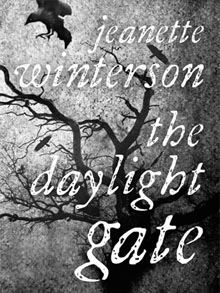
“When shall we three meet again” – daylight of course, it’s such a nice witchy time of day isn’t it?
What am I talking about? Something that has really bugged me about this novel, apart from everything else I wrote about earlier, namely the title of the novel. It tells you nothing about the subject matter, which is mildly irritating, but nothing out of the ordinary. But why daylight? In the novel there are a couple of relatively brief references to the time of day when witches’ occult power is at its highest, and there is no mistaking the fact that this is intended to be a reference to twilight, the point at which day turns to night, and the creatures and spirits of the night begin to emerge. The “gate” in question is a bridge to this other world. “The Twilight Gate” as a title would have made some kind of sense, if only in the context of the novel itself.
But of course the “twilight” word has been thoroughly over-used in recent years, and pretty much franchised out to the werewolf/vampire community. So the editors of this novel must have thought to themselves, “how do we get a slice of that market without directly misleading people into thinking this is a book about teenage vampires with some kind of gate device? I know, let’s use a time of day that sounds a bit like twilight but in fact is nothing to do with it!”
Now I know that doesn’t make sense – if the wanted to just steal some of the teen vampire market they would have just called the novel “The Twilight Gate” and been done with it. This way they have the worst of both worlds – no direct reference to twilight and all the references that come with it, and a title that makes no sense, because daylight is the least witchy, occult, generally creepy time of day imaginable.
![]() |
| Add caption |
I thought long and hard about whether to write this review. On the one hand I have written far too many negative reviews this year, and would much rather write about things I had enjoyed reading. On the other hand, this is supposed to be a record of what I have read, and there’s really no wriggling out of that. Anyway, it is written now so you can judge whether I should have bothered. I feel equally conflicted about the novel itself – while I read it in little more than a sitting, there are aspects of the book that are pretty repellent.
First, some background. Published in 2012, this novel (sometimes described as a novella, although at over 200 pages that isn’t really right) is an imaginative recreation of the events of the Pendle Witch Trials of 1612. The more astute reader will have spotted the coincidence of dates. The Witch trials are probably the best known, mainly due to the record of the trial kept by one of the lawyers, of all the historic persecution of wise women, healers and the like which disfigures this period of history. Winterson mixes in the pursuit of catholics and Jesuits in 17th Century England a few years after the accession of James 1st and Gunpowder Plot. If this wasn’t enough, we also get some references to the alchemists of the period, and almost inevitably Shakespeare has a walk on part.
Broadsheet reviewers really liked this book. The Telegraph reviewer called it a “poetically stylised and visceral read”. The Independent thought it “beautifully written” (which it may well be, but….) and the Guardian reviewer liked it even more, describing it as having “the grisly freshness of a newly exhumed graveyard corpse.” But they avoid some of the more obvious problems with the book. Where to begin? This is very familiar territory – the Pendle Witch trial has been documented in fiction and elsewhere many times. The novel is published by Hammer, the publishing arm of the film company which is known to people of my generation for its Horror B Movies. Hammer has no pretension to being anything other than sleazy, exploitative, salacious, horror. All the tired clichés of the genre are present, down to the Satanic rituals graced by the presence of a priapic “Dark Gentleman” . It almost writes itself, and any suspicion of originality or creativity are missing.
The problems pile up. The abuse of women accused of witchcraft deserves and has received serious feminist analysis. It disrespects the women involved to exploit their stories for titillation. The treatment of sex here is horrifying and hard to stomach, particularly the paedophilia, although the detailed portrayal of 17th century torture techniques is almost as bad. The unlikeliness of this is being written by the author of the wonderful “Oranges are not the only fruit” really confounds me – its like J K Rowling writing for Mills and Boon.
Winterson can’t make up her mind – is this a portrayal of innocent women being tortured and killed as a form of social control, keeping people (obviously, particularly women) in their place? That would be the obvious narrative direction, but throughout the novel witchcraft and sorcery is portrayed as “real” and its invocation forms a central part of the narrative. This is not just a case of deluded old women believing their own confessions, but the reader being invited to accept the reality of magic in many different guises. The Telegraph reviewer mentioned earlier struggles with this, saying: “There is a slightly hallucinatory quality to their efforts to make an exhumed severed head talk that evokes both the macabre and a curious sense of horrified pity. Can their doll-stabbing curses really work? There is a suggestion that they can. But because these women are actually just a means for the authorities to try to get to grander targets – Catholic recusants – their filthy graveyard rites have the pathos of ultimate impotence”. Not really – there is much more than a suggestion that their magic works, and the pain of the Magistrate being targeted by the witches only ends when the figurine they are using is taken from them. They are far from impotent in this novel, even though in reality they would of course have been powerless. (interestingly one of the accused Pendle witches was actually acquitted).
That’s more than enough of the negative. Can I find anything positive to say? Some of the characters are briefly believable, and the quality of the writing is what you would expect of an author of Winterson’s calibre. One simple example – hares stand in fields like question marks – which is exactly right. At points the novel looks as if it is going to break out of the constraints of the known story and have something interesting to say about the persecution of the central character, Alice Nutter, but in the end all the bizarre accusations about here prove to be accurate. I can’t avoid the conclusion that there is a genuinely interesting story here which would respect the memory of those who died. But this isn’t it.
I have had a really bad run in recent weeks – some sub-par McEwan and the execrable Amis – so what led me to pick this one up I am not quite sure. Certainly the cover told me pretty much all I needed to know – US flag on fire, presidential seal, White House with lone figure in background – this is going to be a derivative thriller. Interestingly the cover art for the US version had a much more prominent picture of the White House – I am guessing that American reader won’t need the Jefferson link spelling out so clearly.
Novels of this kind – written for the “if you like this writer why not try this writer” Amazon recommendation algorithm – really shouldn’t apear here – but I did promise to try not to censor myself, and to review my reading good bad or otherwise. Gosh I have even written about books I have read and not written about! So I return to the question I began with – what possessed me to read this? In part it was because this was a gift, and I didn’t want to show disrespect to the giver. Also, I was hoping that this might be one of those “so bad it is good” novels, or even something that was unoriginal but had its merits notwithstanding the genre. Sadly, not – trust the cover.
P.S. One other quibble. One character uses the phrase “a sticky wicket” which as far as I know is not American vernacular. This is a clumsy attempt to give “colour” to a character with a Spanish background – and the text refers to her father funding several Spanish national cricket teams. Now they do play cricket in Spain, Google tells me, but it’s not the traditional home of the sport. Another example of clumsiness which really jarred.
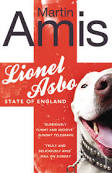
Amis’s obsessive dislike of working class people is given full and free range here – this is a shout of hatred at the underclass of which Amis is clearly afraid. Lionel Asbo is indeed a psychopathically scary figure, capable of extremes of brutality. But his world is equally brutal and atavistic, devoid of any redeeming feature or figure, save the single exception of the pathetic Desmond, who responds to every racist barb thrown his way with a shrug.
I am struggling to find a single positive thing about this novel. Yes, I suppose some of the writing is not bad, but that is a bit like commenting on the lighting in a video nasty. The laziness of the plotting and characterisation is such that if this novel had not been written by Martin Amis I can’t imagine it would have ever been considered for publication. Some critics have kindly assumed Amis is aiming for over the top satire of our celebrity, money obsessed culture. While that may have been the original intention, comparisons with any other form of satire quickly expose this as clumsy and ineffective. I did read to the end, partly out of some kind of morbid fascination. I wanted to know if Amis would have the guts to follow through on the plot lines he had been signalling wildly for most of the second half of the novel – he didn’t, which is probably just as well, but by then I was long past caring. I am not going to spend any more time listing the many things that are wrong with this novel, when I really can’t get past the class hatred.
If you think working class people are disgusting pigs with no feeling, no limits, no taste, no redeeming features whatsoever, this is the novel for you. I need a shower.