21st century literature, Book review, Enduring Love, Ian McEwan

Enduring Love by Ian McEwan

The third of my recent McEwan catch up exercise, prompted by a Waterstones promotion – who says marketing schemes don’t work?

The review I roughed out in my mind mid way through this novel is a very different beast from what I am now about to write. Let me explain.
The principal narrator of the novel, Joe Rose (there are other voices but the bulk of the novel is described from his point of view) is involved in a tragic ballooning accident in which a man dies. A fellow participant in this accident develops an obsessive delusion – that he is in love with Rose – and begins to stalk him.


There are consistent hints throughout the novel that Rose’s account of the accident is flawed. Sometimes these hints are more heavy handed than others The accident victim’s widow is torn apart at the thought that her husband was having an affair, and wouldn’t have been at the site of the accident if he was not having a clandestine meeting with his lover. She sees the accident as a judgment on his fidelity, showing off to his young mistress. We later learn he was not having an affair, and the circumstantial evidence to that effect is explained away innocently. Later in the novel a shooting in a restaurant is shown through Rose’s eyes, but the deconstruction of this incident by a police officer makes it clear that none of the witnesses saw the same thing, even down to what flavour ice cream they ate. There are many more subtle hints that perception is flawed, and that what Rose describes during and after the accident may not be the whole story – in fact, that he may be the delusional one. Even his partner struggles to believe his account of his being stalked, pointing out that the writing on the letters sent to him by his stalker, Jed Parry, looks remarkably similar to his own – one of many such strange coincidences.

I patiently waited for the reveal, the moment at which we learn what “really” happened, the extent of Rose’s self delusion. Rose is a writer on popular science, and digresses at length about the mind’s ability to deceive itself. Surely that is what is going on here – the accident didn’t happen in a way in which he is completely blameless, and has excised any possible suggestion of responsibility from his account.

But it’s not. In a classic double bluff, everything Rose tells us is true. The big reveal is that there is nothing behind the curtain. Everyone else in the novel is deluded or mistaken to some extent or another, including the police, his partner, the widow, his stalker, you name it. The police assume that an attempt on his life, in which a fellow diner is shot in error, was correctly targeted because the victim was the subject of a failed assassination attempt the previous year. Now there’s a coincidence – a contract killing misses its target and instead falls upon a diner at the next table who only months before had been the target of an earlier murder attempt.

Is this McEwan messing with us, setting up expectations only to kick them out from under our feet? I have become so used to the sudden changes of focus in McEwan’s novels, “Sweet Tooth” being a fantastically effective example of this, that to be deprived of one felt wrong.

The novel is not without merit of course. The relationship between Rose and Clarissa seemed genuine. I thought the “going to buy a gun from some hippies” scene was bizarre and out of character with the realism of previous scenes. The digressions on Romantic poetry, popular science, etc were undemanding and integrated well into the overall narrative.

Does love endure? Or is it one big delusion? The only love that lasts in this novel is the product of a psychiatric illness, a delusion that has no foundation in reality. Rose’s relationship with his partner, Clarissa, the portrait of which is one of the principal strengths of the novel, is strong and loving, but does not survive the stress of the stalking and its denouncement. But this novel isn’t an essay on love, more on big game of hide and seek between the author and the reader, with “reality” out there in plain sight all along.
Standard
21st century literature, Black Dogs, Book review, Depression, Ian McEwan

Black Dogs by Ian McEwan

On a walking holiday (and honeymoon) in early post-war southern France, a young idealistic woman, June Tremaine, is terrified by an encounter with two menacing attack dogs. This incident leads in turn to a spiritual experience and changes her life. Surprisingly she decides on an apparent whim to live in France (very near to the scene of the attacK), in the process effectively separating from her new husband, Bernard.

This incident is the kernel around which McEwan winds this novel. Ostensibly a memoir written by June and Bernard’s son-in law, written shortly after June’s death, this novel has a complex narrative structure in which the telling of the tale is delayed time after time. The dogs themselves carry a heavy symbolic burden that they couldn’t quite bear – we know from the early pages that however scary they may be they do not carry out their attack (or at least that June survives to go on and have a family). And in fact it is not the encounter with the dogs which is the turning point in June’s life, but the spiritual epiphany which follows. While we can be gripped and menaced by the dogs, June’s quasi-religious response is not one the reader can easily follow or identify with.

If you have been scared out of your wits, and feel that your survival is a result of divine intervention, and that you need to rethink your life choices as a result – fine – but June’s response, essentially settling in a farmhouse in rural France and having a very nice, fundamentally selfish and not particularly spiritual life for the rest of your days, doesn’t seem to be a coherent response.

The scenes in Berlin as the Wall is coming down, something that obviously has an especial resonance for McEwan, contrast strikingly with the views of France. If a point is being made here – other than the mundane “war is brutalising and nasty” I couldn’t spot it. War has ravaged and damaged France, but the area the couple visit on their walking holiday seems largely untouched, even though the spectral presence of the black dogs is a reminder of the damage the war has done. But other than providing “colour” I didn’t understand why the scenes in Berlin in which the narrator hears a different version of the story of June and Bernard’s marriage needs to have the backdrop of the fall of the Wall.

McEwan can be forgiven some misses among the many hits. This isn’t his worst novel – I still struggle to accept just how silly “Amsterdam” was and is – but others are far more coherent and interesting. I don’t normally do this but one comment from an Amazon reviewer jumped off the screen as spot on – “there is also the idea that McEwan perhaps had a deeper vision he has failed to communicate.”

Standard
21st century literature, Book review, Ian McEwan, Spy stories, The Innocent

The Innocent by Ian McEwan

McEwan is always strong when it comes to evoking a particular time and place, whether it be early 1960’s in “On Chesil Beach”, the Dunkirk evacuation (amongst others) in “Atonement”, or early 1970’s MI5 in “Sweet Tooth”, just to mention a few. The thing that jumps out from that short list for me is how precise this timing is – it is not a decade, or a generation which is invoked, but a very exact point in time and place. In “The Innocent” the setting is Berlin, 1955. Berlin is an occupied city, still literally shell-shocked, reconstruction is barely underway although the Wall has yet to go up – again giving us a very exact moment in time, a turning point in the way “On Chesil Beach” is timed between the Lady Chatterley trial and the Beatles first EP. The city is a microcosm of the Cold War and into this volatile environment Leonard Marnham, the eponymous innocent, a British telephone engineer, is dropped. Leonard is an everyman figure, innocent in many ways – sexually, politically, socially – and although he is quickly absorbed into an American plan to tap Russian telephone messages out of Berlin, he makes a terrible, indiscreet spy.

As a standard Cold War spy story in the Le Carre model, the introduction of a femme fatale, Maria, who approaches Leonard in a night club, comes on cue. Maria seduces Leonard by the book, and very soon he is under her spell. Leonard is too young to have fought in the war, but 30 year old, divorced Maria, survivor of the brutalities of the occupation of Berlin, is a wiser, more mature character who quickly becomes the senior figure in the relationship. Leonard develops a fairly sick fantasy in which he is an occupying soldier who forces himself on the helpless, vulnerable Maria. When he tries to act this out in a disturbing scene she is unsurprisingly repelled, and their relationship only survives by the intervention of Leonard’s American senior officer, Bob Glass.

The (protracted) climax of the novel comes with the return of Maria’s brutish ex-husband, Otto, a bit of a Teutonic caricature. Leonard and Maria are the only ones surprised by his return, and the denouncement is equally predictable, albeit the brutality of the episode is detailed and relentless. There then follows a scene when Leonard tries to dispose of the body (sorry, spoilers) and ends up leaving it in two suitcases in the tunnel dug to intercept the Russian telephone lines, on the Russian side of the border. When he then passes on the secret of the tunnel to the Russians, in a desperate attempt to avoid the body being found by the Americans, his fall from grace is complete, his last innocence lost.

The post-script “30 years later” chapter, when Leonard returns to Berlin just before the Wall comes down, is probably unnecessary, but does give Maria a voice, finally.

Although this is relatively early McEwan, a little derivative in its setting and characterisation, his potential as a mature novelist shines through. if you want to explore early McEwan start here rather than the award winning but badly flawed “Amsterdam”.

Standard
21st century literature, Mark Haddon, The Red House

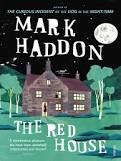
The Red House by Mark Haddon

The premise of this novel is very simple. Brother and sister Richard and Angela have recently lost their mother after a long and distressing illness. Somewhat out of the blue Richard offers to host (can host be used as a verb like this?) Angela and family in a week long holiday in a cottage in Herefordshire, the eponymous Red House. Richard brings his second wife Louisa and her daughter, Melissa. Angela brings husband Dominic, teenage son Alex, slightly younger but still teenage daughter Daisy, and eight year old Benjamin. (I wrote the sentence above without reference to the text, a good sign that the characters came to life for me).
Over the course of the week their back stories are filled in, childhood traumas revisited, (Richard and Angela’s mother was an alcoholic, Angela had a stillborn child eighteen years earlier, and so on) and although very little of note happens in the course of the week (more than you might have thought from reading some reviews) the character development is more than sufficient to maintain interest.  One teenager slowly comes to a realisation that they are gay, another is embroiled in a cyber bullying/teen suicide scenario. There is some light shopping, cooking for eight, board games and jigsaws, a traditional rainy holiday.
The narrative style Haddon uses here sometimes makes the reader work harder than they might be used to – there’s very little “Richard said” or “Angela drowsed off and began to dream” – instead we are pitched straight into the stream of consciousness or dream itself, and left to catch up from the context and content. Occasionally one has to back track once working out what is thinking or dreaming or talking. That is clearly a deliberate attempt to keep the reader focussed and paying attention, and it works well – the text is not so obscure that the reader can’t eventually work out who is thinking, even if they have jumped associatively from what was being said a moment ago.

In “The Curious Incident” Haddon came very close to successfully presenting the world through the eyes of a  child with Asperberger’s Syndrome. I had some issues with this – I thought the way Christopher navigated his way around the London Underground a bit too contrived and unconvincing – but here the ventriloquism reaches a new level. Each character has a convincing internal monologue. Benjy’s eight year old perspective on the world was especially touching and convincing, but each character is given their own realistic voice. Haddon can show the world equally well through the narcisstic eyes of a teenage bully, lovers feeling children again through one another’s touch, or a mother still grieving for a lost child after 18 years.

There are no heroes here – everyone is flawed one way or another, some more than others, but equally no cardboard villains, just real, convincing, vulnerable people. The detail is stunning – one character puts soft brown sugar on her frosties in a way only someone with weight issues would; another character has unsuccessful 20 second sex which ends violently, but still exults at having had sex. There are also plenty of reference to popular culture and literature here to keep the reader entertained, but the novel wears its learning lightly. All in all highly recommended, and I will be tracking down his second novel when a gap emerges in my reading schedule.

Standard
21st century literature

Skios, by Michael Frayn

It must be, I would have thought, quite rare for a writer to sit down and sadistically decide “I am going to write a farce”, as Frayn appears to have done here. Farce has an inflexible set of rules and protocols that can work well on stage, when in the course of a performance improbabilities can be disguised and belief suspended, but within the pages of a novel, set aside every now and then for reflection and consideration, the natural objections that spring to mind – “he wouldn’t behave that stupidly!” or “She would check before doing that” – come to the fore and won’t be ignored. I’ve long admired the artistry of successful farceurs, on the basis that farce is one of the most difficult forms of literature to pull off successfully, but trying and missing is a bit like jumping the Grand Canyon – failure even by a small margin is pretty catastrophic. So to mix my metaphors Frayn is on a highwire from the outset with this novel, and while the effort is impressive I would struggle to describe the performance as enjoyable.

The central premise of this novel is that someone collecting a guest speaker at an airport, picks up the wrong person. It could happen. Here the person picked up in error goes with the flow because – and there’s no real nice way of saying this – he has a mental disorder that means he embraces chaos, not in a “Wouldn’t it be fun” way, but in a way that has no regard whatsoever for the consequences of his actions. He lives totally in the moment, like a goldfish with a memory of a few minutes. We are invited to think of him as a charming rogue, a combination of Boris Johnson and Hugh Grant, but in reality someone like this would spend their life in A & E, picking their teeth out of the gutter. Checking she had picked up the right person doesn’t occur to Nikki – presumably she has a file on him, or access to the Internet, – and no-one at the conference has ever read a book or article by this character that included his illustration. This all has a strong period feel to it, and in the character of the academic travelling from one far flung conference to another, peddling his tired theories about nothing much I was reminded of the portrait in Larkin’s “Naturally the Foundation…” from Whitsun Wedding. The other strong echo was of Carry On films – Carry On Conferencing. So spot the foreigner with the silly accent, who can’t speak proper English, and has an identical twin brother, with much hilarity ensuing. Things are thrown in pools. Lonely secretaries yearn to be taken away from all of this. Russians are gangsters; Americans are fat and stupid. Someone even gets into bed with the wrong person and only realises their mistake when things start to get intimate. We only needed a matron and a bit of drag to complete the picture. I am not complaining – all these characteristics one would expect in a farce – but you do have to wonder who finds this funny in 2013?

Despite all this I was willing to give Frayn the benefit of the doubt. This  with what felt strongly like half an eye on the TV adaptation market. The jokes just about work, and the plotting was sufficiently tight to keep me reading. But there are only so many times the same plot devices can be used to keep the action moving, and ultimately Frayn completely ducks out of even trying to make the novel’s ending work. Having orchestrated a big finale, with all of the characters moving towards a final scene in which all the threads are drawn together, misunderstandings explained, lovers reconciled etc, it all falls flat.

If you want a beach read and some gentle discourse on identity, academia and relationships, you could do worse, but you could do a lot better – David Lodge’s “Small Worlds” for example.

Standard
21st century literature, Book review, Crime, Detective, Michael Connolly, The Drop

Book review: The Drop by Michael Connolly

The Drop sees the return of Harry Bosch, Michael Connolly’s grizzled Los Angeles police detective. Bosch is said to have seen action in Vietnam, and this novel appears to be set in the present day, so he presumably is getting on in years. Having retired and returned to work he now extends his service using a deferred retirement scheme – which gives us the title of the book. Yes, that’s right, a police story using an acronym for deferred retirement as its title. Of course there is an intended pun, in that the primary investigation in the novel is a suspected suicide by high rise jump. There is a sub-plot involving a DNA hit on a long unsolved murder which is integrated nicely into the overall structure – Connolly is a very experienced writer with 25 or so books to his name, and it shows.
This is a guilty pleasure – there is no pretence at anything other than entertainment, and I have to be honest I found it a very easy, undemanding, and enjoyable read. Bosch conforms to the stereotype defined by Raymond Chandler long ago, a loner who struggles with relationships and authority, determined to do what is right irrespective of the personal cost:
Down these mean streets a man must go who is not himself mean, who is neither tarnished nor afraid. The detective in this kind of story must be such a man. He is the hero; he is everything. He must be a complete man and a common man and yet an unusual man. He must be, to use a rather weathered phrase, a man of honor – by instinct, by inevitability, without thought of it, and certainly without saying it. He must be the best man in his world and a good enough man for any world….. He is a relatively poor man, or he would not be a detective at all. He is a common man or he could not go among common people. He has a sense of character, or he would not know his job. He will take no man’s money dishonestly and no man’s insolence without due and dispassionate revenge. He is a lonely man and his pride is that you will treat him as a proud man or be very sorry you ever saw him. He talks as the man of his age talks — that is, with rude wit, a lively sense of the grotesque, a disgust for sham, and a contempt for pettiness….If there were enough like him, the world would be a very safe place to live in, without becoming too dull to be worth living in. ” (The Simple Art of Murder)
That captures Bosch, and many other fictional detectives, so well.
In any long running series there are some challenges for the writer – how to avoid repeating yourself and being predictable while at the same time working within the recognised structure – avoiding gimmicks like relocating to different locations, (although the last Bosch novel did end up in Hong Kong). As a police detective there are constraints on where and how Bosch can work, limiting the writer’s scope for innovation. And within these constraints you can only have so many angry confrontations with impatient supervisors, interrogations of over-confident suspects, intuitive breakthroughs from tiny clues, etc, etc. Connolly seems to have recognised these issues, but shrugged and thought people will keep buying the books so no real need to keep things fresh.
As a result this novel has a reheated feel, one of Connolly going through the motions. Bosch has a short term romance – but guess what, work gets in the way. City Hall politicians conspire to frustrate his investigation. A killer wonders who will play him in the film of his exploits. And a suspected suicide turns out to be, guess what, a suicide! There’s nothing here to surprise or challenge the reader, but it is clear that the reader, even this one, sometimes wants plain undemanding fare. Same again please.
Connolly suffers from the comparison with Chandler, as every crime writer would, but if you want a murder story that aspires to be something that will just pass away a train journey, it’s Chandler every time.
Standard
21st century literature, J K Rowling, The casual Vacancy

Supplementary: The Casual Vacancy by J K Rowling (2)

Of course, no sooner had I finished my previous blog than I googled “Rowling” and “Dickens” and established, conclusively, that there is no such thing as a new idea. In fact, the association between JKR and CD was established long before this novel, in, for example, interviews and comments by JKR herself. And there is the answer to the Christmas ghosts reference. Simply put, the reference to Dickens is there because JKR wants us to approach her dark novel of life in 21st century England in the same way we think of Dickens’ social commentary in his novels. Dickens did not have any simple solutions for the situations he found his characters in – neither does Rowling.

Drawing a link between yourself and one of the greatest English novelists is a bold step, and Rowling has a long way to go in terms of building her canon before any such parallels are justified – to be honest they are a bit ridiculous at this point in her literary career. You can’t argue with the impact of Potter, but however much it crossed over into adult readership, and however much it addresses serious themes, it remained a work of children’s literature. You have to admire her chutzpah though, and if you are going to adopt a role model you could do much worse than Dickens. Of course I am not suggesting Rowling is equating her work with CD, simply saying that she would like her novel to be thought of in the same way ie as serious social commentary.

Having said there is no such thing as a new idea, so far I have not found anyone online pointing out the echoes of Christmas Carol with this novel, so I am feeling a bit smug as of now.

One other thought about this novel – Rowling seems to experience a visceral disgust with fat people, men in particular. She attracted some flak in the Potter novels with this tendency, and built in positive overweight figures later on in the series to balance the impression given by the Dursleys and others. Here fat is strongly associated with nastiness, laziness, and corruption, and is described with a distaste bordering on disgust. A sympathetic character equates obesity with drug abuse, and while Character A says X therefore the author thinks X is obviously too simplistic for words, the insistence of her returning time after time to the observation that the fat middle class men in this book are unattractive and unpleasant really leaves an unavoidable impression that she equates obesity with moral weakness. Fat teenagers are one thing – fat middle aged people are just bad.

Last comment on this edition – what a bad, lazy cover!

Standard
21st century literature, Book review, J K Rowling, The casual Vacancy

The Casual Vacancy by J K Rowling

This is a bit of a trojan horse of a book – ostensibly about middle England’s parochial concerns about a vacancy on the parish council of a small town in the West Country, this novel actually addresses a wide range of social issues, from self harm, racism, prostitution, domestic violence, etc, etc. Its like an episode of the Archers on crack.

The litmus test, as always, is was it a good read? The change of style from the Hogwarts novels is dramatic, and takes time to adjust. We then have a large cast of broadly similar characters doing largely similar things. Sorting out who is who takes a while. The election, when it finally comes, is a damp squib (ha ha, Hogwarts joke there for you) and some of the more melodramatic plot twists are telegraphed some way off. So far so bad, but despite that I found myself turning pages interested in what happens next.

Rowling’s middle England is a bleak, dark place. There’s not one happy family – all the children seem to despise their parents, with good reason. Huge psychological neuroses are carried around on shoulders young and old. A doctor refuses to treat a heart attack patient. There is no love or affection that is fulfilled. The only glimmer of hope for this community dies in the first chapter.

This novel has attracted over 500 Amazon reviews, so the chances of me having much original to say about it are slim. It has been portrayed as a political attack on the middle class, sneeringly done by someone whose political roots and allegiances are with the council estate rather than the detached mansions she now inhabits. This is of course simplistic; Rowling has not rewritten Hard Times here. But the mention of Dickens leads me cunningly on to what I think might be an original point. In this novel the Parish Council website is hacked four times, by four different characters, and messages are posted on the sites comment forum by “the ghost of Barry Fairweather”. Note – “the ghost of BF”, not “BF’s ghost”. Four ghosts – ring any bells? I think there is a deliberate, subtle reference here to the four ghosts in A Christmas carol, including the three Ghosts of Christmas Past, Present, and Future. Is Robbie Weedon a Tiny Tim figure perhaps?

Why – just a coincidence, or is Rowling making a more subtle point about regret. There is no Scrooge-like redemption at the end of this novel, and I clearly can’t build much of a case for the reference – but I bet it is there somewhere.

Standard
21st century literature, Alternative history, Book review, C J Sansom, Dominion

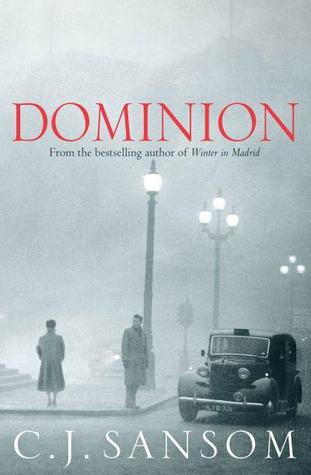
Dominion by C J Sansom

Alternative history novelists are a pretty unimaginative bunch – the Second World War is I suppose such a compelling period of history, when tiny moments can be seen to have had, in hindsight, such momentous impact, that they rarely stray far from its grasp. The turning point in this version of German victory in WW2 is Chamberlain’s resignation in 1940, and Halifax’s acceptance of the premiership. Surrender on terms to Germany swiftly follows.

So far so pedestrian, but Sansom sets his novel 12 years on, in a downtrodden England when the resistance is gaining momentum, Hitler is ailing, and the never ending war between Greater Germany and the USSR is draining the life out of the Reich. This world is realised in a lot of detail with alternative histories laid out for the rest of the world, the British political establishment (including Oswald Mosley and Enoch Powell, foreign secretary, and of course, irresistibly, Churchill, leader of the resistance) and various other British institutions.

What follows is a highly conventional spy narrative, with several strands closely interwoven, never more than a day or two apart. The principal character, David Fitzgerald, a fairly anonymous civil servant finds himself involved in a spy ring. By coincidence Frank Muncaster, a depressive university friend of his, becomes aware of some highly secret information which must not fall into German hands. This is all hugely unconvincing – it is never explained why the USA would want to try to smuggle Muncaster out of the UK when they already have the knowledge he carries. When the secret is finally revealed it is all one big “meh”, and the novel fizzles out of a beach in Rottingdean, of all places. For much of the novel this implausibility doesn’t really matter – Sansom drives the plot along convincingly and doesn’t allow too much time for reflection. The period detail, clearly the result of a lot of research, gives the book the feel of a 1950s black and white movie.

This was an undemanding, very long, read, that was an interesting digression on the “what if” theme, with a reassuring “we win the war in the end anyway” conclusion which I would not be at all surprised to see televised sooner or later.

Standard
21st century literature

Supplementary: Further thoughts on Sweet Tooth – Ian McEwan

I said at the end of August I was going to revisit Sweet Tooth after a period of reflection. Having read a couple of interesting reviews of this novel, as well as some commentary on Atonement, which although utterly different from this novel in terms of setting has some interesting parallels, I have what I hope are some clearer thoughts on this novel, and in particular what McEwan does here.

To recap, Sweet Tooth tells the story of a relatively naive young woman, Serena Frome, going to university, having affairs, starting work with MI5, and meeting an author. The big twist at the end of the novel is that instead of this being a first person narrative from Serena’s perspective, it is written by her author boyfriend in a mixture of anger and disappointment when he discovers that their relationship was based upon a lie – she was initially sent to meet him by MI5 to involve him unwittingly in a half baked attempt to win the cultural cold war. His exposure as a dupe is done with his collaboration.

This is all very clever – all of the inconsistencies in “Serena’s” earlier narrative are immediately explained. There is an under-current of distaste for example in her descriptions of her earlier love affairs which only makes sense when we realise they are as imagined by her current lover. The portrait of her younger self as not as clever as she thinks she is, and frankly just a bit too generous with her affections, suddenly makes sense if they are a portrait by a jealous boyfriend, not a self portrait.

Is McEwan doing anything different here from what he did in Atonement – completely reframing a story and making the reader realise that this is all just a story, the people aren’t real, these things did not really happen to them despite all the earlier attempts to give the narrative verisimilitude?

Where I am left feeling uncomfortable by this novel is in the author’s portrayal of Serena’s approach to literature. She is a mathematics graduate, but reads voraciously, indiscriminately, and has little or no interest in literary theory. To her books are just stories, to be consumed in a day and discarded. She – and remembering this is through the cynical and hurt lens of her author boyfriend of course – is not the kind of reader we think her boyfriend would want. And not really the kind of reader we would want to be. But have we been? Have we rushed through Sweet Tooth to its denounement without fully engaging with the text, without spotting the clues that Serena’s narrative isn’t as straightforward as we are led to believe? Are we guilty as charged?

In a recent interview McEwan has portrayed this novel as a traditional love story, suggesting that the central relationship will survive the trauma of deception and the subsequent damning judgement that is handed down. I certainly did not read the novel’s ending in that way – there is little to suggest there will be a “happy” ending here other than our traditional desire to see one. But the romance is not really the driving force at the heart of the novel. Incidentally this is also definitely not a novel about espionage either, despite the setting – no spying is done, and anyone picking this up expecting a spy story will be deeply disappointed.

If not a romance, nor a spy story, then what is this? At the risk of sounding pretentious, this is a meta-fiction – a fiction about fiction. Of its kind it is one of the more sophisticated (yet deceptively simple), ambiguous species of novel, comparable to The Magus for example.

Standard