Book review

The Blair Years (2) by Alastair Campbell, 2007

There were a few additional observations I wanted to add to my earlier review of Campbell’s fascinating diaries of the years he spent as Tony Blair’s press secretary, from 1994-2003.

One of the contentious policies the Starmer Government has been pursuing since the 2024 General Election is the levying VAT on the fees paid for private education. Campbell always was to the left of Blair on educational issues, advising him against sending his kids to the grant-maintained Oratory school, and he is a strong supporter of the current Government’s plans. This policy idea was originally floated in the early years of Blair’s leadership prior to him becoming Prime Minister – and when it came up he killed the idea stone dead without any debate. He considered it a tax on education and could not understand why any Government would even consider the idea. To him it was unthinkable. I mention this point simply to underline the fact that while the Starmer Government is obviously very far to the right of the policy positions taken during the Corbyn years, there remains some important differences between its policies and those of New Labour. Blair would never have countenanced something as radical as VAT on school fees – Starmer is pushing ahead with the idea despite a lot of well-resourced opposition and limited evidence that the policy is causing the party some electoral damage. In other words he is probably doing it because he believes it is the right thing to do, not simply because it is politically expedient.

The second point that I originally overlooked is an exchange Campbell shares (page 101) between himself and Mo Mowlam, at the time a shadow minister for Northern Ireland, who was to go on to play a key role in the Good Friday Agreement. At the time the Labour Party, still in opposition, was rocked by Harriet Harman’s controversial decision to send her children to grammar school. Campbell’s role as always was to ensure all Labour MPs stayed on-message and defended the party line, whatever their personal feelings on the issue. He recounts his version of events:

“We were still struggling to get anyone to defend her (Harman) on TV, but eventually I persuaded Mo to do it, only half jokingly saying that if she didn’t I’d reveal her stepchildren were at a public school.”

This is horrendous. A Shadow Minister is forced to go on television to defend a position she doesn’t agree with because otherwise a party official will expose damaging information about her family to the media. This isn’t a half-joke, it’s blackmail. The fact that Campbell thought it acceptable to include in this book – presumably to show how far he was prepared to go to support Blair – is appalling, and makes one wonder what dark arts and deviousness were left out.

Finally, during the 2024 general election campaign it was hard to find a single commentator not referring to Labour’s ‘ming vase’ campaign strategy. The phrase was used so relentlessly that it almost lost all meaning, so I was struck by the fact that the phrase is first recorded in these diaries. It isn’t just an echo of the New Labour strategy, it is the New Labour strategy.

“TB told me about his last dinner with Roy Jenkins at Derry’s….” I see you Tony, as someone carrying an exquisite, beautiful. hand-painted vase over a slippery floor and as you proceed across the floor, vase in hand, you can see your destination and you can see the likes of Harriet Harman and Clare Short lunging towards you, and you don’t know whether to run or tiptoe”.

In this original version of the strategy, it’s not the leadership who are going to drop the vase – instead they might have it struck from their hand by outspoken or clumsy Shadow Ministers or party spokespersons. So the strategy is not simply one of taking no risks, but also of shackling any Shadow Ministers seen as likely to say something out of turn. Roy Jenkins was a progressive Labour Cabinet Minister in the sixties and seventies, but had done his best to destroy the party in the eighties by setting up the SDP (which was to eventually merge with the Liberal Party to form the Liberal Democrats). You can interpret the fact that Blair adopted him as one of his senior (albeit unofficial) advisors as either evidence of Blair’s willingness to think outside the box and break rules, or of his innate conservatism.

The diaries were a mine of interesting insights such as this into both the Blair years themselves and their reflection in what might one day be called the Starmer years. Or maybe not.
The Blair Years (2) by Alastair Campbell, 2007

Aside
Book review

Citizen Clem – John Bew

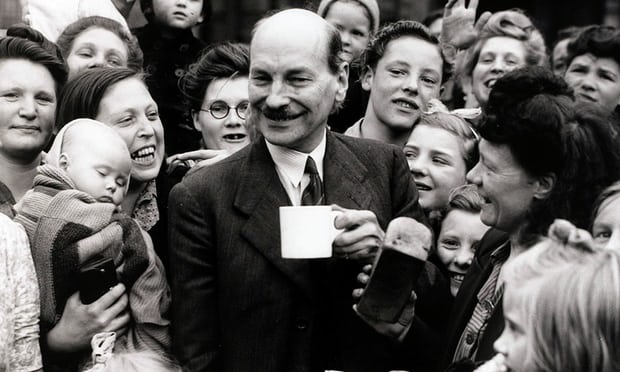
This is a good time to return to the extraordinary story of Clement Attlee’s rise to the leadership of the Labour Party, his twenty-year long period as leader (1935-1955), Deputy Prime Minister (1940-1945) and Prime Minister (1945-1951).  Attlee won two General Elections, saved the Party from the electoral wipe-out of 1931, and governed during Labour’s almost mythical post-war period in office when the Welfare State was brought to fruition.

Attlee

It is timely because the legacy and spirit of the Labour Party is once again the focus for political debate in the UK. It is possible that the party’s much better than expected performance at the 2017 General Election will have quietened that debate for the time being, but few imagine that this will not break out time and again while Jeremy Corbyn remains leader.

Rigidly chronological in structure, this biography charts Attlee’s rise to senior positions within the Labour Party, without his ever really expressing much interest in doing so – he seems to have had an amazing knack of being in the right place at the right time, never more so when he became Deputy Leader after the whitewash of 1931, when the party was reduced to fewer than 50 MPs. After a careful narrative charting Attlee’s childhood, early military career, and his discovery of his social conscience, Bew focuses on the post-war Government which delivered such an amazing legacy of legislation and reform. while at the same time falling short of many of the aspirations generated by such a resounding win.

Despite having made my way through over 500 pages of this biography, Attlee remains something of any enigma. I can’t honestly say I know the man.  You could fill a short book alone with the collected insults offered to him. Nye Bevan is said to have called him ‘a desiccated calculating machine.’ Others compared him to ‘a little mouse’, ‘a poor little rabbit’, or as George Orwell put it, “a recently dead fish, before it has had time to stiffen’. American press said he was `the dullest man in English politics’. Churchill famously said that Attlee was not only a modest man with plenty to be modest about, but ‘a sheep in sheep’s clothing’. Even when people tried to say something supportive or positive about him, they almost always prefaced their comments with another veiled insult about his reserved nature, his modest talents, his poor grasp of economics, and so on.

Bew gives us little of Attlee’s personal life, leaving the reader to conclude that it was as dull as outer appearances suggest. He draws heavily on Attlee’s letters to his brother Tom which are referenced every few pages – as if they provide some unique and previously unknown insights into Attlee’s inner thoughts, when almost always they tell us what we already know and indeed have already been told.

This book won the Orwell Prize for political writing in 2017. I have a sneaking suspicion that the author had half an eye on the prize when writing – the number of shoe-horned in references to Orwell’s work pile up, for example when comparing Attlee to Boxer, the shire horse eventually sent to the knackers’ yard. Boxer represents the ordinary Russian worker who continues to recite party slogans long after they lose all meaning, his faith in the Party unaffected by reality – in other words not at all like Attlee, who was a party faithful all his life but can hardly be described as a mindless functionary. The comparison just doesn’t work, and should have been cut – but the author obviously needed to keep every possible Orwell name-check to keep the book in the prize judges’ eyeline.

I can’t comment on whether this is the definitive Attlee biography, but I am glad I read it – I knew shockingly little about his background as a Major at Gallipoli and in France in World War one, for example, or the collapse of the second Labour Government 1929-1931, although his role in the second World War and the post war Government were naturally more familiar. I did have a couple of quibbles with the book that I can’t let slide.

First, it could have done with a closer edit. Over 500 pages there are always going to be mistakes, but this is not the first edition, and allowing sentences such as (page 144)

“For the moment, he shared the view that the obstacles to self government in India were, for the moment, insurmountable”

is unforgivable. Second, there are some moment of lazy writing. Can you spot what’s wrong with the following paragraph, for example?

(page 147) “The biggest challenge facing the second Labour Government was unemployment. Their task became extremely difficult because of events outside its control. In the last week of October (1929) the bottom fell out of the international economy, beginning with a monumental panic on the New York Stock Exchange that saw traders leap from windows in despair.

Yes, it’s the cliched way of describing the Wall Street crash featuring those leaping traders. Five minutes on Google will tell you that it didn’t happen – suicides rates actually went down during the period of the crash. But even if they didn’t, and they did, why describe the crash in this way? Is the reader supposed to think “Oh that Wall Street crash in October 1929, the one which led directly to the rise of fascism and the resurgence of the National Socialist Party in Germany , I wasn’t sure which one you meant”. If the author can’t be relied on to get simple facts like this right, how reliable is the rest of his narrative?

Standard
Book review

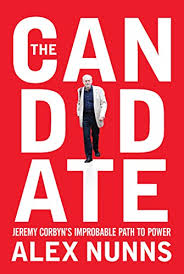
The Candidate – Jeremy Corbyn’s Improbable Path to Power by Alex Nunns

CandidateFirst, I need to declare an interest – I know and have a huge amount of respect for the author, as well as a long term interest in the subject matter. I’d like to think this hasn’t affected my review, but that’s hard for me to judge.

’The Candidate’ is, as the subtitle explains, the story of Corbyn’s improbable, almost unbelievable, ascent to the top of the Labour Party. Or as John McDonnell, Shadow Chancellor of the Exchequer, put it in endorsing the book “”This is a fascinating account of why—as well as how—Jeremy became leader of the Labour Party and transformed our politics. For anyone engaged in this movement, understanding precisely how we came to be where we are can only make us more effective as we go forward. That’s why Alex Nunns’ book is so important.”

Some events (political and otherwise) are so unlikely that no-one sees them coming, not even those closely involved. Few if any in the small group of MPs that constituted what remained of the Bennite Left in the Labour Party thought Jeremy Corbyn would be on the leadership ballot in 2015 following Ed Miliband’s resignation, let alone that he would win. His selection as a candidate was almost an afterthought, when several other potential (and with hindsight, far less suitable) candidates had been ruled out. Looking back at the events of the campaign it is easy to see Corbyn’s subsequent and almost effortless rise to power as inevitable, but Nunns’ forensic day by day, sometimes minute by minute, account, often using the present tense, makes it clear that the outcome was anything but a done deal. This is a definitive version of the extraordinary events of summer 2015, and the revolution that shook the Labour Party.

Nunns’ greatest strength is what I would characterise as myth-busting. Calmly he presents clear thoroughly researched evidence to destroy the various claims and distortions that surrounded Corbyn and his campaign, lies which continue to be recycled to this day. This is reflected in the author’s meticulous approach to research – how many other political narratives have 40 pages of footnotes?

This is not the book for you if you want to learn more about Corbyn’s Wiltshire childhood or his years on the back benches – Wikipedia covers this off pretty comprehensively. Some of the controversies that have been manufactured by his opponents – his close ‘association’ with Sinn Fein for example – are mentioned but do not form the focus of this book. Equally this is probably not the book for you if you are hostile to Corbyn, unless you are exceptionally open-minded – while Nunns is not unaware of Corbyn’s faults, or those of his campaign (for example, the initial failure to appoint any women to senior positions in the Shadow Cabinet is criticised), he doesn’t hesitate to make his allegiances clear. Nunns is particularly sharp in lancing the pomposity of the commentators, pundits and politicians who claimed Corbyn was a joke candidate who could never win, whilst simultaneously saying his victory would be a disaster for the party and the country.

I suspect that when the history of this period of the Labour Party comes to be written, ‘The Candidate’ will be considered an important reference work. Which makes the absence of an index more surprising (although I understand this was not the author’s choice). Similarly the blurb on the paperback edition, again nothing to do with the author, reads like a clumsy attempt to portray the book as a political thriller rather than a serious analysis. Minor quibbles aside, my only argument of any substance with the author would be in his treatment of the Parliamentary Labour Party. In this narrative, the PLP is characterised as monolithic and overwhelmingly Blairite, a product of an iron grip on selection in the Blair/Brown years. This overlooks the fact that Liz Kendall, the Blairite candidate – Kendall rejected this label, but given her endorsements it’s unavoidable – received just 41 MP’s nominations for the leadership, only five more than Corbyn. This perspective distorts the treatment of the 2016 ‘coup’, where the co-ordinated mass resignations from the Shadow Cabinet are characterised simply as ‘the revenge of the Blairites’ (my term). My guess is that MP’s dissatisfaction with Corbyn’s leadership and their reasons for resigning were more complex than simply an attempt to reinstate the status quo. There was widespread dismay at the outcome of the 2016 Brexit referendum, and inevitably Corbyn was the focus of some of that anger. It was not just the PLP who had their doubts, particularly as Labour’s position in the polls deteriorated – even the Guardian’s Owen Jones wrote more than once questioning the wisdom of Corbyn’s retaining the leadership, (“not good enough – his (Corbyn’s) policies are right but his leadership is clearly failing”)

It turns out of course that just about everyone called this wrong, and Labour came agonisingly close to securing victory in the 2017 general election. That campaign, and its aftermath, are the subject of a revised edition of ‘The Candidate’ which is due out early next year. I can’t wait.


Standard