
Some time back in an earlier post I mentioned George Orwell’s essay Politics and the English Language. In that essay Orwell lists the many ways in which writers use ‘bad’ English, including ‘dying metaphors’:
“A newly invented metaphor assists thought by evoking a visual image, while on the other hand a metaphor which is technically ‘dead’ (e. g. iron resolution) has in effect reverted to being an ordinary word and can generally be used without loss of vividness. But in between these two classes there is a huge dump of worn-out metaphors which have lost all evocative power and are merely used because they save people the trouble of inventing phrases for themselves…Many of these are used without knowledge of their meaning (what is a ‘rift’, for instance?), and incompatible metaphors are frequently mixed, a sure sign that the writer is not interested in what he is saying. Some metaphors now current have been twisted out of their original meaning without those who use them even being aware of the fact.
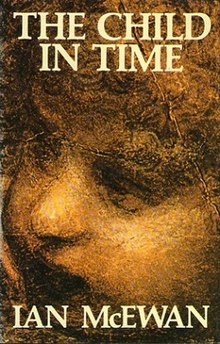
The long-winded reason I have highlighted this quote is because Ian McEwan’s 1987 The Child in Time is very much a curate’s egg – and ‘a curate’s egg is a classic example of a dying albeit very specific metaphor which is invariably used incorrectly. Originally it meant ‘something that has good and bad parts’ but where the bad parts are so bad as to spoilt the overall effect’. Which would be the case where parts of an egg are bad. In other words the phrase is meant ironically – it suggests some parts of the egg (or whatever) are not bad, whereas in fact they are. So it’s quite a subtle phrase – far too subtle for some writers and speakers who adopt the phrase unthinkingly to mean ‘something with good and bad parts’. This usage is so widespread that many dictionaries have given up the struggle and now use the latter definition – so for example Wikipedia defines the phrase as
“something described as partly bad and partly good. In its original usage, it referred to something that is obviously and entirely bad, but is described out of politeness as nonetheless having good features that redeem it. This meaning has been largely supplanted by its less ironic modern usage”.
Stephen Lewis is a fairly archetypical McEwan central character. He is a children’s writer and aspiring novelist, recently and moderately happily married, with a three year old daughter, Kate. The puzzling success of his children’s stories distresses him as he wants to be considered a serious writer – which is the classic definition of a first world problem if ever there was one. I don’t know if we are supposed to empathise with Lewis about this problem, or laugh at him, but he soon has much more serious concerns. On a routine visit to the supermarket Kate goes missing. Is Kate the ‘child in time’? Perhaps. Kate’s disappearance is obviously deeply traumatic and Lewis devotes all his time and energy to trying to find her, with no success whatsoever. The police investigation fizzles out quickly, and media interest in the case moves on. The search places an unbearable strain on his marriage, which slowly collapses.
Principally as a distraction once his search is finally abandoned, Lewis joins a government committee on childcare. He has no particular interest in the details of the committee’s work, but it gets him out of the house. He spends the rest of his days lying on the sofa drinking scotch and watching mindless TV programmes. His wife, Julie has by now moved away to the countryside and become a recluse.
Stephen occasionally visits his close friend, Charles Darke, also on the childcare committee. Darke who was in charge of publishing Lewis’s first novel and is now a junior Minister in the Government, and a rumoured future Prime Ministerial candidate. Darke’s wife, Thelma, is a quantum physicist who engages Stephen with her outlandish theories on time and space. At the behest of Thelma, who believes Stephen’s marriage with Julie is salvageable, he makes an effort to reconnect with Julie by visiting her. Although he has never visited the remote town where she now lives, he feels strangely familiar with the place – especially a pub he passes on the way. There he experiences an event that he cannot explain: he sees his parents as a young couple in a pub, before they were married, an event they later confirmed to have happened. This supernatural experience remains unexplained, but obviously is linked to the ‘in time’ theme of the novel’s title. Though Julie and Stephen temporarily reconnect during his visit and sleep together, Kate’s absence has become too great a divider between them and they part believing it impossible to overcome her loss.
The childcare report is finally published. The Government intervenes and ensures the recommendations are changed to suit its political agenda, and although this interference is exposed the Government brazens it out and ignores the criticism. Who would have known that politics is a dirty business? These scenes in the novel manage to be both very contemporary given the current Government’s manoeuvring to avoid one of its members being suspended for example and at the same time quite dated – we are now a lot more cynical about these things.
In the meantime Darke and his wife abandon their lives in London for seclusion in the countryside. Prompted by a comic encounter with the Prime Minister, Stephen goes to visit and finds that Charles has regressed into a child-like state, a form of infantilism. Intellectually he seems unimpaired, but he is childish and uninterested in the outside world or his previous life and responsibilities. Perhaps Charles is the child in time?
The novel ends with a death and a birth, which seems an almost traditional way of concluding a story. But I started this review by explaining why I thought the novel’s central flaw spoiled the overall impact. If you are going to use the supernatural (or time travel if you prefer) as a plot mechanism, you are going to have to have a good reason for doing so. Whatever A Child in Time is, it is not magical realism where the laws of nature are optional extras. If you have a hyper-realistic novel (and if this is not a realistic novel then why should we care about Kate’s disappearance or the anguish it causes her parents?) then why does it need the magical appearance of time-travel to progress the story. It just felt utterly redundant and more than a bit silly, like a weak episode of Doctor Who.
The opening chapters of the novel in which Kate disappears are very powerful, but once she has gone it seems McEwan wasn’t sure what to do with the novel, and grafted on the Darke storyline with its fairly heavy-handed political commentary. The whole is much less than the sum of its parts. This is still relatively early McEwan, and I want to avoid saying it shows promise, because that is obviously hindsight talking, but it does. But if you are interested in exploring his novels this is definitely not where I would start. Atonement is obviously wonderful, but my personal favourites are Sweet Tooth, a superbly clever variation on the traditional spy novel, and the extraordinary, exquisite novella On Chesil Beach.

