20th century Literature, American literature, Book review, Go Set a Watchman, Harper Lee, TKAM, To Kill a Mockingbird

Go Set a Watchman by Harper Lee

“Go Set a Watchman” (and what a great title by the way) was an early, rejected draft of the story that was to eventually become “To Kill a Mockingbird” (or “that Mockingjay book” as overheard in Waterstones recently. In Watchman, 26 year-old Scout returns from New York to spend time with her family in Maycomb, Alabama. The contrast between urban, progressive New York, and the backward, sister marrying deep South, is the source of much of the dramatic tension of the novel. Scout discovers by chance that her father and family are involved in a racist movement to ensure the black community remains in its place. This movement has sinister, violent undertones. The N word is used freely by its supporters. Scout passinately confronts her father, who refuses to apologise, but tells her she is wrong. Her uncle, a doctor, repeats this message, and when she gets upset violently hits her. This calms her down in the book’s most upsetting scenes. The novel ends with the suggestion that Scout has come to terms with her family’s racism, and may even stay in Maycomb.

Much of the reaction to the novel, and speculation as to its long delayed appearance, centres on the alleged transformation of the character of Atticus Finch, from noble defender of the oppressed black peoples of Maycomb, to a racist Klan supporter. Watchman’s hero is far more human than the paragon of TKAM. This confused response is wrong on two counts. Firstly, as Watchman makes very clear, the Atticus Finch of the second novel is the same man as in the first. There has been no major transformation, no becoming racist due to a traumatic incident or gradual embitterment. Yes, the times have changed, and the circumstances with them, but Atticus was and is a decent racist. How can the brave defender of a wrongly accused black man be a racist? Simply this – he believes in the rule of law, believes black people have a right to a fair trial, but he doesn’t believe they have the right to much more than that. Certainly not equal rights, equal education, the right to have proper democractic representation. Worst still, while Scout is appalled by Atticus’s association with disgusting racists preaching race war, she still has racist views herself. She agrees with Atticus for example when he explains that co-education threatens the Southern way of life. She challenges effectively the idea that mixed relationships will lead to mongrelization of the white race – are black men so irresistible to white women that they have to be legally restrained from marrying them? – but believes the consitution should not compel people to share their schools if they don’t want to.

Realistically, this is probably as progressive you would get for white people in the 1950’s, and even then Scout’s liberalism can be traced not just to her father’s decency, but her “corruption” by New York progressivism.

Why is the Finches’s racism so apparent in Watchman, but not Mockingbird? I believe the main difference is the context. In 1930’s Southern USA, the civil rights movement didn’t really exist. (This is not my specialist subject to say the least, but I think that’s right). In the 1950’s the NAACP was on the march, organising, and challenging the institutional barriers which left most black people as simply released slaves, with few if any political rights. Watchman prefigures the battles to come over civil rights, and shows us how threatened and scared some white communities were. Not everyone in the South who opposed civil rights were monsters, even if their behaviour and language was monstrous.

This book provides us with a different way of looking at Mockingbird, and is worth reading for that reason alone. Lee shows some skill in her handling of the portraits of the Maycomb community, capturing a sense of time and place. The characters emerge strongly, recognisable and consistent with their later (but also earlier) incarnations in Mockingbird. Whether Lee’s editor, who encouraged her to shelve this book and re-create the novel based on the flashback, was right or wrong is a meaningless question – we now have both books, and if Mockingbird is slightly diminished in the eyes of some readers, there’s little that can be done about this now. I suspect Mockingbird is resilient enough to emerge form this unscathed, with Watchman becoming a footnote in future GCSE and A Level reference books. Which would be a pity, because I also suspect Watchman is the more accurate, less romantic portrayal of the two.
Standard
20th century Literature, Book review, Brideshead Revisited, Descriptions of sex in literature, Evelyn Waugh

Supplementary: Brideshead Revisited (2) – on the description of marital and extra-marital sex

There are some interesting descriptions of sex in Brideshead. Waugh avoids any explicit reference to gay sex, but he is slightly more comfortable with marital affairs, taking a quick peek into the bedroom. When Charles returns from his two-year long trip to South America, his reaction to meeting his wife could not be more off-hand if he tried. “There was also a daughter now, she remarked” (218) – noted in the same tone as if she had had the spare bedroom redecorated. When they are at last alone, the scene is described thus:
“She talked in this way while she undressed, with an effort to appear at ease,; then she sat at the dressing table, ran a comb through her hair, and with her bare back towards me, looking at herself in the glass, said “Shall I put my face to bed?”
It was a familiar phrase, one that I did not like; she meant, should she remove her make-up, cover herself with grease, and put her hair in a net.
“No” I said, “not at once”.
Then she knew what was wanted. She had neat, hygienic ways for that too, but there were both relief and triumph in her smile of welcome; later we parted and lay in our twin beds a yard or two distant, smoking”.
Waugh packs a huge amount of information in this brief scene of clinical, hygienic marital sex. When his wife offers herself – obliquely, but quite clearly – to her returning husband after two years apart, she can’t even look at him. She seems to disgust him somewhat – “cover herself with grease”- and his acceptance of her offer is equally half hearted – “not at once”. her relief and triumph derives from his acceptance of her offer. It is later implied that she has been unfaithful in his absence, and that he is aware of this – her relief derives from a mistaken belief that her infidelity has gone unreported, or is forgiven. This is a marriage where little needs to be said – later, when Charles decides to go to see Julia, his mistress, rather than his newly arrived daughter, signalling effectively the end of the marriage, all she says is “I wish it hadn’t got to happen quite this way” (256)

Sex with his mistress on the other hand is more tempestuous, with the storm raging on the Atlantic acting as a usual metaphor:
As we made our halting, laborious way forward…we were alternately jostled together, then strained, nearly sundered, arms and fingers interlocked as I held the rail and Julia clung to me, thrust together again, drawn apart, then in a plunge deeper than the rest, I found myself flung across her, pressing her against the rail, warding myself off her with the arms that held her prisoner on either side” (248)
This plunging and swooping goes on for some time. When the actual, non-metaphorical sex happens a little later, the language Waugh uses is quite extraordinary:
“Julia led me below. It was no time of the sweets of luxury; they would come, in their season, with the swallow and the lime flowers. Now in the rough water there was a formality to be observed, no more. It was as though a deed of conveyance of her narrow loins had been drawn and sealed. I was making my first entry as the freeholder of a property I would enjoy and develop at leisure”. (248)
So not only is this first sexual exchange portrayed in legalistic, commercial terms, but more precisely as a transaction relating to property. Julia eventually inherits Brideshead House, and if they had married Charles would have shared in this inheritance. (Incidentally I wonder if the reference to the “swallow” an accidental punning reference to oral sex? If that’s not too far for you, then this surely is: the mention of lime flowers could be an oblique reference to the fact that lime trees are hermaphroditic, with both male and female parts, suggesting Charles’s tastes are not solely confined to women, as by now we are almost certainly aware.

Portraying sex in novels in the first half of the twentieth century was a challenge – writers were pushing at the boundaries of what public taste and censors would allow, and of course sometimes – Lady Chatterley, Ulysses, The Well of Loneliness, etc – crossing the line. Waugh seems to me to be ambivalent in his references to heterosexual sex – it is treated almost as a necessary evil, but is far from comfortable compared to his treatment of the relationships between men.

Standard
20th century Literature, Book review, Brideshead Revisited, Evelyn Waugh

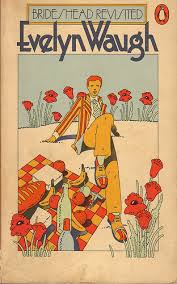
Brideshead Revisited by Evelyn Waugh, 1946

Why do I write this blog? Thinking about it there are four principal reasons, with one bonus justification.

  1. To keep a record of what I read. Simple as that – just to look back and see what I have read over 12-24 months is interesting, as my appetite for classic fiction wanes and is replaced by recent history, for example.
2.    To keep a note of what happens in the novels I read. I appreciate that probably sounds a bit daft at first, but if you think about it, how many times have you picked up a book and wondered whether you had read it or not? Writing down what happens helps fixed the main events of a story in my memory. Of course, re-reading books and rediscovering them can be great fun, but I find it frustrating not being able to remember what happens in a book even though I know I have read it.
3.    To make me a careful reader. This follows on very much from the above – if I know I am going to have to write something about a novel, I will read it more carefully than otherwise. I will even make marginal notes and highlight sections if I am being really conscientious. When I do this of course it means I am more likely to remember the detail of the book, but writing it down reinforces this.
4.    To have something interesting and original to say about the novel/book.
(The bonus reason is that I occasionally use this blog to write about something other than my reading. It’s harmless, and gives me somewhere to work out my thoughts, or maybe just show off a bit, even if just to myself.)
So when I finished Evelyn Waugh’s 1946 novel “Brideshead Revisited” and found I didn’t really have anything new or insightful to say about the novel, I was disappointed. Looking back on the list above however, I realised there are nevertheless plenty of reasons to blog about the novel, even if it won’t be as amusing or clever as I would have hoped – it still ticks three of the four boxes.
“Brideshead Revisited” is narrated by Charles Ryder, an upper middle class officer who is billeted in the grounds of an English country house at an indeterminate point in the second world war. He is startled to realise he knows the house well, having visited as a guest many times. The body of the novel is a series of reminiscences starting with Charles’s time at Oxford in the early 20’s, when he meets Sebastian Flyte, the younger son of the Brideshead family. The fact he is a younger son, and therefore unlikely to inherit the family title or house, is significant – he dedicates himself to a life of excess, ending as an alcoholic wreck. The surname Flyte is also telling – Sebastian is quintessentially flighty, a decadent aesthete interested in only what pleases him. The bond between Ryder and Flyte is strong and instantaneous, and their lives run in parallel until Sebastian’s alcoholism finally pulls them apart.

The sexual nature of their friendship is fairly explicit – bearing in mind that gay relationships were illegal in the UK before 1968, and only decriminalised in very specific circumstances thereafter. They have an openly gay friend – Antoine Blanche – who is accepted by them without judgment or any hint of censure. Waugh is as clear as possible on this point, dropping multiple hints. To give one example, Charles’s cousin, Jasper, visits him early on during his time at Oxford, and warns him “Beware of the Anglo-Catholics – they’re all sodomites” (28). The Flyte’s are one of England’s leading aristocratic Catholic families.

They grow apart, and Charles becomes an artist. He eventually marries, although his relationship with his wife is distant, and he has no interest in his children. He goes on an expedition into the South American jungle, and is away for two years – when he meets his wife after this absence their lack of affectionate is palpable. On the stormy Atlantic crossing home he begins an affair with Sebastian’s sister, Julia, but she ultimately rejects him in favour of her Catholic faith. In a book-ending chapter back at Brideshead, Ryder reveals he too has embraced Catholicism.
This is a complex novel with many themes. The loss of Edwardian England, preserved in part in Brideshead and Oxford, but torn apart by the devastation of the Great War. Waugh’s 1959 introduction to the novel talks about it being about the imminent loss of the great English country house, but that seems a minor theme to a 21st century reader. Catholicism, the Second World War, love, homosexuality – it makes it seem a worthy novel, and eventually it is, but the early scenes in Oxford in particular are extraordinarily evocative:
“Oxford, in those days, was still a city of aquatint. In her spacious and quiet streets men walked and spoke as they had done in Newman’s day; her autumnal mists, her grey springtime, and the rare glory of her summer days – such as that day – when the chestnut was in flower and the bells rang out high and clear over her gables and cupolas, exhaled the soft airs of centuries of youth. It was this cloistral hush which gave our laughter its resonance, and carried it still, joyously, over the intervening clamour.”
Standard
20th century Literature, Book review, Martin Amis, The Information

The Information, by Martin Amis, 1995

Martin Amis wrote the “at pains to be offensive” “Lionel Asbo”. So why on earth would I read “The Information”? My excuses are, to be honest, slim. I originally read this novel when it was first published, in 1995. I had been impressed by the griminess of “London Fields”, and thought Amis was a writer worth persisting with. He was paid an astonishing £500,000 advance for this novel, which may also have had a part to play in my original purchase decision. Coming across it on my bookshelves two decades later, I could remember nothing about it, even when prompted by the blurb. So I restarted, and once going refused to give up, even though the whole exercise was in some respects a long, drawn out insult.

The premise of the novel is simple. An unsuccessful contemporary writer, Richard Tull, has a friend, Gwyn Barry, who has by some inexplicable stroke of fortune become a highly successful novelist. Both men are intensely unpleasant individuals, two sides of the same coin, with only book sales differentiating them. While Tull’s books are unreadably, painfully bad, Barry’s are bland and inoffensive, yet sell by the million. Readers, it is implied, are all idiots, writing books is pointless, all modern books are rubbish, and the publishing industry is full of crooks, thieves and scoundrels.
In response to the failure of his literary career, Tull plans a complex and rambling scheme to punish Barry for his success. This scheme never quite comes to fruition and fizzles out when at each turn Barry has yet another outrageous stroke of luck to avert the threat of the day. As this happens so often, there is little or no interest in whether the next threat will pan out – we know it won’t.
This is another deeply misogynistic book. There are no even partly convincing female characters – they are simply wives and girlfriends, defined by their relationships with the male protagonists. They are sexually used by the men without having any apparent say in the matter – for example at one point Barry has sex with his research assistant, does her the gracious favour of coming quickly so as not to inconvenience her overly, and then moves to his wife’s bed to brag about it. Amis is not celebrating this behaviour of course – my point is that the women are passive in their acceptance of this abuse. Real women wouldn’t stand for this behaviour for a second.
I am not going to go on at any more length about the failures of this book – I have spent too long on this already. If you enjoy Amis you might like this, but there are many less incestuous, less disappearing up its own self referential fundament, less simply unpleasant books about the London literary scene out there.
But. The thing is, despite all this, Amis can write. At its best his writing is something to savour. Take this:
“He awoke at six, as usual. He needed no alarm clock. He was already comprehensively alarmed.”
Or this
“Cities at night, I feel, contain men who cry in their sleep and then say Nothing. It’s nothing. Just sad dreams. Or something like that…Swing low in your weep ship, with your tear scans and sob probes, and you would mark them. Women–and they can be wives, lovers, gaunt muses, fat nurses, obsessions, devourers, exes, nemeses–will wake and turn to these men and ask, with female need-to-know, “What is it?” And the men will say, “Nothing. No it isn’t anything really. Just sad dreams.”
 “there in the night their bed had the towelly smell of marriage.”
There is something on every page that is interesting, not just in the use of language, imagery, etc., but in the author’s ear for how people speak and think. One example of this is his fascination with idiom. One character consistently makes mistakes with her idiom, and a whole section of what passes for a plot revolves around her confusion between the phrase “Gwyn can’t write for toffee” with what she meant to say, which was that he wouldn’t write for peanuts – different foodstuff, utterly different meaning.
“Demi’s linguistic quirk is essentially and definingly female. It just is. Drawing in breath to denounce this proposition, women will often come out with something like “Up you” or “Ballshit”. For I am referring to Demi’s use of the conflated or mangled catchphrase – Demi’s speech bargains: she wanted two for the price of one. The result was expressive, and you usually knew what she meant given the context… So Demi said “vicious snowball” and “quicksand wit” and up gum street”; she said “worried stiff” and “beyond contempt” (though not beneath belief”); she said “on its death legs” and “hubbub of activity” and “what’s with it with her” (257)….” And so on at length.
Another example is the way he captures a character’s fractured internal monologue, in this case thinking about an article being written about him:
“Although Barry was no. A keen. While no jock or gym rat, Barry responded to the heightened life of fierce competition. He loved games and sports….with his old sparring. …As a novelist Tull was no. Unfavoured by the muses, Tull was nevertheless.” (404)
Finally, is it just me or is it hard to forget that Martin is his father’s son? Sometimes you can hear the grumpy old man being channelled, especially here where the reference to the waking-up still drunk scene in “Lucky Jim” must surely be deliberate:
“Looking the mirror now, on the morning of his fortieth birthday, Richard felt that no one deserved the face he had. No one in the history of the planet. There was nothing on the planet it was that bad to do. What happened? What have you done, man? His hair, scattered over his crown in assorted folds and clumps, looked as though it had just concluded a course of prolonged (and futile) chemotherapy. Then the eyes, each of them perched on its little blood-rimmed beergut…..His teeth were all chipped pottery and pre-war jet-glue.” (46)
Kingsley pretty much gave up bothering to try to write convincing female characters, or indeed anyone other than grumpy old men – is Martin heading that way?
Standard
20th century Literature, Book review, Hard-Boiled Wonderland and the End of the World, Haruki Murakami, literature in translation

Hard-Boiled Wonderland and the End of the World, by Haruki Murakami

Translated from the Japanese by Alfred Birnbaum

In my notes on “The Shadow of the Wind” I was harsh, some might say brutally so, towards the translator. So I wanted to open this review by tipping my hat to Alfred Birnbaum. This must have been a fantastically difficult novel to translate. I’ll come to why later but I wanted to start by saying this was one of the strangest books I have read in a very long time. It is set in Japan, and that is one of the very few definite things I can say about it. It is constructed of two parallel storylines, and while it is reasonably clear they are connected early on – otherwise they wouldn’t be in the same book would they? – it takes a long time for the connection to become apparent. Murakami slowly reveals the links – thinking about a novel he has just read about a prisoner, the narrator in one storyline meditates on
the image of a world within walls. I could picture it, with no effort at all. A very high wall, a very large gate. Dead quiet. Me inside. “ (164)
Which is a description of the setting of the parallel narrative. The conclusion suggested here is that the second story is a dream of the narrator of the first story. I resisted the temptation of this interpretation for a long time, (although it turned out to be right), because while fantastical, dreamlike things happen in story B, story A is almost as bizarre.
Story A follows a data analyst with special powers. The author spends a lot of time trying to explain the nature of these powers and the circumstances in which they were acquired, but the effort was wasted on me. Gibberish is gibberish whether written at length or not. Here’s an example
“Whatever we do t’your cognitive circuits, we must never sever that channel. The reason bein’ that your surface consciousness – your first circuit – developed on nurture from your subconscious – that is, from your second circuit. That channel’s the roots of your tree. Without it your brain wouldn’t function. But the question here is that with the electrical discharge from the meltdown of Junction B, the channel’s been dealt an abnormal shock. And your brain’s so surprised, it’s started up emergency adjustment procedures. “ (283)
(As an aside, why the scientist speaking here has this strange accent is one of the many things that went over my head). The narrator has a magnetic attraction to women, who cast aside their clothes and implore him to sleep with them at every opportunity, which is irritating. The nearest style this all approximates to is magical realism. Supernatural things such as unicorns, and subterranean, murloc-like beasts called INKlings appear, and sound can be turned on and off. This is not a naturalistic world, although it is recognisable.
On the other hand, Story B is more dream-like, and follows a similar character (yes, the same person, as we find out sooner or later) who goes to a walled city, has his shadow surgically removed (although it survives the procedure) and spends his time “dream-reading” – trying to interpret mystically readings generated by skulls in a library. As you do.
Eventually the narrative settles down, and a storyline emerges. Despite myself, towards the end of the novel I found myself caring for the romance between the narrator and his librarian girlfriend, a love so compelling that it can cross the boundary between the narratives.
There are so many unusual things about this novel that it is hard to select one, but if forced I would point to the chapters where the author suddenly begins a crude pastiche of American noir detective novels (Chandler, Hammett, etc) – at one point a character stores an object at a baggage check counter, then posts the claim ticket to himself – precisely what Marlowe does in “Farewell my Lovely” (I think).The characters (at this point) all crack wise, even when being smacked around, facing death with smart alec comments, and talking about “spilling the beans”, “rubbing people out”, and “getting sweet”.
This was such a mash-up of genres that I was left utterly bewildered. Which is probably a first. Murakami is hugely popular, and his new novels (this dates back to1985, and includes references to the Police and Duran Duran) are something of an event. If this is representative of his work, I might wait a while before trying another.
I mentioned earlier the credit due to the translator. The different styles of Idiom used are handled well, as is the challenge to make the nonsensical technical explanations, have a veneer of sense. Murakami’s prose can be dense – here’s an example of the translation challenge:
 “This is very important…because to believe something, whatever it might be, is the doing of the mind. Do you follow me? When you say you believe, you allow the possibility of disappointment. And from disappointment or betrayal, there may come despair. Such is the way of the mind”. (351).
Indeed, and as is well know, fear can turn to hate, etc.
I did a quick once-over with the shaver, splashed water on my face, combed my hair. My puss was puffy like cheap cheesecake.” (128/9). A good simile, although the last time anyone used the term “puss” to mean face was around 1945.
Authors often anticipate critical reactions to their work, and include them as a way of fending them off. Murakami does just this towards the end of this novel, when he has a character say “The Wizard of Oz had to be more plausible” (341) If plausibility is what you want this is probably the wrong place to start.
 
Standard
20th century Literature, Book review, http://schemas.google.com/blogger/2008/kind#post, Italo Calvino, The Path to the Spiders' nest

The Path to the Spiders’ nest by Italo Calvino

Another Eton mess. Sorry, cheap joke. This short novel by Calvino, his first, was written in 1946, almost immediately after the end of the Italian partisan war. It follows a young (adolescent?) boy, Pin, who gets involved almost by accident in the partisan campaign. Pin is wise beyond his years in some respects, an orphan (we presume, although this is not confirmed) brought up by his prostitute sister, but innocent and naïve in other ways, always searching for companionship and love. This edition of the novel includes an introduction, written later in the 1960’s, in which Calvino apologises for the story’s failings, including its “neo-realism”, and its sentimental ending.

Most of the action of the novel is shown through Pin’s eyes. He has a limited understanding of what he sees, and it is the gap between his relative innocence and the world going on with its business around him, that offers some the amusement of the novel. Don’t get me wrong – this is not a novel of compic misunderstandings. While Pin is an innocent abroad, trying to survive among short-fused partisans living in the hills above the unnamed city, he is also very “street-wise”. At the same time he is also short-sighted – he steals a German soldier’s gun without giving any consideration to the likely consequences, for himself or his sister.

Although Pin carries most of the narrative focus of the novel, there is one chapter where the point of view switches to one of the partisan fighters – this chapter, and the switch in particular, jars and disrupts the overall flow of the narrative, simply to give a brief lecture on the politics of resistance. The novel also includes some heavy handed symbolism. A pet hawk has its neck wrung, which I wrongly thought might foretell Pin’s eventual demise. The hawk is a more flexible metaphor for innocence and liberty, killed in the bloody war it gets caught up in (you can see why I thought this might have meant Pin, who also carries a lot of symbolic weight on his young shoulders.) 

The introduction to the novel is in some ways more interesting than the novel itself. Calvino directly addresses the reader, and is very frank about the novel’s genesis and its weaknesses. He avoids the obvious explanation/excuse – he was a young writer just setting out to learnt his craft – and gives a series of false starts, interrupting himself and restarting each time with “This was my first novel…” Through this iterative process he comes to an acceptance that this novel is a very minor part of Italy’s literature of the war. He points out some interesting parallels – for example with Treasure Island. Treasure Island is a very simple children’s novel, with memorable but two-dimensional characters (with, arguably, the exception of the charismatic but evil Long John Silver) and has a young boy as its narrator, caught up in an adventure out of his control. So is this novel also a children’s story? And does that explain why it appears on the Eton list? Probably. Roald Dahl’s autobiographical “Boy” is often taught in state schools for the same reason – tell a child a tale about another child having adventures, and it will capture their attention in a way that other stories by the same author may not. This is one of the secrets behind the success of Harry Potter of course. It confirms my suspicion that the Eton list is not an aspirational piece of showing off, but more in the way of a light, unadventurous summer reading list that a bright 16 year old could probably run through in a couple of months.


And as for this novel? Well it won’t occupy you for long, and its weaknesses are capably pointed out by the author himself (although I would recommend you read the preface after the novel). It is an interesting tale of the partisan war in Italy, but other than that it is little more than a curiosity.
Standard
20th century Literature, Book review

Look Back in Anger (2)

My last post summarised the plot of this play. Look Back in Anger made a big impression when it was first performed in the 1950’s. It caught the zeitgeist in that special way that some works of art do, and because they are so very much part of the cultural, social and political environment in which they were created, it is often the case that outside that context they lose much if not all of their impact. That’s not in any way a criticism of such works, or a claim that timelessness equals greatness. But the unarguable fact is that Look Back in Anger is not performed very much if at all nowadays, and for a good reason. 

The 1950s were an interesting time. The war still hung over the country and the austerity is caused was only just wearing off. People like Jimmy Porter were going to university for the first time, where they were taught by men who had come through the war. At the same time the Cold War was accelerating, and the possibility of nuclear annihilation of the planet was becoming clearer. Britain’s role on the world stage was diminishing, and Alison’s father’s reminiscences of the days of the Raj are a reminder of this. Jimmy’s anger was, for 1950’s audiences, a slap in the face, a visceral shock, and the fact that his anger is so unfocussed – it is never really clear precisely what it is he is angry about – make sit all the more difficult to respond to. Which is why Cliff and Alison, for the most part, simply absorb it. It is interesting to me that the play’s title is Look Back in Anger – that is to say Jimmy’s anger is about the past, not so much the present. And neither Cliff nor Alison can do much about the past, hence their helplessness in the face of Jimmy’s ranting. 

So the question is whether this play is simply a period piece, important at the time but no longer of any particular interest, or whether it can be re-staged and made relevant for the twenty-first century? Is there anything left to be angry about now the Cold War has been won and we are all middle class? I would be astonished if an accomplished company couldn’t resurrect this play. There are some staging issues – everyone seems to smoke throughout the play for example, although that could be updated to e-cigarettes I suppose with a bit of a nod to the passage of time – and some of the contemporary references could be updated without any damage to the integrity of the play. But the relevance of Jimmy’s frustration with the state of the country and his place (or lack thereof) in it seems screamingly relevant to me. 

Having said that I suspect the sudden switch of affection from Alison to Helena, their interchangability in Jimmy’s bed, would be hard to pull off convincingly. Jimmy would need to be irresistible, which I suppose could be done. I’d like to see a company try it. 

Standard
20th century Literature, Book review, drama, John Osborne, Look Back in Anger, Modern writing

Look Back in Anger by John Osborne

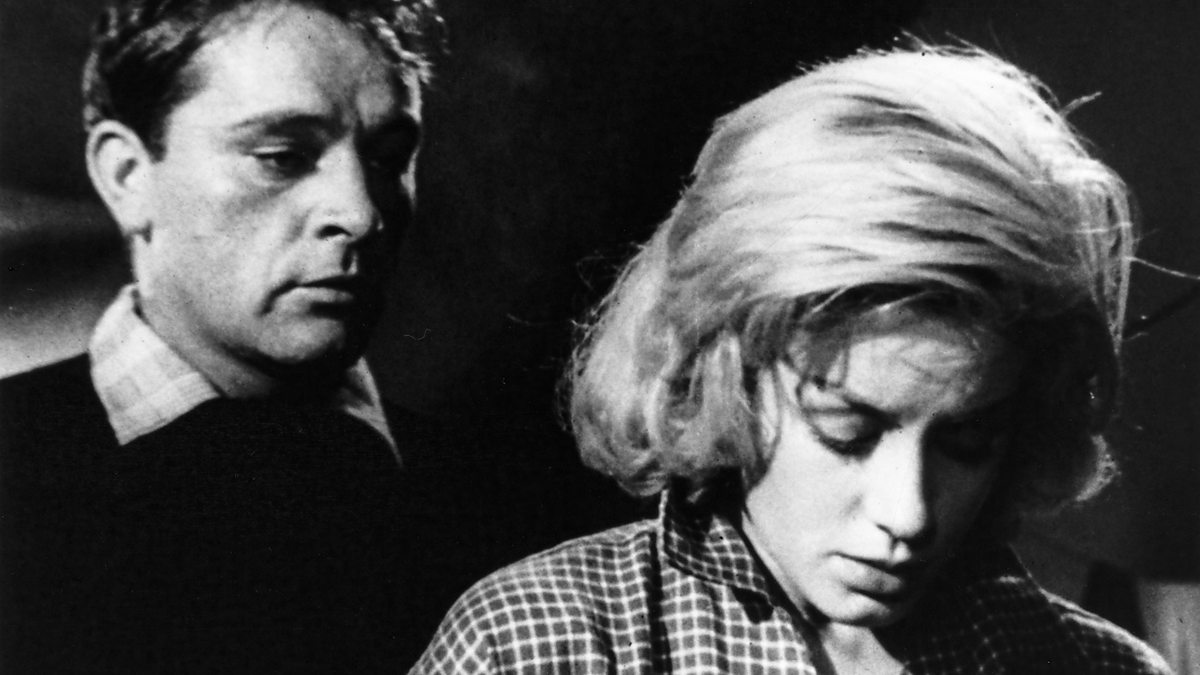
If I was writing this review say 25 years ago, I would not need to provide any details about the content of this play. It formed part of the cultural scenery, largely because of the impact it caused when first performed in the 1950s. Subsequent films (including one with Richard Burton) and revivals meant that everyone knew, broadly speaking, who Jimmy Porter was, and phrases like “angry young man” and “kitchen sink drama” were part of every day discourse.Image result for look back in anger

Now, in 2015, less so. The play is not performed very often, if at all, is not (at the time of writing) on GCSE syllabuses, and the reasons for Jimmy’s/John’s anger seem confused and distant. So to start with a recap. Look Back in Anger is a short play which portrays the relationships of Jimmy Porter, his wife Alison, and their friends Cliff and Helena. There is also a short appearance by Alison’s father, Colonel Redfern. Jimmy is 25, too young to have fought in the war, and is a university graduate. He runs a sweet stall in an un-named Midlands town. It is not entirely clear if this unconventional career choice is voluntary, a rejection of the rat race (in the same way that John Braine’s lead character in “Hurry on Down” becomes a window cleaner) or an expediency to pay the rent. Jimmy is often described as working class, but I think the portrayal of class in this play is more subtle than that – not too many working class people went to university in the 1950s, even if it is more white tile than redbrick, and Jimmy appears to look down on Cliff in class terms, describing him as a ruffian. He is also very erudite, reads the posh Sunday’s, and listens to classical music concerts on the radio. So hardly a working class hero.

His wife, Alison, is however, screamingly middle class. She appears to have married Jimmy, her “bit of rough” to irritate her parents, (particularly her mother), although there is also the suggestion that Jimmy is sexually irresistible. Alison is slumming it, and when the play opens with her ironing Jimmy’s clothes while he and Cliff laze around reading the Sunday papers, she is approaching the end of her tether. Jimmy taunts her constantly, appearing to have already recognised that their relationship is doomed, and therefore accelerating its end. To be fair to Jimmy, he will lash out at any target, although Cliff has developed a technique for handling him – he either gives as good as he gets, or ignores him. Not much happens beyond the grumpy conversations about their Sunday rituals, Cliff the lodger, and old friend of Jimmy’s, providing a foil to much of his good-natured abuse. Cliff and Alison have a strangely overly affectionate relationship which they act out in front of Jimmy, almost to goad him, without success.

Helena, Alison’s childhood friend, arrives as an emissary from the middle class. She spars with Jimmy constantly, and he is right to resent her presence – she makes no secret of her contempt for him and encourages Alison to leave him. Alison breaks the news that she is pregnant – this is clearly unwelcome. She plucks up the courage to leave Jimmy.

It is at this critical turning point that Osborne drops quite a dramatic bombshell (a dead metaphor if ever there was one). Alison leaves, but Helena stays, and confronts Jimmy with the news of his wife’s pregnancy. They fight, she slaps him, he cries, and she jumps on him, passionately, leaving the curtain to fall on what we are led to believe was the consummation of a passion that has been building for some time.

There is an obvious problem here – this switch is utterly unbelievable, psychologically, but the dramatic value of it far outweighs the cost in terms of the audiences’ willingness to believe in these characters. We just have to believe she finds him irresistible, not that she likes him. She quickly takes Alison’s place, literally in that she resumes her stance behind the ironing board, and familiarity quickly descends on Jimmy’s flat. In the play’s climax Alison returns, having lost her baby (strangely I mis-remembered this scene before re-reading the play, thinking she had had an abortion. The scene could be played that way – “I lost the child” could be euphemistic – but perhaps that would have been one taboo too many for Osborne’s 1950’s audience.)

So that’s the play, in summary. I wouldn’t normally spend so much time on a plot as that, but I think it is worth it to provide context for the commentary in my next blog.

Standard
20th century Literature, Book review

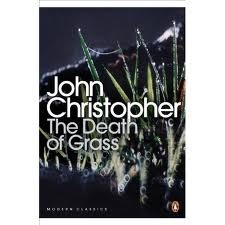
The Death of Grass – John Christopher

I am puzzled why I have never heard of this shocking 1950’s novel before. The threat of nuclear oblivion inevitably had a strong impact on writers in this country, producing a whole crop (ironically, in this context) of post-Apocalyptic novels. Obvious examples are “The Day of the Triffids” and “Lord of the Flies”, the two novels most commonly referenced in commentary on “The Death of Grass”. Although it had previously been out of print for some time before being brought back by Penguin for this edition, it does not suffer from these comparisons. I can however understand why it is not a school text book (as with Lord of the Flies) – there are some shocking, brutal scenes of murder and rape, described dispassionately. 

The re-issue of this novel is timely, because the crisis that precipitates the flight across the country of the band of middle class survivors is not nuclear nor alien, but ecological. A virus arises in Asia that wipes out all forms of grass and remains resistant to any form of treatment. The famines that follow rapidly lead to a breakdown in social order. While grasses may not form the central part of our diet that the novel suggests, this is really not relevant – our food supply chains are stretched, vulnerable and fragile. Equally we may not resort to the lawlessness that engulfs the characters in this novel quite as quickly as appears here – but we might. It is on this issue that the comparisons with Golding are most interesting, because Golding’s cast of characters – schoolboys, albeit mostly middle class, privately educated ones, – has led many to argue that the primitive instincts they give free rein to are only found in little boys, rather than all people. Christopher leaves us here with no such comforting evasions – even the best of us can quickly resort to murder and brutality to defend our families. The veneer of civilisation is frighteningly thin. The men in this novel go from comfortable middle class lives to people who murder innocent families for some breakfast, with hardly a pause for reflection. These are not isolated monsters – around them society fragments with frightening pace, and even the Government contemplates/resorts to (it is not completely clear which) using nuclear weapons on their own people.

The economy of Christopher’s writing is striking, and the pace of the action is a strength of the novel – no time for pauses for breath are allowed. Despite my slow reading in recent months I read this in a sitting. There are some caveats of course – the brutality of the treatment of women in the novel is hard to stomach, even thought they are not all the 1950’s stock characters you might expect, with some of them showing resilience and strength in the face of appallingly difficult circumstances. The digressions on leadership and its role in feudal societies are a little over done, although again at less than 200 pages there is not much time to find this irritating. This is definitely a period novel – post war behaviours, language and attitudes anchor the events of the novel in the 1950s. Class is still a powerful factor in the way people defer to their betters, the war is a very recent memory, and people are self reliant and practical in ways we would struggle with today. But the novel transcends this datedness.

We like to scare ourselves with stories of “What if…?”, and cling to the comforting thought that we would face whatever is thrown at us with a stiff upper lip. That’s the mythology that we used and fostered to help us survive the Blitz and the threat of German invasion in the 1940s. Christopher refuses to offer any comforting conclusion to his disaster novel – the ravaging disease isn’t contained, the army doesn’t arrive at the death to reimpose order. All we have left is family and, if we lucky, a gun.

Standard
20th century Literature, Cold Comfort farm, Stella Gibbons, The Bachelor

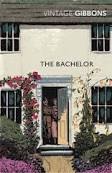
The Bachelor by Stella Gibbons

Oh dear. If you have read anything I have written previously about Stella Gibbons it will be immediately obvious that I rate Cold Comfort farm as one of the best books ever written. Hyperbole? perhaps, because I would recognise the book is not without its flaws, but if I had to choose one book for a life time of desert island living this would be it. It is by far and away the book I have reread the most in my life. But sadly nothing Stella Gibbons ever wrote approached the genius of CCF. In bringing her catalogue back into print Vintage have done us a mixed blessing – while it is exciting to read anything she wrote, the disappointment is inescapable. I will keep reading her to try to capture the magic of CCF, but with steadily decreasing expectation and hope.


The Bachelor is a perfectly decent romantic novel of manners set in 1940s wartime London and the Home counties (a thinly disguised St Albans). The romantic entanglements of the lead characters and supporting cast is handled well, but it isn’t where the interest of the novel resides. To be honest it was the strangely detached description of the war and its impact on the lives of the characters was were I derived my most interest in this novel. The war is a fact of life, a backdrop to pretty much everything the characters do – rationing, the blackout, characters missing on service, the Home Guard, refugees, prisoners of war and evacuees are all there – but everyone just gets on with their lives as if it was a temporary piece of nastiness that sooner or later will pass, which of course it did. The novel was published in 1944 and I suspect written near then, because the threat of invasion or defeat is not even hinted at. The portrayal of the middle class characters who oppose the war and appear to treat it as a case of a misunderstanding between countries taken too far was interesting – these are not conscientious objectors or pro-German or pro-Nazi supporters, more ideological pacifists who think the conflict can be talked away. This pacifism is tolerated as an eccentricity rather than disloyalty or treason.


Towards the end of the novel the war comes more into the foreground. Kenneth the bachelor of the title is in London looking for Vartouhi, the feisty refugee who is less than half his age, (this is not seen as a problem by anyone) who has left his employment after a row with his sister Constance, and is working in a milk bar. He tracks her down in a depressed, bombed out part of London similar to the streets where “Starlight” is set, albeit twenty years later. The extent of the bomb damage is depressing if not to say upsetting, and through this landscape comes Vartouhi, followed by her “boyfriend”, a Canadian soldier with the unlikely name of Raoul who is clearly well on the way to being a psychopath. Although Vartouhi is cheerfully unafraid of the menacing Raoul, Kenneth quickly realises he is dangerous, and sees him off with a show of bravery that seems to draw upon his years in the trenches in the Great War. This section of the novel stands out as a compelling piece of narrative compared to much of the sleepiness of the rest of the book.

So why he “oh dear”. Well first this novel is the reason for my prolonged absence from this blog – it was incredibly heavy going. More than a few pages a night would send me off. The plot consistent solely of the predictable romantic affairs which resolve themselves as expected from the beginning, but take over 400 pages to do so. Very little else happens. The major plot incidents involve an argument about a bedspread – albeit a bedspread loaded with sexual symbolism – and a Christmas visit from an aged relative.
Gibbons handled romance with a delightfully light touch in CCF – the relationship between Flora and Charles is covered in a few lines of text – but when she says “This is forever isn’t it darling?” and he says something romantic about how nice her hair smells, it is utterly convincing. The relationships in the Bachelor are believable enough, but the characters take a very long time reaching the same point as Flora and Charles.
I remain Gibbons’s ardent admirer, and won’t give up on her back catalogue, but now for something completely different….

Standard