Book review

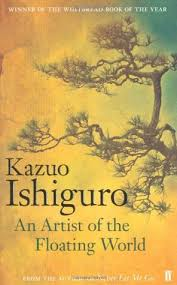
An Artist of the Floating World – Kazuo Ishiguro – 1986

This novel addresses what most be one of the most difficult issues a country has to ever face – how to come to terms with overwhelming military defeat. For Japan, that defeat was all the more painful because its involvement in World War 2 was completely avoidable; and the end of the war, at Hiroshima and Nagasaki was so shocking and final. Ishiguro’s approach to this subject is to walk slowly round it, quietly approaching and then stepping quickly away as soon as the subject becomes too raw.
I am being oblique myself, so let’s explain. The narrator is a painter, Masuji Ono. He has lost a son and a wife in the war, but his two daughters survived. One is married, one going through the complex engagement process used by some Japanese families at the time (and for all I know is still in use). The time structure used in the novel is complex; although each section is dated, giving the reader a misleading reassurance as to the date of the events of that part of the novel, Ono’s account wanders across time, gradually revealing details of his career as a painter. Discouraged by his father from becoming a painter, he runs away from home, and becomes an artist of the floating world – a particular genre of art in Japanese culture. Very slowly Ono reveals his involvement in the rise of Japanese nationalism, and his subsequent disgrace and the rejection of his values by the new, post-war generation. This reveal takes the whole of the story arc, and even then one is left with the distinct impression that we have only been shown a small part of the story.

Ono is a reflective character – he is certainly a deeply flawed narrator, as one would expect, but he is not delusional – he knows that his involvement in Japanese nationalism, painting pictures encouraging the expansion of the empire, was wrong, although the extent of that recognition is unclear: at one point he admits “There is certainly a satisfaction and dignity to be gained in coming to terms with the mistakes one has made in the course of one’s life”, although this is more of a tactical admission than a confession. Ono’s grandson plays an important part in the narrative – he is a really brattish, unpleasant little eight year old, who is encouraged (by his grandfather) to believe that his gender gives him authority over his mother.

There is a profoundly hesitant, tentative feel to the novel. Ono tiptoes around his story, rarely revealing much, and constantly admitting that his recollection may be flawed, The reader is given enough information to piece together the outlines of his story, but only through hints and only rarely through actual events – at one point we are shown him visiting the house of one of his students, who he has reported for anti-nationalist feeling, and it is clear that the authorities reaction has been extreme – we found out earlier that the student was imprisoned for a long time, and apparently tortured. Ono doesn’t understand, or refuses to understand, his responsibility for this situation.

Ishiguro is clearly a writer of some considerable skill – the novel is quite deliberately like a delicate Japanese watercolour, done with great finesse. But the characters – other than Ono himself – are only tentatively drawn – we only see them through Ono’s eyes, and he doesn’t trouble to sketch them in any detail. The language is equally delicate and riven with hesitation, again quite deliberately, giving a very authentic flavour to the narrative, but leaving the reader a little bit detached and remote – the speeches are overly polite, and you need to listen carefully to the subtext to understand what the speakers are really saying, even if the narrator usually misses the point.

Japan clearly went through a huge, if self-imposed trauma before, during and after the Second World War. The price paid was enormous, and understanding how that come to happen is important. Ishiguro gives us one witness’s flawed account, but it is very much that of someone who had only a small, marginal involvement in the tragedy, and I am not sure that it tells enough of the story to be of any value. The book ends without any big reveal, and so does this review.
Standard
100 Best Novels Guardian list, 20th century Literature, Book review, H G Wells, HG Wells, humour, The History of Mr Polly

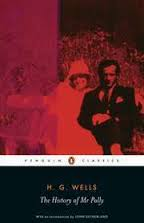
The History of Mr Polly by H G Wells, 1910

Most Victorian novels were about prosperous people. Yes, they sometimes had money worries, but they weren’t urban working class. Dickens changed all that, and people from all parts of the class spectrum became suitable subjects. However, the petit bourgeoise, the shop keeping class, technically bosses in that they were self employed, but dirt poor nonetheless, were largely ignored. That changed with the Grossmiths’ ‘Diary of a Nobody‘ in 1892, and ‘The History of Mr Polly‘ is an early entry in this ‘little man and his troubles’ or ‘white collar’ genre.

Mr Polly‘ opens with him sitting on a stile, grumbling. He hates his life. He doesn’t love or particularly even like his wife, he finds his job as a shopkeeper dull and unfulfilling, and he mourns the absence of any romance or culture in his life. He also suffers horribly from chronic indigestion, representative of his dissatisfaction with life. The first half of the novel is a flash-back from this point, chronicling how he has always felt this way, more or less, and how he reaches this nadir. He settles on suicide as the only logical escape and having made that decision implements his plan quite calmly. Inevitably he botches the job and in the process burns half his street down. Ironically this provides him, in the form of insurance money, an escape route and he runs away. The final section of the novel sees him settled as a handyman at a country pub, living a bucolic but largely culture-free lifestyle that seems to suit him. This life is threatened by uncle Jim, the nephew of the landlady, a thug who menaces her for money. Polly discovers the hero inside himself, stands up to Uncle Jim, and in comic bumbling fashion defeats him.

Polly is quite an engaging anti-hero. He reminded me of Anthony Burgess’s Enderby, one of my comic legends. He has a kind heart, and does his best to avoid causing harm. he takes the hardships in life as they come and looks for pleasure in small things. He has a way of mangling the language which is intended as humorous, and which just about manages to raise a smile. Despite his ineptitude in most things, somehow he manages to come out on top. Some of the set-piece scenes in the novel, such as his father’s funeral, where remote relatives descend on the wake and have a great day insulting one another, are enjoyable. If one looks hard for more serious themes, such as any traces of Wells’ Fabianism, they can be found, but the novel is not openly political. The main ‘message’ of Mr Polly’s history is that one should be true to oneself:

when a man has once broken through the paper walls of everyday circumstance, those unsubstantial walls that hold so many of us securely prisoned from the cradle to the grave, he has made a discovery. If the world does not please you, you can change it. Determine to alter it at any price, and you can change it altogether. You may change it to something sinister and angry, to something appalling, but it may be you will change it to something brighter, something more agreeable, and at the worst something much more interesting. There is only one sort of man who is absolutely to blame for his own misery, and that is the man who finds life dull and dreary”

Mr Polly didn’t have such a terrible life. While slowly going bust in his shop, he didn’t suffer the privations many people experienced, and enjoyed many of the comforts of his Edwardian idyll – an idyll that was to be lost forever just a few years after this novel was published.

Standard
21st century literature, Book review, Terry Pratchett, The Shepherd's Crown

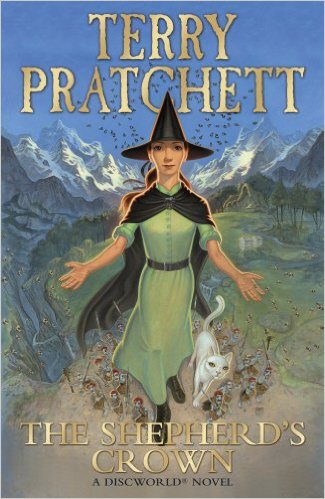
The Shepherd’s Crown (Discworld 41), Terry Pratchett. 2015

Sadly, ‘The Shepherd’s Crown’ will be the last Discworld novel*. I had in my head drafted a response to the critics who claimed that the impact of Terry’s illness can be traced in the overall quality of this novel. The problem with that way of reading the novel is that once you start to look for such connections you inevitably find them. But why stop there – can you find the pages in Great Expectations where Dickens had a heavy cold in 1861 (yes, I had to look that up), or the chapters in Mrs Dalloway where Virginia Woolf was feeling particularly depressed that day. The book is what it is. However, in a well meaning but ultimately unhelpful postscript to this edition, Rob Wilkins, Terry’s assistant, wrote “The Shepherd’s Crown has a beginning, a middle and an end, and all the bits inbetween. Terry wrote all of those. But even so, it was, still, not quite as finished as he would have liked when he died. If Terry had lived longer, he would almost certainly have written more of this book”. Once you know that, you can’t un-know it, and it influences the way you read the novel. You start to look for weaker passages of descriptive writing, jokes that fall slightly flatter than usual, plot lines that dwindle away. The fact that every Discworld novel has similar features seems irrelevant. It devalues what would otherwise have been a marvellous addition to the series – and which I stubbornly think it still is.
The Tiffany Aching series of Discworld novels was always positioned as Young Adult fiction. I am not sure whether if you didn’t know that, it would affect your overall enjoyment of the novel. This series is slightly less complex than the usual DW affair, and the level of menace toned down. But not much – this novel still has some seriously nasty elves who torture babies and dismember cuddly bunnies. These scenes are balanced by the way the elves are easily dispatched by Tiffany and her ragtag army of old men in sheds, part-time witches, and the glorious Mac Nac Feegles.
I’ve made no effort to avoid spoilers in this blog thus far, but I am going to make an exception here. One of Discworld’s best loved characters dies in the opening chapters of ‘The Shepherd’s Crown’, and if you don’t want to know who it is, look away now.

—————————————————————————————–

One of the reviews I read online in preparing this blog entry very insightfully observed that in describing Granny Weatherwax’s death, Pratchett was teaching us how to mourn. How right that is. These scenes are some of the best in the whole canon. Granny had fought Death tooth and nail at other points in the series, but here she accepts her fate with calm fortitude. The characters who survive her mourn her and then carry on doing the work that is in front of them, as we should.
Other things that are wonderful about this novel and the overall series:
1.     The highbrow jokes. Pratchett throws in casually some “English” jokes that might elude international readers. There is an extended reference to ‘Dad’s Army’, and at another point to Monty Python’s ‘Lumberjack’ sketch. Quotes from and allusions to Shakespeare echo throughout the series, and I even spotted a reference to Keats – one character’s reference to someone looking with “wild surmise” which is a quote from the sonnet “On First Looking into Chapman’s Homer”.
2.  Atypically for this genre, Discworld has many well developed female characters. Almost all of them are stronger in their own ways than the menfolk, and all are completely believable and convincing. They are flawed and often full of self doubt, which makes them all the more convincing.
3.     There’s a lack of sentimentality about the novels. People die, back guys do bad things, and while good always triumphs there is a price. ‘The Night Watch’ is a wonderful example of this.
4.     The novels fizz with ideas, some silly, some magnificent. In ‘The Shepherd’s Crown’ the world is changing, seeing the beginning of the Railway Age, and with it the beginning of the end of the world of magic. What better time and place for Terry to take his bow.
*Except of course it won’t be. The Discworld is far too vibrant not to survive the death of its author, and it will continue in fanfiction, incomplete work finished by others, and other work licensed by his estate and publishers.
Standard
21st century literature, Book review, J K Rowling, The casual Vacancy

The Casual Vacancy by J K Rowling

This is a bit of a trojan horse of a book – ostensibly about middle England’s parochial concerns about a vacancy on the parish council of a small town in the West Country, this novel actually addresses a wide range of social issues, from self harm, racism, prostitution, domestic violence, etc, etc. Its like an episode of the Archers on crack.

The litmus test, as always, is was it a good read? The change of style from the Hogwarts novels is dramatic, and takes time to adjust. We then have a large cast of broadly similar characters doing largely similar things. Sorting out who is who takes a while. The election, when it finally comes, is a damp squib (ha ha, Hogwarts joke there for you) and some of the more melodramatic plot twists are telegraphed some way off. So far so bad, but despite that I found myself turning pages interested in what happens next.

Rowling’s middle England is a bleak, dark place. There’s not one happy family – all the children seem to despise their parents, with good reason. Huge psychological neuroses are carried around on shoulders young and old. A doctor refuses to treat a heart attack patient. There is no love or affection that is fulfilled. The only glimmer of hope for this community dies in the first chapter.

This novel has attracted over 500 Amazon reviews, so the chances of me having much original to say about it are slim. It has been portrayed as a political attack on the middle class, sneeringly done by someone whose political roots and allegiances are with the council estate rather than the detached mansions she now inhabits. This is of course simplistic; Rowling has not rewritten Hard Times here. But the mention of Dickens leads me cunningly on to what I think might be an original point. In this novel the Parish Council website is hacked four times, by four different characters, and messages are posted on the sites comment forum by “the ghost of Barry Fairweather”. Note – “the ghost of BF”, not “BF’s ghost”. Four ghosts – ring any bells? I think there is a deliberate, subtle reference here to the four ghosts in A Christmas carol, including the three Ghosts of Christmas Past, Present, and Future. Is Robbie Weedon a Tiny Tim figure perhaps?

Why – just a coincidence, or is Rowling making a more subtle point about regret. There is no Scrooge-like redemption at the end of this novel, and I clearly can’t build much of a case for the reference – but I bet it is there somewhere.

Standard
http://schemas.google.com/blogger/2008/kind#post

Crime and Punishment – Fyodor Dostoievsky

Raskolnikov, a former student, having discontinued his studies through lack of money, lives a bitterly impoverished life in St Petersburg. His pride is wounded by receiving small amounts of money from his mother and sister living in the country. He hears from his mother that his sister has recently left her post as a governess in scandalous circumstances. She is rescued by an offer of betrothal by a wealthy local man, and accepts in the interests of financial security rather than any trace of affection. This dilemma mirrors his own, caused by his poverty. To break out of this situation he decides to murder and rob a local pawnbroker, which he does, killing the woman’s sister along the way.

His state of mind during this killing, and thereafter during the months of the investigation of the crime, is the focus of this novel. The author reveals this to us mainly through the narrator’s commentary. While the murder – with an axe – is brutally described, Raskolnikov never reflects on the details of his crime or expresses any remorse. Nevertheless the psychological trauma of the event cannot be suppressed, and he falls ill, and behaves in such as way as to arouse the suspicions of the police and his family and friends. He is blessed with very steadfast friends and family who stand by him, believing in his inherent goodness, right through to the end of the novel. Raskolnikov lies to himself, suggesting that the murder was something he never really intended to do, while simultaneously showing us the detailed and devious preparation he has made for the murder. He could easily have avoided detection or capture if he had the will to do so. Instead he crumbles and confesses, and is sentenced to eight years in a Siberian labour camp, where he is followed by his adoring prostitute lover, Sonya.

This was not an easy read. The translation, for me, was wooden, and the original language must have been very intense and complex to have produced such turgid prose. It was a struggle to finish and there was little doubt all along about the outcome – the title tells us Raskolnikov is not going to avoid eventual capture and punishment. The tendency for each character to have multiple names only added to the confusion.

Reviewing “classics” is never easy, even less so when the novel is a translation, and much loved by many readers. The entry point is hard to find – one’s own reading and judgments risk being facile, plot summaries are available elsewhere online with much more detail than my memory can supply, and all that needs to be said has been said elsewhere, many times over. I prefer reviewing works that are less monolithic than this. But having read the novel it is in keeping with the spirit of this blog that I record some impressions, however simplistic.

The idea that a novel can be driven by a character who is both a murderer and someone the reader is invited to identify with, even like, was a dramatic shift from a world where only black and white positions existed, with no scope for any shades of grey. I couldn’t warm to Raskolnikov, and as a result I found less and less of the novel to engage with. I did finish, but it was a challenge.

Standard
21st century literature, Booker Prizewinner

The White Tiger – Aravind Adiga

The White Tiger won the 2008 Booker Prize.

This first novel is written in the form of a letter to the Premier of China as an introduction to modern India. The author is not a fan – of modern India, that is, not China. India is a rich source of material for contemporary novelists, (for example, the Inheritance of Loss) and seems to be favoured by Booker judges. The novel charts the life of the narrator as a chauffeur to a prosperous family, and portrays the country as sordid, brutal, and above all bitterly corrupt.

If written by a Western author this account could be easily have been seen as racist. The author’s closeness to the country he describes probably deflects that criticism. Nevertheless there are virtually no redeeming features of the country – the bravery of people who fought for India’s independence is mocked, the beauty of the countryside goes unmentioned, and no-one acts through anything other than cowardice or self interest. The Indian Tourist Board will not be recommending this book in a hurry! It is an indictment of the country India has become in the years since independence, and is horribly unbalanced compared to say Slumdog Millionaire, which shines a light on the underbelly of India but equally shows the beauty of the country and its people.

The plot is very simple. The narrator murders his boss, and runs away with his money, showing a small amount of compassion by taking his nephew with him, despite knowing that the rest of his family is almost certain to be slaughtered in retaliation. Using the stolen money he bribes his way into a position of influence, and gloats over those he has left behind. We are told this fairly on in the book, so I am not including any spoilers. Years later he records his crimes in letters to the Chinese Premier, a plot device that makes little sense incidentally. The central character is deeply unpleasant; as well as being an unrepentant murderer, he is also bigoted towards gays, black people, and women. of course I am not suggesting the author shares these views, but they are presented without adequate challenge. Just because bad views are expressed by a bad person doesn’t make them any more palatable.

By coincidence I am also reading “Crime and Punishment” at the moment, and although the comparison is probably unfair, Dostoyevsky does something Adiga does not (or cannot), which is given us an insight into the mind of a killer. While the portrait of Raskolnikov shows us the internal struggles a killer goes through, in White Tiger the killing is shown as a simple commercial transaction, with little or no horror, nor psychological consequences – extraordinarily I have even seen one reviewer describe the murder as “brave”. Killing someone in cold blood and leaving your family and friends to live or die with the consequences isn’t brave. It’s not even as if the main character was living an impoverished life on the streets – he was doing fairly well as a chauffeur. I appreciate the author isn’t saying “Life in India is so bad murder becomes acceptable” – what he is surely is presenting us with is a world where morality has disappeared, so much so that a murderer sees little wrong with their crime, because they see similar acts of immorality being rewarded all around them. This is “Crime” with no “Punishment”.

All in all a strange Booker choice, subverting many of our expectations about what novels about modern India should be, but with very few redeeming features.

Standard
Book review, Ian McEwan, On Chesil Beach

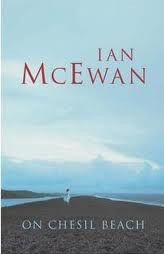
On Chesil Beach by Ian McEwan, 2007

I am going to break all my rules and say what I think this book is about, bearing in mind that I am not sure I even believe in the idea of books simply being “about” one thing.
The plot, such as it is, is quickly summarised in McEwan’s opening sentence:
They were young, educated, and both virgins on this, their wedding night, and they lived in a time when a conversation about sexual difficulties was plainly impossible”. 
We go on to find out that the couple are named Edward and Florence, are in their early twenties, and that the novel is set in summer 1962. Florence is terrified of the imminent consummation of the marriage – which never actually occurs, Edward suffering a spectacular bout of “over-excitement”. After this traumatic start the marriage, indeed the honeymoon, never recovers, and scarred by disappointment and fear they part.
When I first read this novel, shortly after the splendid Atonement, I thought it was about those moments in people’s lives where roads part, and where a word at the right time could change the course of events. The narrator in closing the book explicitly invites the reader to view it in that way. A kind word or words by one or other of the main characters could have rescued their relationship. Fear of sex combined with first night nerves probably feature in many honeymooners’ experience, but love manages to bring couples through the other side.
So why is Florence – (echoes of Florence Nightingale perhaps?) – so scared of sexual contact with her husband. She is clearly torn between her love for him, and her fear of sex – McEwan describes this as a “secret affair between disgust and joy”(page 23). Even French kissing, portentously reminiscent of intercourse itself, makes her want to gag.
The author never tells us directly what causes this fear, but “clues” are scattered throughout the text. On the opening page we are told Florence is an old hand at staying in hotels (a strange expression) “after many trips with her father”. Not with her parents note. Later, when describing Florence’s childhood, we are told (page 54) “Florence found it harder to contradict Geoffrey (her father). She could never shake off a sense of awkward obligation to him. Among the privileges of her childhood was the keen attention that might have been directed at a brother, a son. …And then the journeys: just the two of them, hiking in the Alps, Sierra Nevada and Pyrenees, and the special treats, the one-night business trips to European cities where she and Geoffrey always stayed in the grandest hotels.
Where is her mother, very much still part of the family, when these jaunts are going on? We are not told. Why is it “Geoffrey”, not “her father”?  The omniscient narrator appears to be viewing these jaunts as unexceptional, nothing out of the ordinary, but this is clearly Florence’s flawed perspective rather than a reliable viewpoint. Her relationship with her mother on the other hand is fragile and unphysical “Violet had barely ever touched her daughter at all” (Page 55) – we are left to infer why, but the mother must have withdrawn affection from her daughter for a reason.
When the dreaded moment approaches, and Edward is about to “make his move”, Florence lies back and thinks herself elsewhere. Her mind takes her to an occasion when she
was twelve years old, lying still like this, waiting, shivering in the narrow bunk with polished mahogany sides….her father was moving about the dim cramped cabin, undressing, like Edward now. She remembered…the clink of a belt unfastened…her only task was to keep her eyes closed and to think of a tune she liked. Or any tune. She remembered the sweet scent of almost rotten food
It can’t be a coincidence surely that her memory of this scene is prompted by her imminent if ultimately unsuccessful “deflowering”.  McEwan has given Florence this memory for a reason. Something has traumatised her. In both scenarios she feels a passive victim of male lust. So when Edward finally gives out a wail “the sort of sound she had once hear in a comedy film when a waiter appeared to be about to drop a towering pile of soup plates” (candidate for simile of the year in my book) her revulsion, as well as the immediate visceral objection, has
another element, far worse in its way, and quite beyond her control, summoning memories she had long ago decided were not really hers. … She was incapable of repressing her primal disgust”. (My emphasis)
Why would this incident summon memories she had decided long ago were not hers? What memories, and why were they far worse than her already strong reaction?
Finally, when they are on the beach itself, discussing her reaction, she jokes “perhaps what I really need to do I kill my mother and marry my father” (page 153). Indeed.
I think we are being invited by McEwan, without being told to do so, to consider the distinct possibility that this is a novel about how sex abuse can happen in the best of families, and how it can ruin lives. The final paragraphs telling us to think of the novel as being about turning points in our lives is misdirection.
Of course this is just one element to the book. There are many carefully drawn scenes, and the sense of time and place, that precarious moment in the country’s history “between the end of the Chatterley ban, and the Beatles’ first LP”, where memories of the war are still strong, and national service is still in force, is exquisitely drawn. The writing is confident and precise, and although only 150 pages long I believe this is McEwan at his best.
P.S. One final point, to indulge my hobby of joining the dots between books – I spotted a strong echo of Lawrence in the scene (page 46) where Edward cycles, “at reckless speed, for the brakes barely worked” which reminded me of Paul Morel’s barrelling around the lanes of Sons and Lovers on a bicycle without brakes, risking life and limb and demonstrating his manly bravado.
 

Standard
History

The Greatest Day in History – Nicholas Best

The Greatest Day in History – the 11th Hour of the 11th day of the 11th Month – How the Great War Really Ended by Nicholas Best (Phoenix 2008)
I am probably being pedantic here, but I see a bit of a contradiction between this book’s title and its sub-title: either the book is about the 11th November 1918 – the day – or the 11th hour of that day, or about how the war really ended, which is infinitely more complex than just the analysis of one hour or day.
Pedantry aside, what the author has done here is actually very interesting – he has gathered together a series or memoirs and recollection of the end of the First World War, and woven them together. Sensibly he hasn’t been dogmatic about the time span, and where the narrative requires it he has gone outside the 24 hour constraints.
The book is a curious mixture of these memoirs with some genuine historical analysis, charting hour by hour how the Germans came to sign the Armistice. Armistice not of course surrender, a detail which matter significantly for the later course of European history. The Nazi version of events, whereby the undefeated German army was betrayed by the politicians, is comprehensively demolished through this detail. The last hours of the Kaiser before the abdication is also minutely described. Other scenes are more impressionistic – what various famous or to be famous people were doing at the time of the Armistice.
Many scenes from this book stayed with me, including the account of how, when the news that an armistice and ceasefire was imminent, some troops rushed to the front so they could claim they had “seen action”, not wanting to miss the last chance to have a go at the “Boche”. Some men died minutes before 11, and of course some fighting went on after 11.
I was a little surprised that this approach worked – that a deep dive into one day could tell so much about broader European historical themes such as the end of the second Reich and the Austro-Hungarian empire, instead of a traditional, broad narrative sweep across the years. The use of so much raw material, especially the diaries and letters, gives the account an immediacy and urgency – you can share the elation, the relief, and the bitterness as the war ends.
For anyone who wants to read about the Great War but doesn’t want to lose the personal stories of those involved, this is highly recommended.
Standard