Book review, Jane Austen

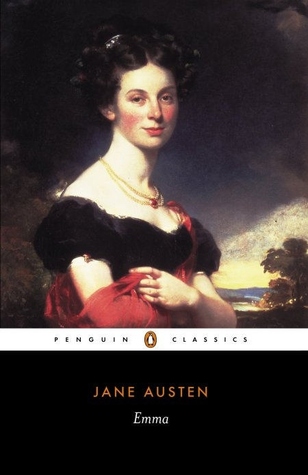
Emma, by Jane Austen, 1815

Emma, by Jane Austen, 1815

Of all the authors I have written about over the last three years, Jane Austen is arguably the one who generates the fiercest loyalties and the most ardent passions. This can’t all simply be down to Colin Firth’s impromptu dip in the television adaptation of ‘Pride and Prejudice’, surely? While her novels are admittedly eminently suitable for television serialisation, they are so much more than that – for me they stand out as some of the greatest works of the nineteenth century, and I am going to use this review of ‘Emma’ to try to explain why.

Austen is an unparalleled miniaturist – the scope of her novels is usually very tightly confined inemma
time and place, yet within these constraints the portrait of utterly convincing characters is what makes the novels so successful. Her characters find such a strong place in people’s affections. They are believable and recognisable, none more so than those in ‘Emma’.

Emma’ tells the story of a year or so in the life of Emma Woodhouse, a prosperous young women living with her father in Surrey. Her social circle is small, and she is clearly bored, her former governess Miss Taylor having just married a neighbour, Mr Weston, leaving her with time on her hands. She fills this time with matchmaking, first trying to match her friend Harriet Smith to Mr Elton, the local vicar. This and all subsequent efforts are disastrous, although ultimately do little long term damage. Into this settled and neatly circumscribed world come two new characters – Frank Churchill, Mr Weston’s son from his first much earlier marriage and Jane Fairfax, the orphan niece of Miss Bates, one of Emma’s neighbours. The plotting is as adept as a murder mystery, and it all plays against the comic backdrop of misunderstanding and romance.

On one level, the novel can be enjoyed simply as a light hearted romance, with a happy ending and marriages, the social order preserved with everyone marrying at the right level of social status. The status quo prevails and is passed down to the next generation. A political reading of ‘Emma’ is appealing, but has been done very well elsewhere, so in the interests of trying to find something new to say I am not going to rework that interpretation here. 

Another way of looking at ‘Emma’ is to consider Austen’s extraordinarily sophisticated control and use of point of view narration. The narrator views the events of the novel largely from Emma’s perspective – we see what she sees and have access to her internal monologue, her thoughts and feelings. But this is not a first person narration – the point of view is one step distant from Emma herself, and allows the reader just enough separation from her perspective to spot when she is being self deluding or simply wrong. I have read that Austen was the first novelist to use this technique (which I am going to take on trust) – certainly she uses it masterfully, the subtlety of which only really emerges with a re-reading (which this was) when the reader knows the denouement and the varies twists in the plot and can spot when Emma is mistaken. There are no moments when the reader is hit over the head with “plot device happening here” warning signals – apart from, arguably, the “blunder” scene, when a secret romance is nearly revealed. The point towards the end of the novel where the narrator strays from Emma’s perspective, when we are shown Mr Knightley’s thoughts, stands out starkly and prompts the reader to consider his ideas and comments all the more carefully, such a contrast as they are from Emma’s speculations and fancies, which by now the reader has come to mistrust.

Emma’s capacity for self-deception is extensive and shown most clearly in her response to the thought of Mr Knightley marrying Harriet Smith:

She could see nothing but evil in it. It would be a great disappointment to Mr. John Knightley; consequently to Isabella. A real injury to the children—a most mortifying change, and material loss to them all;—a very great deduction from her father’s daily comfort—and, as to herself, she could not at all endure the idea of Jane Fairfax at Donwell Abbey. A Mrs. Knightley for them all to give way to!—No—Mr. Knightley must never marry. Little Henry must remain the heir of Donwell.”

The extent of her genuine concern for her nephew little Henry’s interests are shown at the end of the novel, when they occur to her as an afterthought which is quickly discarded.

The character portraits in ‘Emma’ are astonishingly acute, not least in the portrayal of two contrasting chatterboxes, Mrs Elton, the new wife of the vicar, and the adorable Miss Bates, Jane Fairfax’s aunt (“Unluckily, I had mentioned it before I was aware”). It is interesting to contrast these portraits, which Austen achieves using similar techniques. First, the narrator gives us this monologue as Mrs Elton picks strawberries at Mr Knightley’s party:

The best fruit in England—everybody’s favourite—always wholesome. These the finest beds and finest sorts.—Delightful to gather for one’s self—the only way of really enjoying them. Morning decidedly the best time—never tired—every sort good—hautboy infinitely superior—no comparison—the others hardly eatable—hautboys very scarce—Chili preferred—white wood finest flavour of all—price of strawberries in London—abundance about Bristol—Maple Grove—cultivation—beds when to be renewed—gardeners thinking exactly different—no general rule—gardeners never to be put out of their way—delicious fruit—only too rich to be eaten much of—inferior to cherries—currants more refreshing—only objection to gathering strawberries the stooping—glaring sun—tired to death—could bear it no longer—must go and sit in the shade.”

Note the progress from ‘never tired’ to ‘tired to death’! Later, as Miss Bates arrives for the ball at the Crown Inn, her comments are similarly fractured, but there is not an ounce of malice or self aggrandizement in them:

Thank you, my mother is remarkably well. Gone to Mr. Woodhouse’s. I made her take her shawl—for the evenings are not warm—her large new shawl— Mrs. Dixon’s wedding-present.—So kind of her to think of my mother! Bought at Weymouth, you know—Mr. Dixon’s choice. There were three others, Jane says, which they hesitated about some time. Colonel Campbell rather preferred an olive. My dear Jane, are you sure you did not wet your feet?—It was but a drop or two, but I am so afraid:—but Mr. Frank Churchill was so extremely—and there was a mat to step upon—I shall never forget his extreme politeness.”

This is stream of consciousness writing in its most sophisticated and economical, 100 years before Joyce and Woolf, and while mainly about the characterisation manages to progress the plot as well.

There are several characters in the novel who do not step fully into the light until late in the day. Mr Knightley, Emma’s brother-in-law (her older sister married his younger brother, apparently some years earlier – they have five children) and neighbour is referred to as present in several scenes, but has very few lines to himself and remains enigmatic for much of the novel. (I confess, when I first read ‘Emma’ several years ago I did not understand the convention of naming the eldest son Mr Knightley and the younger son Mr John Knightley, which caused considerable confusion) until Emma’s schemes force him to intervene. Jane Fairfax is if anything even more undefined, having very few lines of dialogue and only being shown through Emma’s distorted perspective. Both characters ultimately emerge as central to the novel’s conclusion.

I can’t end without mentioning the comic masterpiece that is Mr Woodhouse, hypochondriac (and yes, I accept that getting a chill was something much more serious in this period than it is today) and control freak par excellence. Emma surely derives her capacity for self delusion – the world is as I wish it to be – from her father.

As a romance ‘Emma’ must take second place in Austen’s works behind ‘Pride and Prejudice’, but as a comic novel, and as a masterpiece of controlled story-telling, I think it comes out just ahead. Happily, we do not have to choose between the two!
Standard
Book review

Little Women, by Louisa May Alcott, 1868 & 1869

The Guardian top 100 novels in English has led me to some strange reading experiences, but there are few novels I would have been less likely to read than this, Alcott’s semi-autobiographical tale of growing up in a strangely unreal nineteenth century America.

‘Little Women’ was originally published in two volumes in 1868 and 1869. Alcott wrote the books rapidly over several months at the request of her publisher, and follows the lives of four sisters—Meg, Jo, Beth, and Amy March— from childhood to womanhood. The novel is extraordinarily saccharine – the girls/women rarely err, and if they do so it is only for the mother – ‘Marmee’ – to intervene with a moralising lecture on the Christian thing to do, which immediately puts things to right – for example.

“My child, the troubles and temptations of your life are beginning, and may be many; but you can overcome and outlive them all if you learn to feel the strength and tenderness of your Heavenly Father as you do that of your earthly one. The more you love and trust Him, the nearer you will feel to Him, and the less you will depend on human power and wisdom. His love and care never tire or change, can never be taken from you, but may become the source of lifelong peace, happiness, and strength. Believe this heartily, and go to God with all your little cares, and hopes, and sins, and sorrows, as freely and confidingly as you come to your mother.”

There is a really vast amount of this improving stuff.

The first half of the novel, published as a separate book but now considered the first half of the wider work, is set during the American Civil War. The family’s father is away serving in the Union army as a chaplain, and even though he re-joins the family at the end of the first novel, he remains a vaguely defined character with barely half a dozen lines of his own across the whole novel. The absent father is of course one of the most dominant tropes in children’s stories, but this lack of definition pervades the whole novel – the setting is Concord, Massachusetts, but the town and environment is so weakly explored that it could really be anywhere. The war is distant and has no impact on the lives of the characters other than the men who slip away to fight and reappear in passing a few chapters later – their stories are not allowed to intrude. While the March family is portrayed as poor, the golden rule of Victorian literature – that no family is too poor not to have servants – still applies, and the family are also able to patronise with charitable endeavours the local dirt-poor German and Irish immigrants of the town.

As what is effectively an updated version of ‘Pilgrim’s Progress’ (there are lots of references to Bunyan throughout ‘Little Women’) this novel formed the template for generations of children’s, and specifically girls stories. To give her credit, Alcott does have the guts to kill of one of her main characters, but the dying is done so gracefully and with such patience that it seems more like a blessing than a tragedy.

What possible reason could any 21st century reader have for revisiting this novel? Are there any redeeming features or points of interest? Frankly, I struggled to find any. Some critics have claimed it as a feminist tract – the March family are mostly strong independent women, but they all find fulfilment in marriage (apart from the sister that dies, of course). The gender constraints they face are accepted as a fact of life, and even the feisty Jo, the character closest to Alcott, who herself did not marry, succumbs to a proposal from a father figure in the end.

But I will just have to accept that I am not and never was the target audience for this novel, and that my inability to appreciate it should take nothing away from those who enjoy it as younger readers, and continue to return to it for its comforting familiarity.

Standard
Book review

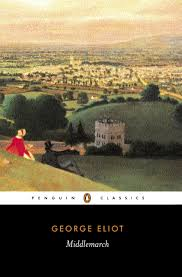
Middlemarch, by George Eliot, 1871-72

Most (or should that be many?) Victorian novels end with a marriage. The bedroom door is closed on the newly-weds, and other than the occasional “we lived happily ever after”, the story closes. (Jane Eyre famously ends with “Reader, I married him” – except of course that it doesn’t, and Jane’s narration gives us a glimpse of her happy married life with Rochester (“I have now been married ten years. I know what it is to live entirely for and with what I love best on earth….No woman was ever nearer to her mate than I am: ever more absolutely bone of his bone and flesh of his flesh”). The conventional narrative arc follows the couple on a long and often difficult journey, and ends with their wedding as the culmination of the relationship, whether it is Emma and Mr Knightley, Jane and Mr Rochester, or Elizabeth and Mr Darcy.mm

Middlemarch inverts that convention, and opens with a marriage, between a couple who are intellectually suited but otherwise unlikely. Dorothea, nicknamed Dodo by her sister, emphasising were it necessary her awkwardness, while still a minor (i.e. under the age of 21) falls for Reverend Casaubon, a dry as bones vicar more than twice her age. Eliot goes out of her way to emphasise Casaubon’s physical unattractiveness and decrepitude – we see him not just through Dorothea’s eyes, but also from the perspective of her sister, Celia, who comments tellingly on his “white moles with hairs on them”. One of the strengths of the novel is Eliot’s sophisticated use of point of view – her narrator will often intrude personally into the novel, but at other times more subtly takes the perspective or voice of one or other of her characters.

Eliot tells us in the novel’s introduction how to interpret the events about to be portrayed:

“Here and there a cygnet is reared uneasily among the ducklings in the brown pond, and never finds the living stream”.

Middlemarch is the brown pond, Dorothea the cygnet doomed to spend her life cut off from the living stream. I’ll discuss Dorothea and Casaubon’s relationship in more detail in a separate post – it is central to the novel – but the reader is given many strong hints that marriage is doomed to unhappiness from the start. When Will Ladislaw, Casaubon’s cousin, is introduced, the threat to the marriage is obvious. Eliot seems obsessed with Ladislaw’s hair, relentlessly referring to his “light brown curls” and his “bushy light-brown curls”, emphasising his vitality in contrast to that of his cousin.

Middlemarch is widely considered one of the great Victorian novels. It is certainly very long, and has an extensive cast. The Midlands setting is largely irrelevant – this could be also anywhere in England, except perhaps London, and while most commentators think the political context, the years preceding the 1832 Reform Act, is significant, the concept of a country in the process of momentous change intrudes only briefly, when the railways start to come to Middlemarch, and is otherwise largely irrelevant. The narrative is complex and weaves together numerous smaller plotlines, although Dorothea’s story, and the career of Dr Lydgate, the two tales from which the novel was originally woven, are the principal components.

The novel’s mechanics, whereby the dark secrets of Mr Bulstrode, the town’s financier, are revealed by his blackmailer whilst drunk, have a distinctly Dickensian feel to them, and are some of the novel’s least successfully parts. They are heavily flagged “plot devices happening here, pay attention, this is important”. Anyone reading ‘Middlemarch’ to learn about nineteenth century life in middle England will be sadly disappointed – the principal characters are drawn from a narrow social class, and will the working class and agricultural labourers are represented (unlike in, say, Austen) they are all bit-part players primarily there for comic relief. Eliot claims to be giving the little people a voice – the novel concludes “that things are not so ill with you and me as they might have been, is half owing to the number who lived faithfully a hidden life, and rest in unvisited tombs”. These are the people who have made this country through their small, undramatic efforts.

Is the novel worth reading, and is it a success. I confess my first reading of ‘Middlemarch’ several decades ago left on the barest impression, that of the unlikelihood of Dorothea and Casaubon’s relationship. Other characters left barely a trace. I found reading the novel a labour the second time of asking – it is less than the sum of its parts, and I found no-one to identify with or engage my interests. I really didn’t care what happened to them all; they rarely became living creations, are remained mostly people in a book. I appreciate this is to many complete heresy, and is a personal reaction rather than a well-constructed criticism of the novel itself. But I did find plenty of interest in the relationship between Dorothea and Casaubon, and that will be the focus of my next blog entry – watch this space!


Standard
Book review

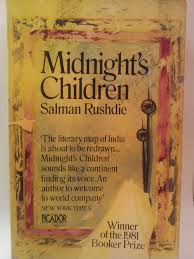
Midnight’s Children, by Salman Rushdie, 1981

I found ‘Midnight’s Children’ a challenge. It is a novel that has been showered with praise and awards and rightly so. While it is overall a complex narrative, with a very large cast of characters and multiple locations, at the same time the autobiographical structure and the single narrator allow the thread of the story to be picked up reasonably easily, even when the novel is read in small portions, as I did in this instance.mc

So why the struggle? What is it about Rushdie’s novel that prevented me from reading much more than a dozen pages at a time? I’ll return to that question when I have worked through my other observations about the novel, which may help formulate an answer.

The title of the novel refers to all the children born between midnight and one a.m. on the day of India’s independence from the United Kingdom. Rushdie’s conceit is that these children – several hundred of them – are born with magical powers.  The story’s narrator, Saleem Sinai, born at the exact moment of midnight, is telepathic, (although this power plays a surprisingly minor part in the overall events of the novel). Using this power he assembles a ‘Midnight Children’s Conference’ of all the gifted children – a conference that has huge potential, but never goes beyond discussion, and is eventually neutered, literally, and destroyed. The obvious point being made here is about the squandering of India’s post-independence potential.

The novel does not start at this point – Saleem takes his time reaching the disclosure about his magical abilities, spending a lot of the opening book of the novel giving us the background to his birth. This leisurely approach– as a narrator Saleem is very long winded – is part of the readability challenge I mentioned in opening.

Saleem’s story is openly allegorical of the story of India’s independence. Even the most obtuse reader could not avoid the numerous links Rushdie draws between his protagonists and Indian history – for example, Saleem’s story includes a number of the migrations and wars which plagued (and continue to plague) his country’s post colonial history.

Midnight’s Children is a wildly ambitious novel, huge in scope, a dissertation on identity, memory, nationalism, and family. In almost all instances it succeeds, and rightly deserves the awards and success it has received. My inability to engage with the text on this reading is I am sure more a reflection of my appetite for novels of this kind that the success or failure of the novel itself. While reading I could recognise the skill and intelligence involved in the construction of the novel I couldn’t warm to the characters or find much interest in the plot. When your main sensation on finishing a novel is relief you know you need to take a break from the classics – I am now reading Kurt Vonnegut’s ‘Cat’s Cradle’ and the contrast in the experience is marked.

Standard
Book review

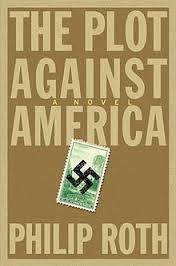
The Plot Against America – Philip Roth 2005

Having enthusiastically reviewed Roth’s breakthrough classic, I thought it would be interesting to try a novel from the other end of his career. The Plot Against America is an alternative history novel, that asks what would have happened if Charles Lindbergh had been the republican candidate for the US Presidency in 1940, and had been elected on a wave of anti-war sentiment.

The election of Donaldroth Trump Continue reading

Standard
Book review, Booker prize nominee, Booker Prizewinner, Naipaul

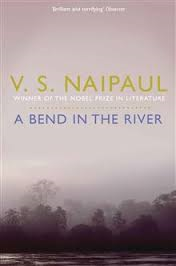
A Bend in the River, by V S Naipaul, 1979

‘A Bend in the River’ reads like an updating of Conrad’s ‘Heart of Darkness’, taken 60 or 70 years forward into the post-independence period. As with ‘Heart of Darkness’, ‘A Bend’ is set in an unnamed African country in the interior of the continent. The setting is not the only similarity between these books – both have colonialism as their principal themes, and both are pervaded with a sense of impending danger and disaster. Naipaul Continue reading

Standard
100 Best Novels Guardian list, 20 Books of summer, 20th century Literature, American literature, Book review

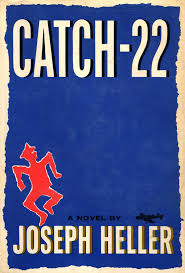
Catch 22 by Joseph Heller, 1961

I was slightly nervous on approaching a re-read of ‘Catch 22’. We are all familiar with the22 original experience of a much loved book, television programme or film being much weaker when revisited (for some reason this is particularly true of television programmes – some iconic series such as The Prisoner, or Monty Python, utterly brilliant at the time, are almost unwatchable a few decades on). Comedy that is side splitting becomes dull and predictable. Novels that once seemed compellingly relevant and important lose any impact. What once worked well in a specific cultural context now seems pointless. Would ‘Catch 22’ suffer in the same way? Continue reading
Standard
100 Best Novels Guardian list, 20th century Literature, American literature, Book review, Don Delillo, Underworld

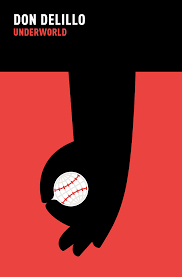
Underworld, by Don Delillo, 1997

Some novels are easy reads – the pages roll past in a blur, the events have a pace and unity that keep you turning the page, but the reader sometimes feel a bit of a passenger, riding the tide of the novel without having to do any work. Chapters are as short as the reader’s attention span, and when the novel is put down at night it can be picked up again at any time without the need to remind oneself where one left off. ‘Underworld’ is the precise opposite of that kind of novel. It is complex, dense, extremely long (832 pages), and peopled with a large cast of characters. The narrative voice is evasive, jumping from character to character and often it is not until well into a paragraph that there is any clue as to who the “I” is – and the very next paragraph it could change once again. The Underworldlanguage Delillo uses is fractured and often very poetic; his characters usually speak in incomplete sentences and there is often no indication who is speaking. The time structure of the novel is equally fragmented and the jumps in time are mirrored by jumps around the globe. This all adds up to a challenging novel, from many different aspects – but the question is, was it worth it? Continue reading
Standard
Book review

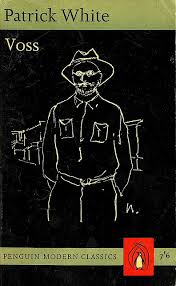
Voss, by Patrick White, 1957

Patrick White was awarded the Nobel Prize in Literature in 1973 “for an epic and psychological narrative art which has introduced a new continent into literature” (I think what this is saying is that White was the first great writer about rather than from Australia). Of ‘Voss’, the citation said it is “an intensive character study against the background of the fascinating Australian wilds”. Faint praise, don’t you think?Voss

Briefly, ‘Voss’ tells the story of Continue reading

Standard
100 Best Novels Guardian list, American literature, Book review, Sylvia Plath, The Bell Jar, The Bell Jar. Sylvia Plath

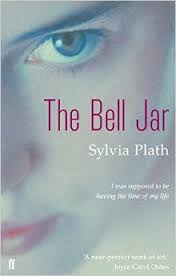
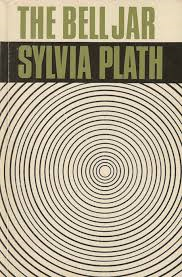
The Bell Jar by Sylvia Plath, 1963

“It was a queer, sultry summer, the summer they electrocuted the Rosenbergs, and I didn’t know what I was doing in New York”.

Is there a better opening line to a novel? It wasn’t until towards the end of this book, when the narrator, Esther Greenwood, has electro-convulsive therapy as part of her treatment for severe depression, and submits to it “like a person coolly resigned to execution” (203) that I was able to join the dots – she sees what happens to her as similar to what happened to the Rosenbergs. Note also that “they electrocuted the Rosenbergs” not “the Rosenbergs were electrocuted” – suggesting the existence of a shadowy and malevolent but wholly real external force that can take people’s lives. Not only does Esther not know what she is doing in New York, but as the novel develops it becomes apparent that her confusion is much deeper rooted.

Rarely has an opening sentence more brilliantly foreshadowed the events of the novel, while at the same time setting the tone and fixing the events in time and place.

Sadly it is now not possible, if it ever was, to separate any reading of ‘The Bell Jar’ from one’s knowledge of Plath’s own life (and death). She committed suicide a few weeks after ‘The Bell Jar’ was published under a pseudonym. The novel is largely autobiographical, and horribly foreshadows, even predicts, her final days. I don’t know whether this extraordinary book is an extended suicide note, or a cry for help – but I do know that I can’t remember reading a sadder novel. The ending, where Esther’s ECT seems to have been successful, and she finally starts to recover from her illness, is a false dawn all the sadder in the context of Plath’s death.

The novel opens with Esther enjoying something of an adventure, on a work-placement with a magazine in New York. She is academically successful, has enjoyed lots of advantages in life, and seems to have the world at her feet. She has not yet mastered the art of developing relationships with men, but is starting to experiment with her new found freedom. There are some aspects of life she finds hard – men consistently try to bully her, particularly when it comes to sex, and while she stands up for herself this is not an aspect of her life she is comfortable with. She doesn’t bond easily with the other women in her lodgings, and in the background is the loss of her German father when she was nine (Plath lost her German father when she was eight).

At first she appears to be in control, and the depression that comes to dominate her life is not immediately apparent. However, subconsciously, the signs are already there. Death, murder, suicide, and objects associated with death, constantly crowd her thoughts:

A lumpy bed is “shrouded by a thin white spread” (86); a silver lighter is “in the shape of a bullet.” (103), as is Doctor Gordon’s pencil “like a slim, silver bullet” (129); a mattress falls across Esther “like a tombstone” (119); a bath tub is “coffin-shaped” (18) and a telephone sits “dumb as a death’s head” (17).

The language of death pops uninvited, and unnoticed, into Esther’s mind all the time, even when there is no apparent connection with the subject. Death is everywhere:

My penalty was the long, dead walk from the frosted glass doors of the Amazon” (95)

Pretend you are drowning’.” (103)

“I felt like a hole in the ground” (15)

“At my feet, the city doused its lights in sleep, its buildings blackened, as if for a funeral.”(106)

“Piece by piece, I fed my wardrobe to the night wind, and flutteringly, like a loved one’s ashes, the grey scraps were ferried off” (107)

“A summer calm laid its soothing hand over everything, like death” (109)

“I cracked open a peanut from the ten cent bag I had bought to feed the pigeons, and ate it. It tasted dead, like a bit of old tree bark”. (131)

(On her mother’s snoring) “The piggish noise irritated me, and for a while it seemed to me that the only way to stop it would be to take the column of skin and sinew from which it rose and twist it to silence between my hands” (119)

Finally, these thoughts cannot be resisted, and the crisis point is reached.

The thought that I might kill myself formed in my mind coolly as a tree or a flower” (92)

From this point Esther plans to kill herself, and these thoughts dominate her waking hours. She plans her suicide carefully, and her inverted thinking is reflected in the language she uses to discuss these plans:

(Of the Japanese) “They disembowelled themselves when anything went wrong” (132)

“The trouble about jumping was that if you didn’t pick the right number of storeys, you might still be alive when you hit the bottom. I thought seven storeys must be a safe distance”. (131)

Note the use of the word safe, meaning here to end in certain death, the complete opposite of its usual meaning.

Esther’s suicide attempts lead to her being sectioned. She dreads the ECT, even though finally it appears to have helped, if only temporarily. She describes her feelings during psychiatric analysis:

I had imagined a kind, ugly, intuitive man looking up and saying “Ah!” in an encouraging way, and then I would find words to tell him how I was scared, as if I were being stuffed farther and farther into a black, airless sack with no way out. Then he would lean back in his chair and match the tips of his fingers together in a little steeple and tell me why I couldn’t sleep, and why I couldn’t read and why I couldn’t eat and why everything people did seemed so silly, because they only died in the end.” (123/4)

So the father figure she is hoping for fails to appear. Equally, the young men in her life are not substitute fathers, failing to care for her.

This isn’t just a book about mental illness and suicide. It’s about growing up, about the way men behave towards women, it is about literature, and reading, and writing, and so much more. It is deeply sad, and provides an insight into the thoughts of a suicidal depressive who ultimately can’t understand her own illness, just wants it to end. In many ways it is a very difficult, challenging novel, and anyone in a similar position to Plath would fit little comfort in it. My edition carries a quotation from Joyce Carol Oates “A near perfect work of art”, and just this once I agree.

Standard