
Some novels are just difficult to get into. I am not thinking of the wilfully obscure novels, where you are never sure what is going on and where picking up a narrative thread is a challenge in itself. Instead I have in mind novels where not much happens, where the characters are not that engaging and where the issues being raised are ‘worthy’ rather than genuinely interesting. Books in other words that could benefit from the attentions of an editor with a radical approach to content.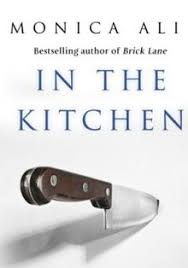
Unfortunately, ‘In the Kitchen‘, Monica Ali’s third novel, falls into this category. The scenario is promising – set in the kitchen of a prestigious central London hotel, the Imperial, staffed by a United Nations polyglot of nationalities and headed by the woefully indecisive head chef, Gabriel Lightfoot. Lightfoot – Gabe – is secretly planning to set up his own restaurant in Pimlico, aiming for a Michelin star. The problem is he has had similar plans for years and he is beginning to realise it is soon going to be now or never. His relationship with his long-term girlfriend, Charlie, is on the same basis, forever just on the point of getting engaged, but never quite getting there.
Gabe is a dull character. An omniscient narrator tells the novel’s events from his perspective, guiding us into his thoughts and dreams, but we never really get to know him – or perhaps there just isn’t that much to know. We are told in detail about his childhood in a Northern mill town, in passages that scream out “research”, his troubled relationship with his parents (his father is slowly dying of cancer in that “sorry to be a bother” way of stereotypical Northerners) his years of training in kitchens around Europe, etc – but at no point does he ever transform into someone we care about or are interested in (and when I say we I of course mean I).
So many modern novels need a sudden death to start or end them and here the accidental death of a porter stumbling down some steps in the kitchen basement is the catalyst for the chain of events that the novel portrays. Yuri, the deceased porter, had been protecting a girl, Lena, whom Gabe, in a half-hearted investigation into the death (this is not, of all things, a detective novel, despite hints at some stage that it might develop into one) takes into his care. A strange relationship develops between the two, in that Lena succumbs to Gabe’s sexual attentions in a disinterested way and Gabe, knowing what he is doing is wrong, doesn’t seem able to stop himself. This is an abusive relationship without doubt, but the least of several evils as far as Lena is concerned. We soon learn she has been trafficked into the UK on the promise of a good job, and has escaped from her pimp from whom she is hiding.
This relationship obviously has an impact on Gabe’s near-engagement with Charlie. Gabe’s enquiries into Yuri’s death uncovers the fact that the trafficking is closer to home that he would have thought. Meanwhile we learn more about the characters in the Imperial’s kitchen. But all this takes an unconscionable amount of time, and for long passages we seem to be on repeat, with Gabe stumbling through a series of aimless conversations with his business partners, his bosses, and his kitchen staff, all the while returning each night to the reluctant but submissive Lena.
Eventually the long nights and little sleep takes its toll, and Gabe suffers a mental health crisis. This seems to blow over quite quickly without any intervention or assistance and he recovers sufficiently to challenge the bad guys, repair his relationship with his family, and even take the first steps to getting back together with Charlie. Which leaves the reader knowing a little about modern human trafficking in the UK, but otherwise regretting the loss of a few hours working their way through the 400+ pages of disappointment. And by the reader I mean me, of course.


This doesn’t sound anywhere up to the level of her other books – the plot seems a little predictable in fact.
LikeLiked by 1 person
To be honest there wasn’t that much of a plot, more a series of minor incidents. Looking at the Amazon reviews for this novel it scored an average of 3 stars with more one and two stars (combined) than 5; on Goodreads the average was less than 3. None of that makes the author a bad writer, but this is not her best.
LikeLike
It doesn’t even seem like the same author who wrote Brick Lane….
LikeLiked by 1 person
I’ve only read one Monica Ali novel – Brick Lane – which I thought was OK but not up to the hype. I probably wouldn’t read any more of hers. Enjoyed your review 🙂
LikeLiked by 1 person
I read Brick Lane when it was first published – but to be honest I remember very little about it!
LikeLike