21st century literature, Autobiography, Book review, http://schemas.google.com/blogger/2008/kind#post, Moab is my washpot, Stephen Fry

Moab is my Washpot by Stephen Fry

In the second volume of his autobiography (although “reminiscences” would be a more accurate description) Fry mentions performing in “All’s Well that Ends Well” in Queen’s College, Cambridge. I saw that performance, and while I have no memory whatsoever of “our hero” I think the odds are I must have seen him in it too. So that’s my personal connection with this book, for what very little it is worth.

If you had asked me a few days ago what the title of this book was I would have fought you to the death in defence of it being “Moab was my washpot”. Why the mental auto-correct? Obviously it’s in part the visual echo between “was” and “washpot”, but also it’s in the past tense, which is where biographies and their titles belong, in the “As I Walked Out one Midsummer Morning” category. The biblical reference is kind of explained in this edition – I reread the quasi explanation a couple of times, but am still none the wiser, and the intended impression of look at me cleverness is clearly quite deliberate.

There isn’t really a criticism of the Stephen Fry aged approximately 4 to 20 you can make that he doesn’t make of himself in the book, in a way becoming immune to such criticisms as he goes. Of course he was insufferable, profoundly irritating, dishonest and despicable towards his loved ones. Guilty as charged and yet still quite pleased with himself. Fry had as you can imagine a very privileged childhood, although he portrays it as ordinary. This is in part defensible – to him it was ordinary – but he must have enough experience of normal life by now to know that having servants in the 60’s (for example) wasn’t normal. The prep and public school experiences dwelt in in this book are however banal, I’m sorry to say – the only remarkable thing about them being that this way of life was thought worth preserving into the 1970’s and beyond, and that he thinks we will find the arcane details of the schools’ invented languages and rituals in any way interesting. Similarly his numerous digressions, which give the impression of existing simply to fill the space available, are a soapbox on which he is able to argue for his various opinions, haranguing the reader without allowing any genuine room for dissent or doubt.

Autobiography that is a careful attempt to massage perceptions of a public figure are always going to happen – don’t hate me, I am ordinary really, look at these pictures of me in short trousers on the beach at Southend etc – but this book is more subtle than that. Describing at almost all times a rather unpleasant little oik is a strange way of garnering public affection, but we forgive him almost everything (as do his saint-like parents and family, and virtually every other authority figure he comes across). He had a QC to present his mitigation at his sentencing hearing in the Magistrates’ Court for goodness sake! This forgiveness is manipulated principally by the alchemy at the end of this book – somehow the A-level failing, prison-sentence serving, obsessive thieving has been transformed into a hard working genius who gets a scholarship into Cambridge after only one year’s study, a transformation which is his responsibility alone it seems. I don’t buy that. It is the one part of the book where there is obviously a whole lot more going on that we aren’t told about. At other points he is clear that he changes details to protect the innocent – maybe some journalist will one day dig out what really went on over those months.

I have managed to get this far without using the “national treasure” description, which is quite an achievement, so there you have it. As such Fry is immune from any criticism, and good luck to him for it – let’s just hope he uses his immense power for good, not to protect public schools, fox hunting and the royal family. I worry about a day in 20 years when he is in the House of Lords lecturing us on how things were better in his day, when schoolboys were taught Greek before breakfast, where sex abuse was seen as part of normal school boy development (the description of his “deflowering” even when sanitised in its description, is not for the faint hearted) and all good fun, and the poor knew their place, good for a comic turn now and again but not much more. You really want a happy ending for Fry, you really do, but does he deserve it?

Standard
19th Century literature, Agnes Grey, Anne Bronte, Book review, Bronte, Bronte Sisters, http://schemas.google.com/blogger/2008/kind#post, Victorian literature

Book review: Agnes Grey by Anne Bronte

There’s a Darwinism in play which determines whether novels continue to be read after the author’s death and the passage of a few decades. Authors that were once widely read and popular turn out over time to be of interest to only a very specific audience, and do not translate well into later periods. As the years pass the number of surviving and still read authors dwindles further, until even once great, Nobel-winning titles are only downloaded for £0.00 on the Kindle, to remain on aspirational reading lists but never quite got round to. But some novels buck the trend, going into hibernation for a century or more only to be rediscovered with a fresh relevance by a new generation. Agnes Grey undoubtedly is not one such novel. It is dull beyond comprehension, and only appears here a) because of the previously mentioned Kindle free availability, b) it is an AS text, c) it was written by a Bronte (Anne, her first novel).

There’s a Darwinism in play which determines whether novels continue to be read after the author’s death and the passage of a few decades. Authors that were once widely read and popular turn out over time to be of interest to only a very specific audience, and do not translate well into later periods. As the years pass the number of surviving and still read authors dwindles further, until even once great, Nobel-winning titles are only downloaded for £0.00 on the Kindle, to remain on aspirational reading lists but never quite got round to. But some novels buck the trend, going into hibernation for a century or more only to be rediscovered with a fresh relevance by a new generation. Agnes Grey undoubtedly is not one such novel. It is dull beyond comprehension, and only appears here a) because of the previously mentioned Kindle free availability, b) it is an AS text, c) it was written by a Bronte (Anne, her first novel).

A measure of the novel’s popularity is that it has never been adapted for television and screen. For good reasons – very little happens. We expect, from Wuthering Heights and Jane Eyre, for Bronte leading female characters to have some spirit, if not spunk, but Agnes is limp, passive, and dull. She gets her man in the end, but doesn’t really deserve him, AB simply rewarding patience and virtue with a predictable long foreseen happy ending which is a complete anti-climax. With most Bronte novels it’s not really about the destination, more about the journey, but with Agnes there is little if any self discovery or personal growth. Some novels deserve to be forgotten, not disinterred to torture A level students, when there is so much great literature out there waiting to be read and discovered. Sorry Anne.
Now I should end there, but I feel guilty. This novel must have some redeeming features, surely, and it is my self appointed task to seek them out. There’s a natural instinct to be protective towards Anne, a romantic figure over-shadowed by her sisters, dying tragically at a young age, a compelling part of the Bronte mythology. ( Forgive me, but I can’t resist mentioning here the academic discoveries of that great critic Mr Meyerburg who postulated, indeed demonstrated, that Bramwell was in fact the author of all the “Bronte sisters’ novels”, and that his alcoholism was all a heroic act to disguise the dissolute nature of his siblings.)

Agnes Grey, simply put, is juvenilia. It is an author learning her craft, using autobiography as material. No-one could possibly criticise Anne for writing this, following a path taken by many authors, but that doesn’t make the novel any more readable.

Standard
21st century literature, Book review, http://schemas.google.com/blogger/2008/kind#post

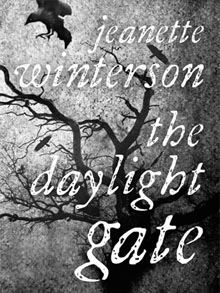
The Daylight Gate – Jeanette Winterson

Add caption

I thought long and hard about whether to write this review. On the one hand I have written far too many negative reviews this year, and would much rather write about things I had enjoyed reading. On the other hand, this is supposed to be a record of what I have read, and there’s really no wriggling out of that. Anyway, it is written now so you can judge whether I should have bothered. I feel equally conflicted about the novel itself – while I read it in little more than a sitting, there are aspects of the book that are pretty repellent.

First, some background. Published in 2012, this novel (sometimes described as a novella, although at over 200 pages that isn’t really right) is an imaginative recreation of the events of the Pendle Witch Trials of 1612. The more astute reader will have spotted the coincidence of dates. The Witch trials are probably the best known, mainly due to the record of the trial kept by one of the lawyers, of all the historic persecution of wise women, healers and the like which disfigures this period of history. Winterson mixes in the pursuit of catholics and Jesuits in 17th Century England a few years after the accession of James 1st and Gunpowder Plot. If this wasn’t enough, we also get some references to the alchemists of the period, and almost inevitably Shakespeare has a walk on part.

Broadsheet reviewers really liked this book. The Telegraph reviewer called it a “poetically stylised and visceral read”. The Independent thought it “beautifully written” (which it may well be, but….) and the Guardian reviewer liked it even more, describing it as having “the grisly freshness of a newly exhumed graveyard corpse.” But they avoid some of the more obvious problems with the book. Where to begin? This is very familiar territory – the Pendle Witch trial has been documented in fiction and elsewhere many times. The novel is published by Hammer, the publishing arm of the film company which is known to people of my generation for its Horror B Movies. Hammer has no pretension to being anything other than sleazy, exploitative, salacious, horror. All the tired clichés of the genre are present, down to the Satanic rituals graced by the presence of a priapic “Dark Gentleman” . It almost writes itself, and any suspicion of originality or creativity are missing.

The problems pile up. The abuse of women accused of witchcraft deserves and has received serious feminist analysis. It disrespects the women involved to exploit their stories for titillation. The treatment of sex here is horrifying and hard to stomach, particularly the paedophilia, although the detailed portrayal of 17th century torture techniques is almost as bad. The unlikeliness of this is being written by the author of the wonderful “Oranges are not the only fruit” really confounds me – its like J K Rowling writing for Mills and Boon.

Winterson can’t make up her mind – is this a portrayal of innocent women being tortured and killed as a form of social control, keeping people (obviously, particularly women) in their place? That would be the obvious narrative direction, but throughout the novel witchcraft and sorcery is portrayed as “real” and its invocation forms a central part of the narrative. This is not just a case of deluded old women believing their own confessions, but the reader being invited to accept the reality of magic in many different guises. The Telegraph reviewer mentioned earlier struggles with this, saying: “There is a slightly hallucinatory quality to their efforts to make an exhumed severed head talk that evokes both the macabre and a curious sense of horrified pity. Can their doll-stabbing curses really work? There is a suggestion that they can. But because these women are actually just a means for the authorities to try to get to grander targets – Catholic recusants – their filthy graveyard rites have the pathos of ultimate impotence”. Not really – there is much more than a suggestion that their magic works, and the pain of the Magistrate being targeted by the witches only ends when the figurine they are using is taken from them. They are far from impotent in this novel, even though in reality they would of course have been powerless. (interestingly one of the accused Pendle witches was actually acquitted).

That’s more than enough of the negative. Can I find anything positive to say? Some of the characters are briefly believable, and the quality of the writing is what you would expect of an author of Winterson’s calibre. One simple example – hares stand in fields like question marks – which is exactly right. At points the novel looks as if it is going to break out of the constraints of the known story and have something interesting to say about the persecution of the central character, Alice Nutter, but in the end all the bizarre accusations about here prove to be accurate. I can’t avoid the conclusion that there is a genuinely interesting story here which would respect the memory of those who died. But this isn’t it.

Standard
http://schemas.google.com/blogger/2008/kind#post

Comment: Competitive Reading Lists

Every now and again lists circulate purporting to show the 50 best this or the 101 best that, inviting the reader to assess their worth by deciding how many of the books shown they have read.
I say “deciding” how many they have read, because this is rarely a binary decision. Have you read “A Christmas Carol”? You almost certainly know the tale from numerous film adaptations, but have you actually read the book? What if you have read some of the book but weren’t able to finish? (An example in this category for me is Don Quixote – many years ago I made a genuine and sustained effort to read this, but failed miserably). The Bible, The Canterbury tales, and Moby Dick are other examples of “books” that often appear on these lists, but for most readers the prospect of genuinely reading them from start to finish is remote.


But these are just quibbles, because there are no rules in this game, and if the “reader” decides that owning the book, having seen the film, or read a summary on Wikipedia is sufficient to merit a “read it” tick, then no-one is really to know. My real concern is that these lists are designed to make you feel bad about your reading habits. No-one with a family and job will have ever read all of the meritorious heavyweight volumes of “A Remembrance of Things Past”, “The Barchester Chronicles”, or “A Dance to the Music of Time” (“God, no!”, “partially”, and surprisingly, “yes, but a long time ago”, would be my answers). But should I really feel bad about all those Russian classics glowering at me from my bookshelves while I indulge in yet another Pratchett?

From previous entries in this blog it will be clear that I have made a concerted effort to fill some obvious gaps in my reading record – Frankenstein, Dracula, The Great Gatsby, etc – but despite this I still find myself admitting “not read” as I run through each list more often than I would have expected. The other trick played in this game is to include less popular works by popular authors – for example by listing “The Quiet American” instead of “Brighton Rock”, or “Men Without Women” (which is a collection of short stories) instead of “For Whom the Bell Tolls”.  

I know I am taking this way too seriously, but there is a point underneath all this – if people read these lists on FaceBook or wherever and think “I must be really dim because I haven’t read any of these” they will be put off even trying them, rather than filling in the gaps. So let’s start writing “These are really fantastic books that you should read if you like romance/thrillers/historical novels/etc” lists, which would be a much more constructive approach to list making wouldn’t it?

Standard
Book review, horror, http://schemas.google.com/blogger/2008/kind#post

Supplementary: further thoughts on Frankenstein

In this post I would like to explore the possibility that the monster was the creation of Dr Frankenstein’s ego or unconscious, and that the crimes in the novel were committed by the good doctor himself. Furthermore I would like to suggest that the source of this psychosis is his fear of his own sexuality. This answers the question most often posed about this novel – who is the real monster, Frankenstein or his creation, with the answer “They are one and the same“. It also explains why the doctor and his creation are so often confused in popular culture, with the name Frankenstein being used for both of them.

To deal with the most obvious objection first – how could the monster be Victor’s alter ego when there are numerous references in the novel to other people seeing the monster? It is important to remember that almost all this evidence is in fact presented through the doctor’s conversations with the explorer, Walton, he meets at the beginning of the novel. We are invited to accept Victor as a reliable narrator, but objectively there is little reason to accept what he tells us without question. First and foremost his story is utterly fantastic – if you met someone raving about having created a monster you wouldn’t just say, “oh yes, that’s interesting”. You would naturally want to know more, and to challenge what you are told. The absence of that challenge, just the plan recitation of the tale, presented unquestioningly, lulls the reader into accepting Frankenstein’s story. As well as its fantastic nature, consider also the context – he is alone in an Arctic waste, chasing after a distantly glimpsed figure that may or may not have been himself. His story tells of a monster that kills his family and friends. Could not the monster be that part of his personality that he considers monstrous? Was, in fact, Dr Victor Frankenstein the first recorded case of manic schizophrenia or multiple personality disorder, the forerunner of another famous self-creator of monsters, Dr Jekyll?

This reading explains a lot, for example the lack of detail over how the monster is created – if this was a delusion then the subconscious could easily skip over the process to focus on the outcome. The disgust Victor feels in the process of creation can be explained by his disgust with procreation, simply put, sex, and cannot believe what he has done. In his psychological crisis he creates the monster to separate the innocent part of himself from the monstrous.

The murders of family and friends is further circumstantial evidence, although Victor can’t be tied closely to any of the murders. There is enough evidence to at least cast suspicion, to the extent that he is even arrested for the killing of his best friend Clerval, and later held during his breakdown after the murder of his wife. The murder of his bride, on the first night of their honeymoon, represents the apotheosis of his sexual horror – rather than consummate his marriage he kills his wife and then faints. His conversations with the monster represent the inner monologue of the two parts of his personality. Virtually no-one else sees the monster in the whole of the novel, albeit admittedly with some exceptions. You would expect a beast lumbering across central Europe to be the cause of some comment – but the monster is never seen or spotted other than at a distance, and then only as reported by Frankenstein.

The exceptions to this are the family he haunts – but this could easily be Frankenstein himself, or just another delusion about his dreams of acceptance into a happy family. The other important exception is the occasion when explorer sees the monster just after doctor’s death at the very end of the novel. This is harder to explain away, but hardly conclusive – the explorer is not necessarily the reliable narrator we are led to believe.

The source of Victor’s psychosis emerges from a closer reading of the section of the novel dealing with the murder of his wife, Elizabeth. Chapter 22 opens with their engagement and wedding. Having been promised that he will return on his wedding night, VF is tortured by fear of the monster, and wants to shun the company of others – “I felt attracted to even the most repulsive among them, as to creatures of an angelic nature and celestial mechanism. But I felt I had no right to share their intercourse.” Who is most commonly characterised by VF as angelic? Elizabeth of course. And who feels unworthy to share “intercourse” with his fellow man? VF feels guilty and worthless because of his “unhallowed acts” – a suggestion that he is unable to face sex with his bride on their wedding night because of previous repulsive and criminal acts. This is the language used to describe homosexuality in the 19th century.

Unable to accept his sexuality VF at first avoids contact with Elizabeth, running away from her to the extent of travelling the world. Apart from her, the part of his personality that wants a conventional relationship comes to the fore, and he agrees to marry her. Before their wedding he writes to her telling her he has a “terrible secret” which will “chill your frame with horror”. VF knows that the monster will unavoidably be with him on his wedding night, because he and the monster are one and the same, and the monstrous, hidden aspect of his personality is his sexuality. There is no hint whatsoever in the way he speaks of Elizabeth of any sexual feelings, only tenderness.
Chapter 23 brings us closer to the wedding night, and the confrontation with the “monster”. VF sends Elizabeth to bed, knowing this is the scene of the coming confrontation. He resolves not to join her until “I had obtained some knowledge as to the situation of my enemy” – here the enemy being his recalcitrant sexuality.

Elizabeth is strangled and VF falls senseless to the ground. When the hotel owner and others come into the room a little later, there is no sign of the monster. There is some confused business here in which he appears to awake from his faint in another room, surrounded by the people of the inn, because he then goes back alone to the bedroom where Elizabeth’s body lies, where he then spots the monster goading him. Again no-one else sees the monster, and after a fruitless search “most of my companions believing it (the monster) to have been a form conjured up by my fancy”. If they genuinely believed this then they can have drawn only one conclusion about the cause of Elizabeth’s death, the identity of her murderer. His guilty behaviour continues as he flees the village without telling anyone, and returns to Geneva. He descends into madness and is kept locked in a cell and his again suspected of being the criminal.

In moments of lucidity VF recognises he is responsible for the killings. He tells his father “I murdered her. William, Justine and Henry – they all died by my hands“. Indeed.

Standard
19th Century literature, Book review, Frankenstein, gothic fiction, http://schemas.google.com/blogger/2008/kind#post, Mary Shelley

Frankenstein by Mary Shelley, 1817

With 200 years of critical analysis weighing down on any critic or reviewer, what is one to do with a novel such as Frankenstein, or the Modern Prometheus? Trying to find new insight or interpretation is almost pointless. Such is the nature of the novel that it opens itself to an almost boundless variety of interpretations, on human relationships, sex and sexuality, or science and the modern world. That burden of scholarship can be oppressive and hamper the ability to say anything sensible or interesting about such a complex novel.


Let’s start at the beginning. The story of the novel’s genesis is well know, probably much better known than the novel itself. It did not come as a surprise to me, with the experience of reading Dracula last year, that the novel bears little or no relationship to its popular culture incarnation. Crucially, the monster is not an incoherent, stumbling beast, but a highly intelligent and articulate creature, albeit one which is monstrously ugly and extremely, dangerously strong. The sub-title of the novel, the Modern Prometheus, should not be overlooked. Wikipedia says that “Prometheus became a figure who represented human striving, particularly the quest for scientific knowledge, and the risk of overreaching or unintended consequences. In particular, he was regarded as embodying the lone genius whose efforts to improve human existence could also result in tragedy“. Quite. Is this then a straightforward anti-science parable – don’t meddle with nature because you will create a monster beyond your control? Certainly the anti-GM protagonists would support that reading. But simple readings of this kind, however attractive, are invariably over-simplistic and resisted by classic texts, and this is no exception. I suspect this is a bit of authorial mis-direction. The sub-title invites us to a simplistic don’t meddle with the unknown interpretation. Suspicion of science and where it might take us at the beginning of the 19th century was certainly understandable. For me the novel’s themes about parenthood and original sin are more interesting.

The narrative structure of the novel is the complex “Russian doll” approach much loved of 19th century novelists. To be honest this adds little to the story overall – you quickly forget you are reading a letter from the explorer who has met Frankenstein and is passing on his tale to his loved one, in much the same way you forget Wuthering Heights is told as a series of fireside gossipy chats from the ever present domestic servant to the new tenant of the neighbouring house. It is almost as if the truly omniscient narrator had yet to be accepted by authors or readers at this stage of the development of the novel, (which in the early 19th century was not quite so anachronistically named). The author appears to feel compelled to show the reader what happens by using increasingly artificial devices – someone claims to have observed what happened – rather than just tell the story. In this novel this is pushed to ridiculous extremes – so for example the monster lives for almost a year in a hovel adjoining the house occupied by the DeLacey family without their once wondering “I wonder who it is who lives next door?”. Dracula uses much the same technique, despite the almost 100 years between the two novels. Is this in homage to the early 19th century spirit of the novel?

John Sutherland’s book on puzzles in 19th century literature which I wrote about earlier this month has an interesting take on this novel, and in particular the question of how Frankenstein actually creates the monster. The author gives virtually no detail – there are glimpses of how he prepares, but the actual process itself is not described at all. Time and again Shelley uses the word “disgusting” to describe Victor’s reaction to his work. This could be a response to the body parts he is presumed to have used, but when he begins to create the monster’s partner later in the nvoel he does so in a remote Orkney croft-house with only his scientific equipment to hand, far from any mortuary or graveyard. Sutherland speculates a sexual component to Frankenstein’s disgust, which is a seductive interpretation. How does man create life, after all? This would go some way to making sense of the original sin theme of the novel – Frankenstein creates life, then rejects it, and reaps the consequences. All parents will have some sympathy with how he feels.

As a central character it is hard to warn to Frankenstein. He is a complete idiot – for example, despite the monster making it clear to him that he will make him suffer if he does not create him a partner, and that he will see him again on his wedding night, the penny does not drop that there might be a threat to his fiancee. He lives a life of considerable privilege, but wastes his energies and gifts on ultimately fruitless personal obsessions.  The monster is a more interesting character, although again his “no-one loves me so I am going to kill someone….Why does nobody love me?” wears thin fairly quickly.

As I mentioned earlier, there are many ways to read this complex novel. The one that appeals to me the most is that the monster is, like Mr Hyde, a product of his creator’s sub-conscious. Both doctors Jekyll and Frankenstein create monsters that run out of control and lead to their ultimate demise. Victor is arrested for the killing of Charval, and it is surprising that no-one suspects him of Elizabeth’s murder. Several people fear he is mad, and few other witnesses see the monster clearly. The sexual under-currents of the novel could also explain Victor’s terror of his wedding night. I appreciate I haven’t explored this idea in any depth, and no doubt there are scholarly articles and books out there which explain the idea far more coherently than I could ever do, but it is an interesting reading of the novel I think.

Standard
Book review, http://schemas.google.com/blogger/2008/kind#post

Is Heathcliff a Murderer? – Puzzles in 19th Century fiction by John Sutherland

This book is a series of 34 short and not quite so short essays looking at “anomalies, enigmas and mysteries” in 19th century fiction. The definition of “puzzle” is draw deliberately loosely. Some are genuine questions that would occur to any reader – how does Jane Eyre get Mr Rochester’s mysterious “celestial” message at the end of her novel? Others would not normally occur to an ordinary reader, particularly those in which the main concerns are timing. One does not normally worry too much about or even notice small anomalies in timings and obsessively working through all the time markers in a text to spot so called mistakes feels like a huge waste of time. (Othello is a great example of this – very few if any audience members and readers spot the parallel time schemes running through the play, which of course are anything other than accidental.)
Sutherland draws on his extensive knowledge of the most arcane and obscure of 19th century novels and the period in which they were written to answer some of his puzzles. Mesmerism, for example, is suggested as the answer to the Jane Eyre puzzle. This was a rich mine for Sutherland – “Can Jane Eyre be happy?”, and “Who Betrayed Elizabeth Bennett?” followed this book in due course, as well as a similar look at Shakespeare.
Obviously knowledge of the text (rather than a film of the text) is a useful prerequisite for enjoyment of each essay here, and as Sutherland fairly quickly moves from the novels that the average reader would be familiar with to ones that only students of 19th Century novels could hope to have heard of (“Is he Popenjoy?” anyone?) I found myself reading more to enjoy his scholarship and learn a little about the text and author, than to share the judgment on the particular puzzle in question.

Genuinely original insight into the core texts are of course elusive. These – Bleak House, Emma, Wuthering Heights, Middlemarch – are some of the most studied works in literature. So it is in the margins that Sutherland finds some gems. In Bleak House the crossing sweeper Jo sweeps what exactly? Is it “dust”, an excuse for begging with no practical purpose, or is it excreta from the horses and humans of a crowded London? More controversially, what is the role of the slave trade in the prosperity of various families in Jane Austen’s novels? I particularly enjoyed the close reading of Frankenstein, soon to appear here, which looks at precisely how the good Dr creates his monster. In the absence of Hollywood’s lightning and hunchbacked servants, Sutherland deduces that there is a sexual component to the act of creation, which of course fits nicely with the creation myth reading of the novel.

I think I know why I enjoy this kind of literary sleuthing so much. In my blog entries the ones which I feel happiest about are the ones where I have from close reading and perhaps a bit of creativity come up with a new and different perspective on a novel – the parallel between A Casual Vacancy and A Christmas Carol for instance.

Standard
Book review, http://schemas.google.com/blogger/2008/kind#post

Book review: Back Story – David Mitchell

Time was I would run a mile from a celebrity biography, with I think plenty of reason – there are so many clippings jobs with glossy front covers out there , that sorting the wheat from the cliche wasn’t usually worth the effort. Autobiographies ought to be better, but the majority are ghost-written with the minimum of effort – a few childhood anecdotes, prompted by photographs of minor parts in school plays and family holidays, progressing quickly to the break through appearance on Comic Relief/Big Brother/Help I’m a Celebrity etc. You can spot the filling and the difficult subjects avoided or glossed over a mile off.
In the spectrum of autobiographies, of which there was a huge surfeit this year, Back Story fits firmly in the middle of the pack. In its favour it is clearly not ghosted – Mitchell’s engaging personality shines through – and it is reasonably open and honest. The downside is that his career trajectory, arguably even his life, has been so predictable and routine – for a comedian that is – that you get the feeling you have read this all before, and more entertainingly.
To provide the book with a structure,other than the blindingly obvious chronological approach, which of course is in the end unavoidable, Mitchell takes a walk through north London, using the things he sees along the way to prompt a minor grumble about an aspect of modern life, followed by the appropriate reminiscence. This is a harmless enough conceit, but gets predictable very early on, and soon becomes unintentionly pedestrian (see what I did there?). It is obviously not his fault that his life has had little in the way of trauma or challenge, and he has made the most of the opportunities life has given him, but overall you have to wonder why he wrote this other than to cash in on his moment of celebrity.

If you want to get to know the real David Mitchell – and I am not sure why you would, his work doesn’t require it, and his comedy is funny irrespective of what school he went to – this is obviously a good starting place. I got the impression a few things were passed over quickly or omitted – most notably the name of the lover before his engagement to Victoria Coren. The section of the book on his relationship with Victoria is by far the most engaging, where the barriers come down the most and we see someone with a bit more than a dry wit and a comfortable life.

One quibble – Mitchell has a pop at Stewart Lee for a piece he does on Only Fools and Horses. You might have seen it – the scene where Del Boy falls through the bar was voted funniest moment on British TV in one of those made up polls that no-one ever really votes in. Lee used this vote as the basis for an extended and extremely funny rant. Mitchell objects to the points Lee makes in this rant, missing the point with considerable flair – Lee is being funny; it is a performance piece, not a political treatise. The irony is that rants about things that you really shouldn’t get upset about eg Tesco’s signs or grocers’ apostrophes are Mitchell’s trademark.

Standard
http://schemas.google.com/blogger/2008/kind#post

Crime and Punishment – Fyodor Dostoievsky

Raskolnikov, a former student, having discontinued his studies through lack of money, lives a bitterly impoverished life in St Petersburg. His pride is wounded by receiving small amounts of money from his mother and sister living in the country. He hears from his mother that his sister has recently left her post as a governess in scandalous circumstances. She is rescued by an offer of betrothal by a wealthy local man, and accepts in the interests of financial security rather than any trace of affection. This dilemma mirrors his own, caused by his poverty. To break out of this situation he decides to murder and rob a local pawnbroker, which he does, killing the woman’s sister along the way.

His state of mind during this killing, and thereafter during the months of the investigation of the crime, is the focus of this novel. The author reveals this to us mainly through the narrator’s commentary. While the murder – with an axe – is brutally described, Raskolnikov never reflects on the details of his crime or expresses any remorse. Nevertheless the psychological trauma of the event cannot be suppressed, and he falls ill, and behaves in such as way as to arouse the suspicions of the police and his family and friends. He is blessed with very steadfast friends and family who stand by him, believing in his inherent goodness, right through to the end of the novel. Raskolnikov lies to himself, suggesting that the murder was something he never really intended to do, while simultaneously showing us the detailed and devious preparation he has made for the murder. He could easily have avoided detection or capture if he had the will to do so. Instead he crumbles and confesses, and is sentenced to eight years in a Siberian labour camp, where he is followed by his adoring prostitute lover, Sonya.

This was not an easy read. The translation, for me, was wooden, and the original language must have been very intense and complex to have produced such turgid prose. It was a struggle to finish and there was little doubt all along about the outcome – the title tells us Raskolnikov is not going to avoid eventual capture and punishment. The tendency for each character to have multiple names only added to the confusion.

Reviewing “classics” is never easy, even less so when the novel is a translation, and much loved by many readers. The entry point is hard to find – one’s own reading and judgments risk being facile, plot summaries are available elsewhere online with much more detail than my memory can supply, and all that needs to be said has been said elsewhere, many times over. I prefer reviewing works that are less monolithic than this. But having read the novel it is in keeping with the spirit of this blog that I record some impressions, however simplistic.

The idea that a novel can be driven by a character who is both a murderer and someone the reader is invited to identify with, even like, was a dramatic shift from a world where only black and white positions existed, with no scope for any shades of grey. I couldn’t warm to Raskolnikov, and as a result I found less and less of the novel to engage with. I did finish, but it was a challenge.

Standard
http://schemas.google.com/blogger/2008/kind#post, Jasper Fforde, The Woman who died a lot, Thursday Next

The Woman Who Died a Lot by Jasper Fforde

Read in the Hodder and Stoughton hardback edition.

This represents a return to fform ffor Fforde, after the disappointing “One of Our Thursdays is Missing”. The seventh in the Thursday Next series, eighth if you count “The Great Samuel Pepys Fiasco”, sees Thursday recovering from injuries sustained in a kidnapping attack, and feeling her age. Offered a post in the Wessex Library Service we spend around 75 pages catching up on life in 1980’s Swindon, during which I was a little worried that the inventiveness of earlier books remained missing. But the scene setting is worth the time, because the book kicks in with a puzzling attack on Thursday’s family which is clearly the work of Aornis Hades, Thursday’s nemisis. From there the action never flags.

The span of the novel plays out over a week in which a lot happens in Thursday’s life. God has decided to cut out all the potential confusion about his existence, and make himself apparent to man. Mankind seems to have taken this in his stride, even when God gets a bit truculent and starts smiting some cities out of existence, downtown Swindon being next in line. So there’s that to sort out, as well as Thursday’s new job in the library service, investigating mysterious attacks on book collections by Goliath, her other nemises, if global corporations can be nemises, and indeed if the plural of nemesis is nemises. Her brother Joffy is now in effect mankind’s chief negotiator with God over the difficult “meaning of life” question. Aornis has escaped, and needs tracking down. And the lives of her children get more complicated as the grow up – Friday is due to murder someone at the end of the week, Tuesday (keep up there) is investigating how to deflect God’s wrath via an anti-smiting device, and Jenny doesn’t exist.

How Fforde keeps all these balls in the air, adding in jokes about Dark Matter (setting up the next book in the series nicely) and a range of wacky ideas about time travel, avatars, parallel worlds (thrown in and lightly thrown away) and of course the Book World, is hard to describe, but he does, masterfully.

The acid test of a good read is if you don’t want it to stop. I read this in a couple of days flat, and didn’t even notice that it was over 350 pages (just checked) – whereas Wolf Hall (for example) was on a slow countdown. I know that probably makes me a sucker for light comic fantasy (and a good dodo joke) – guilty as charged.

Standard