I was intending to take a break from Wells, but this novel jumped out at me from the shelves of a second hand bookshop, and as it wasn’t one I had heard of before, let alone read, I thought it worth the £1 investment!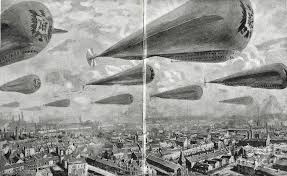
It is interesting how the reputations of writers and their works evolve over time. In the publisher’s introduction to this 1967 Penguin edition, written much nearer to the time of Well’s death than today – and even slightly nearer to the date the novel was first published than today – Wells’s “chief novels” are listed as “Ann Veronica, (109) Tono-Bungay, (141) The World of William Clissold (4), Brynhild, (3) Dolores (now published as Apropos of Dolores (3)), and The Holy Terror (2)”.
Now be honest, how many of these novels have you heard of, let alone read? This is a Penguin edition remember, not some obscure publisher wanting to promote Wells’ back catalogue. The numbers in brackets are the number of reviews each book has received on Goodreads – by comparison the results for three books not mentioned in this introduction are 8,473 – The Time Machine; 5,726 – War of the Worlds; 4,322 – ‘The Invisible Man’.
Why did Penguin focus on these now largely forgotten novels, and ignore his science fiction – in the introduction to one of his science fiction novels? It is not the case that the more popular novels I have mentioned have only recently become popular – they have been in print since first published, and formed the basis of many films, television programmes, sequels, and of course radio adaptations? Usually I can offer some speculation on these questions, but this time I am completely stumped? Anyone?
‘The War in the Air’ (66), another invasion novel, is subtitled ‘And particularly how Mr Bert Smallways fared while it lasted’. The novel is Wells’s speculation on how human flight, just taking off (if you will excuse the pun) when written, will affect warfare. The novel is a strange mixture of fairly low comedy – much of it is written as the misadventures of Wells’s everyman character, as sort of English Good Soldier Schweik – and combat scenes. Wells’s predictions are partly wrong – aerial combat did not develop the way he thought it might, largely due to the practical limitations of airships – and partly completely right, in terms of the devastation of global war. The comedy doesn’t really work, and fits uncomfortably with the war scenes, which explains I think why this novel is largely forgotten while others such as ‘War of the Worlds’ continue to grip our collective imagination.
Steampunk aficionados have claimed this text as one of their own but even this community of readers will find it hard to enjoy much in this labouring and poorly constructed novel.