
The term “cosy catastrophe” was coined by the author Brian Aldiss.
“The essence of cosy catastrophe is that the hero should have a pretty good time (a girl, free suites at the Savoy, automobiles for the taking) while everyone else is dying off.”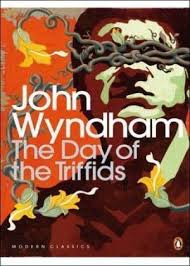
Aldiss coined the term to critique John Wyndham’s classic ‘The Day of the Triffids’. I think he was quite wrong, and I am going to use this post to explain why.There’s a more class-based detailed definition of the genre, which argues that cosy catastrophes were:
“overwhelmingly written by middle-class British people who had lived through the upheavals and new settlement during and after World War II, and who found the radical idea that the working classes were people hard to deal with, and wished they would all just go away….In the classic cosy catastrophe, the catastrophe doesn’t take long and isn’t lingered over, the people who survive are always middle class, and have rarely lost anyone significant to them. The working classes are wiped out in a way that removes guilt. The survivors wander around an empty city, usually London, regretting the lost world of restaurants and symphony orchestras. There’s an elegaic tone, so much that was so good has passed away. Nobody ever regrets football matches or carnivals. Then they begin to rebuild civilization along better, more scientific lines.
Is this a fair analysis of ‘Day of the Triffids’? Chances are you will be familiar with the main plotlines of the novel. Bill Masen, a biologist, works with triffids – tall, venomous walking carnivorous plants. Bill is in hospital, his eyes bandaged after having been splashed with triffid poison, and therefore unable to see the spectacular green meteor shower which leaves anyone who watches it completely blind. After slowly working out what has happened, he eventually joins up with some other sighted survivors including novelist Josella Playton, planning to establish a colony in the countryside.
This is a great adventure story, told in a fairly matter of fact way by Masen. But is it cosy? Let’s put the case for the prosecution first, as always. Bill and Joella are middle class characters; they survive the disaster without serious injury or peril mainly by dumb luck; they don’t go hungry or without the basic essentials of life – indeed there is no real shortage of these for the sighted, at least not in the early days of the apocalypse. They are menaced by triffids but never seem in any serious danger.
But I don’t think they have a good time. Joella’s family are blinded and then killed by triffids, and she only just escapes an attack. She is then kidnapped and beaten, badly. After one or two nights with Bill she is kidnapped again, and separated from him. Bill is also kidnapped, shot at, and witnesses many horrific scenes. Without question they do not revel in their situation – they have one night of relative luxury alone in a posh London flat, but this is very clearly shown as a farewell to this lifestyle, and it is punctuated by the murder/suicide of two neighbours.
It doesn’t take much imagination to realise that the collapse of civilisation in these circumstances would be utterly horrifying. Masen (and Wyndham) averts his gaze from much of this horror. People die in front of him, either by suicide, plague or triffid attack, but by leaving London when he does he avoids the scenes of mass starvation that follow. Most people kindly die indoors to keep the place tidy. The reader is invited consider the moral dilemma Masen and other survivors face – would you try to help the blind, or turn away from the horror, recognise how very little you can actually do, and look after yourself? Masen isn’t a hero, he is a survivor; his pragmatic approach is not lauded but neither is it condemned. Another important character in the novel, Coker, tries to organise and then compel the sighted to help the blind. He certainly doesn’t ignore the unfolding tragedy before him – although his efforts prove eventually fruitless and even counter-productive.
In avoiding explicit descriptions of the collapse of society Wyndham lets the reader do a lot of the work – we imagine what horrors would surround us, and wonder how we would cope, if at all. Another aspect of the breakdown of civilisation that Wyndham is not afraid to consider is the threat of sexual violence. There is a chilling scene in the opening chapters of the novel where Bill encounters a group of drunken blind men being led through the streets by a sighted survivor. They demand ‘women’, and the sighted man reaches out and casually pulls a woman from the crowd. Bill tries to intervene, unsuccessfully, and later reflects that the fate the woman faces is probably not as bad as that most others will experience – “I felt doubtful whether any of the women here-abouts would seriously mind, anyway”. Later when the survivors group are preparing to leave London they “recruit” a large group of women from a local hospital for the blind, with the clear understanding that they are to be second and third wives to the sighted male survivors. There’s nothing cosy about the fate awaiting these women.
To 1950’s readers of this novel, the question “how would I survive in an apocalypse; what would I be prepared to do?” would have been far less hypothetical than it seems today. Nuclear weapons are referenced consistently throughout the novel, and Masen draws explicit links between the Cold War and the green meteor shower that blinds everyone, which is clearly a man-made phenomenon. The novel asks difficult questions about how society would be rebuilt after this disaster. Various solutions are considered – martial law, feudalism, slavery, and so on. While overall preference is shown for the Isle of Wight community, which focusses on rebuilding society through polygamy, ‘Triffids’ is not in any way didactic. The reader is left for themselves to decide which would be best.
There is a way in which Wyndham could have made ‘Triffids’ more distressing (i.e. less cosy) than it often is. And that would have been to have made his narrator someone who is blinded by the ‘meteors’. For a chapter or two that is almost what he does – Masen is blindfolded to protect his eyes as they recover, and is scared that if he removes his bandages prematurely he will damage them. So for a few hours he experiences the world from the same perspective as the blinded. A novel written entirely from this perspective would have been a very different and far more terrifying and challenging experience, and in this respect alone the choice of having a sighted protagonist was the easier one. Later in the novel there is a portrait of a strong-minded character among Masen’s Sussex group who is blinded but determined to survive – virtually the first thing he does is start to learn braille – who would have made an interesting choice for narrator in this alternative version of ‘Triffids’.
I was pleased to return to Wyndham after a very long break, and I think I have really only scratched the surface of this complex and compelling novel. I am going to take a closer look at the portrayal of suicide in this text in a follow-up post.


Doing some catching up aft a holiday hence my delayed reaction to your post. I think Aldiss’ comment is unfair, given when the book was written. What I find chillingly prescient is Wyndham’s hints about the origins of the triffids, and the blinding meteor, in weapons experiments by the superpowers going awry. I re-read and reviewed this book at the end of last year; apologies if you’ve already read this https://litgaz.wordpress.com/2017/12/29/john-wyndham-the-day-of-the-triffids/
LikeLike
Thanks for the link. I wonder – in what way did you think the characters were dated? The female lead is in many ways independent of the ‘hero’ – apart from initially she doesn’t need rescuing at all, and survives well on her own. Not a typical 50’s heroine in other words.
LikeLike
I think they seem dated now. I remember teaching the book a couple of times, and there were one or two awkward bits. As I recall, Bill and Josella did seem rather upper class hero/heroine, almost in a James Bond sort of way. I don’t think that diminishes Wyndham’s novel for one minute, but contextualisation was needed… Josella is an interesting creation, and Wyndham also created strong women characters in The Chrysalids, as I recall, but also of their time.
LikeLiked by 1 person
Pingback: The Day of the Triffids – John Wyndham – bookskeptic.com
Pingback: The Day of the Triffids – Elizabeth Reads