Book review

I think I need to reread Persuasion. The mood you are in and the time and care you dedicate to the process of reading can all have an impact on how you perceive a novel, and for whatever reason I was hugely disappointed with Persuasion, Austen’s last completed work, which I am sure says more about me than it does about this novel. But on this reading alone I’d go so far as to say the incomplete and hurried nature of the conclusion, and the short length of the work (around half the length of Pride and Prejudice, for example) is evidence of it being a late draft completed in the final months of her life (it was published after she died) which had she lived would have seen the extensive revision that was the hallmark of her methods of composition for earlier works.
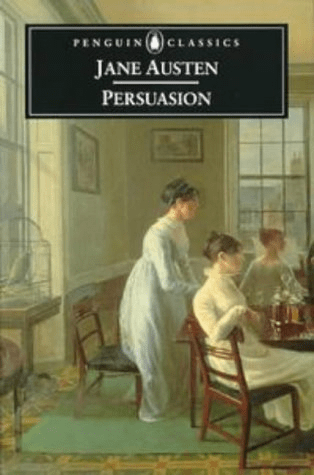
Austen is unquestionably a writer of genius, her control of point of view and narrative technique is unparalleled, and not least critics love Persuasion, which all suggests the problem may have been with me, not the novel, and that I need to give it another chance.

The plot of Persuasion treads familiar romantic ground – young people in Regency England trying to find suitable partners to marry, but it has something of a new twist. Persuasion is about love the second time around. Anne Elliot, middle daughter of Sir Walter Elliot, baronet, lives in the shadow of her older sister Elizabeth, now in effect head of the household following their mother’s death, and Mary, her younger sister who has recently married a local minor aristocrat, Charles Musgrove. Charles had previously asked Anne to be his wife, and once rejected had moved on to the younger sister with that relentlessness and lack of sentimentality that characterised marriage making in this period. Anne is now 27, dangerously old for a woman of this era and at risk of spinsterhood. What is not widely known about Anne (within the novel) is that when she was 19 she had previously rejected an earlier marriage proposal, having been persuaded by her mother’s friend and her own confidante, the widow Lady Russell, that her suitor, Frederick Wentworth, was not good enough for her. Captain Wentworth, as he now is, was at the time without prospects or connections, and marrying for love was an improvident thing to do.

Wentworth re-enters Anne’s life when Sir Walter lets the family estate to Wentworth’s brother-in-law, Admiral Croft. Since their initial romance, Wentworth has fought in the Napoleonic Wars, been promoted to the rank of captain and amassed a significant fortune from capturing enemy ships – being in the Navy could at this time be a very dangerous but very well-rewarded profession. Once Wentworth is reintroduced it is clear he and Anne will end up together, but the only question is how they will be reunited, and which of the many available young women introduced into the plot he will mistakenly be thought to be in love with before the inevitable reconciliation. Visits to Lyme Regis and Bath feature along the way, where the plot’s false starts and red herrings are overcome and the multiple other threads quickly resolved, more in the manner of an early Shakespearean comedy than an elegantly plotted Austen romance.

There is an obvious temptation to see Austen using Anne’s story as a way of working through her own personal issues. Austen had been engaged at one point but hurriedly called it off, and it is possible she regretted choices made in her romantic life. For her there were to be no second chances, so writing a story in which a lost love is finally recaptured must have had at least some element of wish-fulfilment. Austen’s biographer Claire Tomalin described Persuasion as Austen’s “present to herself…. to all women who had lost their chance in life and would never enjoy a second spring.” I don’t find this way of looking at novels as semi-autobiography or therapy as particularly fruitful – Jane isn’t Anne any more than she is Elizabeth or Fanny.

So what are the concerns I have about the novel? It is clear from her correspondence that Austen wrote Persuasion during the illness which was to take her life. Her usual method of composition, working and reworking the text and plot, was simply not available to her – she didn’t have the time or the energy, and it shows. Plotlines are hurriedly disposed of without the usual care – the most obvious example being the way Mr William Elliot, Sir Walter’s heir, is introduced, courts Anne, and is exposed as a scoundrel. This Mr Elliot is a two-dimensional villain whose motivation is simply to ensure he inherits the ancestral home, which is due to do anyway, even without all the Machiavellian plotting. His precise role in the family structure – why he is the heir – is never clearly explained (unless I missed it!) and the way his deviousness and duplicity is exposed is clumsy in the extreme.

As a character, Anne is not as dull as Mansfield Park‘s Fanny Price, but she equally doesn’t come alive compared to an Elizabeth Bennet or Elinor Dashwood. At first she is described by the unsympathetic narrator as ‘faded and thin‘, as ‘haggard‘, and that ‘her bloom has vanished early‘. Captain Wentworth on his return to her company passes a similar devastating judgment, commenting (in a phrase Anne crushingly comes to hear) on ‘the years which had destroyed her youth and bloom‘. However, things aren’t as bad as these judgments might suggest, and some restorative sea air puts colour back into her cheeks. After a short while at Lyme (albeit in November) Anne is attracting the attentions of the passing William Elliott:

“As the passed, Anne’s face caught his eye, and he looked at her with a degree of earnest admiration, which she could not be insensible of. She was looking remarkably well; her very regular, very pretty features, having the bloom and freshness of youth restored by the fine wind which had been blowing on her complexion, and by the animation of eye which it had also produced. It was evident that the gentleman … admired her exceedingly.” (Chapter 12) (Sir Walter on the other had thinks ‘sharp winds‘ can make a women ‘grow coarse’, and on that basis decides not to buy his youngest daughter a new hat and pelisse in case it encourages her to go out in the wind!)

The chapters in Lyme and Bath had the feel of the characters treading water waiting for the reconciliation between Anne and Captain Wentworth. When this reconciliation finally happens it feels rushed – he overhears her speaking with a friend of his, and writes her a letter declaring his feelings, which she happily reciprocates. This was the one scene Austen is known to have re-written. The earlier version survives, in which Wentworth’s sister and brother-in-law take a much more active hand in engineering the couple’s reconciliation, which to me seemed a lot more believable and authentic.

Many of the other characters don’t step off the page. Anne’s younger sister Mary is better sketched than many, and while her hypochondria is a character trait Austen had used before, (with Mr Wodehouse) this is largely forgotten once the novel moves on. Elizabeth the older sister is barely two-dimensional and remains wooden and forgettable. Lady Russell, who advises Anne not to accept Wentworth’s original proposal, is equally and disappointingly weakly drawn. In fact none of the secondary characters are comparable to the wonderful sketches you see in earlier novels of characters such as endearing gossips such as Miss Bates, awful aristocrats like Lady Catherine de Bourgh or villains like Willoughby. Equally the plotting is disappointing. In the great Austen novels we are always aware of events ‘off-stage’, even when the central characters themselves are unaware. There are plenty of hints that there is more to Jane Fairfax and Frank Churchill’s relationship than Emma is aware of with a careful or second reading, and the way Austen charts Elizabeth Bennet’s journey from anger to love with Mr Darcy is utterly convincing, but there is nothing of comparable significance in Persuasion.

Or at least I didn’t find it on this read, which as I have said could easily be down to my reading of the novel rather than the novel itself. So I need to reread it. Of course I am not going to dive into it straight away, but find a time and place when I can give it the care it needs. Until then I would love to know whether you shared my concerns or can point me to where I have gone wrong.
Persuasion, by Jane Austen, 1817

Aside
Book review

I’m slowly making my way through Michael Slater’s biography of Charles Dickens at the moment, and at one point I came across a reference to Dickens’ fellow author Catherine Gore. I had not heard of Gore before. She was a prolific writer of what become known as ‘silver-fork‘ novels. The ever-reliable Wikipedia tells me that silver-fork novels:

“dominated the English literature market from the mid-1820s to the mid-1840s. They were often indiscreet, and on occasion “keys” would circulate that identified the real people on which the principal characters were based. Their emphasis on the relations of the sexes and on marital relationships presaged later development in the novel.”

The novels focus on the lives of the aristocracy and the manners of the high society, in particular that of the Regency period.

Other writers in the genre included Theodore Hook, Edward Bulwer-Lytton, Benjamin Disraeli, Lady Blessington and Lady Bury. Bulwer-Lytton is principally remembered for coining phrases such as “the great unwashed” and “the pen is mightier than the sword“, as well as the famously bad opening line “It was a dark and stormy night; the rain fell in torrents—except at occasional intervals.”

The purpose of this entry, which I am eventually getting to, is that until I fell down this particular internet rabbit-hole I had never heard of this genre of English fiction. Perhaps I should have but I suspect this is not just my blind-spot. Its novelists are to all intents and purposes no longer read; the vast popularity of their novels is forgotten and few of the books are still published (although they are readily available online, of course). Which made me wonder – will any of the popular genres of the early twenty-first century be completely forgotten in a couple of hundred years? Not just the books and the authors, but the whole category of works into which they fall? Will Young Adult literature still be considered a meaningful classification? Science Fiction? Real-life Crime?

The other question that occurred to me was – what other popular genres of literature have been forgotten? Now that is a rabbit-hole you could spend a long time down!

Finally, if you were wondering whether ‘silver-fork’ literature would be worth resurrecting, here’s a short summary of one of Edward Bulwer-Lytton’s novels, Zanoni:

“Zanoni, a timeless Rosicrucian brother, cannot fall in love without losing his power of immortality; but he does fall in love with Viola Pisani, a promising young opera singer from Naples, the daughter of Pisani, a misunderstood Italian violinist. An English gentleman named Glyndon loves Viola as well, but is indecisive about proposing marriage, and then renounces his love to pursue occult study. The story develops in the days of the French Revolution in 1789. Zanoni has lived since the Chaldean civilisation. His master Mejnor warns him against a love affair but Zanoni does not heed.”

Silver-fork novels

Aside
Book review

The Women’s Prize for Fiction is currently running a survey to find the top ten ‘essential books for men written by women’. The press release promoting the survey claims that “most men simply don’t read books by women”. Support for this claim is provided by research by Mary Ann Sieghart (who chairs the 2022 judges’ panel) in her book The Authority Gap. This research was based on the top ten bestselling female fiction authors including Jane Austen, Margaret Atwood and Agatha Christie which showed that only 19% of their readers were men and 81% women. For the top 10 bestselling male authors (including Dickens, Tolkien, Lee Child and Stephen King), the split was 55% men to 45% women. Whether you can extrapolate national reading habits from just 20 authors is debateable, but the general finding – that men read more men authors than women authors – seems right.

Why should that be – why don’t men read more women authors? The Women’s Prize approach seems to suggest that it is simply because there are loads of great women authors out there that men aren’t aware of. It has prepared a list of sixty books by 56 women and is inviting people to vote for their favourite. (The vote closes on June 6th 2022). Obviously this is a way of getting more attention for the prize itself, which is fair enough, but I wanted to consider the reasons why men don’t read women.

The list is interesting. The vast majority of the nominations are from the twentieth century or later. Jane Austen is ignored, as is Emily Bronte. Charlotte Bronte appears but her recommended novel is Villette, not Jane Eyre as you might expect. Arguably this is because everyone already knows about Pride and Prejudice or Wuthering Heights – the purpose of the exercise is to recommend less well-known works. It’s not surprising that there is a degree of well, to be blunt, virtue-signalling in some of the nominations: Ian McEwan nominates We Had to Remove this Post by Hanna Bervoets, which was published in May 2022, while Andrew Marr nominates Ali Smith’s Companion Piece, also published in May 2022. Andrew Billen nominates the relatively ancient The Candy House by Jennifer Egan which was published way back in April 2022. Several of the other novels nominated date back as far as 2018. Are these really novels that will attract men to read them, or do these nominations tell us more about the people making them?

So why don’t men read women authors? Is it simply that men haven’t come across the novels in this list before? That seems unlikely. The Handmaid’s Tale is not really obscure is it? The list includes three Booker Prize winning novels (Girl, Woman, Other, The Sea, The Sea, and Possession). Novels such as Elizabeth Strout’s Olive Kitteridge (which won the Pulitzer Prize) have sold vast quantities and surely need no further promotion. It’s not so much that the novels in the list aren’t the right ones (although authors such as Muriel Spark and Beryl Bainbridge should have been mentioned, and Maggie O’Farrell’s Hamnet should be on every must-read list) but that awareness isn’t the issue. Men know about women authors but choose to read male authors.

There aren’t any easy answers here but I wonder whether the issue can be traced to childhood reading habits. There’s evidence that boys read fewer books and spending less time reading than girls. Once genre reading patterns are established in the early years then they can be difficult to shift.

Men should read more women authors, but that’s not going to happen by exhortation alone. Perhaps this reading gap is a reflection of a more serious gap between the sexes in society?

Men Reading Women

Aside
Book review

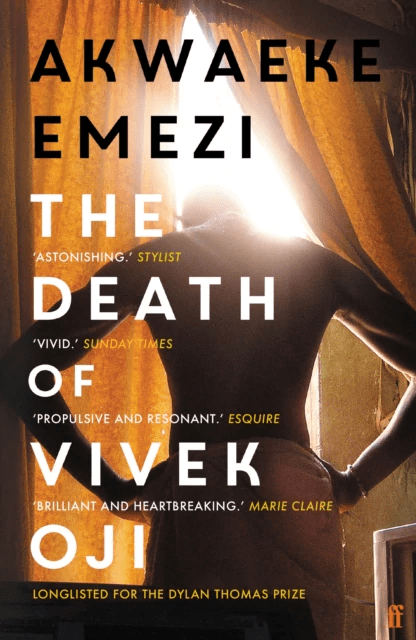
“They burned down the market the day Vivek Oji died.” So begins the tragedy of Vivek Oji, a young man living a double life in modern-day Nigeria. Born on the day of his grandmother’s death, Vivek is seen by some of his family members as her incarnation, marked out by the same starfish-shaped scar.

Vivek’s death marks both the beginning and the end of the novel. It tells the story of his short life, using memories from family and friends alongside his own narration. The fragmented narrative and complex time structure slowly builds into a picture of a life that is brimming with potential but is also, as the reader knows throughout, doomed to be cut tragically short. The main figures in his life are his over-protective mother and his cousin, Osita. It’s hard to pinpoint the precise moment that Vivek’s life begins to unravel, but perhaps it is when he allows his hair to grow down beyond his shoulders. This is a breach of convention in his traditionalist home and community. It troubles his family and his neighbours. Vivek’s aunt becomes convinced that a demon is possessing him, and he is traumatised by a violent attempt at exorcism at her church. The unspoken fear of his parents is that it is an outward sign of femininity and that he is gay, which is taboo in Nigerian society. The context here is vital. Homosexuality is not just taboo in Nigeria, it is illegal. The Same-Sex Marriage (Prohibition) Bill passed in 2014 in response to the legalisation of gay marriage in the West, prohibits marriage between persons of the same sex, forbids any cohabitation between same-sex sexual partners and bans any “public show of same sex amorous relationship.” It imposes a 10-year prison sentence on anyone who “registers, operates or participates in gay clubs, societies and organization” or “supports” the activities of such organizations. Even having long hair is sufficient to spark suspicion, and suspicion is all that is needed.

Much of the novel is told through the eyes of Vivek’s mother, Kavita. Her grief drives her to relentlessly try to find out how her son died. At the novel’s climax she succeeds in this quest and finds some sort of peace knowing that he lived at least part of his life happily and on his own terms.

My initial reaction to this novel was that it was an example of the ‘bury your gays’ trope. But I was wrong, and it might be worth explaining why. My understanding of this trope was that gay people in literature, film, television etc are often denied happy relationships, and frequently die just at the point that a fulfilling relationship or personal happiness is in sight. This article discusses the trope in a lot more detail. While the trope originated as a means to allow gay relationships to be portrayed without overstepping social taboos, it developed over time and now more simply represents the expendability of gay characters, particularly in film and on television. At first it looks as if Vivek’s death might fall into this category. But there are a number of reasons why it doesn’t apply here. First, the author doesn’t explicitly describe Vivek as gay. He has sex with other men, but he also wears women’s clothing and make-up, and adopts a female gender identify at times. It is in these moments that Vivek seems happiest and most fulfilled. He doesn’t adopt a specific gender identity (or perhaps to be more precise, the author doesn’t mention one). This may be because he doesn’t have time to explore this aspect of his identity fully, but also because conservative Nigerian society doesn’t allow him the space to do so. For much of the novel the reader is led to believe that Vivek is murdered by a rioting mob because he is ‘caught’ in public wearing female clothes and make-up. The final revelation about his much more mundane death serves to undercut these expectations – what we think we know about people is wrong, and making judgments based upon those assumptions is equally wrong.

This was a thought provoking if somewhat sad novel about the challenges facing gay, non-binary and trans people in modern-day Nigeria. It’s great that authors such as Emezi are now finding their voices and publishers to promote their work.

The Death of Vivek Oji, by Akwaeke Emezi, 2020

Aside
Book review

I reviewed The Essex Serpent back in 2019, and in a passing comment said “I am … convinced that this would make a hugely popular television series in the right hands.”

Well I am glad to say someone agreed, because the novel is now being televised on Apple TV with the first two episodes being released yesterday. The leads – Claire Danes and Tom Hiddleston – look perfectly cast, and the production wisely filmed extensively in Essex itself.

I’m not on any commission from Apple TV – I don’t even have a subscription – but it is nice to see a novel that demanded to be filmed finally making it to the screen. I think a television adaptation (as opposed to a film) is a much more sensible way of telling this atmospheric story, giving the characters time to develop rather than rushing everything to an end in 90 minutes. I hope it does it justice.

The Essex Serpent by Sarah Perry (again)

Aside
Book review

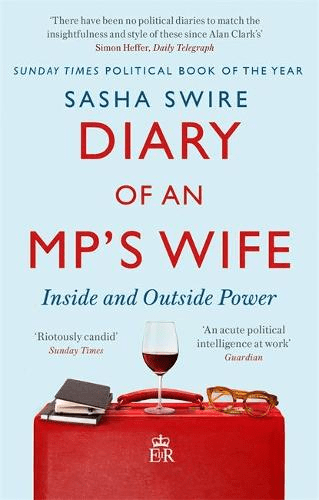
Diary of an MP’s Wife: Inside and Outside Power, by Sasha Swire 2020

Diary of an MP’s Wife is a deliciously indiscrete and gossipy insider’s account of British politics spanning the second decade of this century. It opens with the election of the Cameron/Clegg coalition in 2010, followed by the Tory’s unexpected election win in 2015, the the unfolding tragedy that was the Brexit referendum, ending in the election of December 2019.

The whiff of entitlement coming of the pages of this text can at times be overpowering. The author is the daughter of John Nott, one of Thatcher’s Cabinet Ministers, and her MP husband is an old Etonian. She frequently expresses frustration at this paradox – being an Old Etonian was seemingly a disadvantage in securing a position in the coalition cabinet when the Old Etonian Prime Minister was looking to appoint a more diverse top team. The summary of the Cameron years 2010-2016 contains few surprises – it was always fairly obvious even at the time that this was a clique of close friends with a largely shared, broadly progressive but still old-school Conservative view of the world. The account of the times spent drinking and plotting with the Cameron set seems entirely authentic:

They are all here, the ones that eat, drink, party together, they are all intimately interlocked, some from university days, some from the research unit, some later, such as with us through the selection procedure. We all holiday together, stay in each other’s grace-and-favour homes, our children play together, we text each other bypassing the civil servants. There are old rows, forgiven betrayals and historic rivalries. This is a very particular, narrow tribe of Britain and their hangers-on. It’s enough to repulse the ordinary man, already angered by the continuing hold of the British class system.

It’s hardly surprising therefore that when the political system begins to take its toll, the personal relationships and friendships under-pinning the Government are also put under pressure. Friendships fray and are broken.

I can’t avoid the suspicion that even the frankest of political diaries have the tendency to edit out the more egregious mistakes and highlight comments that seem in hindsight perceptive. There is plenty of that going on here – at one stage Swire says:

“2020 may be a dim, far-off date in the diary (my note – the reference to 2020 is because at the time this was written, shortly after the election in 2015, it was assumed that the next general would be 2020 – in fact we were to have two elections before then!) but whichever side will win there’s going to be plenty of internecine warfare in the meantime. In fact, and manner of things could happen (watch Keir Starmer rise and rise)” (pg201)

All manner of things indeed.

Another thing you often see in political diaries is a loathing for the constituency activists that the MPs depend upon for funding raising and re-selection, but who can be shall we say ‘difficult’ characters. Swire writes of her husband’s East Devon Conservative Association activists:

“They hate, in equal measure, foreigners, Europe, defence cuts, gay marriage, Liberals, the BBC, Germans, the Japanese, the coalition, and garlic.” (140)

There is some suggestion that Swire had publication of these diaries in mind all along – some particularly scathing criticisms of fellow Tories is softened with an unconvincing concluding sentence or paragraph commenting on the general good intentions of them all. Swire seems not to have wanted to burn all her bridges with the Conservatives, but I don’t think the publication of these diaries will have done her much good. When extracts from the book appeared in the media it was reported that the author was upset by their presentation, suggesting that they had in some way been way been distorted. Is anyone really that naive? It’s easy to see how Tory feathers would have been ruffled – at one point Swire claims David Cameron said to her: “The scent you are wearing is affecting my pheromones. It makes me want to grab you and push you into the bushes and give you one.”

The troubling figure of Boris Johnson slowly emerges from these pages as the years pass. Initially he is a fairly distant, slightly comic figure, but his rise to the top of the Conservative Party is charted with precision. Swire is clearly attracted to his energy and his charisma, but has no illusions about his trustworthiness. His pivoting on Brexit as a political manoeuvre rather than on a point of principle is a matter of record, but it is still interesting to see reactions recorded at the time. David Cameron is recorded as saying that:

“Boris…had always been a supporter of Europe, free movement and migration…this whole episode was to do with his leadership ambitions, nothing else”. (242)

Well no shit Sherlock.

I’m not sure this book actually tells us much we didn’t already know. Hugo Swire was a relatively minor figure in the Cameron Governments, and his wife’s best stories are his, repackaged at second-hand. They may have socialised with the key figures but weren’t in the room when key decisions were made. It’s an interesting perspective from a minority grouping within the Tories – self-identifying as ‘Cameroons’ when the label no longer has any meaning, remaining loyal to the Tories largely over the issue of Brexit when so many others have long since parted ways. Hugo Swire stood down from Parliament in 2019 to spend more time with his money, but it is really hard to see him having any part to play in Boris Johnson’s Brexit Party-lite Conservatives.

Diary of an MP’s Wife: Inside and Outside Power, by Sasha Swire 2020

Aside
Book review

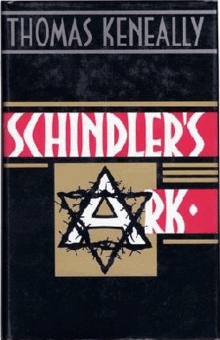
Keneally was inspired to write the remarkable story of Thomas Schindler after a chance meeting with Poldek Pfefferberg, a Holocaust survivor. In some ways this novel is as much Pfefferberg’s as it is Kenneally’s – his persistence is trying to ensure Schindler’s story had a wider audience was remarkable. He was an advisor to Kenneally during the novel’s development and accompanied him to Poland during his research. Keneally dedicated Schindler’s Ark to Pfefferberg: “who by zeal and persistence caused this book to be written.” He was then also involved in persuading Steven Spielberg make the film of the novel.

Schindler’s Ark is in many ways more a history text than a novel. Kenneally has justified the designation of the text as a non-fiction novel (which I know is a recognised literary genre but still feels like a contradiction in terms) due to the inclusion of reconstructed conversations between participants. I take his point, but these are clearly an imaginative way of presenting some aspects of the narrative, and in no way undermine the exhaustive and detailed research that underpins the text. Further there is always a risk that presenting the text as fiction allows sceptical readers to distance themselves from the appalling brutality the novel exposes.

As I am sure almost all readers of this blog will know, Schindler’s Ark is the story of Oskar Schindler, a businessman and entrepreneur who during the Second World War helped save the lives of thousands of Polish Jewish men, women and children. They worked in his factories, and he protected them by insisting that their labour was essential in keeping his factories open, and that in turn the factories were vital to the German war effort.

As the war progressed that was a fiction that was increasingly hard to maintain. His workers were moved first into the Krakow ghetto, and subsequently into brutal labour camps. Those were the ‘lucky’ ones of course – many others were taken directly to the concentration camps. Schindler’s factories produced goods that had a very marginal impact on the war – usually just domestic goods – and any weaponry was very low grade. In any event the Nazi’s blood-lust was such that they were prepared to destroy any Jewish people they could find, irrespective of whether they worked in industries critical to the war. So how was Schindler able to protect his workers when millions of others were being taken to the death-camps? His approach was simple – bribery. He spent lavishly on all sorts of expensive and hard-to-find goods to buy influence and favours, and keep the local Nazis pre-occupied and distracted while all around millions of Jewish people were being slaughtered.

Schindler was clearly a flawed human being – a member of the Nazi party, a drinker, womaniser and a war profiteer – and Kenneally’s portrait is unsparing about Schindler’s weaknesses; he makes no attempt to disguise these aspects of Schindler’s personality. It is possible that it was his very unsaintliness that allowed him to make the difficult decisions he had to make every day to preserve the people under his protection.

Unlike any other novel, film or programme I have seen or read, Schindler’s Ark chillingly portrays the brutality of the Holocaust. You think you know what happened, and perhaps want to avoid some of the details. While Schindler’s Ark is unsparing in its descriptions of Nazi brutality it is the mundane aspect of the regime, its businesslike approach to the industrialisation of murder that is so terrifying. The novel also brought me closer than ever before to an understanding of why Jewish people felt and feel the need for an Independent Jewish state, where all aspects of society – the Government, the police, the media and so on – are under the control of Jewish people. Because during the Holocaust Jewish people felt and were powerless in the face of the German state and were unable to look to anyone – other than the rare exceptions such as Schindler himself – for help or protection. I know I am in deep water here and I in no way want to provide blanket justification for the actions of the Israeli state and its sometimes brutal treatment of Palestinian people, but understanding the mindset which leads to condoning that behaviour is for me a new way of looking at the Palestinian conflict.

Kenneally’s determination to do justice to Schindler’s story makes Schindler’s Ark a dense, and at times distressing read. There is a vast amount of detail to be absorbed, dozens of characters who appear briefly and move on, and minute analysis of minor details of the operation of the factory. These details are probably important when weighing the negative aspects of Schindler’s life against the more obvious positives, but a more ruthless editor might have made this an easier read. Not all novels need to be easy to read, of course, but I wonder how many readers will have given up at some point and watched the film instead? The novel’s retitling for its American publication and the subsequent film, List instead of Ark, is interesting. It’s reductive – it’s so much easier to write a list than build and protect an ark. Escaping the Holocaust wasn’t only a matter of whether you were on a list or not. The film’s title, if not the film itself, reduces Schindler’s heroism to a single act rather than the arduous and lengthy process of fighting every day to preserve the lives of the Jewish people under his protection.

Schindler’s Ark deservedly won the 1982 Booker Prize against a varied and interesting shortlist. The chair of the 1982 judging panel John Carey said “This book has behind it a powerful organising and speculative mind, exercising great tact and restraint in the presentation of its terrible story“. This quite in itself restrained compliment is interesting – the powerful organising mind of the author was an important factor in doing justice to the story, even if it does sacrifice some of the narrative drama for a more exhaustive detailed account of events. But the restraint and tact are equally important – it would have been easy to have presented this as an adventure/escape story, which would have been tasteless and disrespectful to those who didn’t survive. In the end it is a portrait of an almost unimaginable horror and a brief glimmer of hope.

Schindler’s Ark, by Thomas Kenneally, 1982

Aside
Book review

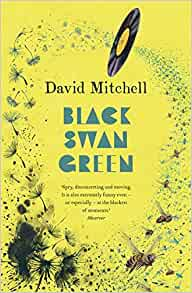
Set in the early 1980’s, Black Swan Green is the tale of a year in the life of 13-year-old Jason Taylor. Jason lives in a Worcestershire village and suffers from a stammer which makes his school life difficult – he is permanently afraid of it being discovered by his class-mates, and uses a variety of strategies to avoid words that might trip him up. The prospect of public speaking fills him with dread.

Jason gives different elements of his personality their own names and to an extent their own identities. Externalising these parts of his personality help him face his fears. His stammer is ‘the hangman’ for example, showing how fearful he is of having his condition ‘exposed’.

This is not just the story of Jason and his stammer. Much of the narrative revolves around his relationships with his peer group at school and time spent just hanging around the village. It quickly becomes apparent that the mundane challenges of day to day life as a teenager in a small English village in the 1980s are of quite limited interest, unless the nostalgic references to 80’s popular culture appeal. Jason has what are presented in his account as adventures (he falls over while skating, he is barked at by some fierce dogs, he goes for a long walk), and no doubt to him that’s what they seem, but they are not much more than everyday events with little in the way of drama. The only event that really stands out occurs when he meets an eccentric European woman Eva van Outryve de Crommelynck who robustly critiques his poetry but still encourages his aspirations to be a poet. Eva seems out of place in rural Worcestershire, and disappears from the narrative as abruptly as she appears, extradited as a result of her husband’s dodgy financial affairs.

Black Swan Green is a slightly less funny version of the Secret Diary of Adrian Mole aged 13 and 3/4. Admittedly there are a few differences between the two novels, in setting and tone, but the extent of the similarities is striking. The central characters are the novels’ naïve teenage narrators. They are the same age. Their parents are both splitting up, although Adrian/Jason comes to realise this a lot later than the reader. They both secretly write poetry. Both take a superficial interest in current affairs, in particular the Falklands War, and along with all teenage boys have crushes on young women. Both are embarrassed to be seen with their parents. Both their fathers are laid off. I could go on – but while Adrian Mole is played for laughs, while at the same time serving as an acute observation of the anguish of teenage life, Black Swan Green is a lot less funny.

So why did the author of the complex, modernist/experimental novels such as Cloud Atlas write a unfunny version of Adrian Mole? I am genuinely puzzled? Of course there is a strong autobiographical element to Black Swan Green, and the similarities with Sue Townsend’s creation may be coincidental (none of the dozens of reviews I read on Goodreads noticed the parallels, so maybe it’s just me?) but this was a surprisingly below par effort from Mitchell. I’ve been fairly critical of the tone of some of his other novels – Slade House for example was in part in poor taste – and the handling of the supernatural elements was unconvincing, but there was no question of his abilities as an author, in crafting compelling stories and characters. Black Swan Green isn’t a young adult novel, or at least it’s not marketed as such, but it might play better to that audience that to readers of his more mature fiction.

Black Swan Green by David Mitchell 2006

Aside
Book review

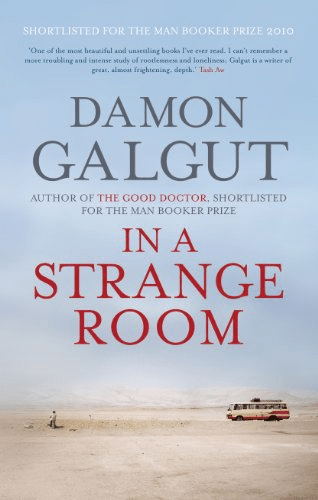
I thought Galgut’s The Promise showed sufficient – well, forgive me – promise to justify trying another of his earlier Booker contenders. In a Strange Room stretches the definition of novel to near-breaking point. It comprises three first-person (although more on that in a minute) narratives. The narrator is a South African writer named Damon. In the first section, The Follower, Damon is travelling in Greece when he meets a German tourist, Reiner. They strike up a strangely detached friendship which is renewed months later when they plan a walking trip together in Lesotho. Damon seems to be on holiday perpetually, and when back in South Africa couch-surfs without every needing to find a job. His trip to Lesotho is funded by Reiner, but the practicalities of a walking tour in a tropical African country with very limited infrastructure are never adequately addressed. Part-way through the tour an argument leads to Damon abandoning Reiner and the trip and returning to South Africa. Throughout the narrative there is a luke-warm sexual tension between the two men which is never acted upon.

The ‘novel’ thing to do would have been to have Reiner appear during the later narratives in the novel, but Galgut eschews this approach. Instead he is quietly forgotten as Damon moves on to his next adventure, this time a walking trip (initially solo) in Africa. This chapter, ‘The Lover’, appears to be set a few years after ‘The Follower’. Damon is older and a little wiser, but still listlessly travelling non-stop without the burden of a career or occupation to hold him back from his nomadic existence. In Zimbabwe he meets three Europeans – a French man and a pair of Swiss twins. Although they have different routes they keep bumping into one another, until eventually they decide to travel together. Damon is clearly attracted to one of the twins, Jerome, who has “a beauty that is almost shocking”, and changes his travel plans to he can join them. They crisscross Southern Africa with the expected complications with visas and passports, but not a lot happens. Damon doesn’t appear to enjoy his travelling – he really could be anywhere. Later he follows Jerome back home to Switzerland before moving on to London and beyond. The relentless travelling without destination or direction is obviously a metaphor for how Galgut sees his own life, but it gets a bit tedious.

The novel’s final section, ‘The Guardian’, features yet another unsuccessful journey. Damon accompanies Anna, a friend suffering from manic depression, on a recuperative journey to India. He is totally out of his depth in dealing with Anna’s illness – despite his best endeavours he cannot protect her from herself, and she ends up taking an overdose. The Indian hospital system struggles to give her the treatment she needs to survive, and the situation descends into a chaotic, distressing nightmare.

These three journeys have some thematic links, but they also had a strong personal memoir sense. On an ‘acknowledgments’ page at the end of the text, the author thanks the editors of the Paris Review ‘where these pieces first appeared, suggesting that they may not have been conceived as part of a larger whole at the time they were originally published, and have been welded rather uncomfortably together to create a text of sufficient length to justify publication in a book format. Although ostensibly they are all about journeys, the third section involves very little travelling, and is really focused on the serious issues regarding metal health and suicide. I don’t think they sat together well at all, and ‘three long short stories’ would have been a more honest representation of the text.

In a Strange Room is written in the third person, but occasionally often the narrative flips to the first person: he talks about the Damon character as if he is someone else, and then at other times, sometimes changing in the course of a single sentence, he will describe him as “me”. To me this was a slightly irritating device. After the initial confusion of working out what was happening – was there someone else present? – it just became an affectation. I assume it was a way of showing the unreliability of memory – when the memory was vivid ‘I’ was used because the narrator felt present, when it was less clear ‘he’ was used to indicate the lack of connection. That’s how I rationalised it anyway. But it emphasised all the more clearly that In a Strange Room is a memoir, albeit an unreliable one used as a creative springboard for a novel about rootlessness.

Periodically sitcoms (especially long-running ones) have clip-shows – episodes comprised principally of clips from previous episodes, put together mainly to maximise the use of content originally used elsewhere. I can’t shake the suspicion that In a Strange Room is the novelists version of that technique. There’s plenty of precedent for this approach – the one that springs to mind is Raymond Chandler who re-used short stories originally published in crime magazines as the components of novels such as The Big Sleep. But Chandler could get away with this, making the whole much larger than the parts. I’m not sure Galgut achieves the same effect.

In a Strange Room by Damon Galgut 2010

Aside
Book review

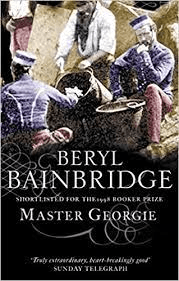
Beryl Bainbridge has been on my ‘must read more by this author’ list for a long time, particularly since I enjoyed her ‘An Awfully Big Adventure‘ back in 2018. It’s taken me until now to act on that resolution, and only then because I came across her Master Georgie, which was shortlisted for the 1998 Booker Prize, in a charity shop at a bargain price.

The novel is told in six brief chapters, which Bainbridge describes as ‘plates’, introducing the photography theme which provides a structure for the novel. The opening plate/chapter is told by Myrtle, a Victorian foundling who has been taken in (and is later adopted) by the Hardy family who are from Liverpool. Any echoes of another orphan child found in Liverpool and taken in by a family (Heathcliff?) seem coincidental. Myrtle is obsessively devoted to Master Georgie, the son of the household. Set in 1846 this introductory chapter tells the events of the day of Mr Hardy senior’s ignominious death of a heart attack in a brothel, and how his body is smuggled back into the family home in a cart (previously used to present a Punch and Judy show) to try to avoid any scandal.

Four years later we next hear from Pompey Jones, an Artful Dodger-like character who having helped with the removal of Mr Hardy’s body from the brothel to his bed has become another part of the extended Hardy household. Pompey is working with Master Georgie, now the master of the household. on his experiments with amateur photography. George is now married and a surgeon. There are also hints in Pompey’s narrative that his relationship with George has a sexual component.

Another time skip takes the novel to the outbreak of the Crimean War in 1854 Sevastopol. For reasons that are unclear (to me on a first read, I may have missed something by way of explanation) George having signed on as an army doctor, has been followed into the conflict by Myrtle, his brother in law Dr Potter, and their families. Pompey is also there as an assistant to a war photographer travelling in the trusty and multi-purpose Punch and Judy cart. This chapter is narrated by Dr Potter, and having checked it seems his explanation for travelling into the heart of a war-zone is that he needs to be there as an ‘observer’ which seems unconvincing at best.

The conflict gradually heats up and comes to dominate the narrative, ending in the bloody battle of Inkerman. These are the strongest scenes of the novel in which the horror of the conflict is captured in gory detail. Death, which has dominated all the sections of the book, almost overwhelms it.

One of the things that stood out from An Awfully Big Adventure was the author’s clever manipulation of point of view narration to slowly build the narrative. It’s the jigsaw building method of story-telling, where the final picture only emerges as the pieces are assembled by the different perspectives. Bainbridge uses the same technique here, although to much lesser effect. The narrators leave it to the reader to fill in many gaps in the narrative, but it is fairly easy to piece these together and work out the relationships between the characters with a little care and attention. When the final picture is assembled in An Awfully Big Adventure it is with a sense of revelation, something that is lacking here. Constructing the novel around the six photographs, one taken in each ‘plate’ was probably a clever idea, but it runs the risk of being over-pleased with the conceit without adding much to the narrative. Each chapter is a snapshot of events rather than part of a coherent narrative, and while piecing the connections between each ‘plate’ is a comfortable enough task for the reader, it didn’t feel as rewarding as I think the author may have intended.

Master Georgie is a lesser novel in other ways. Myrtle has the potential to be a central character, but her portrait is horribly one-dimensional. Apart from her slave-like devotion to Master George, to the extent of having his children and then giving them up to his wife to raise as her own, her character has no depth whatsoever. All she does is follow George around like a puppy dog. This is such a waste of a potentially interesting character – it would have been interesting to have seen her gradually come to realise that he didn’t deserve her devotion for instance, or for her to have found something to do other than hang around on the off-chance he might need her. Dr Potter is also problematic (although to a lesser extent). The amateur Victorian geologist is something of a cliché in the first place, but his role in the novel is unclear other than to provide a contrasting voice to the other narrators. Why does he follow George to war? I understand there was an element of war tourism in the Crimea, but Potter isn’t there for that. For the initial stage of the journey he is accompanied by his wife and children, as is George, even though it is clear that a serious conflict is brewing. It just makes no sense why they would all recklessly head off to the Crimea in the way they do. George seeks out the conflict because he believes he can help as a doctor, and possibly as some form of redemption for previous weaknesses or to prove himself (the novel’s title infantilises him, suggesting he needs to do some growing up), but the presence of the others is inexplicable.

Master Georgie has the beginnings of a great novel about the Crimean War, using that conflict to reflect on Victorian society, class and personal relationships. The structure of the novel, based around the six photographs, is cleverly designed. There are glimpses of what might have been, but only glimpses. It had an incomplete or draft feel to it. I have no issue with the reader being asked to do the heavy-lifting and sketch in the missing details of relationships between characters, for example, but here even when that work is done we are left with a picture with too many missing pieces.

Master Georgie by Beryl Bainbridge, 1998

Aside