The Man Who Would be King runs to not much more than 20 pages. It was first published in Kipling’s collection The Phantom Rickshaw and other Eerie Tales and later in Wee Willie Winkie and Other Child Stories. So there can be no argument that Kipling conceived the story as an adventure tale for children. But it is equally true that today, perhaps in part because of the success of the book’s 1960’s film adaptation, but more probably because of its what are now perceived as out-dated attitudes to empire, it is more often read by adults. It’s interesting how some books originally written for children over time become seen as books for adults and vice-versa. An example of a book travelling in the opposite direction isBlack Beauty which was first published for adults but is now mainly read by or to children.
The Man tells the story of two adventurers, Daniel Dravot and Peachey Carnehan, as told by the narrator journalist they meet during their travels in Imperial India. They have concocted a mad, dangerous plan – to become kings of the remote country of Kafiristan. Their plan involves using firepower – rifles – the likes of which the natives will not have seen before and will consider almost magical in their ability to kill a man stone date at great distances. They also plan to use the standard imperialistic playbook of divide and conquer between the local chieftains and kings.
Two years pass and Carnehan returns alone, a broken man, crippled and in rags. He tells the narrator that he and Dravot succeeded in becoming kings, but ultimately at great cost. The pagan mountain tribesmen acclaimed them as beyond kings, as gods, helped by a bizarre form of Masonic ritual which Dravot and Carnehan were able to show knowledge of, perhaps as a legacy of some long-forgotten previous explorers. But becoming gods is a dangerous position, and when Dravot was exposed as only human after all this was seen as a shocking betrayal. Retribution was swift. Carnehan survived and escaped with only his life and one grisly memento of his adventure. The price of colonialism in this part of the world is high.
The Man Who Would be King would make a great companion text for anyone studyingHeart of Darkness. Both are explorations of the impact of colonialism on the colonisers, who go too far in their efforts to conquer the unconquerable. The two main characters in The Man, Daniel Dravot and Peachy Carnehan pose as gods to impress the people they are attempting to subdue in Kafiristan, in the same way Kurtz assumes a god-like status in the Congo. Empire itself is described in similar ways. Kipling’s narrator describes the native states of India (those not under direct British rule) as
“the dark places of the earth, full of unimaginable cruelty”.
Compare Marlow’s first words in ‘Heart of Darkness’
“And this also [. . .] has been one of the dark places of the earth”.
Both stories are told by survivors of the expeditions that form the central narratives, stories which are then retold by the anonymous narrator. The process by which the local people are subdued is very similar, and the objectives of the protagonists – a dangerous combination of greed and a lust for adventure – are also alike. Equally the resolution of each story is essentially the same. The experience of being god-like drives the protagonist mad and leads to their downfall. In The Man when Carnehan bleeds he is shown to be merely human and is killed; in Heart Kurtz dies suddenly of a fever. In both stories the secondary narrator (the person who recounts the story to the actual narrator) escapes by the skin of his teeth with a memento of their adventure.
As far as I have been able to establish Conrad did not acknowledge The Man as a source for or influence on Heart, and many of the elements I have described here are, one might argue, standard components of all adventure stories. I’m not going to try and resolve the question as to the relationship between the two texts, other than to recognise there must surely be one, because this is a review rather than a thesis, but I think it is worth further investigation.
The narrative style of The Man is informal. The Kipling character is relaxed, recounting a story from his days in India, probably one of many, but chosen as a warning of the dangers of colonialism. He heavily foreshadows the story’s ending in his first paragraph:
I once came near to kinship with what might have been a veritable King and was promised the reversion of a Kingdom — army, law-courts, revenue and policy all complete. But, to-day, I greatly fear that my King is dead, and if I want a crown I must go and hunt it for myself.
Carnehan and Dravot are introduced as eccentric, larger than life adventurers,
“a huge gentleman, …a wanderer and a vagabond like myself, but with an educated taste for whiskey. He told tales of things he had seen and done, of out-of-the-way corners of the Empire into which he had penetrated, and of adventures in which he risked his life for a few days’ food.”
“He’s a big man with a red beard, and a great swell he is.“…“We have been all over India, mostly on foot. We have been boiler-fitters, engine-drivers, petty contractors, and all that, and we have decided that India isn’t big enough for such as us.”
The Kipling narrator by comparison is a passive observer, spending his time waiting for things to happen:
One Saturday night it was my pleasant duty to put the paper to bed alone. A King or courtier or a courtesan or a community was going to die or get a new Constitution, or do something that was important on the other side of the world.
The outlandish plan Carnehan and Dravot outlined to the narrator is obviously extremely risky:
“You’ll be cut to pieces before you’re fifty miles across the Border,” I said. “You have to travel through Afghanistan to get to that country. It’s one mass of mountains and peaks and glaciers, and no Englishman has been through it. The people are utter brutes, and even if you reached them you couldn’t do anything.”
Their expedition starts in a typically unconventional fashion, with Dravot and Carnehan disguised as a mad priest and his follower:
A priest attired in fragments of ribbons and rags stalked up to me, gravely twisting a child’s paper whirligig. Behind him was his servant, bending under the load of a crate of mud toys. The two were loading up two camels, and the inhabitants of the Serai watched them with shrieks of laughter. “I will go even now!” shouted the priest. “I will depart upon my winged camels, and be at Peshawar in a day! Ho! Hazar Mir Khan,” he yelled to his servant “drive out the camels, but let me first mount my own.”
The element of theatre in this start to their journey is key to their plan – they are going to hoodwink their way onto the throne. The narrator doesn’t expect to see them alive again. His life continues as before with world affairs happening elsewhere, life leaving him behind:
The wheel of the world swings through the same phases again and again. Summer passed and winter thereafter, and came and passed again. The daily paper continued and I with it, and upon the third summer there fell a hot night, a night-issue, and a strained waiting for something to be telegraphed from the other side of the world, exactly as had happened before. A few great men had died in the past two years, the machines worked with more clatter, and some of the trees in the office garden were a few feet taller. But that was all the difference.
In Heart of Darkness there is little ambiguity about Kurtz’s attitudes towards the people he comes to lead – they are brutish and anonymously disposable. Carnehan and Dravot have a less directly racist attitude to the people they come to reign over. For a start they are not as dark-skinned:
“The Chiefs come round to shake hands, and they was so hairy and white and fair it was just shaking hands with old friends.”
They also have some understanding and possibly even experience of the masonic rituals that Carnehan and Dravot enact, with the suggestion that they are not the first white men to travel in the area:
“The old priest was a stranger come in from beyond the village of Bashkai. The minute Dravot puts on the Master’s apron that the girls had made for him, the priest fetches a whoop and a howl, and tries to overturn the stone that Dravot was sitting on…ten priests took and tilted over the Grand-Master’s chair … The priest begins rubbing the bottom end of it to clear away the black dirt, and presently he shows all the other priests the Master’s Mark, same as was on Dravot’s apron, cut into the stone.”
Dravot claims to be able to detect that ethnically the locals are closer to being European than Asian, not so much by their skin colour but by their behaviour:
“‘I won’t make a Nation,’ says he. ‘I’ll make an Empire! These men aren’t n******; they’re English! Look at their eyes — look at their mouths. Look at the way they stand up. They sit on chairs in their own houses. They’re the Lost Tribes, or something like it, and they’ve grown to be English.
Englishness is defined by the way people sit!
Dravot then outlines his plan to make his kingdom a strategically important part of the British Empire:
I’ll take a census in the spring if the priests don’t get frightened. There must be a fair two million of ’em in these hills. The villages are full o’ little children. Two million people — two hundred and fifty thousand fighting men — and all English! They only want the rifles and a little drilling. Two hundred and fifty thousand men, ready to cut in on Russia’s right flank when she tries for India! …When everything was ship-shape, I’d hand over the crown — this crown I’m wearing now — to Queen Victoria on my knees, and she’d say:— “Rise up, Sir Daniel Dravot.”
This is the ultimate objective for Dravot, something, Kipling hints, behind the schemes of all colonial adventurers – acceptance by the British establishment, a knighthood, and being able to leave behind his days as a disreputable character in the border countries of the Empire and on the edges of criminality. It is a dream he does not live to see fulfilled.
It is easy to forget when reading boy’s own adventure stories of this kind, with slightly cartoonish characters and uncomplicated plot-lines, that Kipling won the Nobel Prize for Literature at an early age (I believe he remains the youngest person to have ever won this award) and was a dominant figure in English literature for decades. His status now is much reduced. He is largely remembered as a teller of children’s stories and one or two great poems, but also as a representative and defender of all that was wrong with the British Empire. He is probably overdue a re-evaluation. The Man Who Would be King might be a good place to start.
The raw harshness of The Mercies is pretty unrelenting. Based on a real-life seventeenth century witch trial, Hargrave’s novel is either “an atmospheric tale of self-sufficient womanhood and sexual suspicion in a tight-knit island community” as the publisher would claim, or an extraordinarily bleak portrait of how awful life was for women and minorities in this period.
The first thread of the narrative is told by a young woman living in a small fishing community in Northern Norway, close to the Arctic Circle. It opens with a fierce storm (on Christmas Eve, just to rub it in) in which forty fishermen are drowned, watched from the cliff-tops by their womenfolk. The community – Vardo – is an island, largely isolated from the outside world. An already difficult, subsistence way of life suddenly becomes much harder. Word of the tragedy eventually reaches the outside world, but such is the state of public life in Norway in this period, the state’s reaction is to send them a priest, to make sure the women don’t get up to any inappropriate behaviour – such as going fishing to feed themselves. Women doing men’s work is seen by the Puritanism gripping the country to be ungodly, as is wearing trousers, not going to church, and just about any deviation from orthodoxy.
We are introduced to one of the complexities of social life at this time. The indigenous people – the Sami – live alongside the Christian incomers in this part of the world. There is some tension between the two communities but they have largely come to terms with one another. However, the new puritanism that has gained hold in Norway from across the sea in Scotland, where King James preaches against witchcraft, is being used to persecute the Sami and seize their property. It is clear that it is only a matter of time before any traditions relating to the Samis and their way of life become taboo.
The novel’s second narrative begins in Bergen, where a young woman, Ursa, is sold into marriage by her father. Because this is apparently common practice she accepts this servitude without protest. Her new husband immediately takes her with him on his journey to become the Commissioner of Vardo. He is on a mission to cleanse the community of heresy – in other words he is a witchfinder. Ursa’s husband rapes her nightly and of course there is no affection or connection of any kind between husband and wife. The impact of the Commissioner’s eventual arrival in Vardo is explosive and dangerous.
One of the many challenges writers must struggle with when constructing the plots of their novels is how to ensure that the ending doesn’t come as a complete out-of-the-blue surprise to the reader, but at the same time isn’t blindingly obvious. Give too many clues and the element of suspense is gone; give too few and the conclusion will feel like a deus ex machina. Sadly here the author flags the ending very early on. Without giving anything away, which is an approach the author does not adopt, the nature of the relationship between the two central characters is hinted almost immediately. The fact that the witchfinder quickly finds some witches will equally come as no surprise to any reader. One character sees the inevitable coming and flees the village – others are too stubborn to save themselves. Any element of suspense was stripped from the novel by this heavy-handed foreshadowing – it was a question of when things happened rather than whether.
There are other points of interest in the novel beyond the plot-lines and the stories of the two central characters. The evocation of a sense of place is powerful and I learnt more about seventeenth-century Norwegian fishing communities than I knew there was to be learnt. The characterisation was well done. The horrors of the treatment of women suspected of witchcraft was vividly hard to read. It all comes together into a strongly contemporary story of how women are persecuted when men feel threatened by their power. Sadly that message couldn’t be more relevant today. On that level The Mercies succeeds as a powerful reminder of the fundamental injustices women face in society. There’s no question its heart is in the right place. But I can’t say I really enjoyed reading The Mercies – I am not even sure I was supposed to.
This is the final novel in my reread of the Discworld series – now is not the time to be to revisiting the bitter-sweet The Shepherd’s Crown.
Raising Steam is a Moist von Lipwig story. The previous Moist novels (Going Postal and Making Money) saw him take on Ankh-Morpork institutions desperately in need of modernisation, and use his street smarts and quasi-criminal abilities to achieve the impossible. Raising Steam takes a different track. The industrial revolution, already foreshadowed in the arrival of the printing press (The Truth) and the clacks (Going Postal) has now reached the age of steam. Dick Simnel, a self-taught engineer (whose father, Ned Simnel, appeared all the way back in Reaper Man), has perfected the design of a steam engine, one which doesn’t spontaneously explode leaving anyone in the vicinity a red mist. He finds the ideal business partner and investor in the King of the Golden River, Sir Harry King. from this point the railways erupt, with Moist at the heart of making sure they can go where they need to go, and that the Ankh-Morpork and Sto Plains Hygienic Railway company has the resources it needs to succeed.
The Patrician appoints Moist von Lipwig, by now (ironically) one of his most reliable employees, to represent him in the management and expansion of the railway. A line is quickly laid to the coast at Quirm, where fresh sea-food now becomes available to the diners of Ankh-Morpork. Moist negotiates with landowners for permission to build across their land, and finds alternative routes when he is refused. The Patrician pushes Moist relentlessly to ensure that the next phase of expansion, the line to Uberwald over a thousand miles away, is completed at breakneck speed.
One of the many joys of Raising Steam is in its imaginative recreation of the early days of the railways. Train spotters write “1” carefully in their notebooks when the first engine appears. Track-side catering, third class carriages, overnight sleepers and flat-bed trucks for the larger customer (i.e. trolls) are all fitted seamlessly into the narrative. Moist is at the heart of spotting the commercial potential of the railways, even down to the marketing of small train sets for (ahem) children. The novel also has its own spin-off. At one point Moist meets a lady traveller, Mrs Bradshaw, who impresses him with her independent and inquiring mind. He commissions her to write an account of her travels on the railway in return for a free go-anywhere ticket. The product of that meeting is Mrs Bradshaw’s Handbook, which is great fun, full of additional detail about Discworld and lots of terrible puns. My favourite was the description of a rat-inna-bun as a “royale with fleas”*
In Thud, Pratchett describes the signing of the Koom Valley Accord, a historic peace agreement between dwarves and trolls. But that agreement is now under attack due to the relentless rise of dwarven fundamentalism. Extremists, led by the sinister grags, begin a terrorist campaign against the most visible signs of modernism, the clacks towers. Attacks on the railroad soon follow. This is all a prelude to a coup against the Low King of the Dwarfs. In the classic tradition of these things the coup is launched while the Low King is attending an international conference in Quirm. The reason for Vetinari’s insistence on the completion of the track to Uberwald now becomes clear – the Low King has to be rushed back to resist the coup. (OK, if Vetenari was so far sighted as to realise the express service to Uberwald was going to be needed, could he not have just organised the conference at a slightly more suitable, less remote location. Or had the Low King send a deputy? No, you are right, it doesn’t really matter.)
If the first half of the novel is an enjoyable spin through the exciting early days of steam, the second half revolves around the Low King’s break-neck journey back to Uberwald. Anticipating attempts to prevent him from returning to court, the Low King sets off in disguise, decoy carriages are sent to throw the grags off his scent, and half the Watch accompany the party to provide an extended bodyguard. Moist goes along for the ride, to make sure the train arrives on time. As expected the train comes under attack almost straight away, and they face a increasingly serious series of ambushes and attempts at sabotage along the way, requiring Moist to carry off one of his trademark feats of showmanship before finally arriving in Uberwald.
There’s a large supporting cast of characters in Raising Steam. Perhaps this was some kind of farewell? Most of the Watch appear, including of course Commander Vimes who plays an important part in defending the train from the grags and restoring the Low King to his throne. Vimes fans are treated to the wonderful image of him fighting dwarves on the top of the train as it speeds along:
“The commander went, as they say in Ankh-Morpork, totally Librarian on them.”
Adora Belle is suitably acerbic, although the reader is assured that her marriage to Moist is supremely happy. Lu-tze walks on and off-stage briefly. The Patrician is the Patrician, feeling slightly rattled by the increasing difficulty of his crossword, while his clerk, Drumnott, indulges his obsession with all things rail-related. Death returns to remind people what to do when they die. Even Rincewind makes the briefest of appearances in a couple of footnotes – Pratchett could never quite say goodbye to his first wizzard.
You can’t reduce forty-one novels to a single message, of course not, but inclusion has always been at its heart, and that idea remains central to the series even at the end. The message perhaps becomes even more insistent as the series comes to a close. Social change is speeding up in Discworld – we see goblins going from vermin and prey in Snuff to valuable members of society in a few short years. The Watch continues to recruit non-humans to its ranks and spread good policing practice across the hub. There is also time in the novel to find a non-didactic resolution (of a kind) to the long-running discussion of dwarven gender identity, as the Low King is revealed to be the Low Queen.
When I come back to the novels of Sir Terry it won’t be for the jokes or the plots. It will be for his characters and his kindness and understanding. He know that technology can change society profoundly and shows us how it can be exciting and transformative rather than harmful:
“Here is the new thing and here it is. And yesterday you never thought about it and after today you don’t know what you would do without it. That was what the technology was doing. It was your slave but, in a sense, it might be the other way round.”
This will be the final time I say this, having said it far too many times already, but please do read some Terry Pratchett. It is all quite wonderful.
*little nod to Pulp Fiction there if you hadn’t spotted it.
I am not sure which was more daunting – reading the near 1000 pages of Bleak House, or trying to summarise the experience in a few paragraphs for this post. Where to begin? This could be the complete English novel. Pride and Prejudice is a more perfect romance, Wuthering Heightsa more dramatic melodrama, The Big Sleep a better detective story, and The Ragged Trousered Philanthropist a more devastating social critique. But Bleak House is all of the above and so much more. It’s a dazzling display of literary technique, without ever being showy; it is a masterful exhibition of characterisation (of which more later) and the use of themes and motifs is extraordinary. So I ask again, where to begin?
Perhaps a brief plot summary, although to do justice to the byzantine complexity of this novel is quite a challenge in itself. As you may know, Bleak House revolves around the long-running Chancery suit of Jarndyce vs Jarndyce, a dispute about a series of wills and the associated inheritances. Trapped in this case are two wards of court, who go to live with their uncle, John Jarndyce, in the novel’s title location, Bleak House. Also involved in the litigation is Sir Leicester Dedlock and his wife Lady Dedlock. There is clearly an element of mystery about Lady Dedlock’s background – as early as the second chapter it is established that she has secrets. While consulting with the family solicitor, Mr Tulkinghorn, she recognises the handwriting on one of his documents.
“My Lady, changing her position, sees the paper on the table – looks at them nearer – looks at them nearer still – asks impulsively “Who copied that?”
Mr Tulkinghorn notices this reaction, and quickly finds out that the copywriter, “Nemo”, has recently died. The only person who can identify him is the crossing sweeper Jo, who lives in Tom-All-Alone’s, a slum in the poorest part of the City (Tom-All-Alone’s was very nearly the novel’s title).
The novel’s second narrator, Esther Summerson now takes over the tale. This alternating narrative structure, with one a named character, the other unnamed and omniscient, is unusual if not unique. It works well in varying the narrative voice. Esther is naive and reluctant to show her feelings about some close to home topics such as her feelings for Mr Woodcourt, whereas the omniscient narrator is more revealing. Esther starts her narrative by telling the reader about her childhood. She was raised by a Miss Barbary, who denied her affection and told her:
“Your mother, Esther, is your disgrace, and you were hers“.
She is obviously illegitimate, but beyond that knows little about her parents or family. After Miss Barbary dies, Esther becomes the ward of Mr Jarndyce, one of the litigants in the long-running case. She eventually moves in with him along with two other wards in the Jarndyce case, Richard Carstone and Ada Clare.
These parallel storylines – the Jarndyce wards and the Dedlock mystery – intertwine. The mystery of Esther’s parentage is slowly revealed. Along the way Dickens takes any number of diversions, introducing a multitude of characters and sub-plots, all of whom contribute to the development of the novel.
In earlier Dickens novels the villains are often somewhat one dimensional with little to say for them in mitigation. Great characters, but not very nuanced. Bleak House doesn’t really have anyone in this role – in fact it is the law itself which is the real villain of the piece. Many of the other characters while without question fallible have a complexity that allows us to like them even when we disagree with their actions. Lord Dedlock is originally established as the stuffy aristocrat permanently at war with his neighbours and over-bearing to family and servants, but he becomes an almost endearing character by the end of the novel, loving and faithful to the memory of his wife. Tulkinghorn may initially be cast as the scheming lawyer out to fleece his clients of everything he can get his hands on, but as the picture emerges he does seem to be genuinely trying to protect the best interests of his clients, and he doesn’t deserve the fate that befalls him. The aloof Lady Dedlock finds redemption in sacrifice. Inspector Bucket, cruel towards Jo and sinister when he appears as if a ghost in his early scenes, ends up heroically trying to rescue Lady Dedlock and being thoughtful and considerate towards Esther.
Keeping track of the cast of eccentrics in the novel is part of the challenge. I counted over 60 named characters, and there’s no doubt that it is easy to forget who is who unless you are reading the novel with particular care. Inevitably some of the minor characters are a little one-dimensional, but Dickens creates a vivid cast of grotesques, such as the appalling Mr Skimpole, eternally sponging off his friends while maintaining a pretence of his own childishness. Speaking of himself he confesses to
two of the oldest infirmities in the world: one was, that he had no idea of time; the other, that he had no idea of money. In consequence of which he never kept an appointment, never could transact any business, and never knew the value of anything! . . . He was very fond of reading the papers, very fond of making fancy sketches with a pencil, very fond of nature, very fond of art. All he asked of society, was to let him live. That wasn’t much. His wants were few. Give him the papers, conversation, music, mutton, coffee, landscape, fruit in the season, a few sheets of Bristol-board, and a little claret, and he asked no more. He was a mere child in the world, but he didn’t cry for the moon.
There is a complexity to Dickens’s writing that is easy to overlook. His ear for the way people speak is acute. To give just one example, the lawyer’s formal phrase “I beg your Lordship’s pardon” is rendered “begludship’s pardon” (chapter 1) which as well as capturing the clipped tones of the courtroom also speaks to the incomprehensibility of the proceedings. Later a relative of Lord Dedlock speaks in a similar almost incomprehensible manner:
‘The debilitated cousin holds that it’s sort of thing that’s sure tapn slongs votes—giv’n—Mob.”
(“It is the sort of thing that is sure to happen so long as votes are given to the mob” – in other words a casual condemnation of increasing the popular franchise.)
Modern readers will find the relationship between Esther and her guardian, John Jarndyce, inappropriate if not abusive. It creeped me out every time she refers to him as her loving Guardian after they were engaged. My concern is not so much the substantial age gap but the power imbalance – she is his ward, legally his responsibility and therefore completely off limits. Dickens thankfully swerves at the last minute and allows Esther a more traditional marriage to the eminently suitable Allan Woodcourt.
I know the novel’s famous opening has been analysed to death but I did want to acknowledge Dickens’s audacity as a novelist to open with the one-word sentence – “London” – throwing out all the rules we have ever been taught about sentence structure, and then following it with a series of incomplete sentences:
“Michaelmas Term lately over, and the Lord Chancellor sitting in Lincoln’s Inn Hall. Implacable November weather. As much mud in the streets as if the waters had but newly retired from the face of the earth, and it would not be wonderful to meet a Megalosaurus, forty feet long or so, waddling like an elephantine lizard up Holborn Hill.
It’s not until the fourth paragraph that a traditionally complete sentence appears, (“The raw afternoon is rawest, and the dense fog is densest, and the muddy streets are muddiest near that leaden-headed old obstruction, appropriate ornament for the threshold of a leaden-headed old corporation, Temple Bar” This sentence stands out and draws the reader’s attention precisely because it is complete). If one wanted, a whole essay could be constructed around Dickens’ use of this motif of mud, dirt and dust in the novel. Often the words are used euphemistically – for example where the author writes of the “stagnant channel of mud which is the main street of Tom-all-Alone’s,” That’s not mud really is it? The critic and academic John Sutherland has fun with “the laundered quality of Victorian literary language” in his article in the London Review of Books,
“Assuming, for instance, that the dust heaps in Our Mutual Friend are what Humphry House claimed, urban mountains of shit, is Dickens’s ‘dust’, the modesty of the novel, or the modesty of a man of Dickens’s class and time? One knows that Jo, in Bleak House, is a crossing-sweeper: but why are we never told what it is he is employed to sweep out of the way? (Horse dust, presumably.)
Dust also brings to mind ashes, (one of Miss Flite’s birds is named Ashes) and the inevitable association with fire and death.
Another example of Dickens’s ability to imbue minor incidents or characters with significance to the whole novel is the involvement of the brick-builders. These are impoverished labourers and their families, who we first meet when Esther is dragged off to dispense charity to them by Mrs Pardiggle. While they are there one of the babies, malnourished and sick, dies abruptly. Esther deals with the situation as best she can, and wraps the baby in one of her handkerchiefs. In a nod to Othello this handkerchief is later recognised by Lady Dedlock and is an important clue in her realisation that her long-lost daughter is really alive. The baby’s death is not just a plot-device – the handkerchief could have been left behind for any number of reasons – but also a reminder of the proximity of sudden death for the labouring classes in nineteenth century England. Later the brick-builders appear in London at Tom’s-All-Alone, and then at the novel’s climax in the chase to find Lady Dedlock. As well as playing an important role in the novel’s plot, the brick-builders represent the people who are transforming the country through their labour but sharing no part in the benefits of industrialisation. The working classes are in no way romantised though – the men are alcoholics and beat their wives, who stoically bear it all and join the men in drinking.
I’ve only really scratched the surface in looking at some of Dickens’ techniques in constructing Bleak House. It is a novel that can be read and reread time and again, and analysed from many different perspectives. Apart from its length it is not a difficult read. Sharing the monthly instalments when it was first published in the 1850’s must have been an amazing collective experience, very different from the ‘all in one go’ way of reading the novel one uses today. This was my one-a-year reread of Dickens, and although there is admittedly a sense of having ticked off another reading target for 2021 I am really glad I chose to revisit this epic of Victorian literature.
When published in 2011, Snuff was the third-fastest-ever selling novel in the UK. Of course at the time we didn’t know it was going to be the ante-penultimate Discworld novel, but enough was known about Sir Terry’s condition to make people aware that this well of wonderfulness was one day going to run dry, and perhaps that knowledge played its part in the novel’s popularity – that and of course that by this point the series had earned a huge and entirely justified reputation and an international fanbase.
Set around three years after the events of Thud, which left their mark on Commander Vimes and which are referenced several times here, this is the final novel in the Watch series. Sam is persuaded against his better judgment to take a family holiday out at the Ramkin country estate. Young Sam is now six, and has graduated from Where’s My Cow and is now, like many six-year olds, obsessed with every possible variety of poo. Much amusement is also derived from the fish-out-of-water experience for Ankh-Morpork born-and-bred copper Sam getting used to the many bizarre country traditions and practices.
Inevitably and in accordance with strict convention Sam encounters suspicious behaviour by the locals almost from the moment he arrives, and stumbles into an investigation, at least in part to stave off the boredom of the countryside. Family time, particularly showing Young Sam around the countryside and its strange practices, has to be fitted into those moments when he is not following up on clues or fighting surly locals. His butler Willikins, a formidable assassin and street-fighter in his own right, comes in very handy as a side-kick in the absence of the usual Watch supporting cast.
In the course of what are obviously unwelcome investigations Vimes is arrested by the local constable, Feeney Upshot, on suspicion of murder. This allows Vimes to mentor Feeney in some of the tricks of the policing trade. Together they visit the local goblin cave, where they find evidence of an even more serious crime – a crime against humanity, after a fashion. Back in Ankh-Morpork some important clues relevant to this investigation are found, and it is not long before the dots are joined up and the chase is afoot.
Snuff is mis-titled – the tobacco product is barely mentioned, and the other meanings of the word don’t really play any part – and is a frustrating combination of absolutely wonderful touches of Pratchett (and Sam Vimes) magic, combined with the occasional off-note. Not least of these is the central goblin-storyline. Previous Discworld novels have followed the integration of other races into Ankh-Morpork society, (most recently the orcs in Unseen Academicals) which is often symbolised by the appointment of a representative of the race into the City Watch. Trolls, zombies, vampires and werewolves all go from being a feared ‘other’ to being recognised as valuable members of society. Goblins are the last known species to be outside that family of sentient species – in the countryside especially they are considered vermin, and the severed head of a goblin is displayed alongside other ‘animals’ on the wall of a local pub. To be fair the goblins don’t help change perceptions, not least by their practice (in desperation) of cannibalistic infanticide (as I have said many times, Pratchett will go to the dark places other authors would back away from) and their unusual religion of unggue, in which everything that is expelled from their bodies – snot, saliva, etc – is treated with reverence and stored in pots for final disposal with their bodies.
When not being slaughtered, goblins are enslaved and made to work on tobacco plantations (hence the tenuous link with the novel’s title), and while not illegal Vimes deems this practice unacceptable, and goes about arresting those involved. He also shows how society’s views on such issues can be transformed; by the end of the novel the way people think of goblins is beginning to change. It’s so easy to forget how profoundly political a writer Pratchett was – here goblins can be symbols for ethnic or racial minorities, other oppressed groups, or possibly even our behaviour towards the animal kingdom.
Wonderful though it is, Snuff has its faults. The river chase scene feels like it was lifted from the Ankh-Morpork archives and dropped wholesale into the novel. The idea of the river being of a scale sufficient to support a luxury paddleboat cruiser and at the same time fast-flowing and dangerous enough for a boat to have to swerve around corners just didn’t feel plausible. I recognise this – implausibility – is a strange criticism of a novel about goblins, but the consistency of Pratchett’s world-building is usually one of the strongest features of the series. Vimes’s plot armour is now ten-foot thick, so something else was needed to inject some sense of peril into the novel, but it’s missing. There’s never any question that the bad guys are going to be caught and justice served to the living and the dead. Lots of familiar characters have brief walk-on parts, although as is often the case with this series is the new characters, local copper Feeney Upshot and children’s author Miss Felicity Beedle, world’s greatest authority on poo, who are the most interesting. The dad jokes are an acquired taste, and of course some work better than others –
“Vimes thought for a moment and said, ‘Well, dear, it is a truth universally acknowledged that a man with a lot of wood must be in want of a wife who can handle a great big–”
or this obviously quite personal quip:
“How hard can writing be? After all, most of the words are going to be ‘and,’ ‘the,’ and ‘I,’ and ‘it,’ and so on, and there’s a huge number to choose from, so a lot of the work has been done for you.”
Pratchett wrote some quite exceptional police procedural/detective novels, but this isn’t one – the mystery is very straightforward and doesn’t detain us long, and all Vimes really has to do is follow his nose. He almost literally trips over the clues. But this is Vimes’ swan-song. where the murder-mystery elements are largely incidental beside the bigger picture in which Vimes, happily and contentedly married, a father, indispensable to the Patrician and with an international reputation in policing, gets his happily ever after. Not a bad way for him to bow out.
I savoured every line of Snuff, knowing how close we were coming to the end. It is full of wisdom, humour, kindness, and love. It is a wonderful addition to the series, and the flaws I have mentioned are like the lines on the face of an old friend, which don’t detract in the slightest from the novel overall. I loved it.
Goodreads tells us that Pnin is one Nabokov’s “best-loved novels” and that it “features his funniest and most heart-rending character”, comments that I have to say gave me pause for thought. Published just after Lolita,Pnin is apparently the novel which established Nabokov in the public mind, or at least that much of it that exists in America. It follows the titular Professor Timofey Pnin, a comically disorganised Russian émigré lecturer working at an American college in the 1950’s. Pnin is an everyman character struggling with the challenges of everyday life – driving a car, taking a bus, hosting a drinks party, and not least the complexities of the English language. As you would expect with Nabokov the novel features a slightly sinister narrator who is far more than just unreliable but who towards the end of the novel seems to be actively malevolent towards Pnin. By this stage the reader feels protective towards Pnin, but the peril dissolves without coming to a head.
Pnin was first serialized in The New Yorker and then published in book form in 1957. It is everything Lolita is not – gently comic, uncontroversial in its subject matter, and comparatively straightforward. There are some autobiographical elements – Nabokov was a refugee from Nazi-occupied France, arriving in the USA in 1940, and taught Russian at an American university. I am a massive fan of Nabokov’s transgressive, challenging novels, so there’s no point in trying to disguise the fact that I was a little disappointed in Pnin. I am sure the problem was that I was expecting or hoping for something in the same vein as Lolita (or Pale Fire, another wonderful novel), and the gentle comedy just took me unawares. On its own terms its a perfectly successful novel, it’s just not the Nabokov I expected.
There is an episodic character to the novel, without doubt deriving from its original publication format. Pnin is sensitive to noise and moves from house to house, hoping to find a noise-free environment, but finding each noisier than the last. He tries painfully to be a welcoming host at his little dinner party, but ends the evening with the devastating news that he is being fired. He fails, then passes, his driving test:
“…If he failed the first time he took his driver’s licence test, it was mainly because he started an argument with the examiner in an ill-timed effort to prove that nothing could be more humiliating to a rational creature than being required to encourage the development of a base conditional reflex by stopping at a red light when there was not an earthly soul around, heeled or wheeled. He was more circumspect the next time, and passed…”
It would take a harder heart than mine not to be touched when he throws away the football bought with some difficulty for his ex-wife’s son after finding out he is not interested in sport. Slowly the character of a kind, well-meaning man at odds with the modern world emerges. On its own terms it is engaging and entertaining – I can see how it would have worked in serial magazine form, where there wasn’t time for the understatement to become underwhelming.
I am not sure whether it is best to read Pnin as a companion piece to Lolita, a palette cleanser after the monstrosities of Humbert Humbert, or to try and isolate the two works and read Pnin entirely on its own merits. In practice I suppose the latter is impossible, so the former it is. It is clearly from the same hand as Lolita, showing a command of the subtlest nuances of English which from a non-native speaker is breath-taking. Here’s Pnin recovering from having all his teeth taken out for example:
“A warm flow of pain was gradually replacing the ice and wood of the anaesthetic in his thawing, still half-dead, abominably martyred mouth. After that, during a few days he was in mourning for an intimate part of himself. It surprised him to realize how fond he had been of his teeth. His tongue, a fat sleek seal, used to flop and slide so happily among the familiar rocks, checking the contours of a battered but still secure kingdom, plunging from cave to cove, climbing this jag, nuzzling that notch, finding a shred of sweet seaweed in the same old cleft; but now not a landmark remained, and all there existed was a great dark wound, a terra incognita of gums which dread and disgust forbade one to investigate. And when the plates were thrust in, it was like a poor fossil skull being fitted with the grinning jaws of a perfect stranger.”
What an extraordinary collection of imagery packed into that brief paragraph! I can’t quite forgive Pnin for not being another Lolita, but I know it deserves more than that. At just over 160 pages it is the briefest of reads, so perhaps I should return to it when feeling less locked-down and in need for something escapist?
Have you ever had the experience when you are reading a book and you notice that your attention keeps wandering to the page number, and without thinking about it your mind starts to calculate the number of pages left to be read? And perhaps the distance read thus far as a percentage of the total book? That can just be me! I always think of it as a clear warning sign, that I have caught myself reading the book just to get to the end, not for pleasure.
Sometimes that’s just how it has to be. You need to grit your teeth and get to the end of the book. Perhaps you are reading a set text on a course, are in a particularly strict book club, or consider not finishing a novel a personal failure. But if you are free from those pressures and still catch yourself counting the pages remaining, that’s surely time to pause and re-evaluate your reading choices. Why are you reading this novel if you can’t wait for it to end?
I see a lot of bloggers online writing about their ‘TBR’ list – books they have bought or chosen as ones they want to read, or have agreed to review. Rather than seeing that list as a menu of things to look forward to, books to enjoy and savour, the list becomes oppressive. People write about thinning down their TBR inventory as if it is a to-do list of burdensome chores. For example someone I follow wrote the following about novels on their December 2019 TBR
“In any event, if these books aren’t completed by December 31st, I’m done with them. I’m not ‘taking’ them into 2020 with me.”
Well do you want to read them or don’t you? Rather than using some arbitrary date to tidy up your list of chores.
I’m not trying to be holier-than-thou about this – I am as guilty as the next person of slipping into this way of thinking – “I’ve read X number of pages today” or “Only another 100 pages and I will have finished Novel Y” rather than “What a great writer novelist Z is”. But I realise it’s not healthy, and over time can erode one’s passion for reading. So my advice? Perhaps this sounds trite, but I can only summarise it thus – don’t read for pleasure books that you don’t find pleasurable. If you aren’t enjoying a novel (and you have given it a fair chance to grab your interest) stop reading it, – perhaps put it aside and go back to it later when your appetite for the genre has returned. No-one will judge you for it, honest. And if your TBR list is getting you down, strip off everything apart from those novels that you genuinely want to read – make it a WTR list.
Americanah is Adichie’s third novel, following Purple Hibiscus in 2003 and Half a Yellow Sun in 2006. It’s a more personal novel than the earlier works, reflecting a maturity of her style and writing.
Although its reputation as a novel about race goes before it, Americanah is at its heart a love-story. It follows two central characters, Ifemulu and Obinze, who meet and fall in love with while growing up in Lagos. The portrait of life in Nigeria is unblinking – corruption is everywhere and affects everything. Many if not most middle-class Nigerians have just one ambition – to make enough money to be able to afford to leave the country, for either the UK or America. The non-linear structure of the novel means that much of it is told in the form of Ifemulu’s and Obinze’s reminiscences once Ifemulu has gone to America on a scholarship. Her experience of life in America is initially hard. She stays in Brooklyn with relatives for the first few months, and uses a fake identity card to try (largely unsuccessfully) to find work. Rejection after rejection make her wonder what she is doing wrong – is she too African? Slowly she comes to terms with American culture and the way of life, and in particular the prevailing attitudes to race. Before she came to America Ifemelu wasn’t really conscious of race – now she can’t avoid it. In her blog she later writes
“I came from a country where race was not an issue; I did not think of myself as black and I only became black when I came to America”.
Or putting it another way
“Dear Non-American Black, when you make the choice to come to America, you become black. Stop arguing. Stop saying I’m Jamaican or I’m Ghanaian. America doesn’t care.”
Her approach to the way she wears her hair – braided, ‘relaxed’ or naturally – comes to act as a metaphor for a central question of racial politics – do immigrants attempt to integrate into America culture, or do they retain links to their home countries, culture and ways of life? Initially she adopts an American accent in an attempt to fit in (and in particular to find a job) but eventually rejects that enforced Americanisation – the attempt to make her an Americanah – and goes back to using her natural accent and way of speaking.
She attempts to sustain her long distance relationship with Obinze, but when she is forced, through lack of money, to accept a sleazy job helping a tennis coach “relax”, she sees this as a betrayal of her relationship, and ghosts Obinze. This is a turning point for her in other ways as she finally obtains a well paying job and new relationships which she struggles to sustain.
Obinze’s parallel journey is to England. He also finds life in his new environment difficult and experiences many of the same problems Ifemulu faces. He lives with friends, struggles to find work, and has to use false identity papers. In desperation he pays for a marriage with an EU citizen which will allow him to stay in the UK, but on the day of his wedding he is arrested and deported. Racism in the UK is different from that in the US, but part of his daily experience nonetheless. Adichie catches some of the anti-immigrant sentiment that was to eventually lead to Brexit:
“He sat on the stained seat of the noisy train, opposite a woman reading the evening newspaper. Speak English at home, Blunkett tells immigrants’. He imagined the article she was reading. There were so many of them now published in the newspapers, and they echoed the radio and the television, even the chatter of some of the men in the warehouse. The wind blowing across the British Isles was odorous with fear of asylum seekers, infecting everybody with the panic of impending doom, and so articles were written and read, simply and stridently, as though the writers lived in a world in which the present was unconnected to the past, and they had never considered this to be the normal course of history: the influx into Britain of black and brown people from countries created by Britain. (258/9)
Back in the USA Ifemulu starts her a blog on the issue of race in America. The narrative includes several of her posts – informal and personal, allowing the author to reinforce points about race which may not have emerged fully in the main narrative. Her blog rapidly becomes very popular and she is able to use the earnings from it to give up her day job and buy an apartment. She is even invited to give talks at conferences and conventions on race in the USA.
She begins a new relationship with a Professor of history at Yale. Their relationship centres upon a mutual passion – their support for Barack Obama’s run for the US presidency. His campaign slogan – Hope – summarises how they feel about the prospect for race relations in America following his win. But the optimism fades quickly, and after a fight over a protest Blaine arranges, Ifemulu slowly comes to the realisation that her future lies back in Nigeria. This is the point the novel originally opens on, with her reaching out to Obinze after several years of silence, the previous narrative all being told in flashback to explain how they have reached this point. It is clear the mutual attraction is still there, and although Obinze, now rich from property deals, is married with a daughter, they resume their relationship as if they intervening years had not happened. The novel ends on a positive note for them.
The largely positive responses to this novel are often qualified by two concerns – that the novel is sprawling, and that it is didactic. It could also be argued that the novel is a little too obviously aware that it is a novel about race. It includes a number of fourth wall breaches such as when Shan, Blaine’s irritatingly confident sister, ‘slightly drunk, slightly dramatic, and now sitting yoga-style on the floor’ proclaims:
“You can’t write an honest novel about race in this country. If you write about how people are really affected by race, it’ll be too obvious. Black writers who do literary fiction in this country, all three of them, not the ten thousand who write those bullshit ghetto books with the bright covers, have two choices: they can do precious or they can do pretentious. When you do neither, nobody knows what to do with you. So if you’re going to write about race, you have to make sure it’s so lyrical and subtle that the reader who doesn’t read between the lines won’t know it’s about race. You know, a Proustian meditation, all watery and fuzzy, that at the end leaves you feeling watery and fuzzy.” (335/6)
Americanah is unquestionably not watery and fuzzy. The rejection of bullshit ghetto books with bright covers possibly explains why both the hardback and paperback editions of the novel are presented in such a subdued way. As for the concern that the novel is sprawling, some readers will certainly have found it that way. For me it just kept on the right side of complexity, although I found the introduction of so many new characters even in the final pages of the novel a bit frustrating. It’s going to be interesting to see where Adichie goes next as a novelist.
(And more specifically, does her legal status within the Bertram household offer the reader any insight into her character?)
Was Fanny adopted? Strictly speaking, no. Adoption as a legal concept did not exist in the UK until the twentieth century. The first legislation relating specifically to adoption was not passed until the 1920s. Before then the legal status of anyone brought up as the child of another family was unclear. The construction of non-nuclear families was often a necessity given how common early death was in nineteenth-century Britain, but the law was rarely involved in the process.
Why does this matter? I think it’s because it introduces another way of looking at Mansfield Park. It can be read as a story of profound childhood trauma. A child is uprooted from her family home, her parents and many siblings and taken halfway across the country to live with an aunt, uncle and cousins she has never met before. Apart from periodic letters from her brother William she has no further contact with her family until she is eighteen. She is treated moderately well in her new home, but is never considered a full member of the family. When she does finally return to her family after eight years their poverty alienates her further (although even the Prices are not above having at least two servants! I have mentioned before the phenomenon whereby no matter how poor people become in nineteenth century literature they are always still able to employ a servant or two).
We are not told anything directly about Fanny’s feelings about her move to Mansfield Park, but there are some hints in the text about how traumatic it might have been. When considering her return to Portsmouth Fanny wonders at the reception she will receive from her mother “who had certainly shown no remarkable fondness for her formerly”. Fanny is sure this lack of maternal affection (and by extension the decision to send her away) must be her fault:
“She had probably alienated love by the helplessness and fretfulness of a fearful temper, or been unreasonable in wanting a larger share than any one among so many could deserve. Now, when she knew better how to be useful and how to forebear, and when her mother could no longer be occupied by the incessant demands of a house full of little children, there would be leisure and inclination for every comfort.” (Chapter 37):
In other words she has understood all this time that the decision to send her to live with her aunt and uncle was a rejection of her by her parents, a punishment for an unknown fault. She has carried the burden of this belief in her unworthiness since the age of ten. She has also had to live with constant reminders of her lack of intelligence, grace and attractiveness compared to her older cousins. This is how she is introduced at the opening of the second chapter:
“Fanny Price was at this time just ten years old, and though there might not be much in her first appearance to captivate, there was, at least, nothing to disgust her relations. She was small of her age, with no glow of complexion, nor any other striking beauty; exceedingly timid and shy, and shrinking from notice; but her air, though awkward, was not vulgar, her voice was sweet, and when she spoke her countenance was pretty.”
Fanny is defined here by a flood of negatives. From this point on she is treated as a second-class member of the family – whenever her cousins arrange an outing or activity, Fanny is left behind to sit with her docile aunt.
Fanny had no share in the festivities of the season…as to her cousins’ gaieties, she loved to hear an account of them, especially of the balls, and whom Edmund had danced with; but thought too lowly of her own situation to imagine she should ever be admitted to the same,
The details of her move from Portsmouth to Mansfield Park are arranged so hurriedly in the novel’s opening chapter that they are easy to overlook. Initially when Mrs Price approaches her sister for help she asks
Her eldest was a boy of ten years old, a fine spirited fellow, who longed to be out in the world; but what could she do? Was there any chance of his being hereafter useful to Sir Thomas in the concerns of his West Indian property? No situation would be beneath him; or what did Sir Thomas think of Woolwich? or how could a boy be sent out to the East?
It seems as if help is indeed given to find William a situation in the navy, but in addition:
“What if they were among them to undertake the care of her eldest daughter, a girl now nine years old, of an age to require more attention than her poor mother could possibly give? The trouble and expense of it to them would be nothing, compared with the benevolence of the action.”
Sir Thomas is more cautious about the idea of bringing an unknown child into his family. He has the foresight to see some of the potential complications, even if not the sense to act on his doubts:
Sir Thomas could not give so instantaneous and unqualified a consent. He debated and hesitated;—it was a serious charge;—a girl so brought up must be adequately provided for, or there would be cruelty instead of kindness in taking her from her family. He thought of his own four children, of his two sons, of cousins in love, etc.;—but no sooner had he deliberately begun to state his objections, than Mrs. Norris interrupted him with a reply to them all, whether stated or not.
“My dear Sir Thomas….you know I am a woman of few words and professions….I don’t say she would be so handsome as her cousins. I dare say she would not…do not you know that, of all things upon earth, that is the least likely to happen, brought up as they would be, always together like brothers and sisters? It is morally impossible. I never knew an instance of it. It is, in fact, the only sure way of providing against the connexion….. Breed her up with them from this time, and suppose her even to have the beauty of an angel, and she will never be more to either than a sister….
Of course these are prophetic words, in that the risk of an attraction between cousins is not ultimately negated by the children having been brought up together.
When Fanny finally returns to Portsmouth (in chapter 39), she finds herself alienated from her family, and can no longer consider it her home. The Price family home in Portsmouth is, in Fanny’s eyes, an “abode of noise, disorder, and impropriety. “ Fanny thinks her mother to be “a partial, ill-judging parent, a dawdle, a slattern, who neither taught nor restrained her children, whose house was the scene of mismanagement and discomfort from beginning to end, and who had no talent, no conversation, no affection towards herself; no curiosity to know her better, no desire of her friendship, and no inclination for her company that could lessen her sense of such feelings.”
Fanny’s status in Mansfield Park is profoundly ambiguous. There are few precedents for a relationship of this nature, and it is for Fanny and the Bertrams, with the ever-helpful advice of Mrs Norris, to negotiate. Bringing a young man into a family to inherit a family estate and name was not unknown, and long term fostering of a child was necessary from time to time, but always with a clear objective – either to provide an heir (in which case a name change was also necessary) or to provide respite to the child’s birth parents. Jane had first-hand experience of the former type of adoption – her brother Edward having been ‘adopted’ by the Knight family, changed his name, (although retaining the Austen as a middle name) and made their legal heir. Wikipedia describes this adoption of sorts rather bluntly
“When Edward was twelve years old he was presented to Thomas and Catherine Knight, who were relatives of his father and were wealthy. Thomas had given George Austen (jane’s father) the living at Steventon in 1761.They were childless and took an interest in Edward, making him their legal heir.”
Here the reasons for providing a home to Fanny are less clear-cut – essentially it is to help her parents financially, although offering some money would have done the job just as easily. This decision, so central to the novel, seems lightly done.
Mrs Norris attempts to delineate Fanny’s status in the Bertram household by her allocation of sleeping quarters:
I suppose, sister, you will put the child in the little white attic, near the old nurseries. It will be much the best place for her, so near Miss Lee, and not far from the girls, and close by the housemaids, who could either of them help to dress her, you know, and take care of her clothes, for I suppose you would not think it fair to expect Ellis to wait on her as well as the others. Indeed, I do not see that you could possibly place her anywhere else.”
Lady Bertram made no opposition.
Fanny is placed with particular precision, nearer the governess (Miss Lee) than the daughters, and close by the maids. She may not be a servant but neither is she a member of the family.
Sir Thomas also frets about the question of Fanny’s status in his household:
“There will be some difficulty in our way, Mrs. Norris,” observed Sir Thomas, “as to the distinction proper to be made between the girls as they grow up: how to preserve in the minds of my daughters the consciousness of what they are, without making them think too lowly of their cousin; and how, without depressing her spirits too far, to make her remember that she is not a Miss Bertram. I should wish to see them very good friends, and would, on no account, authorise in my girls the smallest degree of arrogance towards their relation; but still they cannot be equals. Their rank, fortune, rights, and expectations will always be different. It is a point of great delicacy, and you must assist us in our endeavours to choose exactly the right line of conduct.”
The novel’s silence on Fanny’s feelings about her move to Mansfield Park leaves it to the reader to construct this part of the narrative. Are we intended to assume that her distress at removal from her family is brief, and she easily comes to terms with the changes in her life? Or does it emotionally cripple her, causing her to withdraw into herself and become the passive observer of life we see her as?
I tried. I really did try to enjoy Mansfield Park. If ever a writer deserved the benefit of the doubt it is the author of the extraordinaryPride and Prejudice. But I wasn’t able to love this novel. There are without question scenes of fine writing and much to admire throughout, but it would make this blog pretty pointless if I tried to ignore its serious flaws. And yes, those flaws are the ones people always mention – the central character, Fanny Price, and the novel’s hurried and unconvincing ending.
As these flaws have been anatomised many times before I am not going to dedicate too much time to them. I will try to make this post mainly be about what is good about Mansfield Park – but I won’t be able to ignore the problems and I suspect I might find myself writing more about them than I intend to.
First, a quick plot summary. Mansfield Park tells the story of our heroine, Fanny Price. Aged ten she leaves her family to live with her wealthy uncle and aunt, Sir Thomas and Lady Bertram. She grows up very meek and mild. The Bertrams have four children of their own – daughters Maria and Julia, both mainly interested in making a good marriage, and sons Tom and the Edmund. Oldest son Tom is a bit of a playboy; Edmund is planning to enter the priesthood. These young people looking for excitement and romance quickly find it in the persons of Mary and Henry Crawford, siblings of the wife of the local vicar. Romantic entanglements ensue, as you would expect.
It might help structure things more clearly if I address some of my concerns about the novel, get them out of the way, and then come to its strengths. So, firstly, there’s something about Fanny……
The events of the novel are told by a narrative voice which aligns closely with Fanny’s perspective. Only rarely are other points of view used and when they are they stand out. Fanny is the novel’s central consciousness and at one point she is described as the “quiet auditor”. In other words she is not just a passive observer, she also sits in judgement on the other characters.
Fanny looked on and listened, not unamused to observe the selfishness which, more or less disguised, seemed to govern them all, and wondering how it would end”.
The criticism implicit here is always present – Fanny can’t help but silently judge the behaviour of her cousins and their friends, waiting for mistakes and moments of indecorum or indelicacy. There is a strong alignment between Fanny’s perspective and the narrator’s – we are in almost all instances invited to accept her judgment as correct. Unlike Austen’s other flawed heroines, where differences between the judgment of the central character and what the narrator shows the reader allows us to see their mistakes and misunderstandings, Fanny is apparently always right. Even advocates for the novel accept there is an issue with Austen’s portrait of her heroine. Kathryn Sutherland, editor of the Penguin Classic edition of the novel, agrees that
“Fanny Price…embodies so many of the reader’s difficulties with the novel.”
(I note Sutherland’s use of the singular, universal ‘reader’ as opposed to acknowledging any spectrum of views on the issue).
I think the reader is intended to see Fanny’s growth into a young woman over the course of the novel and to appreciate the woman she becomes, not the timid girl she starts out as. Certainly other characters change their view of her. Initially she is treated almost as an invalid – Edmund is always noticing how pale or tired she looks, and urging her not to exert herself. Lady Bertram meanwhile treats her like her companion “I could not do without my Fanny”. She is not considered as a woman in her own right until Sir Thomas returns from the Caribbean and notices she has matured during his absence:
“observing with decided pleasure how much she was grown!…He led her nearer the light and looked at her again – inquired particularly after her health, and then correcting himself, observed that he need not inquire, for her appearance spoke sufficiently on that point.” (Chapter 19).
Once Maria and Julia are no longer on the scene to distract him Henry Crawford makes the same discovery and decides to ‘make’ Fanny fall in love with him. Her resistance increases her attractiveness, and there comes a point towards the end of the novel where the reader is genuinely unsure whether his persistence will work. In this regard Mansfield Park differs from its predecessors where there is never really any serious doubt as to the outcome. Here the reader cannot be certain that Fanny will marry Edmund, even though it is established as early as the fourth chapter of the novel that she worships him:
She regarded her cousin as an example of everything good and great, as possessing worth which no one but herself could ever appreciate, and as entitled to such gratitude from her as no feelings could be strong enough to pay.
But I didn’t find much growth in Fanny. There are no moments of self-realisation, unless you count her recognition that she no longer belongs in her parents’ world in Portsmouth. She makes her mind up and it stays made up, whether it is her judgment on Henry Crawford or her longing for her cousin, Edmund. That she is finally proven right about Henry and ends up married to Edmund really does nothing to help the reader see Fanny in any other way.
The novel’s ending is all the more disappointing for its clumsiness, in contrast to much of the earlier subtlety of the novel. Henry abandons his attempts to woo Fanny and instead runs away with the now married Maria Rushworth nee Bertram. We are told very little about this dramatic and shocking affair, and it comes with minimal build-up – we know Maria despises her husband, but would she really abandon her status and wealth and break the strong moral codes of the time for a man she surely knows does not love her? There was never going to be a happy-ever-after ending for Maria and Henry. I can’t be the only reader who would have enjoyed reading about this affair so much more than the depressing scenes of Fanny moping around in Portsmouth?
As for Fanny’s marriage to Edmund, what can I say? He has always seen her as a younger sister, and by all accounts continues to do so. Fanny’s devotion helps him to recover from his disappointment in Mary , and
“Scarcely had he done regretting Mary Crawford, and observing to Fanny how impossible it was that he should ever meet with such another woman, before it began to strike him whether a very different kind of woman might not do just as well, or a great deal better: whether Fanny herself were not growing as dear, as important to him in all her smiles and all her ways, as Mary Crawford had ever been; and whether it might not be a possible, an hopeful undertaking to persuade her that her warm and sisterly regard for him would be foundation enough for wedded love.
Loving, guiding, protecting her, as he had been doing ever since her being ten years old, her mind in so great a degree formed by his care, and her comfort depending on his kindness, an object to him of such close and peculiar interest, dearer by all his own importance with her than any one else at Mansfield, what was there now to add, but that he should learn to prefer soft light eyes to sparkling dark ones. (Chapter 48)
Cousin marriage remains to this day a sensitive issue, but here the relationship is effectively between adoptive siblings. Although Fanny is never formally adopted by the Bertrams, the distinction is a technical one – she is brought up by them and always turns to Edmund for brotherly support. He considers her his sister in all but name for 99% of the novel and it is not until his relationship with Mary Crawford breaks down and he turns to Fanny for consolation does he slowly begin to see her in another way. Admittedly close relatives marrying one another was not unheard of in nineteenth-century society (and fiction) and both George IV and Victoria married their cousins. Despite this Fanny and Edmund’s marriage seems simply inappropriate to many modern readers, sufficiently so to spoil any sense of romantic satisfaction at the novel’s conclusion.
The natural thing to do when faced with such a passive and dull central character is to look for interest elsewhere. The novel is not short on alternative heroines and heroes. There’s a Shakespearean element to the romantic comedy scenes in which sisters Maria (already engaged to Mr Rushworth) and Julia Bertram are competing for the affections of Henry Crawford, who ends up trying to marry Fanny. His sister Mary is attracted to younger brother Edmund Bertram for whom Fanny also secretly yearns. The complexities of these romances are narrated from Fanny’s watchful perspective. The echoes of Midsummer Night’s Dream in particular were for me reinforced by Henry Crawford comments about the preparations for a play they plan to put on:
“It is as a dream, a pleasant dream!” he exclaimed, breaking forth again, after a few minutes’ musing. “I shall always look back on our theatricals with exquisite pleasure.”
Two scenes stand out in the novel as examples of this subtle drawn romantic comedy – the visit to Sotherton, Mr Rushworth’s estate, and the preparations for the play, Lovers’ Vows.
Chapter 10 describes the visit to Sotherton. I think of this chapter as ‘The Curious Case of the Ha-Ha’, for reasons which will become obvious. By this point in the novel, Maria Bertram is engaged to the rich but dim Mr Rushworth. Despite this she is clearly becoming more and more attracted to the dashing Henry Crawford. She is young enough to want to have her cake and eat it, but seems close to breaking off her relatively recent engagement with Mr Rushworth if she gets a sign from Mr Crawford that this is more than just a flirtation.
Not a picture of Sotherton, which is fictional
Unusually, Fanny is included in the party to Sotherton. Normally she would be excluded from trips of this nature, but she is needed as an observer of the young people’s antics, to sit and quietly pass judgment on their behaviour. Both Julia and Maria have already been flirting with Henry prior to this day out, but the trip presents opportunities for a closer acquaintance away from the constraints of Mansfield Park and the watching eyes of Sir Thomas. After a tour of the house the party goes for a walk in the extensive grounds, which include a “wilderness” – an area of the park deliberately allowed to grow wild. There is a similar area in Pride and Prejudice (“a prettyish kind of little wilderness on one side of your lawn”) where Lady Catherine confronts Elizabeth about the rumours of her engagement with Darcy. These areas of the grounds, contrasting with the well-manicured lawns and beds of the formal gardens, act as a mini-Eden, an area where some of the normal rules of social behaviour are disapplied, and people feel free to act on their more natural instincts without some of the constraints usually applied. Edmund and Miss Crawford are the first to set off into this area, leaving Fanny sitting on a bench. Maria Bertram, Mr Rushworth, and Henry Crawford join her. Miss Bertram sends Mr Rushworth back to the house to find a key for a gate locking them out of part of the park – this is a blatant excuse to get rid of him. As soon as he is gone, she starts to flirt with Mr Crawford. The flirting is obvious enough to make Fanny uncomfortable. Maria asks, “Do you not you find the place (Sotherton) altogether worse than you expected?” This is a not so subtle hint at her disappointment in her choice of fiancé in which the house represents the man. His reply continues the flirtation:
“No, indeed, far otherwise. I find it better, grander, more complete in its style, though that style may not be the best. And to tell you the truth,” speaking rather lower, “I do not think that I shall ever see Sotherton again with so much pleasure as I do now. Another summer will hardly improve it to me.”
Because within a year she will be married – in other words he derives pleasure from her company as an unmarried woman. He drops his voice to attempt to prevent Fanny from overhearing this compliment. Miss Bertram takes it as intended:
“After a moment’s embarrassment the lady replied, “You are too much a man of the world not to see with the eyes of the world. If other people think Sotherton improved, I have no doubt that you will.”
“I am afraid I am not quite so much the man of the world as might be good for me in some points. My feelings are not quite so evanescent, nor my memory of the past under such easy dominion as one finds to be the case with men of the world.”
This was followed by a short silence. Miss Bertram began again. “You seemed to enjoy your drive here very much this morning. I was glad to see you so well entertained. You and Julia were laughing the whole way.”
Miss Bertram teases him by suggesting he is attracted to her younger sister, Julia;
Your prospects, however, are too fair to justify want of spirits. You have a very smiling scene before you.”
“Do you mean literally or figuratively? Literally, I conclude. Yes, certainly, the sun shines, and the park looks very cheerful. But unluckily that iron gate, that ha-ha, give me a feeling of restraint and hardship. ‘I cannot get out,’ as the starling said.” As she spoke, and it was with expression, she walked to the gate: he followed her. “Mr. Rushworth is so long fetching this key!”
The iron-gate has by this point assumed a symbolic significance. It represents a barrier between their current constrained behaviour and lives, and a more unrestrained, freer life beyond, without barriers or rules. It is also Mr Rushworth personified – he is the barrier to their future together. But they have to make a conscious decision to pass this barrier – and face the dangers it represents.
“And for the world you would not get out without the key and without Mr. Rushworth’s authority and protection, or I think you might with little difficulty pass round the edge of the gate, here, with my assistance; I think it might be done, if you really wished to be more at large, and could allow yourself to think it not prohibited.”
He is goading her here – with his assistance, he says she will be able to circumvent the barriers between them. It can be done if she wants it enough.
Fanny, feeling all this to be wrong, could not help making an effort to prevent it. “You will hurt yourself, Miss Bertram,” she cried; “you will certainly hurt yourself against those spikes; you will tear your gown; you will be in danger of slipping into the ha-ha. You had better not go.”
Fanny sets out the series of dangers facing Miss Bertram – she will hurt herself on the spikes of the gate, she will damage her gown, and she might fall into the ha-ha. If Miss Bertram abandons her engagement with Mr Rushworth she will potentially expose herself to similar dangers – physical harm, economic harm, and a metaphorical fall – the fall from grace that Adam and Eve experienced. A fallen woman was a common usually term to describe someone who had sex outside of marriage, and was often used as a euphemism for prostitute. Of course this warning is unheeded, and eventually Maria and Henry face the fate they have been warned against. Young people are not very good at listening to words of warning when they stand in the way of something they want:
“Her cousin was safe on the other side while these words were spoken, and, smiling with all the good-humour of success, she said, “Thank you, my dear Fanny, but I and my gown are alive and well, and so good-bye.”
Julia, the younger sister arrives, and is vexed when Fanny tells her what has happened. She describes Maria’s behaviour as sinful “I am not obliged to punish myself for her sins.” This is a clear acknowledgement that Maria and Henry are contemplating sinfulness if not exactly behaving sinfully at this point. In quick and undignified order (“she immediately scrambled across the fence”) she heads off after them – she has not given up in her quest to snare Mr Crawford.
Mr Rushworth arrives with the key. Fanny tells him what has happened, and
“though she made the best of the story, he was evidently mortified and displeased in no common degree. At first he scarcely said anything; his looks only expressed his extreme surprise and vexation, and he walked to the gate and stood there, without seeming to know what to do.
…. “I do not believe I shall go any farther,” said he sullenly; “I see nothing of them. By the time I get to the knoll they may be gone somewhere else. I have had walking enough.” And he sat down with a most gloomy countenance by Fanny.”
Mr Rushworth may be slow-witted but even he is aware that Mr Crawford is a rival for his fiancé’s affections, hence his gloominess. He takes petty revenge by insulting Henry’s stature and appearance:
“Pray, Miss Price, are you such a great admirer of this Mr. Crawford as some people are? For my part, I can see nothing in him.”
Fanny is happy to agree: “I do not think him at all handsome.”
“Handsome! Nobody can call such an undersized man handsome. He is not five foot nine. I should not wonder if he is not more than five foot eight. I think he is an ill-looking fellow. In my opinion, these Crawfords are no addition at all. We did very well without them.”
A small sigh escaped Fanny here, and she did not know how to contradict him.
She feels the same way, perceiving Miss Crawford as a rival for her affection for Edmund.
This is all masterfully done. Fanny knows full well what is going on – the various flirtations and rivalries – and is appalled by it all. She does not need to narrate her reactions – the narrator lets us know through simply describing the scenes with the occasional sigh or adjective to guide the reader through. There is no sympathy shown for Maria, trapped in an early engagement with a man she no longer respects, and now attracted to the charismatic Henry. Fanny sees what is going on, thinks it is appalling and immoral, but the other characters either understand the various attractions in play and believe them to be harmless, or simply don’t notice.
Not long after the trip at Sotherton, the young people are joined by a friend of Tom Bertram, Mr Yates, and decide to put on a play at Mansfield Park. This is for their own amusement – they are bored. Sir Thomas has been away in the West Indies looking after his mysterious business affairs there, and his children and their friends feel a freedom from paternal restraint they would not otherwise enjoy. The play they eventually settle on, Lovers’ Vows, is a romance, and gives them the opportunity to build upon the flirtations started at Sotherton. Henry and Maria manipulate matters so that they play lovers in the performance, leaving Mr Rushworth feeling rejected and confused. Edmund is persuaded against his better judgment to play opposite Mary Crawford, leaving Fanny equally jealous and resentful. She condemns the whole affair, and is horrified when they try to get her involved. Soon the romance between Maria and Henry is spoken of openly between Mrs Grant (Henry’s older sister) and Mary:
“I would not give much for Mr. Rushworth’s chance if Henry stept in before the articles were signed.”
“If you have such a suspicion, something must be done; and as soon as the play is all over, we will talk to him seriously and make him know his own mind; and if he means nothing, we will send him off, though he is Henry, for a time.”
Sir Thomas’s unexpected return means the well-advanced plans for the performance have to be abandoned, but the damage in terms of the romantic attraction between Henry and Maria and Edmund and Mary is done. However, Henry leaves Mansfield Park without declaring his feelings towards Maria, as she had been hoping he would. For one of the very few times in the novel the narrative point of view switches from Fanny to Maria. We are told of not only her actions and words, but also her feelings:
“Maria was in a good deal of agitation. It was of the utmost consequence to her that Crawford should now lose no time in declaring himself, and she was disturbed that even a day should be gone by without seeming to advance that point.”
Henry is described as “the man she loved”
As the Crawfords leave Mansfield, the narration is entirely from Maria’s point of view: (note the emphasis on his hands and his touch:
To her he soon turned, repeating much of what he had already said, with only a softened air and stronger expressions of regret. But what availed his expressions or his air? He was going…the hand which had so pressed hers to his heart! the hand and the heart were alike motionless and passive now! Her spirit supported her, but the agony of her mind was severe…He was gone—he had touched her hand for the last time, he had made his parting bow, and she might seek directly all that solitude could do for her. Henry Crawford was gone.
These are just two of the fine, carefully crafted scenes in Mansfield Park. There are others, and some of the character portraits are wonderful, not least the monstrous Mrs Norris (after whom J.K. Rowling named Argus Filch’s cat). Jane Austen was an extraordinary writer and I so wanted to like this novel, but ultimately its strengths couldn’t for me overcome the central flaws. Even the contemporary responses to the novel that Jane collected from family and friends (who would after all be expected to pull their punches!) recognise clearly that this is not her best work (I agree with her mother that Fanny is “insipid”. If you can’t bring yourself to love Fanny you will struggle to love Mansfield Park.
*With thanks and love to Mr Flay the Cat thrower for editorial and proof-reading assistance.


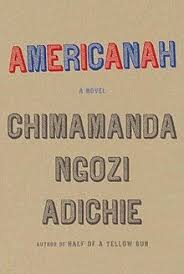
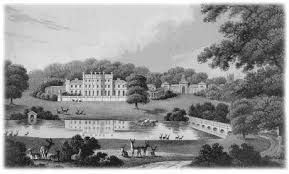
 The Reading Bug