Book review

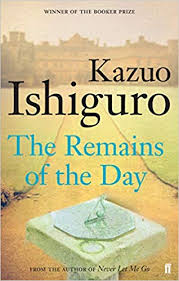
The Remains of the Day, Kazuo Ishiguro, 1989

The Remains of the Day is a subtle, detailed portrait of a life of self-control, restraint and sacrifice. It is narrated by Mr Stevens, an ageing butler, who in 1956 takes a road trip to the West Country, to visit a former colleague, Mrs Dean, formerly Miss Kenton. In the course of his largely uneventful trip he reminisces freely about his long career of service. It has been a prestigious career at the height of his profession, or at least so he claims, but there has been a price to pay for this commitment to the demands of his role.

We are used to flawed narrators in modern literature, in which the detRemainsails of the story emerge in the gaps between what the narrator tells us, and what we can perceive is actually happening. Here Ishiguro pushes the flawed narrator concept even further – Stevens’s memories are carefully layered to reveal a portrait of a man profoundly reserved and out of touch with his feelings, who comes to fear that he has wasted his life, and worse still will waste what remains to him. Several memories are revisited more than once in the course of the novel, with Stevens’s revisions and corrections revealing each time further insights into his decisions and thought processes.
The ostensible purpose of his road trip emerges over the course of the novel. Initially we are told that Stevens is planning to ask Miss Kenton to return to Darlington Hall, the scene of his long years of service to Lord Darlington, and more recently to an American employer, Mr Farraday. Darlington Hall was once a large prestigious establishment, but is now sadly reduced with large areas of the hall closed up, and only a skeleton staff. Stevens has received a letter from Miss Kenton which he chooses to interpret as indicating that she wants to return to her post as housekeeper. At this time we know little about their relationship, and Stevens only gives us unreliable glimpses of the past, but he slowly builds a picture of a warm friendship which could easily have become something more. Later he confesses that he may have read too much into her letter, and that his visit has more a more personal agenda. He mentions several other former acquaintances that he has lost touch with over the course of the years, and it becomes apparent that this trip is, for Stevens, (although he would never admit it) a last attempt to rekindle an old flame and recapture some of the former glories of his past. Stevens is an expert at self deception, and his explanations for his conduct – for example when he pretends to the villagers he meets when his car breaks down that he is a gentleman, rather than a servant – are always plausible but ultimately unconvincing.

In parallel with this personal account of his life, Stevens reveals the story of his former employer, Lord Darlington. Lord Darlington, it slowly becomes apparent, was a Nazi-sympathiser and supporter of appeasement, and after the outbreak of the second world war was publicly disgraced. Stevens avoids admitting that he was butler to Lord Darlington in the post-war present, even though privately in the confines of his personal narrative he defends his former employer as having been well-intentioned if ultimately misled by those he trusted. In one scene he recounts the story of his being asked by Lord Darlington to fire two servants because they are Jewish. He does so despite the passionate protests of Miss Kenton, taking the approach that it is not his role to question his employer’s decision.

The pace of the novel and the lack of incident in the present have led to some reviewers expressing frustration with this novel. Stevens’s buttoned-up, restrained personality, and his habit of expressing himself with precise, non-committal language that never expresses his true feelings. When his father dies for example, we can only tell he is upset because someone notices he is crying, something he would never admit to doing himself.

Certainly there are no car-crashes, chases or fist-fights in ‘The Remains of the Day’. If you are looking for dramatic incident, look elsewhere. This is a novel of subtle details, precisely chosen words, and delicate portraits. The reader needs to invest in the narrative – if they do so the rewards are worth it.

Did you enjoy ‘Remains’? Did you prefer the film, which was undoubtedly brilliant, but arguably placed too much emphasis on the romantic aspects of the novel? Or was the lack of incident a problem for you? Would really like to know what you thought.


Standard
Book review

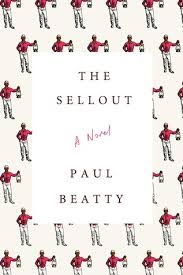
The Sellout, by Paul Beatty, 2015

I turned to Paul Beatty’s ‘The Sellout’ as some light relief after the torture that was ‘The Golden Bowl’. You can tell how bad things have got when a Booker Prize winner constitutes light relief! But it was. ‘The Sellout’ works best as an extended stand up routine – at times angry, often lyrical, usually very funny, challenging, and fast paced enough to ensure that the jokes that don’t work are quickly left behind and you are onto to the next. The Sellout

The narrator, “Me”, opens the narrative in the United States Supreme Court, where a case against him is being heard. The majority of the novel explains how the case occurred (i.e. in flashback). The narrator comes from and lives in the ‘agrarian ghetto’ of Dickens, a suburb or ghetto of Los Angeles.  He is raised by his sociologist father, who uses him as the subject of some bizarre social and racial experiments, which are hard to distinguish from child abuse (“I wasn’t fed; I was presented with lukewarm appetitive stimuli. I wasn’t punished, but broken of my unconditioned reflexes. I wasn’t loved, but brought up in an atmosphere of calculated intimacy and intense levels of commitment“). After his father is casually gunned down by the police and he inherits the family small holding, and his father’s taste for outrageous racial experiments.

The central conceit of the novel is launched when the narrator re-introduces slavery and segregation to Dickens. The segregation of bus passengers along racial lines is widely welcomed by the passengers, who are almost exclusively black in any event. Emboldened by the unlikely success of this initial experiment the narrator segregates the local all-black school, by renting a vacant lot opposite and advertising a soon-to-be-opened all-white college. Attendance and grades at the existing school quickly begin to improve. Further inventive ways of segregating an all-black community continue until the law intervenes.

This rather bald summary may make it look as if Beatty’s satire is unsubtle, if not reactionary. Is he suggesting that the position of some black people in America have not improved since the end of slavery and the struggles of the civil rights movement? The narrator is very clear that is not the point being made, however much it may appear to be the case. The Republican argument that more black children grew up with two parents during the days of slavery than they do today is comprehensively destroyed. But equally the advances in civil rights and representation since those days, such as the election of a black President, are not something that the angry voice of the novel takes for granted, or considers enough.

I’m so fucking tired of black women always being described by their skin tones! Honey-colored this! Dark-chocolate that! My paternal grandmother was mocha-tinged, café-au-lait, graham-fucking-cracker brown! How come they never describe the white characters in relation to foodstuffs and hot liquids? Why aren’t there any yogurt-colored, egg-shell-toned, string-cheese-skinned, low-fat-milk white protagonists in these racist, no-third-act-having books? That’s why black literature sucks!”

The election of the most reactionary President since I have no idea has underlined the novel’s argument that we are not yet living in a post-racial world.

While being a complex and nuanced discussion of race in America today, the novel is not for the lily-livered. The language is full-on, as above, and the n-word is used throughout the text. Some of the jokes miss their mark, such as

“Foy was no Tree of Knowledge, at most he was a Bush of Opinion”

or are predictable
“If New York is the City That Never Sleeps, then Los Angeles is the City That’s Always Passed Out on the Couch.
But these are exceptions, and virtually every page has one or more great lines, such as this description of a character “listing hard to the right like a drunken seaman with an inner ear infection” or this joke about the meaning of the word bi-monthly: “The meetings consisted mostly of the members who showed up every other week arguing with the ones who came every other month about what exactly “bimonthly” means.”
I enjoyed ‘The Sellout’. I can’t say whether it was a worthy winner of the Booker, because I haven’t read all the other short-listed novels, and I wasn’t on the jury anyway, but this is a book that will make you think, and I can’t praise it more highly than that.
Standard
Book review

The Green Man, by Kingsley Amis, 1969

Kingsley Amis spent his whole career not writing a successful follow up to his great first novel,  ‘Lucky Jim’. I loved ‘Lucky Jim’ when I first read it several decades ago, and while the passage of years has eroded that affection somewhat, at the time it lead me to read as much Amis as I could get my hands on. That’s not to say Amis’s later novels were bad – the Booker prize for ‘The Old Devils’, as well as a couple of other shortlisting, attests to that. ‘The Green Man’ stood out at the time as something very different from Amis’ s usual portraits, so when the opportunity to revisit it came up I took it, wondering whether it would be as good, and as strange, as I remembered it?the-green-man

I am glad to say it was. The Green Man of the title is an inn owned and managed, after a fashion, by Maurice Allington, a another thinly disguised Amis self-portrait. The inn dates back to the 14th century, and comes with the usual stories of hauntings and the occult. Strange things start to happen. Allington sees what we are lead to believe are ghosts, although the heroic scale of his alcoholism leaves open the distinct possibility that there are just hallucinations. His elderly father suffers a stroke, which if anything spurs Allington on to even greater peaks of drinking. Nothing seems to dent his self-destructive urges, and on the day of his father’s funeral he pursues an affair with his neighbour, and persuades her to have a ménage à trois with his wife. As with many novels written by middle aged men, his sexual allure is irrestistible, and this plan succeeds, to a point – the orgy happens, but he finds it hard to get involved, and eventually gives in and goes off and has another drink.

Refusing to believe they are simply hallucinations, Maurice somehow finds the time to investigate the hauntings. He uncovers the long lost diaries of Thomas Underhill, a local scholar and former owner of the inn, who he believes to be the identity of the ghost. These diaries reveal that Underhill used the supernatural to seduce and or ravish young girls from the village, and may be the explanation for the current events. The paranormal themes of the novel now take centre stage, as it becomes clear that the ghosts are not simply the product of Maurice’s drinking (even if he is unable persuade anyone else of their authenticity). Underhill emerges from the shadows and persuades Maurice to unearth his nearby grave, in which he finds an ancient silver figurine, which in turn leads to a rather clumsy scheme which will cause the death of Maurice’s teenage daughter. Maurice frustrates this plan at the last minute, in part due to an intervention by another supernatural figure who we are led to understand is a manifestation of God. If this sounds bizarre, it is, although Amis’s undoubted skills as a story teller allow him to carry it off.

The Green Man is traditionally portrayed as a benevolent figure, and Amis’ s idea to transform him into a sinister, lumbering killer is inspired. It is a mark of a confident writer that he can combine genres – the comedy of the drunken, lecherous innkeeper frozen out of his own orgy – with the supernatural Underhill narrative. Allington is ultimately a bit of a tragic albeit resilient figure, and as usual with Amis it is the underwritten women characters who one would like to have seen more of, rather than just playing bit parts as figures of sexual interest. Overall however I was pleased to find this novel still in print, despite Amis being very much an author no longer in vogue, and enjoyed the nostalgic re-read.

Standard
Book review

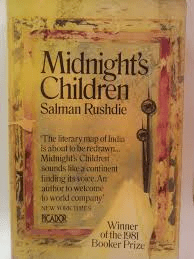
Midnight’s Children, by Salman Rushdie, 1981

I found ‘Midnight’s Children’ a challenge. It is a novel that has been showered with praise and awards and rightly so. While it is overall a complex narrative, with a very large cast of characters and multiple locations, at the same time the autobiographical structure and the single narrator allow the thread of the story to be picked up reasonably easily, even when the novel is read in small portions, as I did in this instance.mc

So why the struggle? What is it about Rushdie’s novel that prevented me from reading much more than a dozen pages at a time? I’ll return to that question when I have worked through my other observations about the novel, which may help formulate an answer.

The title of the novel refers to all the children born between midnight and one a.m. on the day of India’s independence from the United Kingdom. Rushdie’s conceit is that these children – several hundred of them – are born with magical powers.  The story’s narrator, Saleem Sinai, born at the exact moment of midnight, is telepathic, (although this power plays a surprisingly minor part in the overall events of the novel). Using this power he assembles a ‘Midnight Children’s Conference’ of all the gifted children – a conference that has huge potential, but never goes beyond discussion, and is eventually neutered, literally, and destroyed. The obvious point being made here is about the squandering of India’s post-independence potential.

The novel does not start at this point – Saleem takes his time reaching the disclosure about his magical abilities, spending a lot of the opening book of the novel giving us the background to his birth. This leisurely approach– as a narrator Saleem is very long winded – is part of the readability challenge I mentioned in opening.

Saleem’s story is openly allegorical of the story of India’s independence. Even the most obtuse reader could not avoid the numerous links Rushdie draws between his protagonists and Indian history – for example, Saleem’s story includes a number of the migrations and wars which plagued (and continue to plague) his country’s post colonial history.

Midnight’s Children is a wildly ambitious novel, huge in scope, a dissertation on identity, memory, nationalism, and family. In almost all instances it succeeds, and rightly deserves the awards and success it has received. My inability to engage with the text on this reading is I am sure more a reflection of my appetite for novels of this kind that the success or failure of the novel itself. While reading I could recognise the skill and intelligence involved in the construction of the novel I couldn’t warm to the characters or find much interest in the plot. When your main sensation on finishing a novel is relief you know you need to take a break from the classics – I am now reading Kurt Vonnegut’s ‘Cat’s Cradle’ and the contrast in the experience is marked.

Standard
21st century literature, Booker Prizewinner

The Inheritance of Loss – Kiran Desai

Read in a 2007 Penguin edition.
Kiran Desai’s novel is in many ways a very traditional exploration of modern India, but a dramatic contrast to White Tiger. The book is set in the 1980s in the shadows of the Himalayas, and follows the affairs of a small prosperous household – a retired judge, his cook, and his teenage granddaughter.
This is not a plot-driven book. From the time of the opening chapters to the novel’s conclusion only a small amount of time has passed, and there has been little incident. Most of the narrative is devoted to following the characters’ back stories – how the judge went to university in England, how his granddaughter’s parents died in Russia, and so on. Most of this is extraordinarily predictable – everything plays out just as we expect, with little happening and minor dramas being created out of minor events such as the loss of a dog. The more dramatic events of the time are shown but appear largely incidental. In any event the time structure of the narrative has already shown us that no-one central to the story will be affected.
Although the setting allows for some exploration of the politics of northern India, and in particular the struggle for independence of the Gurkhas, this largely feels like window dressing for the centre of the novel, the lives of the main characters and the cast of eccentrics that circles them. The book really only comes to life when it jumps across to follow the cook’s son struggling to make a life for himself in New York.  I wasn’t surprised to subsequently read that this is the author’s current home.
This has all been done before, and better, most obviously by Rushdie. The contrast with White Tiger though is interesting. Here the portrayal of India remains convincingly honest; the police are corrupt, there is crushing poverty, which robs people of their dignity, tourists are crass and insensitive – but at the same time the country has its beauty and the people have their charm, even when you have to struggle to find it. The book is well written, and the descriptive prose is very well done. For me this was not enough, and while this novel was head and shoulders above White Tiger, it nevertheless disappointed. Incidentally I found the title pompous and patronising – yes everyone has experienced loss of some kind of another, and it has had an affect on their situation and personality, and yes there is an obvious read across to India itself, but the same could be said of just about anyone and any country.
Standard
21st century literature, Booker Prizewinner

The White Tiger – Aravind Adiga

The White Tiger won the 2008 Booker Prize.

This first novel is written in the form of a letter to the Premier of China as an introduction to modern India. The author is not a fan – of modern India, that is, not China. India is a rich source of material for contemporary novelists, (for example, the Inheritance of Loss) and seems to be favoured by Booker judges. The novel charts the life of the narrator as a chauffeur to a prosperous family, and portrays the country as sordid, brutal, and above all bitterly corrupt.

If written by a Western author this account could be easily have been seen as racist. The author’s closeness to the country he describes probably deflects that criticism. Nevertheless there are virtually no redeeming features of the country – the bravery of people who fought for India’s independence is mocked, the beauty of the countryside goes unmentioned, and no-one acts through anything other than cowardice or self interest. The Indian Tourist Board will not be recommending this book in a hurry! It is an indictment of the country India has become in the years since independence, and is horribly unbalanced compared to say Slumdog Millionaire, which shines a light on the underbelly of India but equally shows the beauty of the country and its people.

The plot is very simple. The narrator murders his boss, and runs away with his money, showing a small amount of compassion by taking his nephew with him, despite knowing that the rest of his family is almost certain to be slaughtered in retaliation. Using the stolen money he bribes his way into a position of influence, and gloats over those he has left behind. We are told this fairly on in the book, so I am not including any spoilers. Years later he records his crimes in letters to the Chinese Premier, a plot device that makes little sense incidentally. The central character is deeply unpleasant; as well as being an unrepentant murderer, he is also bigoted towards gays, black people, and women. of course I am not suggesting the author shares these views, but they are presented without adequate challenge. Just because bad views are expressed by a bad person doesn’t make them any more palatable.

By coincidence I am also reading “Crime and Punishment” at the moment, and although the comparison is probably unfair, Dostoyevsky does something Adiga does not (or cannot), which is given us an insight into the mind of a killer. While the portrait of Raskolnikov shows us the internal struggles a killer goes through, in White Tiger the killing is shown as a simple commercial transaction, with little or no horror, nor psychological consequences – extraordinarily I have even seen one reviewer describe the murder as “brave”. Killing someone in cold blood and leaving your family and friends to live or die with the consequences isn’t brave. It’s not even as if the main character was living an impoverished life on the streets – he was doing fairly well as a chauffeur. I appreciate the author isn’t saying “Life in India is so bad murder becomes acceptable” – what he is surely is presenting us with is a world where morality has disappeared, so much so that a murderer sees little wrong with their crime, because they see similar acts of immorality being rewarded all around them. This is “Crime” with no “Punishment”.

All in all a strange Booker choice, subverting many of our expectations about what novels about modern India should be, but with very few redeeming features.

Standard