Book review

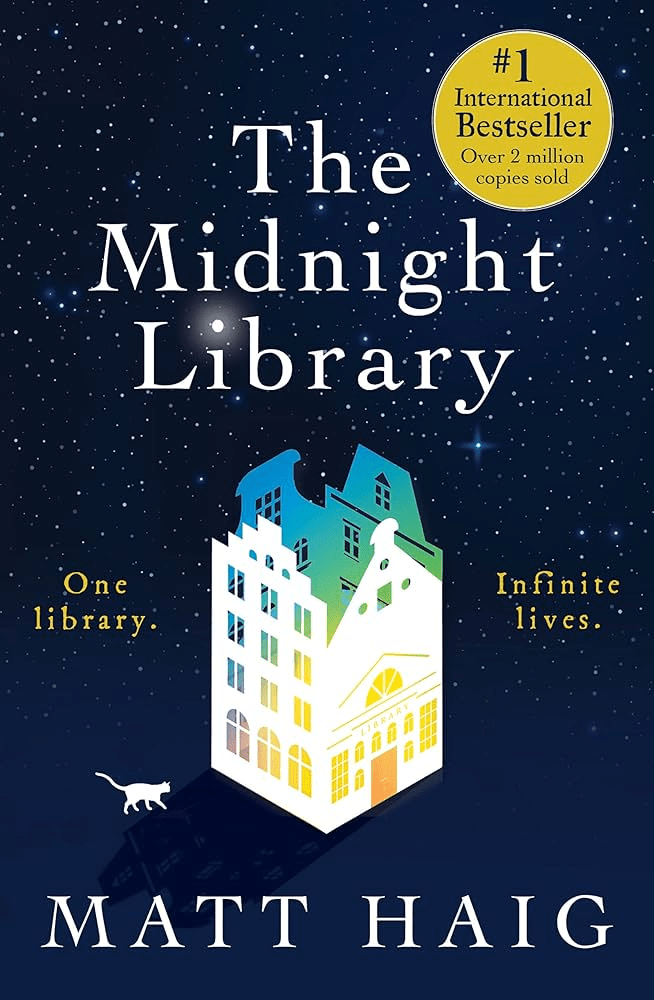
The Midnight Library by Matt Haig, 2020

The Midnight Library is a very explicit anti-suicide book. So if it saves a single life, then it is worthwhile. Any reviewer of the novel therefore needs to make a simple choice – should the novel be treated as a work of literary fiction, or should it be considered as a self-help book, intended as therapy and advice for those in need? Of course it can be both things at once, and in the main does so successfully, but these are two very different yardsticks by which to evaluate the book. (Note to self – yardstick = dead metaphor. Presumably there sticks a yard long were once in common use to measure things, but despite them no longer being widely used, the phrase persists).
Anyone contemplating suicide must feel that life is not worth living. Haig’s mission in this novel is to persuade them otherwise. He attempts this through the story of his central character, Nora Seed (I assume the surname Seed was chosen because seeds are full of potential life). But when we first meet her, Nora feels anything but. Her cat is dead, she is alienated from her family, she has lost her job. She has recently separated from her fiancé, having changed her mind at the last minute about marriage. Her life, once full of promise and possibility, seems empty. Late one evening, she tries to kill herself.

Nora wakes up to finds herself in a library. Each book on the infinite shelves tells the story of an alternative version of her life. The core of the novel sees Nora briefly living these multiple lives. In each she is given the opportunity to change one decision she regrets making, and see how it would have affected her life. In one she becomes a rock star, having decided not to leave her brother’s band; in another she wins Olympic medals having kept up her promising swimming career; in yet another she on an Arctic research vessel studying global warming and has a close encounter with a hungry polar bear. Each version of her life is better – more interesting, more fulfilled – than what she refers to as her ‘root’ life, but every one is also in some way unsatisfactory, so she keeps doom-scrolling through endless ‘what-ifs’ searching for a version of her life in which she has not taken a wrong turn, and is happy.

If I were suicidal, being told that the choices I made in life had prevented me from becoming an Olympic athlete, a rock star, or an artic explorer might not convince me that I had nothing to regret, even if in each of these alternative lives there were also things that were not perfect. A common cause of dissatisfaction with Nora’s new lives is that in each a family member or close friend has died – her brother from an overdose, her mother from cancer, a friend in a road traffic collision, and so on. None of these deaths were a result of her choices, so seeking a life in which she took a different route and kept everyone alive seems a futile search.

The novel’s conclusion – that life is worth living, and regret at the choices we make is foolish – comes as hardly a surprise. Is this life affirming? it’s unquestionably intended as such, and literature as therapy is undoubtedly worthwhile. The popularity of this novel suggests that people find it helpful, so any dissent from me would probably be churlish. One yardstick (see what I did there?) of a novel’s success I often find useful is to ask whether you want to spend more time with the characters, to find out how their lives span out. Who would turn down the chance to read more about Elizabeth Bennet or Mr Pickwick? Sadly I can’t say the same of Nora Seed. I am glad her story ended on a positive note – but it could hardly have ended any other way in the circumstances!
The Midnight Library by Matt Haig, 2020

Aside
Book review

Capital, by John Lanchester, 2012

I’ve written quite a bit in the past about different categories of novel – most recently Newgate novels for example, nineteenth century stories about prisoners awaiting trial in Newgate. or the earlier Silver Fork novels about rich Regency people doing rich Regency people things. The problem is – where do you stop? Where do you stop creating ever finer more detailed sub-categories of novel? This problem occurred to me when reading John Lanchester’s 2023 novel Capital.

As well as obviously being about London and its inhabitants, Capital is more specifically a credit crunch novel, a literary response to the financial crash of 2008. It was published in 2012 which makes it a a relatively early response to the crash, when the full impacts of austerity had yet to be played out. In Capital people are still manically developing their houses with basements and loft extensions, even if the early seeds of doubt about the wisdom of this reckless spending are being sown; later post-Brexit crash novels (or are they a separate category?) see that this reckless spending is not without consequence. The worst that happens to a banker made redundant part way through Capital is that he has to sack his nanny and retire to the country with his money, confident that he will bounce back. Where am I going with this point? I suppose I am arguing that instead of simply being an ambitious survey of life in modern-day London, Capital is a more immediate response to political and economic circumstances that might not have the durability and longevity the author was obviously aiming for. It’s also a novel that addresses that very specific problem of gentrification, without having much to say about the issue other than vaguely suggesting it is not a good thing.

Capital follows the inhabitants of a south London street, Pepys Road, over the course of a year. The choice of name is obviously not coincidental – Pepys was a great chronicler of London-life, and it seems Lanchester aspires to do the same. Pepys Road is undergoing dramatic changes as London society responds to a influx of new residents from around the globe. As we are introduced to a series of immigrants – a Polish builder, a Hungarian nanny, a Senegalese footballer and a Zimbabwean traffic warden – one wonders whether these are much more than stereotypes? Their stories are juxtaposed with those of earlier residents, now undergoing their own diaspora as they are forced out of Pepys Road.

“Having a house in Pepys Road was like being in a casino in which you were guaranteed to be a winner. If you already lived there, you were rich. If you wanted to move there, you had to be rich. It was the first time in history this had ever been true”.

Another of the multiple threads of the novel follows stockbroker Roger Yount. Roger and family live a life of excess fuelled by the multi-million salaries and bonuses common in the City pre-Crash. Roger is an entitled and slightly thick public-school boy relying on nepotism to get along in a business he admits he does not really understand. His wife Arabella is a bit of a monster, spending her days shopping for designer nonsense and having long boozy lunches with girlfriends while her children are cared for by a series of nannies. We care little for Roger and Arabella, equally stereotypes in their own way, and celebrate their downfall as Roger first gets a disappointing five figure bonus, and is then sacked and has to rethink his life

Most of the storylines peter out – they have endings of sorts but I was insufficiently engaged with the characters to worry overly if they go on to live long and happy lives. Ends are tied up but with a conspicuous sense of ends being tied up so that the novel could finish rather than narratives being successfully concluded. A good example of this is the young African footballer who comes to the UK to play, suffers as career-ending injury, and goes back home with riches beyond imagination and still able to play football locally – a happy ending of sorts but hard to see where it fits in the overall narrative, other than being just another story of the residents of Pepys Road.

At over 600 pages this was harder work than it ought to have been. The years immediately after the Crash in which this novel is set seem a lifetime ago. If I had read Capital when it was first published it would have had an immediacy that it now lacks given how much has happened since then – it’s almost enough to make me nostalgic for 2012!

Capital, by John Lanchester, 2012

Aside
Book review

The Last Devil to Die: The Thursday Murder Club (4) by Richard Osman, 2023

I confess to being a lazy reader of murder mysteries. What I mean by that is that I am comfortable with learning whodunnit when the author is ready to let me know, and not before. Of course I spot the red herrings, the introduction of what appears to be a peripheral character who is actually a suspect, and so on. But I know that a well-written book – and Richard Osman is an author who takes care with his plot construction – will provide just enough information to make the resolution of the mystery almost impossible to guess in advance, but to appear fairly obvious once it is revealed. I don’t see mysteries as a battle between me and the author to prove who is the cleverest – the contract between us is for the author to entertain the reader, challenge them a little bit, maybe even educate them, while not making them feel inferior or stupid, and never ever cheating (untraceable poisons and the like).

I say this because I worked out ‘whodunnit’ in this, the fourth of Osman’s Thursday Murder Club series, fairly early on – avoiding spoilers, it is someone who falls into the category I describe above – and that the mystery we are presented with isn’t the real mystery after all. I explain this a little more in the section marked ‘SPOILERS’ below. But that doesn’t mean the novel wasn’t enjoyable. It is always pleasant to spend time with the club members, who Osman stubbornly refuses to kill off (despite my clear prediction in my review of the original novel in the series that he would do so early on in book two). If anything he has expanded his cast of characters, with other residents of Coopers Chase being introduced into the crime-fighting team, including an older person who knows how to use computers (bit of a patronising portrait I thought – not all old people are clueless when it comes to technology) and another who is the victim of a pretty transparent romance fraud. The relationships of the wider cast, police officers Chris and Donna, builder Bogdan and drug dealer Connie all make little or no progress – there is talk of an engagement, but nothing more. If you haven’t read the previous books in the series, or like me have a poor memory for novels read without the full beam of your attention, then you might struggle a little working out who is who – backstories are very lightly sketched.

I also struggled with the subplot involving former spy Elizabeth and her husband Stephen, as they face his advancing dementia. Again I can’t really write at any length about this thread of the novel without spoilers, so I again refer you to the text below.

As to what happens, well if you have read one Thursday Murder Club you have really read them all. Someone is murdered, other crimes follow, and the four pensioners solve the crime using unorthodox means and a considerable amount of tea and cake. Stereotypes about old age are both challenged and used as a source of comedy, particularly through the well-meaning character of Joyce, who is endlessly curious but a little adrift in the modern world.

It’s not uncommon for authors of long-running series to lose steam – Terry Pratchett being the obvious exception to the rule. I am sure there will be more Thursday Murder Club novels, but in an implicit acknowledgement of the diminishing returns from another outing of the feisty pensioners, Osman is writing about a father-in-law/daughter-in-law detective duo, which sounds sufficiently different to be interesting while in the same wheelhouse. Looking forward to it.

SPOILERS ALERT

Don’t read this unless you have already read The Last Devil to Die or have no intention to do so. Early on we are told that the heroin which goes missing is being carried in a box. The box is not described in any detail, but there’s enough to pique a curious reader’s interest – why smuggle heroin in a box? I suspected this was an example of the wheel-barrow theft operation story (A man works on an building site. Every day he walks off the site with a wheelbarrow full of sand. The security guards are suspicious and look through the sand trying to find if he was stealing anything. When he retired a guard asked him “Alright, how did you do it? We knew you were stealing, what did you hide in the sand?” “I wasn’t hiding anything in the sand, I was stealing the wheelbarrows.”) The box is described as ‘a small terracotta box, made to look old, like a tatty piece of garden junk…a boring ornament’. The obvious incongruity of using a terracotta box to smuggle heroin caught my attention at the time, and while the author works hard to downplay its significance, I was reasonably confident that we hadn’t heard the last of that box.

I am not claiming this as an example of my powers of penetration, simply suggesting that the puzzles in this novel weren’t that hard to solve. Actually, worse than that, they were pretty obvious.

I found the Elizabeth and Stephen subplot difficult, if not even a little distressing. Stephen’s dementia is accelerating and Elizabeth is slowly realising she is unable to cope with him. She is unable to leave him alone for any length of time without him putting himself in danger. He is aware at moments of his decline – at others he barely recognises her. So to cut a long story short, he kills himself with her assistance. This is presented to us as a brave choice, but it felt like patient-assisted suicide to me (because it was) which is illegal. Elizabeth is not one to care about being on the right side of the law, but anyone making a case for euthanasia simply because someone’s memory is failing (Stephen is in no physical pain or discomfort, and while obviously upset at his increasing dementia does not spend his days in acute distress) will find little support from me. It left a bad taste. Osman has given old people some dignity in these novels, revealing their strength and resourcefulness and celebrating the positive aspects of old age, but here, for me, he drops the ball badly. Old people lose their memories, but don’t deserve to die for it. He takes care to tell us that Stephen takes his own life, and is fully aware of the choice he is making, but glosses over the illegality and subterfuge required to achieve this end without prosecution.

Osman also uses Stephen’s dementia as a key point in the main plot – Stephen is the only person alive who knows where the missing heroin that everyone is being killed for is hidden, and somehow through the fog of his dementia manages to tell Elizabeth, albeit in a confused way. Because that’s what people suffering from dementia do, isn’t it – they solve crimes and locate hidden contraband. This was clumsy and a bit distasteful if I’m honest.

The Last Devil to Die: The Thursday Murder Club (4) by Richard Osman, 2023

Aside
Book review

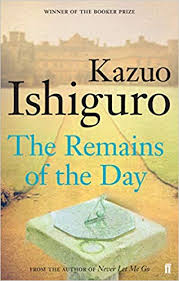
The Remains of the Day, Kazuo Ishiguro, 1989

The Remains of the Day is a subtle, detailed portrait of a life of self-control, restraint and sacrifice. It is narrated by Mr Stevens, an ageing butler, who in 1956 takes a road trip to the West Country, to visit a former colleague, Mrs Dean, formerly Miss Kenton. In the course of his largely uneventful trip he reminisces freely about his long career of service. It has been a prestigious career at the height of his profession, or at least so he claims, but there has been a price to pay for this commitment to the demands of his role.

We are used to flawed narrators in modern literature, in which the detRemainsails of the story emerge in the gaps between what the narrator tells us, and what we can perceive is actually happening. Here Ishiguro pushes the flawed narrator concept even further – Stevens’s memories are carefully layered to reveal a portrait of a man profoundly reserved and out of touch with his feelings, who comes to fear that he has wasted his life, and worse still will waste what remains to him. Several memories are revisited more than once in the course of the novel, with Stevens’s revisions and corrections revealing each time further insights into his decisions and thought processes.

The ostensible purpose of his road trip emerges over the course of the novel. Initially we are told that Stevens is planning to ask Miss Kenton to return to Darlington Hall, the scene of his long years of service to Lord Darlington, and more recently to an American employer, Mr Farraday. Darlington Hall was once a large prestigious establishment, but is now sadly reduced with large areas of the hall closed up, and only a skeleton staff. Stevens has received a letter from Miss Kenton which he chooses to interpret as indicating that she wants to return to her post as housekeeper. At this time we know little about their relationship, and Stevens only gives us unreliable glimpses of the past, but he slowly builds a picture of a warm friendship which could easily have become something more. Later he confesses that he may have read too much into her letter, and that his visit has more a more personal agenda. He mentions several other former acquaintances that he has lost touch with over the course of the years, and it becomes apparent that this trip is, for Stevens, (although he would never admit it) a last attempt to rekindle an old flame and recapture some of the former glories of his past. Stevens is an expert at self deception, and his explanations for his conduct – for example when he pretends to the villagers he meets when his car breaks down that he is a gentleman, rather than a servant – are always plausible but ultimately unconvincing.

In parallel with this personal account of his life, Stevens reveals the story of his former employer, Lord Darlington. Lord Darlington, it slowly becomes apparent, was a Nazi-sympathiser and supporter of appeasement, and after the outbreak of the second world war was publicly disgraced. Stevens avoids admitting that he was butler to Lord Darlington in the post-war present, even though privately in the confines of his personal narrative he defends his former employer as having been well-intentioned if ultimately misled by those he trusted. In one scene he recounts the story of his being asked by Lord Darlington to fire two servants because they are Jewish. He does so despite the passionate protests of Miss Kenton, taking the approach that it is not his role to question his employer’s decision.

The pace of the novel and the lack of incident in the present have led to some reviewers expressing frustration with this novel. Stevens’s buttoned-up, restrained personality, and his habit of expressing himself with precise, non-committal language that never expresses his true feelings. When his father dies for example, we can only tell he is upset because someone notices he is crying, something he would never admit to doing himself.

Certainly there are no car-crashes, chases or fist-fights in ‘The Remains of the Day’. If you are looking for dramatic incident, look elsewhere. This is a novel of subtle details, precisely chosen words, and delicate portraits. The reader needs to invest in the narrative – if they do so the rewards are worth it.

Did you enjoy ‘Remains’? Did you prefer the film, which was undoubtedly brilliant, but arguably placed too much emphasis on the romantic aspects of the novel? Or was the lack of incident a problem for you? Would really like to know what you thought.


Standard
Book review

Jacob’s Room is full of books – Susan Hill, 2017

‘Jacob’s Room is full of books‘ is Susan Hill’s very readable if (I have to say) unsubstantial  follow up to ‘Howard’s End is on the Landing’. Simply, it is a reading diary, a year of reading as the subtitle puts it.  Each month Hill mentions the books she has been reading, and these booHIllks then go on to trigger what often seem quite random but nevertheless entirely natural thoughts – her personal acquaintance with the author, her impressions and judgments on their other works, what it is like to be a writer on GCSE reading lists, attending literature festivals, and so on. Interspersed with this well-informed stream of consciousness are many observations about nature, particularly birds, which if I was being cynical I would think of as padding to get the book over the 200 pages mark…

There is a structure of sorts to the book – it is divided into the twelve months of the year – but you could easily dip into it at any point and it wouldn’t make much difference. You certainly don’t end the book knowing much more about Hill or books or reading or writing than you do, say, half way, or indeed after having read ‘Howards End is on the Landing’. Which makes me wonder – is this anything other than a rather cynical cash-in, a stocking filler, something to appeal to Christmas shoppers with a reader in their lives to keep happy? I feel a bit ridiculous mentioning this, but the fact that Jacob’s Room isn’t mentioned at all in the book, other than to provide the mildly amusing title, niggled at me slightly. Because Hill’s struggles with her out-of-control personal collection of books, which she culls ruthlessly and often, but still can’t keep on top of, (“As fast as I get one out of the back door, two new ones come in through the front anyway”) was one of the more relate-able aspects of the book which I would have liked to have known more about.

The book shows signs of being a transcribed notebook – there is an immediacy to many of Hill’s observations and comments, such as those on wildlife spotted (that is seen, not spotted wildlife) or emails received – and the repetition at many points, such as her slightly contradictory accounts of being on the 2011 Booker prize jury, could have done with some friendly editing. There’s little artifice here – there must have been a temptation to edit or self censor to make the author appear a more careful and considered reader – but that doesn’t seem to have happened. I suspect I won’t be the only reader who snapped the book shut at her more outrageous criticisms of writers we have loved – Keats, for goodness sake, gets dismissed with a few words, and Jane Eyre goes proudly unread – but then cheered when she praises our favourites. I can forgive her almost everything for her comments on the brilliance of Raymond Chandler.

If I wanted to I could construct a narrative about this book being (underneath all the daily noise) about ageing. Hill is in her mid-70’s, and while full of life she still has some/much of the grumpiness of many of that age. She knows that her overstocked shelves are becoming a bit of a burden, and in trying to divest herself of them she is making tentative steps towards preparing for the later stages of her life. Whether I can convince even myself on this one is another matter.

This was the first and probably easiest/shortest of an extraordinary haul of books I accumulated over the recent festivities, which will dominate my reading across much of 2018. I’ll keep you posted.


Standard
Book review

Autumn by Ali Smith, 2016

My reading slump persists, and ‘Autumn’ has had no impact whatsoever on my jaded appetite for contemporary literature. While it was a gentle, undemanding read, the lack of a strong narrative thread meant this didn’t grip in the way I need right now.

In a highly fragmented manner this novel tells the story of the friendship between Elisabeth Demand, a thirty-something art historian, and her elderly European neighbour, Daniel Gluck. Parts of the non-linear narrative include Daniel’s dreams of being young again. ‘Autumn’ has been described as the UK’s first post-Brexit novel, which may be correct, but it also contains many references to the 1960’s, including pop-art and the Profumo scandal.

To be blunt, I didn’t engage with the narrative. I didn’t care about the characters who never really came to life for me, and who don’t really do much anyway. There is no plot to speak of, not that that usually troubles me. Attempts at humour are clumsy – the Post Office scenes, when Elisabeth goes to renew her passport, felt like amateurish stand-up. Which leaves us with the social and political commentary (where Smith tries not to come down on one side of the Brexit argument or another, is clearly a metropolitan liberal, of course she is) and the prose. Smith’s prose is easy to read, but I found it mainly uninspiring and flat. Take these two descriptions of autumn (and having named the novel after the season, you would hope that these paragraphs are where Smith would deploy her big guns), annotated with my notes:

“October’s a blink of the eye (1). The apples weighing down the tree a minute ago are gone and the tree’s leaves are yellow and thinning. A frost has snapped millions of trees all across the country into brightness. The ones that aren’t evergreen are a combination of beautiful and tawdry, red orange gold the leaves, then brown (2), and down.

The days are unexpectedly mild. It doesn’t feel that far from summer, not really, if it weren’t for the underbite(3) of the day, the lacy creep of the dark and the damp at its edges, the plants calm in the folding themselves away, the beads of the condensation on the webstrings(4) hung between things (5).”

  • No, it is not a blink of the eye. The phrase is “gone in the blink of an eye, meaning passes quickly, Of course Smith has abbreviated the phrase deliberately – we don’t always think in full phrases, but October doesn’t pass quickly. Most people wish it would, but as the first frosts kick in it seems an age since summer, the first colds of the year start to spread, and it is months until Christmas. October crawls past.
  • There’s little imagery here – lacy creep I suppose – and the efforts to describe autumn colours “red orange gold the leaves, then brown” wouldn’t win any awards in a primary school – although the narrator helpfully points out that it is only the trees which are not evergreen to which this description applies. She attempts to get some movement into the description – “and down” – which also ends the internal rhyme. Stilted word order again is an attempt at poetical phrasing – “the plants calm in the folding themselves away”.
  • The term underbite describes “the position of the teeth in which the lower teeth go over the upper teeth”, so try as I might I can’t see the term being used to describe the late cold of the day in the way the speaker does here – she is groping for a way of describing the way the days get colder quickly as night falls, despite the late bright sunshine October days often enjoy.
  • And (5) By using compound words – underbite, webstrings – Smith is taking liberties with the language in order to be ‘poetic’. This description ends tamely, with the webstring hung between “things”. Well what a picture that conjures up?!

The test here is really a simple one – does this paragraph evoke autumn for you? Can you taste, it, sense it, feel it? Does it make you want to close your curtains, turn on a lamp and put another log on the metaphorical fire? What if you read it in May or June – would it work as well then?

Now it’s November

“November again. It’s more winter than autumn. That’s not mist. It’s fog. The sycamore seeds hit the glass in the wind like – no, not like anything else, like sycamore seeds hitting window glass.(1) There’ve been a couple of windy nights. The leaves are stuck to the ground with the wet. The ones on the paving are yellow and rotting, wanwood, leafmeal. (2) One is so stuck that when it eventually peels away, its leafshape left behind, shadow of a leaf, will last on the pavement till next spring. The furniture in the garden is rusting. They’ve forgotten to put it away for the winter. The trees are revealing their structures. There’s the catch of fire in the air. All the souls are out marauding. But there are roses, there are still roses. In the damp and the cold, on a bush that looks done, there’s a wide-open rose, still. Look at the colour of it.”(3)

  • This couldn’t be more clumsy if it tried –; sycamore seeds hitting glass are like sycamore seeds hitting glass? Well thanks for that vivid imagery there! Unless you have lived or worked next to a sycamore tree this image will have no resonance whatsoever.
  • The reference to wanwood and leafmeal are from Manley Hopkins’s poem about mortality, ‘Spring and Fall’

“Though worlds of wanwood leafmeal lie;

And yet you will weep and know why”

  • This is better. Smith has noticed the incredible resilience of the late blooming rose, still there despite all that autumn can throw at it.

TLDR

I’ve never felt the need to use a scoring system for my reviews, but if I did I would give ‘Autumn’ a ‘meh’ out of ‘whatever’.

Standard
Book review

Yellow Dog, by Martin Amis, 2003

There is an undeniable trajectory to Martin Amis’s novels – downward. Not just in quality but in coherence, tone and taste. He peopled his 2003 effort ‘Yellow Dog’ with disgusting grotesques and events that made it hard to stomach. The best I can say about this novel is that it is not as bad as ‘Lionel Asbo’, but from the author of ‘Money’ this is such a fall.amis yellow dog

‘Yellow Dog’ was one of those novels that bitterly divided reviewers when it was first published. If you enjoy critical reviews, you will probably appreciate these more than the novel itself. In an industry where most reviews are by default favourable, this in itself was extraordinary. The Independent gave it both barrels:

Yellow Dog is a strange, sad stew of a novel, so aggressively unpleasant that it would perhaps be best accompanied by an author photograph of Amis flicking Vs at the reader….The fact that Yellow Dog is so bad is not a cause for celebration. Anyone interested in English fiction will be deeply saddened to see one of our country’s greatest talents produce such a purposeless novel

The Times Literary Supplement was more surgical, describing the novel as “not absolutely terrible”.

Tibor Fischer, one of Amis’s contemporaries went even further with this celebrated denunciation:

“It’s like your favourite uncle being caught in a school playground, masturbating”

If you have time you can also read numerous monsterings of the novel on Goodreads, which gives ‘Yellow Dog’ one of the lowest average scores I can remember seeing.

Plotwise the novel is a complete mess. Amis runs several storylines in parallel, tying them together at the end of the novel with a summary neatness that seems insulting, as if he just lost interest and stopped writing. We have an author assaulted in a pub, and acquiring a sexual interest in his daughter as a result; a plane slowly approaching a crash landing; a comet passing near to the earth, and a blackmail plot involving a sex tape and a princess. A tabloid journalist for the Morning Lark buzzes around doing what journalists in comic novels do, making up headlines and being offensive. None of this has any point or purpose. A visit to America to visit a porn studio is a clumsily inserted (forgive the pun) piece of repurposed journalism.

None of these plotlines are particularly interesting, devoid as they are of real characters. In fact, the image that came to mind when reading yet another set piece of absurdity was the adult comic, Viz. Joseph Andrews, the psychotically violent gangster, is surely a thinly disguised Big Vern, Henry 9th, King of England in this parallel universe, is any one of the comic’s thick but dim upper class characters; Clint Smoker is a tabloid journalist with a micro-penis. Like Viz but without the humour, Amis sets out to offend with these caricatures, the sexual violent, incestuous paedophiles that people the pages of ‘Yellow Dog’. The class hatred that seeped from the pages of ‘Lionel Asbo’ is equally obvious here. The working class are amoral, ultra-violent criminals, although in the interests of balance the upper classes don’t come off much better.

What redeemed ‘Money’ from these obvious criticisms was Amis’s ability to craft an elegant metaphor, a skill that seems to have abandoned him here. Here’s an example of a paragraph which is Money would have fizzed with vividness:

The bright sky was torn by contrails in various stages of dissolution, some, way up, as solid-looking as pipecleaners, others like white stockings, discarded, flung in the air, or light bedding after beauty sleep, others like breakers on an inconceivably distant shore.” (page 289)

Do these images work for you? Do they conjure up thoughts of a bright sky crossed by aircraft trails? I wonder how many readers will still know what a pipecleaner looks like? The ‘light bedding after beauty sleep’ simile works after a fashion, although the beauty sleep addition is pretentious. He’s working hard, and it is not bad writing, it just doesn’t impress in the way ‘Money’ did, and to redeem the other features of the novel it really needed to be magnificent. I’ve chosen one of the more innocuous passages from the novel – dip into any page and there is gratuitous often sexual violence and pretentious philosophising.

This was a 50p charity shop find – I am glad I didn’t pay more.


Standard
Book review

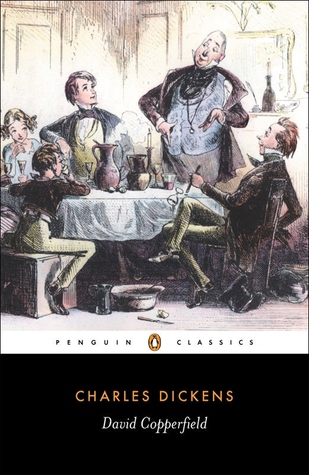
David Copperfield by Charles Dickens, 1850

Subtitled “The Personal History, Adventures, Experience and Observation of David Copperfield the Younger of Blunderstone Rookery (Which He Never Meant to Publish on Any Account)”

Originally published in nineteen monthly instalments, ‘David Copperfield’ takes the form of a personal narrative, with this evocative introduction:david-copperfirled

“Whether I shall turn out to be the hero of my own life, or whether that station will be held by anybody else, these pages must show. To begin my life with the beginning of my life, I record that I was born (as I have been informed and believe) on a Friday, at twelve o’clock at night. It was remarked that the clock began to strike, and I began to cry, simultaneously.”

The largely autobiographical plot follows the young David as he is orphaned, sent to school, and slowly makes his way in the world, eventually becoming a prosperous author.   Continue reading

Standard
Book review

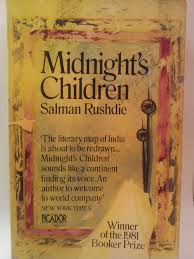
Midnight’s Children, by Salman Rushdie, 1981

I found ‘Midnight’s Children’ a challenge. It is a novel that has been showered with praise and awards and rightly so. While it is overall a complex narrative, with a very large cast of characters and multiple locations, at the same time the autobiographical structure and the single narrator allow the thread of the story to be picked up reasonably easily, even when the novel is read in small portions, as I did in this instance.mc

So why the struggle? What is it about Rushdie’s novel that prevented me from reading much more than a dozen pages at a time? I’ll return to that question when I have worked through my other observations about the novel, which may help formulate an answer.

The title of the novel refers to all the children born between midnight and one a.m. on the day of India’s independence from the United Kingdom. Rushdie’s conceit is that these children – several hundred of them – are born with magical powers.  The story’s narrator, Saleem Sinai, born at the exact moment of midnight, is telepathic, (although this power plays a surprisingly minor part in the overall events of the novel). Using this power he assembles a ‘Midnight Children’s Conference’ of all the gifted children – a conference that has huge potential, but never goes beyond discussion, and is eventually neutered, literally, and destroyed. The obvious point being made here is about the squandering of India’s post-independence potential.

The novel does not start at this point – Saleem takes his time reaching the disclosure about his magical abilities, spending a lot of the opening book of the novel giving us the background to his birth. This leisurely approach– as a narrator Saleem is very long winded – is part of the readability challenge I mentioned in opening.

Saleem’s story is openly allegorical of the story of India’s independence. Even the most obtuse reader could not avoid the numerous links Rushdie draws between his protagonists and Indian history – for example, Saleem’s story includes a number of the migrations and wars which plagued (and continue to plague) his country’s post colonial history.

Midnight’s Children is a wildly ambitious novel, huge in scope, a dissertation on identity, memory, nationalism, and family. In almost all instances it succeeds, and rightly deserves the awards and success it has received. My inability to engage with the text on this reading is I am sure more a reflection of my appetite for novels of this kind that the success or failure of the novel itself. While reading I could recognise the skill and intelligence involved in the construction of the novel I couldn’t warm to the characters or find much interest in the plot. When your main sensation on finishing a novel is relief you know you need to take a break from the classics – I am now reading Kurt Vonnegut’s ‘Cat’s Cradle’ and the contrast in the experience is marked.

Standard
Book review

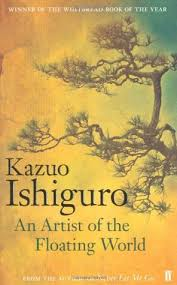
An Artist of the Floating World – Kazuo Ishiguro – 1986

This novel addresses what most be one of the most difficult issues a country has to ever face – how to come to terms with overwhelming military defeat. For Japan, that defeat was all the more painful because its involvement in World War 2 was completely avoidable; and the end of the war, at Hiroshima and Nagasaki was so shocking and final. Ishiguro’s approach to this subject is to walk slowly round it, quietly approaching and then stepping quickly away as soon as the subject becomes too raw.

I am being oblique myself, so let’s explain. The narrator is a painter, Masuji Ono. He has lost a son and a wife in the war, but his two daughters survived. One is married, one going through the complex engagement process used by some Japanese families at the time (and for all I know is still in use). The time structure used in the novel is complex; although each section is dated, giving the reader a misleading reassurance as to the date of the events of that part of the novel, Ono’s account wanders across time, gradually revealing details of his career as a painter. Discouraged by his father from becoming a painter, he runs away from home, and becomes an artist of the floating world – a particular genre of art in Japanese culture. Very slowly Ono reveals his involvement in the rise of Japanese nationalism, and his subsequent disgrace and the rejection of his values by the new, post-war generation. This reveal takes the whole of the story arc, and even then one is left with the distinct impression that we have only been shown a small part of the story.

Ono is a reflective character – he is certainly a deeply flawed narrator, as one would expect, but he is not delusional – he knows that his involvement in Japanese nationalism, painting pictures encouraging the expansion of the empire, was wrong, although the extent of that recognition is unclear: at one point he admits “There is certainly a satisfaction and dignity to be gained in coming to terms with the mistakes one has made in the course of one’s life”, although this is more of a tactical admission than a confession. Ono’s grandson plays an important part in the narrative – he is a really brattish, unpleasant little eight year old, who is encouraged (by his grandfather) to believe that his gender gives him authority over his mother.

There is a profoundly hesitant, tentative feel to the novel. Ono tiptoes around his story, rarely revealing much, and constantly admitting that his recollection may be flawed, The reader is given enough information to piece together the outlines of his story, but only through hints and only rarely through actual events – at one point we are shown him visiting the house of one of his students, who he has reported for anti-nationalist feeling, and it is clear that the authorities reaction has been extreme – we found out earlier that the student was imprisoned for a long time, and apparently tortured. Ono doesn’t understand, or refuses to understand, his responsibility for this situation.

Ishiguro is clearly a writer of some considerable skill – the novel is quite deliberately like a delicate Japanese watercolour, done with great finesse. But the characters – other than Ono himself – are only tentatively drawn – we only see them through Ono’s eyes, and he doesn’t trouble to sketch them in any detail. The language is equally delicate and riven with hesitation, again quite deliberately, giving a very authentic flavour to the narrative, but leaving the reader a little bit detached and remote – the speeches are overly polite, and you need to listen carefully to the subtext to understand what the speakers are really saying, even if the narrator usually misses the point.

Japan clearly went through a huge, if self-imposed trauma before, during and after the Second World War. The price paid was enormous, and understanding how that come to happen is important. Ishiguro gives us one witness’s flawed account, but it is very much that of someone who had only a small, marginal involvement in the tragedy, and I am not sure that it tells enough of the story to be of any value. The book ends without any big reveal, and so does this review.

Standard