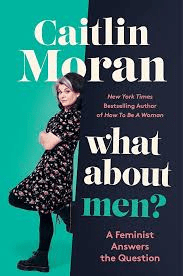
What indeed? Caitlin Moran is an excellent columnist. I enjoy her writing; it is usually insightful and broadly progressive. But does her style of writing – pithy, with a punchline every few hundred words – convert well into a book that grapples with the serious question of the crisis of modern masculinity?
There are multiple issues with this book that undermine its overall impact and effectiveness. Stuart Jefferies, reviewing the book in the Guardian, does an extremely good job of identifying these issues and I am not going to try and duplicate his points, almost all of which I support (although re-reading the review at a later date he does give Moran both barrels and doesn’t take much time looking for any redeeming features). While reading the text I constantly found myself disputing Moran’s observations and not in a good way. They were not thought-provoking so much as smugly wrong. To offer one example, when the author uses the term ‘men’ she appears to refer to a very specific sub-set of men, largely defined as ‘blokes I know’. They are almost all in her age group, heterosexual, and British. A chapter about porn-addiction, based on an interview with a twenty-something young man, stands out because it gives a voice to a different group. Claims such as “your T-shirt collection is, to you, as your wife’s lovingly collated wardrobe of second-hand Chanel, designer jeans and Zara brogues is to her” just aren’t funny because they don’t derive from any observable reality. Isn’t that observation only true of Moran’s husband and their mates? Not many women I know have a collection of second-hand Chanel designer jeans and I am reasonably close to Moran’s demographic. I appreciate this is intended as tongue in cheek humour, but it falls at the first hurdle because it is neither funny nor relatable.
Which is a huge pity, because the subjects Moran writes about – the crisis of toxic masculinity in this country – is profoundly serious. It is literally killing men, through suicide, differential life expectancy, and poor health care. Moran addresses all these subjects, but rarely gets to grips with them before a punchline is required.
Perhaps the fault is mine, in reading this book as a text rather than a series of chapters grouped around the same topic. A fine distinction perhaps but what I mean is What About Men might work better if read one chapter a week rather than straight through like a novel. Some of the more
There is, unquestionably, a dialling it in aspect to this book. Her habit of twitter-sourcing content doesn’t inspire confidence that the book has been carefully researched for example. Most of the conclusions she draws about men are simply stating the obvious – the amount of original insight is minuscule. As a quick gallop through the main issues of modern masculinity, a starter text if you like, this would be fine for someone who hadn’t read a newspaper or spoken to a man in the last few years. Perhaps that’s the real audience – teenagers? But the problem with that idea is that in my experience teenagers are profoundly better informed on issues of sexuality and gender that 99.9% of people of Moran’s generation. I think, in fact I am pretty sure, that most teenagers would be appalled if they read her generalisations on sex, gender and masculinity. Her real audience is obviously the people who buy books and give them to one another for birthdays and Christmas without really expecting them to be read. Why would you bother properly researching a book if you know most people are going to skip to the chapters about sex?
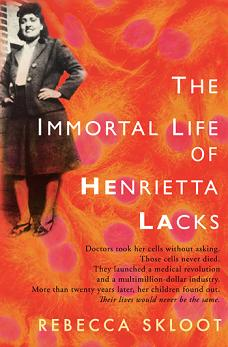
The Immortal Life of Henrietta Lacks by Rebecca Skloot, 2010
The premise of this book is that the extraordinary story of Henrietta Lacks – and more specifically, her cells which (for reasons I am still not clear about) continued to multiply after they were removed from her body, shortly before her death from cancer in 1951 – needs to be told. In other words, that this is the most
comprehensive account of Henrietta’s life, death, and subsequent ‘life’. But you don’t have to read very far into “The Immortal Life” to establish clearly that is an overstatement – in fact one of the complaints of Henrietta’s surviving family is that they are constantly being badgered for interviews by journalists and scientists. Skloot’s account may well be the most comprehensive but it is not a revelation of a lost story. Since 1996 the main School of Medicine in Atlanta has held an annual Women’s Health Conference in recognition of Henrietta and “the valuablecontribution made by African Americans to medical research and clinical practice”. In 1996 the mayor of Atlanta declared a ‘Henrietta Lacks Day’. In 1997 U.S. Congressman Robert Ehrlich presented a congressional resolution recognizing Lacks and her contributions to medical science and research. Also in 1996 the BBC made a documentary about Henrietta’s story, ‘The Way of all Flesh’. Skloot writes that the documentary team “covered the Lacks family story in more detail than anyone ever had, filling dozens of hours of interviews”. In other words, hers is a very well known and comprehensively researched story and the suggestion that this account is anything other than a detailed retelling – albeit with some new elements relating to Henrietta’s family – is misleading. Which is a pity because this is a perfectly worthwhile retelling, as far as it goes, just not anything revolutionarily new. To be fair I have to accept that I can’t pin down a quote where this claim is made explicitly, but it is strongly implied throughout the text, as well as the presentation and marketing of the book.
Henrietta’s story is definitely worth retelling. She came from a literally dirt-poor African American family only two generations away from slavery. Brought up by her grandmother and married at 14 to a cousin, she grew up in an America where African Americans had few civil rights. She was only 31 years when she died in 1951 in a “coloured ward” in hospital in Baltimore. She left behind a husband and five children – and a slice of her tissue, cut from the cancer that went on to kill her. These cells duplicated and kept on duplicating despite being outside a host living organism. Scientists had known this was technically possible, and I am not sure if Henrietta’s cells were the first ever kept alive in this way, but they were undoubtedly the most prolific. The cells went on to be used across the world in numerous different laboratories and environments, including being sent into space. Their origins were largely forgotten. An industry developed around the production of these cells and it seems as if the question of compensating Henrietta’s family and heirs for her extraordinary, if entirely accidental contribution to medical research simply didn’t occur to anyone.
Henrietta’s family are as much a part of this story as her own short life. Her deaf daughter, Elsie, was committed to an institution despite there being any evidence of mental illness. The hospital she was committed to sounds an incredibly grim place. Henrietta’s other children grew up without much in the way of parenting and suffered horrible abuse from family members. Skloot invites us to pity this resilient family, suggesting that they struggled to understand the difference between their mother’s death and the survival of her cells – “Nobody round here ever understood how she dead and that thing still living. That’s where the mystery’s at” – which feels… improbable. Henrietta’s youngest son Joe served time for homicide and remains a menacing presence in this narrative, but the central role is taken by Deborah, Henrietta’s daughter, whose obsession with her mother’s legacy comes to dominate the final chapters of the book. Whether that would have been the case without Skloot’s intervention is unclear, but it’s no surprise that in the television film adaptation of this book it was this role that was taken by Oprah Winfrey rather than Henrietta herself. Skloot even goes so far as to suggest that Deborah believed her mother had been cloned and that she was suffering the pains of all the diseases that her cells had helped to cure, and links these delusions to the more understandable suspicions of African Americans of the medical establishment. Central to this belief was growing awareness of the brutal Tuskegee project in which black men were allowed to die from syphilis so that the progress of the disease could be studied. While the extent to which the medical establishment could abuse African American people is hard to over-state, the idea that Henrietta’s family thought she might still be suffering through her surviving cells feels far-fetched.
There are three main components to this book – Henrietta’s story, the discussion of the various medical ethics issues suggested by what was done to her, and the account of the writing of the book itself. The ethical issues chapters are some of the weaker elements of the book. At points Skloot conflates serious ethical scandals (such as the Tuskagee experiments mentioned earlier) with the taking of tissue samples without informed consent. It is hardly surprising that the paper trail for Henrietta’s consent (if any) to the procedures she underwent is impossible to trace and I struggle the idea that it is a scandal that someone didn’t obtain her informed consent to the tests that were done on her tissue samples and their eventual commercial exploration. She was in intense pain and dying of cancer – the last thing she would have needed is someone trying to explain what they were planning to do with her tissue after its removal. Such consent is not required even to this day, and the case for it being so is very weak.
It is the third element of the narrative, the diary-like description of the creation of the book itself, that comes to dominate the narrative, providing an element of drama, specifically whether Deborah will withdraw her support for the project. Henrietta’s story ends chapters earlier. The space Skloot devotes to her travels and time with Deborah feels self-indulgently ‘meta’ – a book about the writing of a book – and doesn’t contain anything of substance. I felt that at over 350 pages the book could easily have been 100 pages shorter without losing any of its impact. Arguably in the end the author eventually becomes the story herself, which is rarely a good thing, not least in a popular science book. Despite all these reservations, Henrietta’s story is worth retelling and stands on its own as a fascinating combination of science and ethics set against a backdrop of racism and the experience of black people in the period immediately before the civil rights movement.
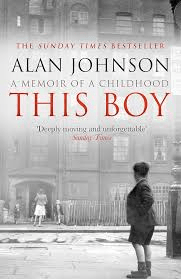
It’s traditional for politicians to write their memoirs after the end of their Parliamentary career. Alan Johnson was a senior figure in the Blair administration, but nonetheless This Boy had to be something special to stand out from the host of other post-Blair/Brown government autobiographies, diaries and memoirs. And it is. What makes this narrative so exceptional is its unsentimental portrait of a childhood of quite profound poverty and deprivation. That fact that the scenes Johnson describe date from the late 1950’s and early 1960’s, not some Dickensian nightmare, make them all the more extraordinary.
How bad was it; just how poor was his family? He regularly went without meals; his social housing in North Kensington, now considered part of trendy Notting Hill, was condemned; he didn’t have an indoor toilet or bathroom until he was in his teens. He faced the daily humiliation of free school meals (when everyone knew who received the free meals and who didn’t) and having to ask shop owners for ‘tick’ (credit). Coal was bought one day at a time because it couldn’t be afforded any other way and the Johnson household was usually bitterly cold, especially during the harsh winters of the early 1960’s.
But despite all that, this is not a misery memoir. These facts are recorded honestly but Johnson doesn’t dwell on them unnecessarily, and rarely seems to feel sorry for himself. (I think his older self feels sad for his younger self, but recognises that at the time he was often happy, especially when his father wasn’t around). Growing up in the 60’s Johnson sees and feels a small part of the immense social change that swept the country as it emerged from a post-war period and the 1964-70 Labour Governments introduced a host of progressive legislation.
Racism disfigured society of the period and Johnson also witnessed more than his fair share of that, as North Kensington saw terrible scenes of abuse of the Windrush generation. It’s not hard to trace the roots of the Labour politician Johnson became in the childhood of this boy.
You often see debates in the media and online about the definition of poverty. Lots of families live in households where the family income is below 60% of the median national income, the most widely used statistical definition, without suffering anything like the deprivation Johnson faced. Some of these families, it is sometimes claimed, are relatively affluent – they don’t go without daily necessities, can afford holidays and things that the middle class might consider luxuries such as mobile phones, cigarettes and flat screen televisions. So what we mean by poverty changes over time, it is relative, and the situation Johnson faced as he grew up was perhaps not as dire as that of the previous generation. The threat of eviction never seems present, social housing however poorly constructed is almost always available (including on several occasions the offer of new housing in the suburbs, most often declined) and jobs seemed to be extremely easy to walk into. If Johnson’s father had contributed to the family finances then a reasonable standard of living was within reach – certainly Johnson describes other family members and friends living in relative comfort. The safety net of the welfare state may not have protected everyone, but it did a pretty good job compared to the absolute poverty of fifty years or so earlier. That aspect of the narrative – that Johnson’s story is one of exceptional hardship, rather than a typical West London boyhood – was often lost in many of the reviews of the book at the time it was originally published. Johnson has corrected this narrative to some extent with his subsequent memoirs covering his early years as a postman, when life was comfortable by comparison.
Johnson’s sister Linda and mother Lily emerge as the heroines of this memoir. Lily worked numerous part-time jobs to keep the family afloat both before and after her husband Steve left, despite her serious health issues which took her life in her early forties. Linda, just three years older than Alan, kept the family together after Lily’s death and showed a remarkable maturity in dealing with the challenges of being orphaned and looking after her younger brother.
This book is written with a refreshing honesty and simplicity. It is obvious from the first page that it is not ghost-written, and the clumsiness of the text is easy to excuse when set beside the rawness of the content. It’s a hard read at times, although knowing that things turn out well for Johnson and his sister helps at lot.
Muriel Spark’s The Bachelors revolves around a group of single young(ish) men in 1950’s London. The plot centres on a case of fraud against a bogus spiritualist Patrick Seton. Seton, a leading member of spiritualist group, The Wider Infinity, is accused (and is clearly guilty of) forging a letter from his landlady, to explain his embezzlement of £2,000. Barrister Martin Bowles is prosecuting Seton, and friend Ronald Bridges, a handwriting expert, is going to be an expert witness in the trial. Other minor characters have bit-arts including an art-critic, a journalist and a teacher.
While the story is ostensibly about the men in the novel, the women play an equally central role – the novel could easily have been called ‘The Bachelors and the Spinsters’. I suspect the choice of title reflects the women’s apparent lack of agency – they are usually subservient to and manipulated by the men, in particular Alice, Patrick’s pregnant and vulnerable girlfriend. The novel takes a sinister turn from the mildly comic when it becomes apparent that he is planning to kill her by depriving her of the insulin she needs to stay alive.
And I will release her from this gross body. He looks with justification at the syringe by her bedside, and is perfectly convinced about how things will go in Austria (all being well), since a man has to protect his bread and butter, and Alice has agreed to die, though not in so many words.
Worse, one of his fellow bachelors suspects his plot but does little to prevent it. Patrick is something of a psychopath – his murderous intentions are not really financial but sadistic, possibly triggered by Alice’s refusal to abort the baby she is carrying. She gullibly believes Patrick’s assurances that they will marry as soon as his divorce is made final. Elsie, her friend, distrusts Patrick, and seeks to secure his conviction in the forgery/fraud case to help Alice escape his malign influence.
Modern (that is to say, 1950’s) spiritualism is a central theme of the novel, and it doesn’t come particularly well out of it, as you can probably imagine. It is a means to manipulate and defraud the simple-minded. Seton, an obvious villain, is protected his supporters within the Society, who are convinced he is a genuine medium, and his trial is the satisfying climax of the novel, where just desserts are granted.
TheBachelors is a quite dark novel, despite the overall jaunty tone. Ronald’s epilepsy is presented as a parallel to the spiritualists’ attempts to contact the ‘other side’ (they use the same drugs for example) in a way I couldn’t quite understand. I appreciate epilepsy as a condition was looked at very differently in the 1950’s compared to the way it is now – it was still under the shadow of the idea of possession, more part of the middle ages than a twentieth century attitude.
This wasn’t one of Spark’s stronger novels. The characters, especially the minor ones, are not clearly defined, and I think most readers will share my experience of struggling at times to work out who is speaking and what there relationships are to the other characters present. The reader has to do a lot of the work, and while sometimes that is justified, here is simply felt frustrating. The humour doesn’t always land and the portrait of living with epilepsy as if it were a curse was depressingly out of date.
I remain convinced that Spark is an under-appreciated writer who is always worth the short time it takes to read her very condensed novels, but overall this was a miss for me.
A few years ago I reviewed Patrick Suskind’s Perfume. It’s fair to say I didn’t like it very much. One commenter pointed out the similarities between Suskind’s novel and Bitch, a much earlier short story by Roald Dahl. So when I finally got round to reading Switch Bitch, the collection of four Dahl stories that includes Bitch (and apologies for the misogynistic language by the way, on which more later) there was the resounding and much-delayed sound of a penny dropping. Because Perfume isn’t just inspired by Bitch, it robs it of its central premise unashamedly. Dahl’s story tells of a scientist who develops a scent that robs men of all sexual inhibition whatsoever – they become animals who have only one thought in their heads, to have sex with the nearest available woman. Nothing, including a gun to the head, can stop them. The scent triggers an animalistic response long-buried in our Neanderthal brains. Sounds familiar? This is the central concept of Perfume. Just one more reason, were it needed, to despise Suskind’s novel.
As well as sharing a central idea, both stories are profoundly sexist. If you didn’t know it you nevertheless could easily guess that the Dahl story was written for Playboy, a soft porn magazine from the days when there were such things as soft porn magazines, which included occasional stories to give readers a break from the soft-focus photography. Their purpose was solely to titillate the invariably male reader. Dahl’s writing for adults is often characterised by unexpected endings – this was the whole premise of the long-running television series “Tales of the Unexpected” which were originally based on his short stories of the same name. But there’s an obvious problem with this structure = once it’s established the twist to each tale becomes more and more obvious. The same problem applies to the stories in this collection – there is no real surprise when the denouement of each is revealed. As the reader has known for some time, Bitch ends with the scent being accidentally discharged. This leads to a profoundly unattractive woman being ravaged, and apparently enjoying the experience. It’s horrible.
There are three other stories in this collection. In The Visitor the narrator’s uncle Cornelius, (by his own account) a preposterously successful philanderer, finds himself stranded in Egypt while on his way to Jerusalem. He is offered a room for the night by a local businessman who has built a luxurious mansion in the desert. Cornelius suspects his car has been tampered with to cause him to be stranded and meet the businessman, although why is unclear. While there Cornelius meets the man’s wife and daughter and sets out to seduce them – he likes a challenge. The inevitable sexual encounter that night happens in silence and complete darkness, (of course it does) leaving Cornelius unsure which woman he has ‘bedded’. If you don’t work out who he actually sleeps with you haven’t been paying much attention.
Our understanding of what constitutes sexual assault has evolved a lot in recent years. At the time it was published I don’t think many people would have understood that the central premise of The Great Switcheroo, in which two men devise a (profoundly improbable) plan whereby each man has sex with the other’s wife (without either wife realising the deception) is clearly a case of rape, rather than some ‘light-hearted’ fun. The sting in the tail/tale – that one wife enjoys the sex with her neighbour so much more than she does with her husband – is in part intended to ameliorate the grossness of the husband’s behaviour. He finds out his wife has hated having sex with him all their married life, so the ‘joke’ is on him. This is a modern version of the bed-trick, (which Dahl had already employed in a more conventional form in The Visitor) the principal difference being that in traditional literature it is almost always the woman who is substituted for another (the implication being that men are unable to tell who they are having sex with as long as it is dark). When this story was first published, again in a soft porn magazine, the idea of a husband tricking his wife into having sex with another man, only for the plan to blow up in his face, was mildly whimsical – some fifty years on it is appalling, distressing and hard to read. The story is told from the perspective of the husband who initiates the plan (his neighbour goes along with it enthusiastically) and ends up finding out he is a dud in bed, an anti-hero who we are invited to laugh at rather than a proto-rapist.
In The Last Act a widow reconnects with the man she left for her husband years earlier. The man is a gynaecologist, recently separated, and harbours a grudge for her breaking off their relationship. He seduces and humiliates her, and it is suggested that this makes her commit suicide. This is another appalling story – even Dahl’s biographer said it should have been scrapped.
Charlie and the Chocolate Factory had been published in 1964, well before these stories were published in Playboy. I mention this because I can almost understand a working writer selling cheap, tawdry stories to a men’s magazine simply to pay the bills. But Dahl obviously wasn’t in that position, and even if he was he could have chosen not to subsequently publish the stories in this format in 1974, by when he was also writing for films and obviously very well off.
Don’t read Switch Bitch. I always reject the idea that you can tell what an author was like as a person by his or her works, but sometimes the challenge of joining the dots between the two is almost irresistible.
I confess I’ve never been a particular fan of Hardy. I’ve not really worked out why, but I don’t think his novels have aged well, even if various film and television adaptations have postponed any risk of obscurity. I thought I would try some of his short stories to see if they could offer something different. Life’s Little Ironies is a collection put together by the author and his publisher shortly before Hardy published his last novel (Jude the Obscure) and went into self-imposed poetical exile. All the stories had originally been published in various Victorian magazines and this is reflected in their length and subject matter.
If you didn’t know this collection was by Hardy it would take a matter of seconds to work it out. The settings are very familiar – Melchester, Casterbridge, etc – and the characters are all eminently recognisable – honest, hard-working rural folk prone to making unfortunate choices. The theme that links the stories, we are invited to accept, is that they are sketches of ironic moments in people’s lives, although the irony is quite often hard to identify.
An Imaginative Woman opens the collection with the story of a woman who conducts an affair with a young writer entirely in her imagination, but does so so convincingly that her husband strongly suspects her of having cuckolded him. Ella Marchmill is bored in her marriage to an older, unsympathetic man, and when she finds out that the previous tenant of the seaside rooms they are renting was an author she admires, she begins to spin a fantasy in which they meet and run away together. Despite her tentative efforts to reach out to the writer they never actually meet, but she leaves enough clues behind her when she dies in childbirth to cause her husband to suspect that the child is not his and to reject him. Is this ironic? Contrived certainly, depending on “a known but inexplicable trick of Nature (whereby) there were undoubtedly strong traces of resemblance to the man Ella had never seen...” What trick of nature is that then? Surely the author’s convenient plot device trick?
The Son’s Veto is again quintessential Hardy. It’s a complex little tale of disappointed love, with the main character’s happiness being frustrated by the wishes of her son. (hence the title). The story is also about class, and how marrying outside of one’s class can cause complications. It’s a polished, densely packed story barely longer than ten pages, and one of the stronger, more complete tales of the collection.
For Conscience’ Sake is another tale in which the central character has left Wessex and returns to complete unfinished business, in this case driven by his conscience. Mr Millbourne left Wessex when he fled from a relationship, leaving the young woman alone and pregnant – “the old story”. Pregnancy out of wedlock is a theme Hardy returns to frequently, but here the protagonist is determined to right the wrong even though many years have passed. Sadly he learns that the past cannot be rewritten and some wrongs cannot be righted.
A Tragedy of Two Ambitions follows two dour young men trying to carve out a career in the priesthood. Their ambitions are frustrated by their drunken reprobate of a father. How they deal with him when his appearance threatens to ruin them is rather predictable but becomes a heavy burden for them to bear.
On the Western Circuit could easily have been expanded into a novel. It tells of Charles Bradford Raye a London lawyer who while travelling to courts in the Western Circuit (for judicial purposes England and Wales is divided into six or seven ‘circuits’ i.e. regions) meets Anna, a pretty young servant girl, something of a Hardy stereotype. Normally he would not have considered Anna a suitable wife, and instead pursues her for less honourable purposes, but while they are apart her letters persuade him she is far more educated and sophisticated than she actually is – her letter are drafted for her by her employer, Mrs. Edith Harnham, the wife of a wine merchant, who is attracted to Raye and uses these letters as a form of literary infidelity. Raye finds out too late that he has been fooled and accepts his fate with resignation. This is a variant of the Cyrano de Bergerac story in which someone falls in love with a false representation of their partner, although in fact the Hardy story actually pre-dates the French play. It is a sophisticated and complex story which once again features an out of wedlock pregnancy, euphemistically described thus: “she made confession that the result of her relations with her lover it would soon become necessary to disclose”. The story also pivots around class differences – Raye would never consider marrying his lover if he knew she was a barely literate working girl as it would seriously impede his career, as if eventually does.
To Please his Wife is a short tragic story in which a seaman chooses a wife unwisely, and pays the price. Another unhappy marriage ending in tragedy – not a collection of stories to cheer anyone up!
The Fiddler of the Reels. The concept of a fiddler with quasi-demonic powers, able to charm people into dancing manically or against their will, can be found in folk-lore. Hardy draws on this idea to weave a tale of a fiddler who uses his mastery of his instrument to be seduce young women. This folk element of the story is interwoven with an account of a local mechanic who, disappointed in love, leaves rural Wessex to go and work in London, his young lady having become besotted with Wat ‘Mop’ Ollamoor, the charismatic fiddle player. This happens at the time the great Exhibition of 1851 is on in London, and this event is described as more than a background to event, but as a central marker in the country’s history, as important as the Norman Conquest. Several years later he receives a letter from his young lady, asking for a second chance, but it is only when she arrives (by an open-carriage train) that he discovers she has a young daughter, the result of an affair with Mop: “I was so unlucky to be catched the first time he took advantage o’ me“. Nevertheless he accepts the proposed reconciliation, marries her and accepts the child as his own. When they eventually return to Wessex a re-encounter with Mop is inevitable, although the precise outcome is unexpected and troublingly ambiguous.
A Few Crusted Characters concludes the collection and is comprised of a series of recollections of local characters and the often mysterious events of their lives. The stories are told by the passengers on a stage coach – there is a nod to Chaucer in the structure of the work. Each has a slightly incomplete feel, as if they were drafts of intended longer works that had been set aside but kept just in case they were to be of any use, and are finally set to work here.
Overall, these stories don’t improve on Hardy’s status as an author, but neither do they diminish it. They didn’t make me want to rush back to the novel and they lack of variety in the subject matter and themes was a little disappointing. As an introduction to Hardy you could do a lot worse.
This extended essay on the continuing significance of Orwell as a writer and thinker is a tour de force of analytical writing by the late, great, Christopher Hitchens. Orwell has been seconded to a wide range of causes over the years, by cold warriors, reactionaries and revolutionaries, but I don’t think anyone has written as clearly nor as intelligently about his work as Hitchens does here.
There’s an immense but loosely worn scholarliness about this analysis. Hitchens has not only read and remembered virtually everything Orwell ever wrote, (and in case I haven’t mentioned it before that was an enormous, prodigious amount), but he seems also to have read everything written about Orwell. What is wonderful is that this isn’t an account bogged down in footnotes and irrelevant detail. Heavyweight critics of Orwell from left and right are batted away with ease. If I found some of the debates about Orwell’s legacy hard to follow at points, due to the arcane academic language used by some critics, (in complete contrast to Orwell’s one writing of course) I nevertheless felt in safe hands in Hitchens company.
A lesser critic would have been tempted to call this text ‘Why Orwell was Right’ but Hitchens is a far subtler writer than that. He appreciates that the idea of Orwell having a fixed set of ideas that never changed throughout his life and which can be tested by later critics as either correct or otherwise is facile – Orwell changed his mind constantly, as any human being will, particularly as he lived through the political turbulence of the 1930’s and 40’s. Orwell was at heart a journalist, and he frequently opened his articles with provocative statements intended to engage the reader rather than as statement of positions he genuinely felt. Orwell’s early anti-Semitism and later attempts to address the issue within himself is charted fairly here, as is his more troubling and apparently life-long homophobia. Orwell the flawed but ultimately heroic author and man emerges more clearly from these pages than from most of his biographies.
Hitchens is very good on Orwell’s novels, and their relationship to the rest of his work. The earlier works before Animal Farm are considered fairly but also I think accurately as a minor contribution to his work. He describes (page 186) Coming Up for Air, A Clergyman’s Daughter, Keep the Aspidistra Flying and Burmese Days wonderfully thus: “These four pre-war efforts constitute a sort of amateur throat clearing” which is exactly how I have always thought of them – like an orchestra warming up discordantly before the symphony begins. Hitchens writes of Orwell’s final masterpiece (page 190) 1984 “It is the first and only time that his efforts as a novelist rise to the level of his essays”. That might be , in fact almost certainly is, hyperbole, and is totally unfair with regard to Animal Farm, but the essays are much under-appreciated, beyond one or two pieces such as Shooting an Elephant and A Hanging which are still taught in schools.
Despite this very positive reaction I still found something to disagree with on almost every page. That’s going to happen with polemical writing and is part of the fun! Some points of fact were I think missed (for example Hitchens claims Orwell was right to deduce (in his essay, Boys’ Weeklies, published on Horizon) that the Greyfriars/Billy Bunter stories were written by more than one person, whereas Frank Richards’s wonderful response to Orwell’s essay is rightly cherished and to my knowledge never disproven) but equally Hitchens invites disagreement and I suspect would have relished it. Perhaps he was not being deliberately controversial, but it is clear he never backed down from a fight either.
For Orwell enthusiasts this is a must-read. For anyone looking for an introduction to Orwell this might be quite advanced – it assumes a fairly extensive knowledge of Orwell’s life and works – but there are many far worse places to start.
Any reader of Dombey and Son is presented with a puzzle – why isn’t it any good? I knew before I started it that the novel was one of Dickens’ ‘lesser’ works: not lesser in length, unfortunately – it runs to nearly 1000 pages – but poorly thought of, by both critics and general readers alike. It is not widely read any more (it has 1,000 reviews on Goodreads, but Great Expectations has 22,000!) doesn’t appear on many academic reading lists, and has never been filmed. Even Andrew Davies abandoned an attempt to turn it into a television series despite having made successes of less obvious material. So as I read I was looking out for the flaws or weaknesses that would explain this lack of popularity. I didn’t have to look far.
(Incidentally, I am aware that this might seem a very negative way of reading any novel. Surely it would be better to be positive, to look for the novel’s strength and good points? Of course. But I’d make two points about this: a) I can’t unknow what I know about the novel and b) I am simply being honest about my mindset – this blog is not about presenting myself as some kind of idealised reader, burning their way through the classics, but an honest description of the books I read and what I think about them. I did look for the positives in Dombey and Son – nothing would have given me more pleasure than to have discovered an overlooked Dickens masterpiece, but that isn’t what happened. Because it isn’t.)
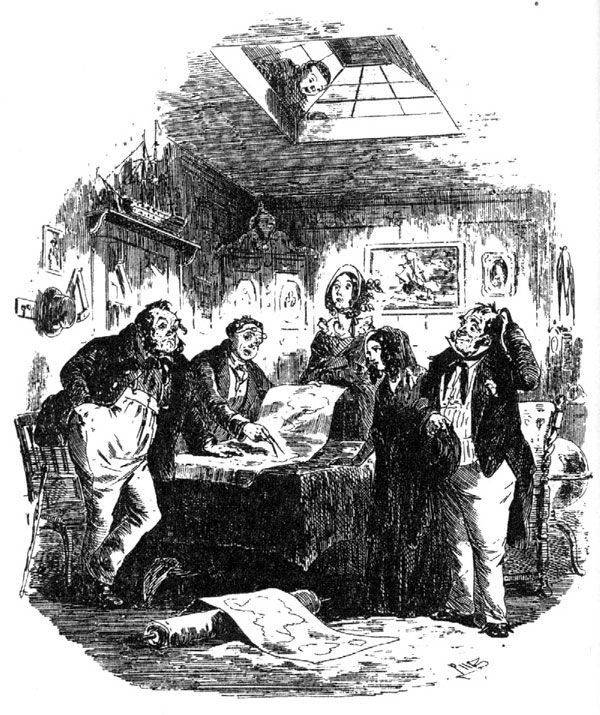
The plot is very limited despite the novel’s length. Not much happens, and the small number of events that do occur are heavily telegraphed. For example: Walter, an office boy sent to work overseas by his company (Dombey and Son) goes missing when his ship capsizes in a storm. There can’t have been a reader on the planet who did not expect Walter to re-emerge – the only surprise was just how long it took Dickens to bring him back. Similarly when Walter first meets the novel’s proto-heroine, Florence, his uncle Sol and his uncle’s friend Captain Cuttle both predict what will happen – that one day Walter and Florence will marry. And guess what?
Everything you expect to find in a typical Dickens novel is present. A huge cast of characters (over 50), long rambling plot lines that are sewn together conveniently at the end, comic scenes of extreme behaviour, all set in a foggy London that is undergoing rapid change due to the arrival of the railways. In fact the parts of the novel describing the arrival of the railways are some of the most interesting in the book:
“The first shock of a great earthquake had, just at that period, rent the whole neighbourhood to its centre. Traces of its course were visible on every side. Houses were knocked down; streets broken through and stopped; deep pits and trenches dug in the ground; enormous heaps of earth and clay thrown up; buildings that were undermined and shaking, propped by great beams of wood. Here, a chaos of carts, overthrown and jumbled together, lay topsy-turvy at the bottom of a steep unnatural hill; there, confused treasures of iron soaked and rusted in something that had accidentally become a pond. Everywhere were bridges that led nowhere; thoroughfares that were wholly impassable; Babel towers of chimneys, wanting half their height; temporary wooden houses and enclosures, in the most unlikely situations; carcases of ragged tenements, and fragments of unfinished walls and arches, and piles of scaffolding, and wildernesses of bricks, and giant forms of cranes, and tripods straddling above nothing. There were a hundred thousand shapes and substances of incompleteness, wildly mingled out of their places, upside down, burrowing in the earth, aspiring in the air, mouldering in the water, and unintelligible as any dream. Hot springs and fiery eruptions, the usual attendants upon earthquakes, lent their contributions of confusion to the scene. Boiling water hissed and heaved within dilapidated walls; whence, also, the glare and roar of flames came issuing forth; and mounds of ashes blocked up rights of way, and wholly changed the law and custom of the neighbourhood.
In short, the yet unfinished and unopened Railroad was in progress; and, from the very core of all this dire disorder, trailed smoothly away, upon its mighty course of civilisation and improvement.”
This is Dickens giving it both barrels, over-writing to the extreme, but just about getting away with it. Despite this characterisation of the railway as a destructive phenomenon, later descriptions show the positive benefits of the coming of rail – in particular the Toodles family prosper from its construction. Later still the railway is to have a decisive role in the fate of the novel’s principal villain, Mr Carker.
The plot centres on the hubris of the industrialist, financier and merchant Paul Dombey. Dombey wants a son to continue the family name and business. He is obsessed with this ambition and as a result neglects his daughter simply because her sex, particularly once his second child, a son, is born. However Paul junior is a weak and sickly child who eventually dies a characteristically Dickensian death, fading away slowly but inevitably. Having lost his wife in Paul’s birth Dombey disastrously remarries. His second wife, Edith, is effectively sold by her mother on the marriage market, and can’t stand her new husband, and refuses to make any pretence at doing so. We can safely assume their marriage is loveless and unconsummated. He uses Carker to act as a go-between between himself and his new wife, to disastrous effect. As a villain, Carker is a failure. He plots and schemes and positions himself at the heart of Dombey’s business, but then has no real plan other than adultery, and that fails miserably. If he is driven by passion rather than a Machiavellian cunning then there is no sign of it.
Dombey is a deeply unpleasant character, proud and arrogant, and devoid of any love or affection. He doesn’t have a convincing redemption story – he is eventually reconciled with his daughter, and is shown being affectionate towards his grandchildren, but for the reader this is far too little too late. His second wife, Edith, is equally proud and unrelenting, and her (step)maternal bond with Florence is all too brief. Both characters are brought low by their pride.
The novel’s principal sub-plot tells the story of Walter Gay and his uncle Solomon Gills, owner of a profoundly unsuccessful nautical instruments shop, and Sol’s friend, an old seaman named Captain Cuttle. Walter and family act largely as a counterpoint to the emotionally sterile Dombey household, but also provide most of the comedic scenes of the novel. There is another, lightly sketched and under-developed sub-plot involving Mr Carker’s older brother, his sister, and one of Carker junior’s former lovers. This sub-plot fizzles out with a resolution, of sort, but not one the reader feels in any way invested in. It is clearly intended as a counterpoint to the main Dombey/Edith storyline, but fails to do anything other than simply echo it.
Were there any redeeming features in the novel, anything to recommend it? The minor characters are entertaining, including those already mentioned, to which I would add the endearing Mr Toots and the indefatigable Susan Nipper, who almost alone amongst the novel’s characters is prepare to give Mr Dombey a piece of her mind. The railway descriptions are interesting records of the first flourishes of the age of steam. But that’s pretty much it. There are unquestionably many better Dickens’ novels and I can really only recommend Dombey for completists. Its reputation is unfortunately justified.
Short stories by Robert Louis Stevenson: The Body-Snatcher, A Lodging for the Night, Markheim, Thrawn Janet & The Misadventures of John Nicholson
These stories were included in the Vintage edition of Dr Jekyll and Mr Hyde (and other stories), which I finally got round to reading several years after the event. (That is, I read the short stories long after having read Dr Jekyll). To what extent they were ‘padding’ to make the original novella into a fuller length text, or were stories worth republishing in their own right, is something I will consider in this review.
The website devoted to all aspects of Stevenson’s life and works, (‘The RLS website‘) says
“Stevenson has an important place in the history of the short story in the British Isles: the form had been elaborated and developed in America, France and Russia from the mid-19th century, but it was Stevenson who initiated the British tradition.”
Which is a bold claim when you think about the short stories and novellas Dickens wrote, to give just one example. The site also claims that many of his stories:
“have an affinity with the Strange Case of Dr Jekyll and Mr Hyde in their setting in the labyrinthine modern city, and the subject matter of crimes and guilty secrets involving respectable members of society.”
The Body-Snatcher is definitely one such dark, gothic tale. The title tells you almost all you need to know – it is set in Edinburgh at the time of the Burke and Hare murders when corpses were in such demand for dissection by medical students that grave robbing become common-place and eventually led to murder to provide more bodies. The story is told from the perspective of a laboratory assistant who unwittingly becomes embroiled in the cadaver trade. The story’s climax comes on a ubiquitously dark and stormy night when a corpse is robbed from a remote country churchyard and supernatural events intervene. It’s a classic horror story that must have chilled Stevenson’s Victorian audience and would make a highly atmospheric radio play.
A Lodging for the Night, subtitled A Story of Francis Villon is another gothic morality tale. Rather far-fetched claims have been made by some critics that this story can be precisely identified as the first modern version of the genre – I have to say that sounds implausible. There’s nothing dramatically original about the form or content. The story opens with the narrator describing a snow-covered Parisian night in 1456. Francis Villon, a poet is drinking and gambling in a small cabin in the grounds of a cemetery with a few friends. While Villon tries to compose a poem, the gambling turns sour and one of the participants is stabbed and murdered. His corpse is robbed and although Villon apparently had no part in the murder he takes his share of the robbery. He flees into the night, but not before his purse is stolen, leaving him destitute. He eventually seeks refuge in a stranger’s home. The remainder of the story is a protracted exchange between the amoral Villon and his host, a former knight who lives by a strict code of conduct. When Villon finally leaves he appears to have learnt nothing from his host.
Markheim is set in a pawn shop. The titular character visits to buy a gift but when the opportunity arises he murders the pawnbroker with a view to stealing from him. While he tries to decide what to do next, someone enters the house, looks briefly into the room Markheim and the body are in, “looked at him, nodded and smiled as if in friendly recognition, and withdrew again.” Markheim cries out, and the stranger returns, asking “Did you call me?”. Again the rest of the story is an exchange between this other-worldly visitor and the murderer. The visitor offers to tell Markheim where the pawnbroker’s money can be found. It soon becomes clear that he knows all about Markheim’s descent into criminality, and has no faith in his ability to change the course of his life. He even offers to help him escape when the pawnbroker’s maid returns home unexpectedly early. But there is wonderful twist in the tale which I won’t spoil for you. This is a genuinely innovative story that subverts the readers expectations without a hint of sentimentality. It’s the gem of the collection.
Thrawn Janet is written in a broad Scottish dialect, and I have to admit at times I struggled with the language. It is not that it is impenetrable. In sentences such as “There was Janet … wi’ her neck thrawn … like a body that has been hangit, and a girn on her face like an unstreakit corp. ” most of the language is conventional English words, and others are simply transliteration of other everyday terms – “hangit” for “hanged”, “corp” for “corpse”, and so on. There are occasional words that need to be looked up – thrawn means twisted for example – but usually the sense is clear. (There is incidentally a version of the story available on the internet ‘translated’ into English, which seems a bit unnecessary!). Janet is housekeeper to a young Scottish preacher. The local people suspect her of being a witch. When they try to prove it by dunking her in the local pond, the preacher intervenes and makes her publicly swear she is not in league with the devil. From that point, Janet’s appearance is changed – twisted neck like someone who has been hanged. Later, after meeting a strange “black man” (the implication being this is the devil), the preacher finds Janet hanging dead in her room. As with Markheim, the supernatural is portrayed as being a tangible and real presence in people’s lives.
The collection ends with what is conventionally known as a shaggy dog story, although I can’t be sure it was conceived as such. The Misadventures of John Nicholson has the eponymous central character go through a series of mishaps, but always ends up on his feet, able to rely on either dumb luck or his family to bail him out. Even though his implicated in at least two series robberies and a murder, he walks away without any series consequences. It’s a weak ending to the collection with no gothic elements, a loose narrative structure and not much point.
So were these stories just padding, or are they worth reading in their own right? Yes and no. Dr Jekyll is such a powerful story because it has something to say about the nature of humanity, civilisation, and the duality of good and evil. It’s also a genuinely interesting story. Some of these shorter stories have interesting insights into similar issues. Clearly none have the same impact as Dr Jekyll, and some are disappointingly predictable, others, particularly Markheim with its clever subversion of the reader’s expectations, are definitely worth reading in their own right rather than simply as companion texts.
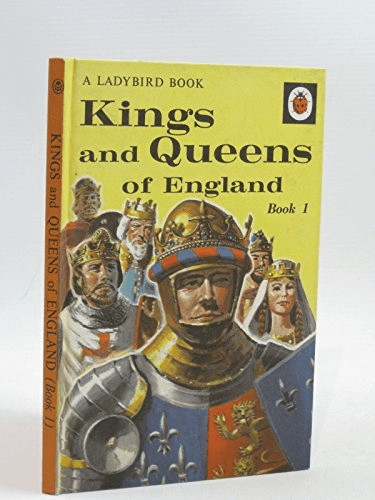
All books are themselves the product of earlier books, however original they may be. I’m not suggesting that all books are copies of earlier works, but they all have dna, texts which have influenced them and without which they couldn’t exist. Some reveal their origins more obviously than others. Unruly makes very little attempt to disguise its sources and influences, which are a fairly straightforward combination of Horrible Histories and the ladybird books that gave you one king per page, with an illustration summarising the one thing you needed to remember about him or her. Add in a little 1066 and All That and a lot of swearing (and I will come back to the swearing), and there you have it.
Which as always begs the inevitable question – why? What made David Mitchell think that writing a book about the queens of England from Anglo-Saxon days to the end of the Tudor period, a pretty long span of history in anyone’s books, was a good idea? Certainly there is a very well established tradition of celebrities writing books. And Mitchell studied history at Cambridge, albeit quite a while ago. My hunch is that this is a lockdown book, something the author filled his hours with when going out or recording game shows wasn’t an option.
There’s not much original research here – none in fact – and anyone with a reasonable grasp of English royal history won’t learn a great deal. A canter through six hundred years of royal history was always going to be somewhat superficial. Even if Mitchell’s reasons for writing the book can be surmised, that in itself doesn’t explain why anyone should read it. There are a few reasons, although whether these justify the whole exercise I am not so sure.
Firstly, there’s the swearing. For someone who has developed a whole comedic persona around being posh, here Mitchell swears freely and extensively. For example, writing about King Stephen and Queen Matilda, he says: “They were both twats. They may not have been able to help being twats – the mores and values of their times and of their class may have made them twats. But they were twats and terrible things happened as a result.” (This is a more family-friendly example). The comedy here derives from the repetition of the word twat rather than its shock value – just in case you hadn’t spotted that. Despite his best efforts not much comedy is wrung from the humour of King Cnut’s name sounding a little like a spelling mistake. But it lightens the tone and makes it clear that Mitchell isn’t taking the exercise all that seriously.
The main interest and where the text really comes alive is in Mitchell’s observations about the nature of monarchy. He argues compellingly that monarchs aren’t in any way special people:
“Ultimately the reverence shown to monarchs is a mockery, a joke. It’s pretending they’re something they are not. This is a bitter and clear reduction of kingship to its essentials: an office accepted only because an unjust hierarchy is preferable to anarchy. Out of the gangsterism of the lawless post-Roman land of Britannia, a few local bigshots emerged, their power gradually coalescing into kingship.” (396).
That’s the book’s thesis in a nutshell – once the Romans left Britain there was a period of lawlessness, local thugs took control of small areas, slowly killed one another and grew in power and influence until the concept of ‘king’ was invented. That power was then cemented with “ceremonial and religious elements giving kingship an aura of legitimacy and sanctity. But it was just made up. At some point someone with a sociopathic dislocation from the truth had to start asserting it, like the first conspiracy theorist who said that 5G masts spread Covid”. All of this is rather brilliantly summarised in the book’s final chapter, Bookends. This final chapter also contains a rather remarkable few paragraphs about Shakespeare. Mitchell writes with passion about Shakespeare’s brilliance, and concludes “He’s where this book has been heading, it turns out…Shakespeare is a good reason to stop writing about kings, because his brilliance makes them seem silly.” I wish he had come to that realisation a few hundred pages earlier and turned his intelligence and learning towards a subject that obviously interests him far more than kings and queens, and one on which has some valuable insights.
The book ends by making it clear that although the exercise could be repeated for the Stuarts, Hanoverians etc, it won’t be. The excuse offered is that kingship had by the end of Elizabeth’s reign become less important and therefore less interesting (tell that to Cromwell). I’m not buying it for an instant. I hope Mitchell’s next book is about a subject he obviously has a real passion for and which according to this book he shares with his wife – if she were to help him out with it all the better!