1950's post war fiction, 20th century Literature, apocalypse, Book review, cosy catastrophe, John Wyndham, science fiction', The Day of the Triffids

Supplementary: The Day of the Triffids – a closer look at murder/suicide

Yesterday’s post on ‘The Day of the Triffids’ was getting overly long, and I wanted to spend some time looking more closely at the scene below from chapter 5, ‘A Light in the Night’. I think it demonstrates Wyndham’s “less is more” technique. it also provides a further perspective on the question of how to respond to overwhelming tragedy from which there appears no escape.

Bill and Joella have found a flat in which to hide overnight on the first night after the mass-blinding. They have chosen an opulent third floor flat to celebrate what they both think will be their last night of ‘civilised’ living. While Joella is out scavenging for clothes, Bill witnesses the following scene. I have included it in full because I think it merits it:

“As I stepped outside, another door farther down the passage opened. I stopped, and stood still where I was. A young man came out, leading a fair-haired girl by the hand. As she stepped over the threshold he released his grasp.  “Wait just a minute, darling” he said.

He took three or four steps on the silencing carpet. His out-stretched hands found the window which ended the passage. His fingers went straight to the catch and opened it. I had a glimpse of a fire-escape outside. “What are you doing Jimmy?” she asked. “Just making sure” he said, stepping quickly back to her and feeling for her hand again.

“Come along darling”. She hung back. “Jimmy I don’t like leaving here. At least we know where we are in our own flat. “How are we going to feed? How are we going to live? In the flat darling we shan’t feed at all, and therefore not live long. Come along sweetheart don’t be afraid”. “But I am Jimmy, I am”. She clung to him and he put one arm around her.

“We’ll be alright darling, come along”. “But Jimmy that’s the wrong way…” “You’ve got it twisted round dear. It’s the right way”.

“Jimmy, I’m so frightened. Let’s go back”. “It’s too late darling”. By the window he paused. With one hand he felt his position very carefully. Then he put both arms around her., holding her to him. “Too wonderful to last”, he said softly. “I love you my sweet, I love you so very, very much”. She turned her lips up to be kissed. As he lifted her he turned and stepped out of the window…

I found this is a chilling scene. It is mutely observed by the narrator. He makes no attempt to intervene, not a sound. He could have tried to help this loving young couple, but decides to do nothing. Passively he accepts the young man’s judgment that death is the preferable option for the blind. Note by the way that this is clearly a murder/suicide – the young girl is frightened and suspicious (perhaps they have already discussed their options previously).

Bill’s observation is detailed – he watches them carefully. He describes events more in the manner of an omniscient narrator than an observer, without judgment. He glimpses the fire escape outside, hears the fear in the girl’s voice, counts the man’s steps to the window, and notices that he finds the catch easily, rather than fumbling for it. He records their conversation word for word, even the telling repetition of ‘very’ in the final line. The fact that he records this scene in such detail, when he looks away from so many others that must be occurring all around him, suggests he feels it has a particular significance.

Bill has already seen a suicide by jumping earlier in the novel, by a doctor in the hospital; he also has met a man in a pub who goes to join his wife and children in death by gas after getting properly drunk:

“Wha’s good of living blind’s a bat?. . . Thash what my wife said. An’ she was right-only she’s more guts than I have. When she found as the kids was blind too, what did she do? Took ’em into our bed with her an turned on the gas”

Suicide is a rational, sensible, even brave, option in the new world, is the implication.

The scene ends with an ellipsis and a paragraph break. In the next scene no mention is made of what Masen has witnessed – he chooses not to tell the reader (nor Joella) what happens to the couple after this point. A more horrific description would have followed their fall, the screams, the crunch of mangled bodies on pavement, the blood slowly pooling. Wyndham gives us none of this, just those three little dots after the word “window”.

Is this an example of the author protecting the reader from the worst of the apocalypse, making it more cosy? It is interesting that it is Bill only who witnesses this scene – Joella is conveniently out ‘shopping’. Personally I found the scene powerful and effective, and a description of their fall and death would have added little. The reader is left to fill in the gaps with their imagination. But I accept that this narrative approach allows readers to also look away if they choose, to decide not to engage emotionally with the enormity of what is being shown, as Bill effectively does.
Standard
apocalypse, Book review, cosy catastrophe, John Wyndham, science fiction

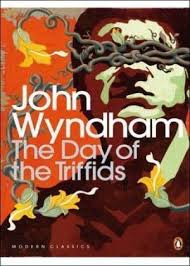
The Day of the Triffids, by John Wyndham, 1951

The term “cosy catastrophe” was coined by the author Brian Aldiss.

“The essence of cosy catastrophe is that the hero should have a pretty good time (a girl, free suites at the Savoy, automobiles for the taking) while everyone else is dying off.”triffids

Aldiss coined the term to critique John Wyndham’s classic ‘The Day of the Triffids’. I think he was quite wrong, and I am going to use this post to explain why. Continue reading

Standard
19th Century literature, Book review, George Orwell, H G Wells, science fiction', The Time Machine

The Time Machine by H G Wells,1895

Continuing with my Wells-athon, all of which have been quite short novels, I now turn to the hugely influential ‘The Time Machine’.

Time travel was not a new concept, but Wells’s novel was one of the earliest on this theme, and established some concepts and principles that remain with us. having said that, I found the behaviour of Wells’ s protagonist in many ways puzzling. If you had invented a time machine, what would you do? Where would you go? Would you go back to the nativity, to the Globe in 1605, to assassinate Hitler? Or would you travel 800,000 years into the future, as Wells’ time traveller does, without packing a sandwich, let alone a camera or a weapon? I know that is a ridiculously literal response to a science fiction story, but good science fiction is above all plausible. If I could forward travel in time I would like to know how society reshapes itself in 100 years, what new technology is developed, whether extra-terrestrial life is encountered, so many other things – but 800,000 years?? Given that the existing span of human civilization can be measured in single-figure thousands of years, it seems wildly optimistic to imagine that humans will still be around this far into the future.

I appreciate I am still being too literal – time travel is simply a device to allow Wells to speculate on how human society will evolve, and we need not get too absorbed with the precise date – this is simply the vaguely distant future. In this future humans have evolved into two distinct races, the Eloi and the Morlocks. The Morlocks live underground, and predate upon the simple-minded Eloi. Society is decaying terminally. Into this world the time traveller is pitched, loses his machine, and is forced to confront his slowly dawning realisation that this is no Utopia he had hoped man would have built for himself.

Wells’s conception of time travel is quaint. It doesn’t involve Government-led endeavours and vast resources – an independent inventor working in his shed is able to master the feat after a few years of study. He sets off in an extraordinarily blase fashion, making no preparation whatsover – this is a quick jaunt into the future, not an expedition risking life and limb, back in time for a quick bath and dinner at eight. Victorians were of course great explorers, and often quite eccentric into the bargain, but Wells’ s time traveller takes this to the extreme.

One of the most distinctive features of Wells’ writing is his focus on the personal, the everyday, even when his themes are global or astronomical. As I mentioned in my review of ‘War of the Worlds’, the Martian conflict is constrained within the English Home Counties, and described from the limited perspective of two individual observers. The scenes from ‘The Invisible Man’ are all rooted in suburban and rural England. Kipps and Mr Polly follow the same pattern – his protagonists are everymen. It is no coincidence that the central characters in ‘The War of the Worlds’ and ‘The Time Machine’ are both unnamed. This allows them to act as representatives of their class and time.

However, politically, ‘The Time Machine’ is a difficult book. Wells is commonly considered as a socialist, but his portrait of a future in which the working class has become a cannibalistic underground monster, preying on the weak and enfeebled middle classes, is profoundly pessimistic. It not only expresses “Wells’s horror at the realities of 19th-century class relations, but also his fears about what utopian socialism and communism were offering in their place” (Matthew Taunton). It is hard to travel back from the dystopia of 800,000 to 1895 and find a way to avoid this co-evolution and class war.

It’s been interesting to revisit Wells, but I remain ambivalent about his status as a writer. Influential, without question. I think his social comedies have aged less well than his science fiction. But if I ever am at a loss to put into words my thoughts and feelings about a novel or a writer, there is always one reliable solution, and that is to turn to George Orwell. Try it – he almost always has something sensible and interesting to say about any author of his time or before. Reliably, he puts his finger on this sense of unease. In ‘Wells, Hitler and the World State’, published in Horizon in 1941, he wrote:

Thinking people who were born about the beginning of this century are in some sense Wells’s own creation… I doubt whether anyone who was writing books between 1900 and 1920, at any rate in the English language, influenced the young so much. The minds of all of us, and therefore the physical world, would be perceptibly different if Wells had never existed.”

But he goes on to say

the singleness of mind, the one-sided imagination that made him seem like an inspired prophet in the Edwardian age, make him a shallow, inadequate thinker now…. Back in the nineteen-hundreds it was a wonderful experience for a boy to discover H. G. Wells….But because he belonged to the nineteenth century and to a non-military nation and class, he could not grasp the tremendous strength of the old world… He was, and still is, quite incapable of understanding that nationalism, religious bigotry and feudal loyalty are far more powerful forces than what he himself would describe as sanity. “

Orwell anatomises with extraordinary precision why Wells’s utilitarian version of socialism had not come to pass, even though the scientific advances he anticipated had been realised and indeed exceeded:

Creatures out of the Dark Ages have come marching into the present, and if they are ghosts they are at any rate ghosts which need a strong magic to slay them…Wells is too sane to understand the modern world. The succession of lower-middle-class novels which are his greatest achievement stopped short at the other war and never really began again, and since 1920 he has squandered his talents in slaying paper dragons. But how much it is, after all, to have any talents to squander.”

Creatures out of the Dark Ages have come marching into the present“. Wow.


Standard
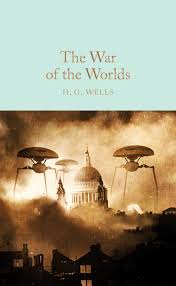
Book review, H G Wells, invasion literature, science fiction', War of the Worlds

War of the Worlds by H G Wells, 1897

Wotw

“No one would have believed in the last years of the nineteenth century that this world was being watched keenly and closely by intelligences greater than man’s and yet as mortal as his own; that as men busied themselves about their various concerns they were scrutinised and studied, perhaps almost as narrowly as a man with a microscope might scrutinise the transient creatures that swarm and multiply in a drop of water.”

I come from the generation that finds it physically impossible to read that opening paragraph without hearing Richard Burton’s magnificent voice, providing the narration for Jeff Wayne’s album.

I really enjoyed ‘War of the Worlds’. I can’t imagine you don’t know the basic premise, but just in case, here goes: aliens attack Woking, and thence Southern England. Not so much war of the worlds therefore as Martians vs the Home Counties. And of course ‘we’ win, in a way that had allowed Europeans to win so many earlier colonial wars.

Continue reading
Standard
19th Century literature, Book review, H G Wells, science fiction'

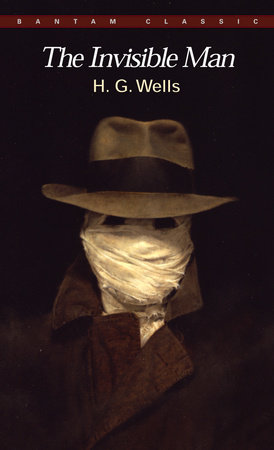
The Invisible Man, by H G Wells, 1897

The power to transform the human body using advances in scientific understanding. 9780553213539This was the theme that captured the imagination of many nineteenth century writers, including, among others, Mary Shelley in ‘Frankenstein‘, Robert Louis Stevenson in ‘Dr Jekyll and Mr Hyde‘, and H.G. Wells in ‘The Invisible Man‘. In this late Victorian novella, Wells explores the idea of what would happen if someone, somehow, managed to make themselves invisible. Continue reading
Standard
Book review, China Meiville, Crime, The City and the City, Weird fiction

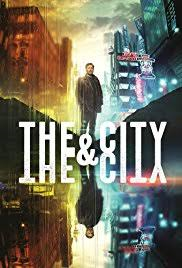
The City and the City, by China Meiville, 2009

When reading this review, if you do, please remember my policy on spoilers – which is that I will probably use them. I don’t do so deliberately, I just find it hard to write comprehensively about something I have read without writing about the things that other readers might consider spoilers (bearing in mind of course that there is no meivilleuniversally agreed definition of what constitutes a spoiler in the first place). ‘The City and the City‘ is particularly difficult to review without reference to the central concept. If you avoid blurbs, plot summaries, reviews, tv adaptations etc, and read this novel without any preconceptions (I would agree by the way that a ‘pure’ approach to reading any novel is impossible – the reader will be influenced by their knowledge of the author, the cover illustration, etc) you become slowly aware that there is something unusual about the setting.
The central concept in this otherwise orthodox police procedural novel is extraordinary. Inspector Borlú, of the Extreme Crime Squad in the central European country of Besźel, investigates the murder of a foreign student. The victim was involved in debates about the complex relationship between Besźel and its neighbour and rival Ul Qoma. From early on there are some unusual aspects of Borlu’s narration. He talks about ‘unseeing’ a passerby, with no explanation of what this means. Borlu is Beszel born and bred, so his instincts as a native are deeply ingrained – he sees nothing out of the ordinary in what follows. Slowly, the true nature of Beszel and Ul Qoma’s unique relationship is revealed. The cities occupy the same geographical space, but preserve their separation through rigid adherence to ‘unseeing’ – being aware of but refusing to acknowledge the existence of the other – its buildings, vehicles, citizens and so on. This practice is enforced by a sinister entity known as Breach. Separation is assisted by differences between the city and the city – clothing, architecture, even gait. Residents are taught from childhood to recognise things belonging to the other city without actually seeing them. Ignoring the separation, even by accident, is called “breaching” – a serious and swiftly punished crime.

I suspect Meiville drew inspiration for this separate but the same concept from the situation in the former Yugoslavia in the 1980s and 90s, where neighbouring countries fought bitterly over small areas of land. This separation could have arisen from this kind of conflict, although we are told it dates to before recorded European history. Inevitably there are many complications to this way of life. The cities have areas where ownership is unclear, and where people of both cities walk and drive alongside one another. The only way one can legally pass from one city to another is through border control – even though such journeys involve returning to the same physical space one has just left.

Meiville’s construction of this world is thorough – he thinks through all the practical aspects (what if there is a traffic collision between cars from the different cities?) – this is not just a whimsical concept but a fact of everyday life for the citizens of the two cities, which make investigation of cross-border crime a logistical and conceptual nightmare.

Within this world, the murder investigation unfolds, and it is not a criticism to say that in this respect the novel is a traditional police procedural. Suspects are interviewed, other crimes are discovered, hidden forces interfere with the investigation, all in a routine manner. This is not of course a simple murder, even if where it was committed had been a less complex environment. A conventional buddy relationship develops between Borlu and his Ul Qoma partner, and Borlu’s sidekick does what every good sidekick does, providing back-up and insight without stealing the limelight.

In crossing genre boundaries, any author runs the risk of pleasing fans of neither original genre. Meiville does what he can to mitigate this risk, but his weird fiction fans are the most likely to have been disappointed – other than the setting or context, this is a very recognisable world. I really enjoyed it, and while I recognise it is probably not typical of Meiville’s work, I will be interested to see to what extent that is true, or whether my fairly uninformed impressions of this author are correct.

Standard
Book review

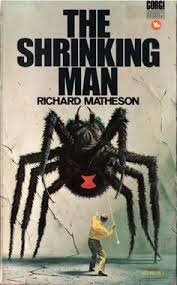
The Shrinking Man, by Richard Matheson, 1956

You may be more familiar with this novel through the film adaptation (pointlessly retitled the Incredible Shrinking Man, as if the shrinking bit was otherwise credible). It tells the story of Scott Carey, caught in one of those freak nuclear accidents that were almost unavoidable in 1950s America. Instead of imbuing him with superpowers, he begins to shrink. Every day he loses one seventh of an inch in height and overall mass. Doctors are unable to halt his inexorable decline.Shrinking Man

Matheson focuses his narrative on the end of Carey’s experience, when he is less than an inch tall, and is trapped in the family cellar, menaced by a Black Widow spider hungry for a snack. A lot of attention is paid to the practical detail of moving around when you are less than an inch tall, finding food, water and safety. In brief moments of calm Carey remembers his slow decline from a strong, six foot two husband and father, through an inverted adolescence, finally being housed in a doll’s house by his towering but ever faithful wife.

The novel cries out to be read as a parable. Carey’s emasculation, as he shrinks in both size and status, leading him to be more and more impotent, is a thoughtful commentary on the role of men in 1950’s American society. He is unable to provide for his family, and he becomes vulnerable first to a drunken paedophile and then teenage bullies. He briefly rediscovers his sexuality by spying on his daughter’s babysitter, who has a convenient propensity to remove her clothing and later has a brief affair with a fairground dwarf.

Size really does matter is the simple interpretation of this text, but to be honest I found the novel much more interesting if read as a commentary on the space race and the Cold War. Despite the seemingly impossible challenges Carey faces, he never gives up, and always ends up on top. He defeats his much larger enemies, and uses good old American pluck to win through. Each day’s shrinkage is another challenge to be confronted and beaten. At the end of the novel, he lies on his back looking up at the stars:

How beautiful they were, like blue-white diamonds cast across a sky of inky satin. No moonlight illuminated the sky. There was only total darkness, broken by the flaring pin points of the stars. And the nicest thing about them was that they were still the same. He saw them as any man saw them, and that brought a deep contentment to him. Small he might be, but the earth itself was small compared to this.”

Just at this time the USA and the USSR were both planning to launch satellites, and were contemplating the vastness of the challenge in front of them. The space race was a proxy expression of the Cold War. Matheson seems to say here that nuclear weapons will present a challenge for America, but that no matter what is thrown at it, it will survive and go on to conquer. The novel ends on a remarkably positive note in language which anticipates some of the purple prose used by the first astronauts:

“If there were other bursts of radiation, other clouds drifting across seas and continents, would other beings follow me into this vast new world? So close — the infinitesimal and the infinite. But suddenly, I knew they were really the two ends of the same concept. The unbelievably small and the unbelievably vast eventually meet — like the closing of a gigantic circle. I looked up, as if somehow I would grasp the heavens. The universe, worlds beyond number, God’s silver tapestry spread across the night. And in that moment, I knew the answer to the riddle of the infinite. I had thought in terms of man’s own limited dimension. I had presumed upon nature. That existence begins and ends in man’s conception, not nature’s. And I felt my body dwindling, melting, becoming nothing. My fears melted away. And in their place came acceptance. All this vast majesty of creation, it had to mean something. And then I meant something, too. Yes, smaller than the smallest, I meant something, too. To God, there is no zero. I still exist!

Matheson came up with a superb idea here and has created one of the seminal 1950s science fiction texts (he also wrote ‘I am Legend’). Although the narrative can get bogged down with a “how tiny me climbed the side of the chair to recover some breadcrumbs” level of detail, I wasn’t too distracted by this, and enjoyed the adventure elements of the story.

Standard
American literature, Book review, science fiction'

Fahrenheit 451, by Ray Bradbury, 1953

“A book is a loaded gun in the house next door…Who knows who might be the target of the well-read man?”

Bradbury’s seminal dystopian novel is one of the key texts of the McCarthyite era in post-war America. Bradbury describes a world in many ways very much like his own, but where firemen burn books, where the population are distracted from an understanding of their lack of freedom and the threat of nuclear war by the bread and circuses of wall-sized flat screen televisions, and in-ear “sea-shell thimbles”, and where suspects are hunted down by helicopter and summarily executed on live television. Continue reading

Standard