Book review

As I read Goldfinger with, I have to say, an increasing sense of dismay, I found myself playing a bizarre game of ‘bigotry bingo’:

Homophobia? As early as page 21 the narrator (from Bond’s perspective) refers to a bar-owner as “a pansified Italian“; later Bond lusts after Pussy Galore (who in the novel is a lesbian) and reflects on “the sexual challenge all beautiful Lesbians have for men“! (279); of course Bond believes that every lesbian just hasn’t met the right man. He refers to Tilly Masterson as “one of those girls whose hormones had got mixed up. He knew the type well, and thought they and their male counterparts were a direct consequence of giving votes to women… as a result of fifty years of emancipation, feminine qualities were dying out or being transferred to the males”. (313)

Inevitably at the end of the novel this happens:

Bond said firmly, “Lock that door Pussy, take off that sweater, and come into bed. You’ll catch cold.”

She did as she was told , like an obedient child. She lay in the crook of Bond’s arm and looked up at him. She said, not in a gangster’s voice, or a Lesbian’s, but in a girl’s voice, “Will you write to me in Sing-Sing?”

… “They told me you only liked women”

She said “I’ve never met a man before”.

Pussy then goes on to explain she was only a lesbian because she was sexually abused as a child: “I come from the South. You know the definition of a virgin down there? Well it’s a girl who can run faster than her brother. In my case I couldn’t run as fast as my uncle. I was twelve.” (371)

(I feel bad even quoting this garbage, but in case you ever meet anyone who claims Ian Fleming’s novel’s have any merit whatsoever, remember that quote, making fun of CSA! )
Anti-Semitism? Check. On page 27 Du Pont answers Bond’s question on Goldfinger’s nationality by saying “You won’t believe it but he’s British. Domiciled in Nassau. You’d think he’d be a Jew from the name, but he doesn’t look it. We’re restricted at the Floridian. Wouldn’t have got in if he had been.” In other words Du Pont’s club bars Jewish people from being members.

Misogyny. Well where isn’t there misogyny in Bond? All women are referred to as ‘girls’ and all of them are liable to succumb to his charms. They are disposable and insignificant, suitable only for bringing coffee, typing up memos, and of course servicing his other needs.

Racism. Describing Goldfinger’s gold smuggling operation in the UK, the Bank of England chappie, Colonel Smithers, refers to “half a dozen Korean stevedores he picked up in Liverpool. They didn’t know a word of any civilised language”.(88) Later Bond refers to putting Oddjob and “any other Korean firmly in his place, which in Bond’s estimation was rather lower than apes in the mammalian hierarchy“.(257).

Obviously it is wrong to make light of the nasty, outdated attitudes reflected throughout this novel. Bond was a colonial anachronism long before the sun had set on the British Empire, a relic of a time when just being British was enough to guarantee one’s superiority amongst ‘foreigners’. I’ve written at length elsewhere about the difference between novels which simply reflect outdated views which were prevalent at the time the text was written (the use of the n-word in Huckleberry Finn, for example, or the anti-Semitism in Trollope) and the more active promotion of these views, where they are supported and presented as being right-minded. It’s not only hard to write about slavery without acknowledging the existence of racist views, or the Holocaust without mentioning anti-Semitism, it would also be both wrong and ridiculous. But it is completely possible to write a spy story without the spy being a dinosaur who always wins because he believes himself to be, and is, superior to all the foreigners he meets, and who has all the women he wants because he is simply sufficiently manly. Bond isn’t just a dinosaur in the twenty-first century, he had horrendously out of date attitudes and beliefs in the 1950’s.

The novel’s plot is constructed of a series of set pieces – the card game, the golf round, the car ride across Northern Europe etc which bear the hallmarks of research that Fleming was reluctant to waste. The superfluous detail and technical terminology grates very quickly. The novel also presents some mysteries for the reader to solve which are laughably easy – even for a disengaged reader like me who really wasn’t trying that hard! Just as an example, the novel open with Bond being employed to help find out how Goldfinger is cheating at cards. As soon as we are told he wears a hearing aid and that he insists on playing outdoors, facing the hotel (i.e. with his opponent having his back to the hotel windows) the solution is apparent to even the most casual of reader. Later the reader will have worked out how Goldfinger smuggles his gold long before it finally dawns on Bond.

As super-villains go, Goldfinger is very one-dimensional (in addition to being a deeply anti-Semitic portrait). His gold-smuggling regime is preposterous – it involves buying the gold at UK retail prices, melting it down and remaking it into car parts, melting it down again in Switzerland and remaking it into airplane seats, and then finally re-melting it down back into gold bars in India. As well as being ridiculously complex (and therefore expensive) this process introduces multiple points of failure into the process, when he could just simply bribe a handful of Indian customs officials. The decision to not kill Bond and use him in some kind of bizarre clerical capacity, when he is so obviously a law enforcement officer, is equally nonsensical. The finale, the raid on Fort Knox, is just about as mad as it gets.

Bond lives on through the immense success of the films and novels authorised by the Fleming estate using respected authors such as Anthony Horowitz. But I think this veneration of Fleming’s creation has gone on far too long. There is no need for a modern Bond (especially one who continues to treat women as disposable, as the Daniel Craig version of the character does) when there are better stories to be told. I hated Casino Royale and read Goldfinger with low expectations of any improvement. There was none at all.

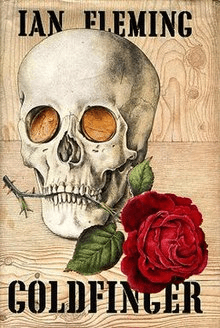
Goldfinger, by Ian Fleming, 1959

Aside
Book review

I think publishers around the world will be working frantically to find novels in which shy but brilliant young women live lives of hardship in isolated communities (preferably American, preferably coastal) and get involved in crimes of passion while at the same time pursuing an academic interest in zoology. Oh, and also writing her own poetry. Because that seems to be the magic formula for selling books if the extraordinary success of Where the Crawdads Sing is anything to go by.

BUT – spoiler alert – that doesn’t mean the novel is any good. In fact a recent Reddit post entitled “Always shocked to discover a bestseller is actually awful” summed it up for me:

“Read if you like migraine inducing romance, insipid mystery, sh*t dialogue, unrealistic flat characters, and enough plot holes to backfill a swamp dry. I envied Kya’s mother for walking out of this book on page 6 and not having to suffer through the rest of it like I did.”

Much of the novel is written in a folksy vernacular – y’all – which grated until either I got used to it or the author quietly dropped it. My impression is that it was the latter. Either way that wasn’t the main problem. To explain the central flaw in the novel I need to give a quick plot outline. Briefly it tells the story of Kya Clark, a young girl who lives in the North Carolina swamplands in the 1960s. She is abandoned by her family, and grows up almost entirely isolated from society, ignored by the local villagers who refer to her as ‘swamp girl’. In a parallel plot line set around ten years in the future, a local man has been murdered and Kya is a suspect.

For the novel to work in any way we need to be able believe in Kya, that she could survive on her own, and become an academic prodigy with the minimum of support. But this is asking too much – she is abandoned by her whole family at the age of six (or thereabouts) and manages to survive in a harsh environment on her own. The lack of intervention by the authorities – Child Protective Services or the 1960’s equivalent – is explained by Kya’s ability to hide; each time the school attendance officer comes out to Kya’s shack she hides in the swamp until they leave. After a while they give up. That just didn’t ring true. She goes into town once a week to buy groceries – usually just a bag of ‘grits’ – wouldn’t they have just waited for her there? Equally her transformation from an abandoned child to an academic expert on the local flora and fauna is utterly implausible. Learning is more than being able to read – surely that hardly needs saying does it? And once I lost any belief in the central character, the purpose of rest of the novel just dissolved away.

The parallel plot – the murder mystery – is even less plausible. I’m not going to spoil the plot by telling you why, but I just refuse to believe anyone will read this novel, find out the ‘answer’ to whether Kya killed the philandering sex abuser that tries to rape her, and be surprised at the outcome, however many red herrings the author introduces. Or maybe I will.

So apart from the ridiculous plot and unbelievable characters, is the novel well written? Of course not! It is totally overwritten. Some brief examples should suffice:

Sometimes she heard night-sounds she didn’t know or jumped from lightning too close, but whenever she stumbled, it was the land who caught her. Until at last, at some unclaimed moment, the heart-pain seeped away like water into sand. Still there, but deep. Kya laid her hand upon the breathing, wet earth, and the marsh became her mother“

“Autumn leaves don’t fall, they fly. They take their time and wander on this their only chance to soar.”

“Faces change with life’s toll, but eyes remain a window to what was…”

‘Autumn leaves don’t fall, they fly’. No they bloody don’t! If ever a sentence was written to go on a bookmark or a t-shirt that was it.

I am really sorry if you enjoyed Where the Crawdads Sing – I appreciate you will hate this post, and find it mean-spirited. I also know the author’s primary purpose – to write a novel that helps protect the North Carolina marshland which is under threat from development – was well-intentioned, and I have probably over-stated the novel’s weaknesses without giving credit where it is due for its strengths. But my wariness over the popular fiction best-seller list remains as strong as ever.

Where the Crawdads Sing by Delia Owens, 2018

Aside
Book review

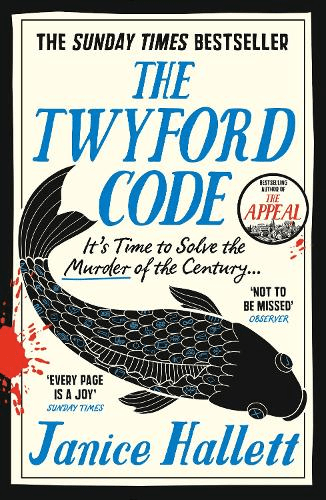
The Twyford Code is several books at once. Don’t be misled by the Osmanesque branding – this is nothing like The Thursday Murder Club, apart from coexisting in the broad category of mystery/crime. The misleading marketing continues in the novel’s blurb, which claims “It’s time to solve the murder of the century...” even though the novel isn’t about a murder. What it is about is slightly harder, I’d admit, to define.

It opens with what seems at first to be a fairly clumsy framing device – a detective inspector sends some transcribed audio-files to an academic who specialises in cryptic codes, asking for assistance in tracing the missing person who made the recordings. That’s where the first warning signal should been buzzing away – why send the transcriptions rather than the audio files themselves? And why transcribe the files using a very poor voice recognition software full of mistakes when an audio typist could have transcribed the audio accurately? Of course there are answers to both these questions that we find out at the end of the novel when the big reveal takes place, although by then we have just accepted the premise.

The transcribed recordings form the bulk of the narrative. Some are straightforward dictation, others are recordings of telephone conversations, and a few are fragmented recording of conversations while the phone is in the character’s pocket, constituting in effect ‘overheard’ conversations. This gives the novel the immediacy of a story being told in the moment, although the device doesn’t always work. There are several points when the narrative has some catching up to do. The recordings are being made by Steven Smith, who has recently been released from a long prison sentence, and are directed to his parole officer, Maxine. They are an account of his life story, focussing on an incident from his schooldays. Travelling on a bus he found a copy of a children’s book. Thinking he might be able to sell it for the price of a bag of chips he took it to his remedial English teacher, Miss Isles, (throughout the novel her name is transcribed as ‘missiles’, which at first was mildly amusing but which quickly became irritating), who is fascinated by it. Eventually she explained to Steven her belief that the author was using the bland children’s stories to communicate in code, To whom, and about what, is unclear, but in pursuit of the mystery she organised a field trip for her class to the author’s family home in Bournemouth. At some point during the trip she disappeared, leaving her class to make their own way home.

Steven has become obsessed by this buried memory, and now free to pursue his investigation he contacts the schoolmates who were with him on the trip. Alongside the story of his investigation he recounts memories of his childhood and how he drifted into a life of crime.

Twyford is a very thinly disguised version of Enid Blyton. There is some clumsy commentary on how Blyton was cancelled in the seventies and eighties, which is very much not the case and glosses over the fact that there was problematic content in her stories. It wasn’t political correctness that caused Blyton to fall out of fashion but an increasing awareness that the outdated views on gender and race in her stories was potentially harmful to kids. But she was never banned and her books remained widely available and in print.

The mystery at the core of The Twyford Code is hard to pin down – the focus of the mystery keeps shifting. It’s not clear whether Miss Isles did go missing on the day trip to Bournemouth, nor whether the Twyford books do contain acrostics and other codes pointing to the whereabouts of stolen bullion hidden during the second world war. It’s also unclear whether the narrator is being pursued by mysterious figures throughout his investigations, as he appears to be, or whether these are figures of his imagination. He is an unreliable narrator and there’s almost nothing he says that can be trusted.

The resolution to the novel is well constructed and convincing, but it is a long time coming. You can read mystery/crime novels passively, knowing that each mystery you are presented with will be explained and resolved fairly quickly, or you can more actively engaged with the text and try and work out what is going on. This novel pushes that choice upon the reader quite hard – for example we are presented with large chunks of text from the Twyford stories and asked to decode them. I have no idea whether this is a confession or not, but I tend to read these popular fiction novels for entertainment rather than mental exercises, and I don’t try to work the puzzles out. I know that the author will usually have withheld key information making the working out element almost impossible, and Hallett is no exception. As an example, we are told that acrostics can be found throughout the Twyford stories between occurrences of the word ‘cat’. This is then modified to phrases where the word ‘cat’ appears as an acrostic itself, and then further modified to phrases where the word ‘cat’ appears close together in the text. Then it is finally revealed (minor spoiler) that cat isn’t the real keyword at all, and there is another keyword which we should have been looking out for all the time. That’s just cheating isn’t it? If the intention was to invite the read to go back over these passages and work out the puzzles than that’s a hard pass from me.

There are other instances where the puzzles in the text are impossible for the reader to decrypt. A picture in the background of a photograph is believed to contain clues relating to numbers of a dartboard. Subsequently a different version of the picture is revealed showing another set of numbers. So any effort invested in trying to discern the relevance of the first group of numbers – are the map references, dates, codes to a cypher etc – is pointless. That’s my excuse for not engaging with this element of the novel – it’s a matter of personal choice and if you enjoy trying to work these puzzles out then go for it.

I appreciate the fact that the author tried something different here rather than the conventional, narrator-led body in the drawing room school of cosy crime. She also includes some commentary in education in prison, and the treatment of children with special educational needs, all of which is very commendable. I am tempted to try Hallett’s earlier novel The Appeal which has received positive reviews, and to which by all accounts this represents a slightly disappointing follow up. Without wanting to sound too condescending, if you are looking for something diverting on a long train journey, this might fit the bill, but I doubt it will linger long in the memory.

The Twyford Code, Janice Hallett, 2022

Aside
Book review

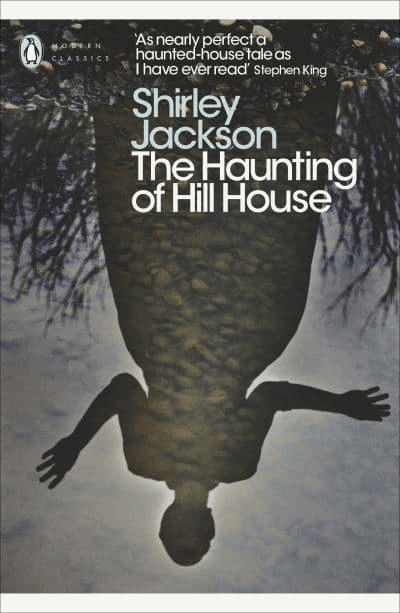
I am pretty ambivalent about horror as a genre, and The Haunting of Hill House has done little to change my mind about this one way or the other. While bad horror is virtually unreadable, good horror needs to tap into some primeval fear for it to make any impact at all and avoid the cardinal sin of being ridiculous. I wasn’t convinced that The Haunting managed to swerve that pitfall.

This novel is an unusual example of the genre in that is is without a monster – no aliens or creatures from the black lagoon. While other 1950’s American authors were being inspired by the Cold War, the space race and the march of technology (see for example Richard Matheson’s 1956 The Shrinking Man, or John Wyndham’s 1951 The Chrysalids) here Shirley Jackson falls back to one of horror’s earliest forms, the haunted house story.

Hill House is a mansion somewhere remote in the USA – a precise location is obviously never specified – which although relatively recently built, has acquired a reputation for being cursed or haunted:

“Hill House, not sane, stood by itself against its hills, holding darkness within; it had stood so for eighty years and might stand for eighty more. Within, walls continued upright, bricks met neatly, floors were firm, and doors were sensibly shut; silence lay steadily against the wood and stone of Hill House, and whatever walked there, walked alone.”

Jackson, or her narrator, is clear – there is something about the precise architecture of Hill House that is evil:

“No human eye can isolate the unhappy coincidence of line and place which suggests evil in the face of a house, and yet somehow a maniac juxtaposition, a badly turned angle, some chance meeting of roof and sky, turned Hill House into a place of despair, more frightening because the face of Hill House seemed awake, with a watchfulness from the blank windows and a touch of glee in the eyebrow of a cornice.”

and later

“Almost any house, caught unexpectedly or at an odd angle, can turn a deeply humorous look on a watching person; even a mischievous little chimney, or a dormer like a dimple, can catch up a beholder with a sense of fellowship; but a house arrogant and hating, never off guard, can only be evil.”

Four brave/foolhardy souls decide to stay at the house overnight to investigate the persistent reports of the place being haunted: Dr. John Montague, an paranormal investigator; Eleanor Vance, a young woman escaping her oppressive family; Theodora, an artist; and Luke Sanderson, heir to Hill House. Eleanor and Theodora have been chosen by Dr Montague, who is leading the experiment, because they have had previous encounters with the paranormal. Clearly the assumption is that they will find something strange about the house – and of course they immediately do.

Apart from Dr Montague these are not the typical cast of characters found in a haunted house story. Eleanor is timid and an extremely unlikely ghost-hunter; Theodora is, it is broadly hinted, a lesbian, and while I am not suggesting for one second that lesbians can’t hunt ghosts, it is definitely not a typical piece of casting; and Luke – well to be honest Luke is not a very well developed character at all – he is principally there to make up the numbers. Only Dr Montague conforms to his eccentric scientist trope.

The cast assembles in the way that groups of people going to haunted houses do and the scene is set for the haunting to begin, along with the obligatory creepy housekeeper. Strictly on cue the scary happenings kick-off. All of the inhabitants begin to experience ‘strange events’ while in the house and its grounds, including violently loud noises, freezing cold doorways, sinister messages being scrawled on the walls and spectral figures glimpsed out of the corner of the eye.

Is this all really happening, or are the loud noises etc being produced by the residents themselves? Alternatively, are they imagining them? Maybe even both? The narrative carefully avoids any possibility of the reader knowing what is really happening, and this undermines the attempts at realism in the story. We can’t be scared of what we know is not real after all, and the willing suspension of disbelief needs a convincing appearance of reality.

Approximately two-thirds of the way through, as the daily routine of general spookiness is beginning to settle down, the novel is given a massive injection of life by the late arrival of the magnificent Mrs. Montague and her side-kick Arthur Parker, a no-nonsense headmaster. This pair are wonderfully comedic – Mrs Montague relentlessly and unreasonably hen-pecks her husband, and Mr Parker’s attempts at being the alpha-male are farcical:

I shall make my headquarters in the small room just this side of the nursery, well within shouting distance. I shall have with me a a drawn revolver – do not take alarm, ladies, I am an excellent shot – and a flashlight, in addition to a most piercing whistle…You may all sleep quietly I assure you.

The ending is sadly predictable, but after all the range of choices available to the author of horror stories are fairly limited:

a) Ghost are real;

b) It was the spooky caretaker/groundskeeper in a mask after all (i.e. there is a logical explanation of some kind to all the apparently supernatural activity); or

c) The horror is psychological – the haunting etc is all in the mind.

H. P. Lovecraft said of horror writing that “the oldest and strongest emotion of mankind is fear, and the oldest and strongest kind of fear is fear of the unknown”. Jackson picks up on this concept here:

“Fear,” the doctor said, “is the relinquishment of logic, the willing relinquishing of reasonable patterns. We yield to it or we fight it, but we cannot meet it halfway.”

Jackson does a good job of keeping the threat imposed by Hill House largely unknown – it’s never really clear what is going on at any particular time. The confusing layout of the house, which leads to the characters getting lost all the time, makes good use of this concept. But I needed to be persuaded to willingly relinquish my grasp on reasonableness before experiencing anything like fear and I never quite succumbed.

The Haunting of Hill House by Shirley Jackson, 1959

Aside
Book review

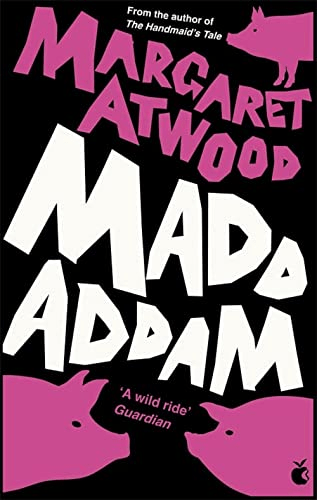
MaddAddam is the third and final novel in (and also gives its name to) the MaddAddam trilogy. It continues the story of the characters introduced in Oryx and Crake and The Year of the Flood, and opens in traditional manner of sequels: two survivors of the apocalypse, Ren and Toby, (the principal characters of The Year of the Flood), set out to rescue their friend Amanda, another of God’s Gardeners, the survivalist millennial cult who has been kidnapped. During their search they met up with other survivors including several former members of the God’s Gardeners, who were either all extremely lucky or somehow developed an immunity to the man-made virus that triggered the pandemic. They also meet Snowman Jimmy (principal narrator of Oryx and Crake) and his ‘Crakers’, modified humanoids genetically designed to survive the apocalypse and prosper in the new, post-human world. Together they form a small defensive compound, pooling their resources and skills and protecting themselves against the hostile wildlife, as well as the two ‘painball’ (a form of gladiatorial combat) kidnappers.

As with the previous books in the trilogy, Atwood combines present tense narratives with long, detailed flashbacks. In this novel we learn a lot more – possibly a shade too much – about Zeb’s background. He and his brother, Adam, who we later find out is the founder of the God’s Gardeners, escape from an abusive father and step-mother, and go on the run. Zeb adopts a bewildering series of different identities, at each stage crossing the paths of other characters already featured. Or as the New Stateman’s reviewer put it:

A penchant for coincidence began to emerge in The Year of the Flood and by this instalment it’s running as amok as the pigoons. All the survivors have known each other for years and keep bumping into each other in the post-apocalyptic landscape, while rarely encountering anyone who didn’t appear in the first two books.

The improbable coincidences pile up as Zeb moves from job to job, all of them ‘manly’ roles such as pilot and bouncer for a sex club (the one Ren and Amanda work at, of course). Zeb has adventure after adventure (at one point he is mistaken for Bigfoot, which I think was intended as comedic relief?). I had the impression Atwood was writing these asides as a form of therapy, an escape from ‘serious’ writing and that she could have gone on almost indefinitely.

Humour is also provided by the naivety of the blue-skinned, penis-waving Crakers. They are like toddlers constantly asking “why?” insisting on being told stories, and then interrupting them. This joke is quite amusing the first time it is used, but it doesn’t bear that many repetitions.

When it was originally published MaddAddam was met with some confusion. Why was Atwood still writing about this society which had already been explored in considerable depth? Was there anything particularly new to say about the apocalypse? There’s a degree of condescension in this attitude – as if science fiction is not worthy of the attention of an author of Atwood’s status – but this is nevertheless quite derivative stuff. The lack of originality in the novel’s core concept – ‘the end of the world, and what happens to the plucky group of survivors’ – is certainly a weakness which becomes all the more apparent by this stage of the series. There’s no sense of peril in the conflict with the Painballers – the novel’s bad guys – and the final showdown is told almost entirely ‘off-screen’ through the confused eyes of one of the Crakers, who doesn’t really understand what is going on.

Atwood hints that the Crakers may not be the primitive creatures we have been led to believe. One of the younger humanoids learns how to write and gains an understanding of some of the simpler human concepts. Is this a sign of the Crakers’ beginning to evolve and throw of their genetic limitations, or not? We don’t find out because this element of the story remains unresolved.

In the novel’s acknowledgements, Atwood wrote: “Although MaddAddam is a work of fiction, it does not include any technologies or biobeings that do not already exist, are not under construction, or are not possible in theory”. (my emphasis). The final clause in this sentence is doing a lot of the heavy lifting. A lot of things are theoretically possible but still thousands of years away from being developed. To imply that the technology in MaddAddam is in some way imminent is misleading: psychic pig/human hybrids are not going to happen any time soon. Of course what Atwood is doing quite deliberately is referencing a similar point she made about The Handmaid’s Tale – that everything described there had happened to women at some point in human history. This is an attempt to make the text more vivid and real, a warning rather than speculative fiction. Whether she needed to do that or not is a moot point – without it does the text stands on its own well enough as fiction? Most dystopian fiction doesn’t need the protective cover of an ‘it could happen, really’ justification.

Atwood prescience happens where I suspect she least expected it – not in the development of genetic engineering, but in an aside on one of Zeb’s early jobs:

“His first employer was Ristbones, an outfit that specialised in the hacking of electronic voting machines. That had been easy in the first decade of the century, and also profitable – if you controlled the machines you could slip in whichever candidate you wanted”.

I detected some conservative themes in the previous novels in this series – opposition to gun control, and a suggestion that the apocalypse could in some way be an opportunity for a new start for humanity – but I didn’t expect to see Trumpian lines about electoral fraud being anticipated so accurately.

MaddAdam by Margaret Atwood, 2013

Aside
Book review

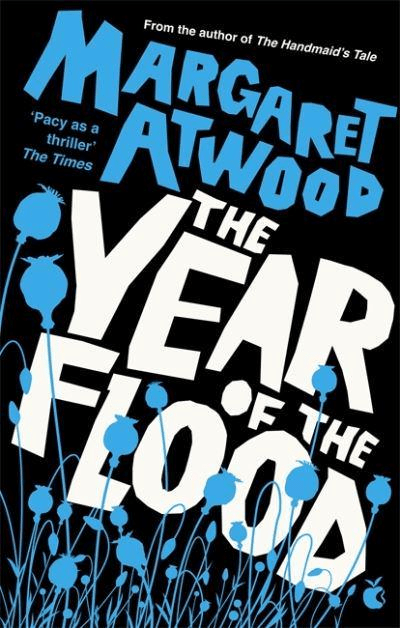
The Year of the Flood is the sequel to Atwood’s 2003 novel Oryx and Crake. It was a long wait to find out about the mysterious people that Snowman/Jimmy saw on the beach at the end of his hazardous supply-run to his former compound, but one of the obvious advantages of reading these novels ‘in arrears’ so to speak is that they can be read without the long delays in between publication, keeping the details of the preceding books fresh in the mind.

However, the enigmatic end of O&C is not immediately resolved – the wait continues until near the end of this sequel. The Year of the Flood follows the story of two of ‘God’s Gardeners’, the millennial cult mentioned in O&C. God’s Gardeners believe that a biblical ‘waterless flood’ is coming, in which the world will be cleansed of the damage done by man. and of mankind itself, leaving only a small number of survivors who have prepared for the ‘flood’.

Prepping – ‘the practice of making active preparations for a possible catastrophic disaster or emergency, typically by stockpiling food, ammunition, and other supplies‘ – is now a fairly common concept if not practice, particularly after Covid, but I am not sure when it became mainstream. Regardless, God’s Gardeners are preppers, stashing away supplies in ‘arks’ in preparation for the coming imminent catastrophe. And they are as it turns out absolutely right to do so. Atwood’s sympathies seem clearly with those warning of the impending ecological disaster, even if it is probably too late to do anything to avoid it.

As the narrative develops we learn more about the God’s Gardeners’ beliefs – they are strict vegetarians and aim to live entirely self sufficiently while they await the expected end of the world, even though their origins are not fully explained until the third novel is the trilogy, MaddAddam. Sections of the novel are regularly interspersed with copies of sermons preached by Adam One, the God’s Gardeners leader and founder, and hymns which celebrate their endless round of festivals. The cult’s leadership council are all called Adam and Eve One, two, Three etc. We also learn that the group’s ideology is perhaps not as outlandish as we had originally been led to believe – their understanding of the likely coming apocalypse proves almost exactly right, and they develop an impressive range of survival skills. The community steadily grows as more people come to realise that the modern way of life is unsustainable.

Much of The Year of the Flood follows a similar time period and structure to Oryx and Crake, with a fresh perspective of the events leading up to the apocalypse and its aftermath from the point of view of the God’s Gardeners and in particular two of their surviving members, Toby and Ren. As with O&C much of the novel is told in flashback. Toby (confusingly, a young woman) works as a ‘meat barista’ in a burger bar, enticingly named SecretBurgers. As we know from O&C law and order has largely broken down in the world outside the corporation compounds, so when Toby is assaulted by her manager, the psychotic Blanco, she is unable to do much about it until the God’s Gardeners rescue her and take her to their commune.

The other parallel thread of the story is told by Ren, a child member of the group, whose mother Lucerne is an escapee from one of the corporation compounds. At first Lucerne is in a relationship with Zeb, one of the Group leaders (while the focus of this novel is on the female characters, Zeb is a charismatic figure and it is no surprise that he comes to the fore in final novel of the trilogy). When that relationship breaks down and Lucerne and Ren return to their compound, (Lucerne claiming to have been kidnapped, a not entirely unknown experience), Ren goes to a conventional compound school where she meets Jimmy (Snowman) and Glenn (Crake). This is the starting point for the timelines of the two novels to merge.

Atwood carefully creates a very convincing portrait of a world where science is unchecked and is taking us to the brink of catastrophe. Her warnings about gene editing technology, global warming, and climate change could not be clearer. This isn’t a ‘we are all doomed’ rant, but it tiptoes close to it: if a full-scale global apocalypse does ever happen I can imagine Atwood standing in the wings, tweeting ‘well I did tell you so’. Unlike with most other dystopias there is no real attempt to suggest a way out of this mess – we are probably past the point of no return, and all we can do (it is implies) is stock up on tinned goods and hide our guns.

There are a few other weaknesses in the narrative. The days of the apocalypse themselves remain strangely unexplored – we know in detail how it happened, and how the handful of survivors come together, but almost nothing about the event itself. Atwood is careful to provide elaborate reasons why Ren and Toby survive the pandemic (Ren is locked in a bio-secure environment when it happens – it’s not entirely clear why but it appears to be some sort of quarantine required as part of her role as a sex-worker; Toby locks herself in the high-end spa where she works, also ensuring her survival) but other survivors emerge without such clear reasons for their survival, and the novel’s plausibility wobbles alarmingly when they all end up being known to one another, including several of Jimmy’s previous girlfriends. This makes for moments of recognition when incidents in the first novel are called back, such as when Jimmy’s college girlfriend burnt his shoes because they were made of faux leather, but this doesn’t make them any more plausible.

As a dystopia The Year of the Flood doesn’t have a lot more to say than Oryx and Crake. But as an adventure story it is entertaining, even exciting at point, and the reader is always rooting for the God’s Gardeners, unlikely good guys in the apocalypse if ever there were any, to come out on top, The strange Crakers make a return appearance at the end of the novel when the action catches up with where we left it at the end of Oryx and Crake, setting things up for the exciting finale, MaddAddam.

The Year of the Flood by Margaret Atwood, 2009

Aside
Book review

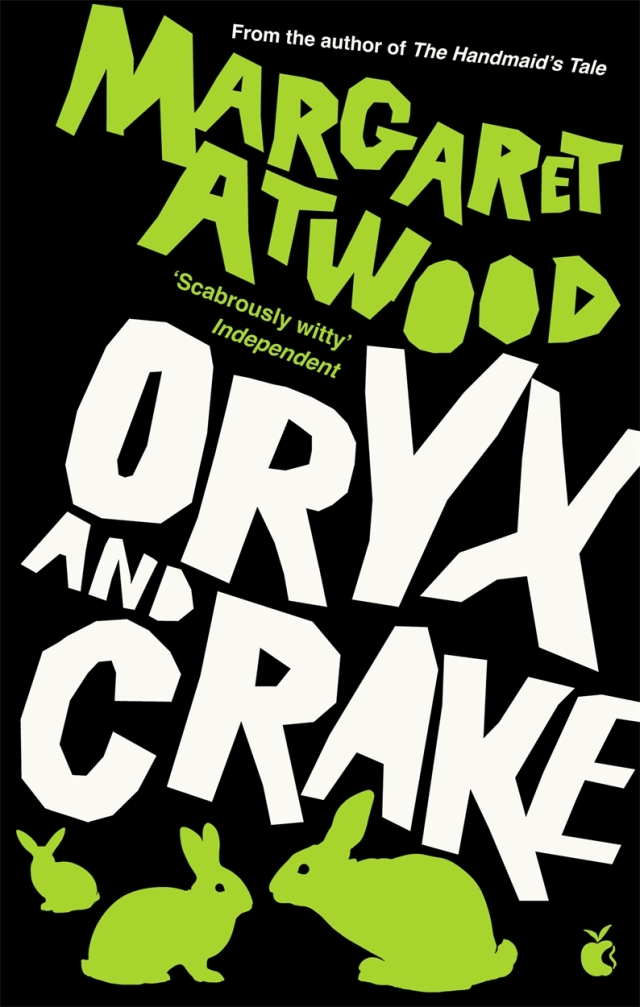
O&C was shortlisted for the 2003 Booker Prize (losing out the the excellent Vernon God Little) and the 2004 Orange Prize for Fiction. It is the first novel in the MaddAddam trilogy, followed by The Year of the Flood (2009) and MaddAddam (2013).

“Snowman”, short for ‘Abominable Snowman’, is a lonely survivor of a global pandemic that has seen virtually all mankind wiped out. He lives a precarious existence surviving off scraps and is threatened by the many bio-engineered creatures that now roam freely in a decaying landscape devoid of mankind. The novel opens with him waking up in a tree where he hides each night for safety. When I first attempted to read Oryx and Crake for some reason I never got past this very early point. This vivid image – a slightly mad-man in a tree – stayed with me, along with the entirely incorrect impression that this was a very experimental novel.

Snowman has an uneasy relationship with a mysterious group of primitive human-like creatures living nearby who he calls ‘Crakers’. The remainder of the novel tells us how the Crakers came into existence, how Snowman got his name, and how the world almost came to an end.

Much of Oryx and Crake is told in the form of Snowman’s memories as he decides how to track down the food, drink, shelter and weapons he needs to survive in this hostile environment. These are the very early years – if not months – of the post-apocalypse world. Snowman, once called Jimmy, grew up in a world recognisably similar to our own. This society was dominated by megacorps that replaced most forms of government. People working for these corporations were an elite who lived and worked in compounds, isolated from the world outside in which society was slowly breaking down. The government and the police appear to have withered away, with law and order being provided to the highest bidder by private police, the CorpSeCorps. (Atwood makes a subtle pro-gun lobby point here – the citizens of this dystopia are unable to resist the loss of their civil liberties because strict anti-gun laws have been introduced and enforced). You will not be surprised to hear that the climate was also damaged beyond repair, and that many different species of animal had become extinct. This pre-apocalypse future in other words was highly unpleasant, but entirely recognisable.

Science in our world has led society down some very dark paths, and Atwood simply follows them to their logical conclusion. For example, genetic engineering in Oryx and Crake’s pre-apocalypse society has created hybrid animals which are usually more dangerous than originally intended, and all of which survive the human-only pandemic. Some of these hybrids would be more at home on the Island of Dr Moreau than on a farm or in a laboratory – there are lion and lamb hybrids, and pig and human creatures, pigoons, designed to act as carriers of spare transplant organs.

At first the nature of the apocalypse that has wiped out humanity is unclear, but as Snowman’s story is slowly revealed we learn that the unchecked bioengineering created a super-virus that was spread through a version of Viagra. This it transpires was a deliberate attempt to wipe out mankind engineered by Jimmy’s brilliant if unstable friend Glenn, also known as Crake. It was also Crake who bioengineered the Crakers as an attempt to restart humanity with all our bad traits genetically removed.

Running short on supplies, Snowman/Jimmy decides to return to his compound, leaving behind the Crakers who look to him as some kind of spiritual leader. This is the prompt for more reminiscing by Jimmy. At school he met Glenn, who was already clearly a dangerous genius. Atwood describes the damage unrestricted exposure to the worst of the internet would have had on these young minds, another element of the socially conservative under-current to the novel. Jimmy and Glenn, now known as Crake, his identity in an online game, play violent online games and watch extreme content including live executions and child pornography.

On leaving school Crake and Jimmy part ways. Crake goes to the prestigious Watson–Crick Institute to study bioengineering; the far less gifted Jimmy follows a different path and goes to the arts and humanities based ‘Martha Graham Academy’. Jimmy has a number of relationships (which are called back in the later sequels, but which at the time seem inconsequential). A counter-culture lead by a group called God’s Gardeners is mentioned, but these seem a harmless millennial cult rather than serious opposition within society. After graduation Jimmy works in advertising until he is offered a job by Crake promoting a new drug he has developed.

All the pieces are now in place for the pandemic to break out, and it duly follows. The author doesn’t dwell on the end of the world – we have been shown the build up and the aftermath, but the event itself is passed over quickly. This is a novel of ideas rather than an adventure story after all. But the novel does end on a cliff-hanger (readers had to wait six years before finding out what happens next) when Jimmy discovers he is not alone in this world.

Dystopian fiction is a fairly crowded field, particularly of late, and the global pandemic that wipes out mankind was of course chillingly prescient. But the novel that Oryx and Crake reminded me most of was, strangely, Brave New World, In both novels mankind has become subservient to technology, which dominates everyday lives including the messy business of sex. Some people live outside the highly stratified modern society and have ‘primitive’ attitudes towards reproduction, which are presented as being more ‘natural’. Soma, the drug taken to dull the pain of everyday life in BNW, a form of anti-depressant taken like sugar or caffeine, has its equivalent in Oryx and Crake’s BlyssPluss. Huxley;s view of the prospects of mankind is fairly pessimistic, but Atwood goes a step further by seeming to welcome Crake’s apocalypse, even if the Mark 2 humanity that emerges, the Crakers, are stripped of all the positive qualities we associate with man – creativity, appreciation of music, spirituality – leaving them as mere dumb beasts.

Atwood’s themes – globalisation, the power of corporations, the climate crisis and the risks inherent in bio-engineering – are all as relevant today, if not more so, than when the novel was first published almost twenty years ago. The novel at times tiptoes close to being moralistic, and the enigmatic character of Oryx is never fully developed, but this is in many ways a traditional ‘what-if’ dystopia that suggests the end of the world wouldn’t be all bad, and it might well be what we deserve. That’s a worrying interpretation which the sequels (reviews to follow) do little to dispel. I was however glad to be wrong about the readability of this novel – it is at heart an entertaining adventure story, albeit a fairly morbid one,

Oryx and Crake, by Margaret Atwood, 2003

Aside
Book review

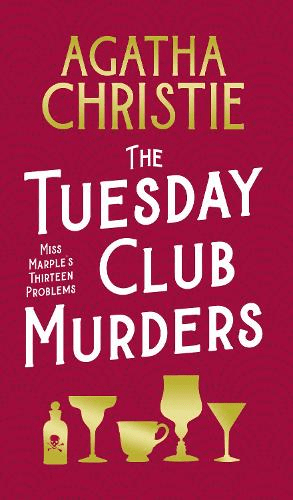
Yes, you read that correctly – the Tuesday Club Murders, by Agatha Christie, not The Thursday Murder Club by Richard Osman. The similarities in name are striking though aren’t they? Although in interviews about his novels Richard Osman has regularly acknowledged his debt to Christie, I don’t (so far as I know) think he has ever mentioned this collection of stories. I can’t surely be a coincidence though.

To be fair, this collection of stories is usually published as ‘The Thirteen Problems’. It was first published under that title in the UK in 1932 and it wasn’t until the stories were published in the US the following year that the title The Tuesday Club Murders was adopted. Obviously the publishers have reissued the collection under the US name to capitalise on the popularity of Osman’s novels, even going so far as to describe the stories in the blurb as ‘the original weekday murder club’! To be fair they haven’t mimicked the distinctive cover design used for The Thursday Murder Club and its sequel, The Man Who Died Twice, unlike other recent murder mysteries, but they must have been sorely tempted to do so.

The introduction to the club does seem very similar to Osman’s version:

‘Well,’ said Joyce, ‘it seems to me we are a pretty representative gathering. How would it be if we formed a Club? What is today? Tuesday? We will call it The Tuesday Night Club. It is to meet every week, and each member in turn has to propound a problem. Some mystery of which they have personal knowledge, and to which, of course, they know the answer.’

But this is almost where the structural similarities end. This is a collection of short stories not a novel, and the ‘club’ structure is a weak framing device that isn’t really necessary. Apart from the title, the points of similarity between these stories and Osman’s novels are actually few and far between. They have a similar setting, and the Miss Marple would probably fit in quite well into the group of crime-solving pensioners in The Thursday Murder Club. But the Tuesday ‘Club’ isn’t really a club at all, nothing more than a story telling group of friends, who seem to only meet the once (despite the initial set up) , even if they were probably quite capable of taking on a ‘real’ case or two.

All thirteen stories feature Miss Marple, and all follow the same pattern quite rigidly – some friends gather and share stories about a crime, Miss Marple chuckles to herself and indirectly reveals she has worked out ‘whodunnit’, followed swiftly by the reveal of the criminal’s identity. Invariably she is knitting throughout the story, and almost always drops a stitch or two as a way of emphasising her powers of concentration. There’s little by way of characterisation – you will find more varied personalities in a game of Cluedo (Clue) – descriptive writing is kept to the minimum, and any deviation from the structure comes as a welcome but rare relief. Perhaps that is no surprise – these are some of Christie’s earliest published works, and the first time that Miss Marple appears in print. There is a brief attempt to bring Miss Marple to life in the opening story. She is described in more detail than any other character in the collection:

“She sat erect in the big grandfather chair, Miss Marple wore a black brocade dress, very much pinched in round the waist. Mechlin lace was arranged in a cascade down the front of the bodice. She had on black lace mittens, and a black lace cap surmounted the piled-up masses of her snowy hair. She was knitting, something white and soft and fleecy.”

That’s an interesting portrait that’s worth unpicking a little. Firstly she is sitting in a grandfather chair. The internet is probably the world’s most useful information tool ever developed, but it can’t tell me precisely what a grandfather’s chair looks like – the best description is ‘an easy chair, usually with wings’. I think we can infer from the context that this is a significant, perhaps even dominant chair which allows Miss Marple a place of prominence in the gathering. The black brocade dress – brocade being defined as

“heavy cloth with a raised design often of gold or silver threads” – suggests she is formally if not over-dressed to receive her guests. Mechlin lace is interesting. Christie could easily have just dressed her character in ‘old’ or ‘ornate’ lace, but she specifically chose Mechlin, which is a relic from the nineteenth century and before. Wikipedia as always a mine of information, tells us that:

“In 1755 Mechlin lace went into decline in England….Mechlin lace was also very popular with the English royalty. Queen Mary II, in spite of the prohibition against imported laces, purchased two yards of knotted fringe for her Mechlin ruffles in 1694…George I had a Mechlin cravat, and it was a favourite of Queen Charlotte and Princess Amelia.”

In other words it was a bit old-fashioned even when Queen Victoria came to the throne, and almost a hundred years later I think we can safely say was not the height of fashion! The bodice over which this lace ‘cascades’ is out of date as well, She is dressed almost entirely in black, including black mittens and cap, which strongly suggests someone in mourning. There was no national mourning at this period, and there is no suggestion that she ever married or suffered a family loss. She is just one of those old ladies who prefers to wear black. The constant knitting might suggest a tricoteuse in the shadow of the guillotine, which is apt as Miss Marple’s detective skills would almost certainly have sent many men and a few women to the deaths. In A Christmas Tragedy, one of Miss Marple’s own contributions to the collection, she says of the story’s villain:

“Saunders was hanged .. and a good job too. I have never regretted my part on bringing that man to justice. I’ve no patience with modern humanitarian scruples about capital punishment”.

Clearly Miss Marple isn’t just the sweet little old lady she likes to present herself as.

In detective stories the principal interest is in the challenge – can the reader work out the solution to the mystery before it is revealed? Christie is adept, even in these very early stories, of giving the impression that the mystery can be solved – after all, Miss Marple can work them out with only the information we the reader are given – but really the solutions are almost impossible, and in some cases quite random. The use of mystery poisons features in several of the stories, as do several other mystery story stand-bys – invisible ink, swopped identities, even Cornish smugglers.

I’ve been determined to add Christie to my list of reviewed novels – her absence seemed a real gap, but I don’t think I chose a very sensible starting point. These stories are static and repetitive, and I quickly lost interest in the crimes and their inevitable solution. Of course Christie went on to be a much more mature writer, and to judge her on the strength of this collection alone would be unfair. So she remains, for now, on my non-existent ‘to be read’ list.

The Tuesday Club Murders, by Agatha Christie, 1932

Aside
Book review

Klara and the Sun is narrated by the eponymous Klara, who is an ‘AF’ – an Artificial Friend, an advanced robot able to simulate and understand human emotions. Despite her intelligence Klara has a limited, child-like understanding of the world. The novel opens with Klara waiting patiently in her store to be bought. We learn that she is a specific type of robot intended as a child’s companion. She is solar powered, and therefore assumes that the sun has a significant role in all human affairs, a misunderstanding which would have been easily programmed away but which goes on to play an important part in the novel. Eventually she is purchased and taken to a remote family home, apparently somewhere in America. There are hints that American society is slowly breaking down, but this aspect of the novel, due to Klara’s very limited understanding, are never fully fleshed out. We also learn that in this dystopian future some children are genetically engineered (described here as “lifted”). This engineering seems to offer significant advantages in life, but comes at a serious risk of illness and death. Josie, the daughter of the family she has been bought to support, had an older sister Sal who died as a result of the lifting process, and Josie herself is seriously ill.

Through Klara we are introduced to Josie’s neighbour and childhood friend Rick. Rick has not been lifted and resents the impact this is likely to have on his career and life chances. This felt like fairly heavy handed social commentary – it’s not really much of a revelation that rich people have better prospects than the poor and that they can buy advantages for their children. The suggestion that any advantages come with a heavy price later in life is more subversive but it is not apparent how this translates to the real world – being rich and privileged doesn’t seem to have too many downsides!

Klara develops a theory about Josie’s illness which she is reluctant to explain in any detail, although it appears to have something to do with the sun. At first the reader believes this theory might have a grain of truth, but it quickly becomes clear that Klara has an essentially pagan understanding of the role of the sun in society and indeed of astronomy. She comes to believe that when the sun sets it ends up in a farmer’s barn on the horizon. She travels to the barn – it is suggested this is akin to an epic quest, although it is not clear why such a straightforward journey would represent a challenge to an advanced robot – and prays to the sun to save Josie. Klara offers a sacrifice in return for this favour – to destroy a machine which she believes in the sun’s enemy.

It slowly becomes apparent that Klara’s role is not just to be a friend to Josie. She is asked by Josie’s mother to imitate her daughter, and it is eventually revealed that if Josie dies, Klara is going to take her place as a disturbing if convincing substitute. I think you will by now have got the idea – this is not a science fiction novel, nor a traditional dystopian novel. Klara’s world is in some respects convincing, but in others very much the opposite. I particularly struggled with the idea of a robot being so powerful as to accurately understand and replicate human emotions, but not understand very simple concepts of astrology (as an example – Klara understands very little about the world apart from what she has observed from her shop window. Why robots would be solar powered was also puzzling! The mistakes she makes about the physical world, and the false conclusions she draws from her observations, make Klara a highly misleading narrator. Showing the reader the events of the novel and the world in which it is set through the eyes of someone – Klara in this case – who doesn’t really understand what’s going on and who makes some serious errors of understanding, is a very well established technique for encouraging the reader to see the world from a fresh perspective. The reader slowly across the course of the novel learns to decode Klara’s descriptions and work out when and how she gets things wrong, and when things are being carefully hidden from us.

The more I think about it, (and I finished the novel several weeks ago and have been turning it over in my mind ever since) the more I think the only way to read Klara and the Sun is as a parable, a modern Gulliver’s Travels. All the inconsistencies in the plot and the strange mistakes Klara makes about the world are unimportant when the novel is read that way. The anachronism of the steam-punk science is less obtrusive: we don’t need to understand why Klara’s parents would bafflingly expose her to a life-threatening treatment which had already claimed the life of her sister for little apparent benefit. But as a parable the novel is elusive – life is short and mysterious, and sometimes things happen for no particular reason. Klara is a thought-provoking novel, but I am not sure whether it works as a whole rather than as a collection of ideas that don’t cohere together as a whole. Perhaps it is one of those ‘go back and read it in a few years and see what you think’ novels?

Klara and the Sun by Kazuo Ishiguro, 2021

Aside
Book review

The Dark Side of the Sun (playing on the title of Pink Floyd’s iconic 1973 album ‘The Dark Side of the Moon’, which to be fair makes a lot more sense) was first published in 1976, long before the Discworld series started with The Colour of Magic in 1983. It’s largely forgotten now, kept in print by Pratchett completists I suspect. It’s a fun, lightly sketched sci-fi adventure with numerous throw-away ideas. Fans of Pratchett’s later work will find references to Discworld jumping off the page every so often, which to be honest provided most of the entertainment. 

The novel is really a mystery written in a lightly comic tone very reminiscent of Douglas Adams. Set far in the future the galaxy is populated by fifty-two different sentient species, all of which evolved in the last five million years. Scattered across space are artefacts of ‘the Jokers’ an apparently extinct race of master engineers who may or may not have been the reason life arose in the first place. The only surviving piece of Joker text is a poem which says they have gone to a new home “at the dark side of the sun”.

Dom Sabalos, the novel’s protagonist, sets out with his tutor, Hrsh-Hgn and his Man-Friday robot assistant, on a quest to find the Jokers world. As he travels to the various populated planets he is hunted by a robot assassin who keeps missing despite having good luck engineered into his programme. Something or someone wants Dom to survive to find the Jokers. 

As a sci-fi story The Dark Side of the Sun is eminently forgettable. The science is so lightly sketched as to be closer to magic, and the characters are fairly one-dimensional. The ending is a bit baffling if I am honest. There are some clever ideas alongside quite a lot of clichéd characters and situations. But this will not matter to Discworld fans, who will find lots of points of comparison between this novel and the series. Hogswatchnight and Small Gods both first appear here, without much if any detail about what they are other than annual holidays or celebrations. This is very much in the style of Dark Side – not much detail is provided and the reader is left to fill in most of the gaps, making the novel an immersive experience as we build the world ourselves with the author acting as guide. 

Sir Terry was famously progressive, way before his time (books and programmes from the 1990’s now often come with warnings that they represent ideas and terms that were commonly used at the time but now may be considered offensive). Sir Terry’s works on the other hand have stood the test of time magnificently, and even this early in his writing career he is standing up for fairness and respect. At one point his robot speaks disrespectfully of one of the alien races they encounter, and his is firmly put in his place:

“There’s guards all over the place, boss. I can’t find that gecky frog anywh-”

“That’s shape-hatred talk, Isaac.”

OK, yes it’s a joke about what we now call political correctness, but the point is that the protagonist rejects the idea of judging people because of their body shape. In the 70’s jokes about otherness were the staple of most comic routines, but here we have Pratchett avowing such ideas.

There’s an early incarnation of the Assassins Guild here as well – when an assassin tries to kill Dom he is asked at one point: “I hope you were given due notice” to which he replies “Oh yes, three days and a regular United Spies contract.”

There’s even a character (a planet sized being) who speaks in caps, as famously practised by Death. 

If you enjoy Discworld then you might find some moments of The Dark Side of the Sun diverting. As sci-fi it’s inevitably dated and doesn’t pretend to be more than a fairly derivative piece of light entertainment. The switch to fantasy was the light-bulb moment for Pratchett and once he began the DW series he never really looked back. It’s still interesting to read this early work with its little hints of what was to come, but I recognise this won’t be for everyone.

The Dark Side of the Sun by Terry Pratchett, 1976

Aside