Book review, Muriel Spark, The Driver's seat

The Driver’s Seat, by Muriel Spark, 1970

What a disconcerting, puzzling book this is. At barely 100 pages it is little more than a long short story, but Spark gives the reader a lot to think about in this strange tale of her lead character’s last few hours on earth.

“She will be found tomorrow morning dead from multiple stab wounds, her wrists bound with a silk scarf and her ankles bound with a man’s necktie, in the grounds of an empty villa, in a park of the foreign city to which she is travelling”. Continue reading

Standard
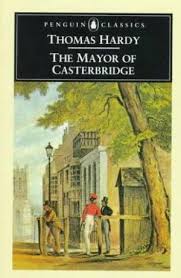
Book review, Mayor of Casterbridge, rural traditions, Thomas Hardy

The Mayor of Casterbridge, by Thomas Hardy, 1886

download (4)

Authors of classic works of literature tend to gain a reputation in popular culture – Lawrence is raunchy, Dickens is long-winded and a bit preposterous, Joyce impenetrable, Pinter full of pauses, and Shakespeare “difficult”. Sometimes these reputations are justified; more often they are cliches that are dispelled as soon as one reads the author concerned. But they are astonishingly pervasive, and sometimes damagingly so. Tell a student that Shakespeare is difficult often enough and sooner or later they will believe it. I am sometimes guilty in falling for these stereotypes and I did with Hardy. Based on the evidence of a reading of the undeniably bleak ‘Jude the Obscure‘ (which I can’t believe I reviewed six years ago!) I accepted the idea that Hardy is depressing, slow, and that his characters invariably come to an unfortunate end.

‘The Mayor of Casterbridge‘ confounded many of those expectations. It is fast paced and packed with incident. But literary clichés don’t come from nowhere and most have some truth in their origins. True to his instincts Hardy ensures that this novel’s protagonist and his family are never able to escape completely the consequences of the fatal decision taken in the opening chapter. That decision, as you may know, is made by the eponymous Thomas Henchard, then a lowly agricultural labourer. In a fit of drunken anger Henchard decides to sell his wife and child. Wife sales were by this time a well-established form of divorce, in particular in rural communities. It was widely believed that they legalised the process of separation. The ‘purchaser’ was usually the man that the wife had left her husband for. The sales were conducted publicly on market days. In other words they were akin to a piece of theatre, in which the old relationship was formally dissolved, and the new recognised and legitimised. The Wikipedia entry on wife sales is highly recommended by the way. All the textual indications are that the wife sale in ‘Casterbridge’ is not like this at all, but a spontaneous decision, done in a drunken fit of anger, regretted thereafter, and that the buyer is a stranger. In other words not an informal rural divorce at all, but a vicious form of spousal abuse in which the wife and child were treated as the husband’s property to be bought and sold.

Continue reading
Standard
1950's post war fiction, 20th century Literature, apocalypse, Book review, cosy catastrophe, John Wyndham, science fiction', The Day of the Triffids

Supplementary: The Day of the Triffids – a closer look at murder/suicide

Yesterday’s post on ‘The Day of the Triffids’ was getting overly long, and I wanted to spend some time looking more closely at the scene below from chapter 5, ‘A Light in the Night’. I think it demonstrates Wyndham’s “less is more” technique. it also provides a further perspective on the question of how to respond to overwhelming tragedy from which there appears no escape.

Bill and Joella have found a flat in which to hide overnight on the first night after the mass-blinding. They have chosen an opulent third floor flat to celebrate what they both think will be their last night of ‘civilised’ living. While Joella is out scavenging for clothes, Bill witnesses the following scene. I have included it in full because I think it merits it:

“As I stepped outside, another door farther down the passage opened. I stopped, and stood still where I was. A young man came out, leading a fair-haired girl by the hand. As she stepped over the threshold he released his grasp.  “Wait just a minute, darling” he said.

He took three or four steps on the silencing carpet. His out-stretched hands found the window which ended the passage. His fingers went straight to the catch and opened it. I had a glimpse of a fire-escape outside. “What are you doing Jimmy?” she asked. “Just making sure” he said, stepping quickly back to her and feeling for her hand again.

“Come along darling”. She hung back. “Jimmy I don’t like leaving here. At least we know where we are in our own flat. “How are we going to feed? How are we going to live? In the flat darling we shan’t feed at all, and therefore not live long. Come along sweetheart don’t be afraid”. “But I am Jimmy, I am”. She clung to him and he put one arm around her.

“We’ll be alright darling, come along”. “But Jimmy that’s the wrong way…” “You’ve got it twisted round dear. It’s the right way”.

“Jimmy, I’m so frightened. Let’s go back”. “It’s too late darling”. By the window he paused. With one hand he felt his position very carefully. Then he put both arms around her., holding her to him. “Too wonderful to last”, he said softly. “I love you my sweet, I love you so very, very much”. She turned her lips up to be kissed. As he lifted her he turned and stepped out of the window…

I found this is a chilling scene. It is mutely observed by the narrator. He makes no attempt to intervene, not a sound. He could have tried to help this loving young couple, but decides to do nothing. Passively he accepts the young man’s judgment that death is the preferable option for the blind. Note by the way that this is clearly a murder/suicide – the young girl is frightened and suspicious (perhaps they have already discussed their options previously).

Bill’s observation is detailed – he watches them carefully. He describes events more in the manner of an omniscient narrator than an observer, without judgment. He glimpses the fire escape outside, hears the fear in the girl’s voice, counts the man’s steps to the window, and notices that he finds the catch easily, rather than fumbling for it. He records their conversation word for word, even the telling repetition of ‘very’ in the final line. The fact that he records this scene in such detail, when he looks away from so many others that must be occurring all around him, suggests he feels it has a particular significance.

Bill has already seen a suicide by jumping earlier in the novel, by a doctor in the hospital; he also has met a man in a pub who goes to join his wife and children in death by gas after getting properly drunk:

“Wha’s good of living blind’s a bat?. . . Thash what my wife said. An’ she was right-only she’s more guts than I have. When she found as the kids was blind too, what did she do? Took ’em into our bed with her an turned on the gas”

Suicide is a rational, sensible, even brave, option in the new world, is the implication.

The scene ends with an ellipsis and a paragraph break. In the next scene no mention is made of what Masen has witnessed – he chooses not to tell the reader (nor Joella) what happens to the couple after this point. A more horrific description would have followed their fall, the screams, the crunch of mangled bodies on pavement, the blood slowly pooling. Wyndham gives us none of this, just those three little dots after the word “window”.

Is this an example of the author protecting the reader from the worst of the apocalypse, making it more cosy? It is interesting that it is Bill only who witnesses this scene – Joella is conveniently out ‘shopping’. Personally I found the scene powerful and effective, and a description of their fall and death would have added little. The reader is left to fill in the gaps with their imagination. But I accept that this narrative approach allows readers to also look away if they choose, to decide not to engage emotionally with the enormity of what is being shown, as Bill effectively does.

Standard
apocalypse, Book review, cosy catastrophe, John Wyndham, science fiction

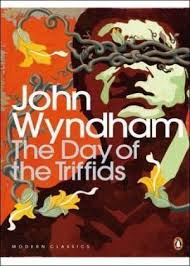
The Day of the Triffids, by John Wyndham, 1951

The term “cosy catastrophe” was coined by the author Brian Aldiss.

“The essence of cosy catastrophe is that the hero should have a pretty good time (a girl, free suites at the Savoy, automobiles for the taking) while everyone else is dying off.”triffids

Aldiss coined the term to critique John Wyndham’s classic ‘The Day of the Triffids’. I think he was quite wrong, and I am going to use this post to explain why. Continue reading

Standard
Book review

The Farther Adventures of Robinson Crusoe, by Daniel Defoe, 1719

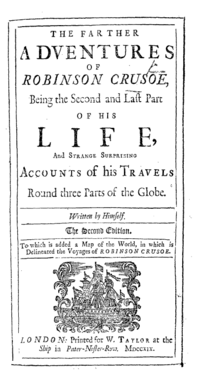
Or to give the novel its full title, because the full titles of early novels are always worth recording: “The Farther Adventures of Robinson Crusoe; Being the Second and Last Part of His Life, And of the Strange Surprising Accounts of his Travels Round three Parts of the Globe”. 200px-FartherAdventuresCrusoe

I enjoy literary curiosities and this novel definitely falls into that category. The original ‘Robinson Crusoe was hugely popular, and this little-read sequel could be seen as a cynical cashing in, a ‘straight to video’ Robinson Crusoe 2, published just five short months after RC1. There is also an RC3 –  ‘Serious Reflections During the Life and Surprising Adventures of Robinson Crusoe: With his Vision of the Angelick World‘ (1720) which for me is probably one Crusoe too many.

This novel opens with a quick summary of Crusoe’s life since his return from the island. He has bought a farm and had three children. But his wanderlust cannot be contained for long and he wants to return to his island. The death of his wife acts as a form of release and he sets off on another set of voyages, leaving his young family behind. Continue reading

Standard
Anthony Trollope, Barsetshire, Book review, Classics, The Warden

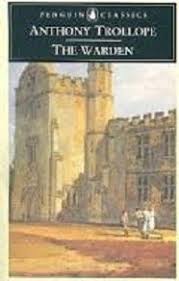
The Warden, by Anthony Trollope, 1855

‘The Warden’ tells the story of a chapter in the life of Mr Septimus Harding, warden of Hiram’s Hospital and precentor of Barchester cathedral. (Readers requiring an wardenexplanation of the term ‘precentor’ may already be getting the impression that they are not the target audience for this novel). An introduction of this kind would normally refer to the “adventures of Mr Septimus..” etc but readers of Trollope will expect no such thing. Adventure, indeed incident, is devoid from this novel. Trollope almost seems to disdain the need for such things. Portraits, conversations, lectures – these are the principal building blocks of ‘The Warden’. Continue reading
Standard
Book review, gothic fiction, Jane Austen, Northanger Abbey, satire

Northanger Abbey, by Jane Austen, 1818

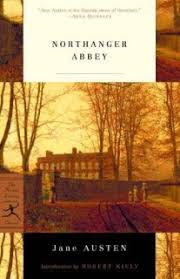
I think Jane Austen is one of our greatest authors. ‘Pride and Prejudice‘ is a masterpiece of controlled writing that has few if any equals, with ‘Emma‘ a close second on any list of classic novels. While ‘Northanger Abbey‘ may not be in the same league, a careful read can uncover many signs of the great author Austen was to become.

Northanger

The central weakness of the novel resides with our heroine, Catherine Morland.

Continue reading
Standard
Book review

The War in the Air, by H G Wells, 1907

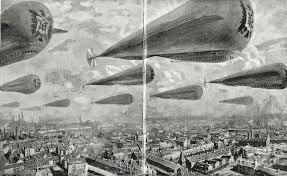
I was intending to take a break from Wells, but this novel jumped out at me from the shelves of a second hand bookshop, and as it wasn’t one I had heard of before, let alone read, I thought it worth the £1 investment!war

It is interesting how the reputations of writers and their works evolve over time. In the publisher’s introduction to this 1967 Penguin edition, written much nearer to the time of Well’s death than today – and even slightly nearer to the date the novel was first published than today – Wells’s “chief novels” are listed as “Ann Veronica, (109) Tono-Bungay, (141) The World of William Clissold (4), Brynhild, (3) Dolores (now published as Apropos of Dolores (3)), and The Holy Terror (2)”.

Now be honest, how many of these novels have you heard of, let alone read? This is a Penguin edition remember, not some obscure publisher wanting to promote Wells’ back catalogue. The numbers in brackets are the number of reviews each book has received on Goodreads – by comparison the results for three books not mentioned in this introduction are 8,473 – The Time Machine; 5,726 – War of the Worlds; 4,322 – ‘The Invisible Man’.

Why did Penguin focus on these now largely forgotten novels, and ignore his science fiction – in the introduction to one of his science fiction novels? It is not the case that the more popular novels I have mentioned have only recently become popular – they have been in print since first published, and formed the basis of many films, television programmes, sequels, and of course radio adaptations?  Usually I can offer some speculation on these questions, but this time I am completely stumped? Anyone?

‘The War in the Air’ (66), another invasion novel, is subtitled ‘And particularly how Mr Bert Smallways fared while it lasted’. The novel is Wells’s speculation on how human flight, just taking off (if you will excuse the pun) when written, will affect warfare. The novel is a strange mixture of fairly low comedy – much of it is written as the misadventures of Wells’s everyman character, as sort of English Good Soldier Schweik – and combat scenes. Wells’s predictions are partly wrong – aerial combat did not develop the way he thought it might, largely due to the practical limitations of airships – and partly completely right, in terms of the devastation of global war. The comedy doesn’t really work, and fits uncomfortably with the war scenes, which explains I think why this novel is largely forgotten while others such as ‘War of the Worlds’ continue to grip our collective imagination.

Steampunk aficionados have claimed this text as one of their own but even this community of readers will find it hard to enjoy much in this labouring and poorly constructed novel.

Standard
Book review, First World War, H H Munro, invasion literature, Saki, When William Came

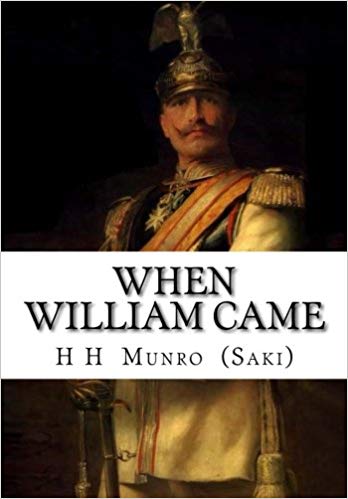
When William Came, by H H Munro (Saki) 1913

More invasion literature, this time a long short story or novella by a writer more traditionally associated with humour, albeit of the more biting kind. I originally read ‘When William Came‘ many years ago, and it is one of those stories that sticks in your head, particularly the final vivid image of resistance and rebellion. when william came

Let me explain. In the years running up to the First World War, there was a common understanding that a global conflict was coming. Initially this was a speculative idea – “what if there is a global war?” –  but after much repetition it become more a question of “When there is a global war…” This idea in other words became part of the political and cultural landscape, accepted as a truism. Novels were written about how the conflict might start and pan out, and a particular focus was on the UK’s lack of preparation. There was also a fashion for novels that saw the country quickly defeated by a technologically and militarily superior alien force (‘War of the Worlds’ for example) with the bulldog spirit emerging at the end to fight back. Other perspectives focussed on the precise nature of our enemies’ preparations – see ‘The Riddle of the Sands’ by Erskine Childers for example.

‘When William Came’ (William, in this context, being Kaiser Wilhelm) opens with the return to the UK of Murray Yeovil, a wandering aristocratic Englishman. He has been very unwell on his travels, and thus isolated from the catastrophic news from home. This provides an opening for a recount of the story of the UK’s recent conquest. A swift and decisive land invasion and an equally destructive naval battle, in which the dispersed British fleet was destroyed by superior German technology, followed by the flight of the royal family and much of the upper classes to imperial India, left the UK defeated and conquered. A few months has passed, and London is slowly accommodating the German victors. Society is divided between those prepared to put up with the demands made by the Germans – new street signs, higher taxes, new currency, German culture, etc – and those who either retreat to the country or emigrate.

Resistance has not entirely faded from the conquered British spirit, and there are several discussions about how the UK could throw off the German oppressor, possibly using the forces of the Empire. These are given short shrift – the German stranglehold on the UK is overwhelming and any resistance by Australia or Canada for example would see their swift defeat in turn. Munro is arguing that there will be no second chances – defeat is the end of the Empire. Yeovil despairs at the decadence of British society that has led to this situation – the novel is a thinly disguised plea for rearmament and the introduction of national service.

Anti-semitism is a feature of far too many novels of this period, and Saki’s portrait of Jewish characters and society in this novel is hard to stomach at times. He goes far beyond the casual anti-semitism of everyday Edwardian language and perpetuates many of the classic anti-semitic tropes that were widely accepted at the time but no less distressing and damaging for all that. I still haven’t worked out whether this damages the novel overall for me sufficiently to detract from the value of Munro’s writing – it is not an integral part of the novel, but it is sufficiently pervasive to be pretty damaging, not something that can be skipped over as ‘just the way people spoke back then’. This is also not a question of Munro giving anti-semitic ideas to a character as part of their portrayal – this is a much more didactic novel than that. I am not a proponent of censorship of novels featuring language or ideas we no longer find acceptable, but there are some novels that should be left to gather dust.

Which is a pity, because ‘When William Came’ is otherwise a powerful portrait of a conquered and cowed Britain, emasculated by defeat. (Yeovil’s wife openly flirts with other men in front of her husband, who seems untroubled by her disloyalty.) The closing scene in which the youth of the country defy the invaders has been criticised (on Goodreads) as being ridiculous or anti-climatic, but I found it powerful and vivid. The fact that Munro went on to die in the imminent Great War gives the novel a greater poignancy.

This is undoubtedly a literary curiosity, and unrepresentative of Saki’s oeuvre, his waspish short stories. It is I think an important representative of the invasion literature genre – one that accepts war as inevitable, and expresses fear for Britain’s preparedness. It is however unlike many other examples in that the war is not described, and avoids any reference to the physical destruction many other novels anticipate (London seems barely touched). I can’t honestly recommend it unless you have a particular interest in these topics and a strong stomach for anti-Semitism.

Standard
Book review, Crime, gothic fiction, Laura Purcell, The Silent Companions

The Silent Companions, by Laura Purcell, 2017

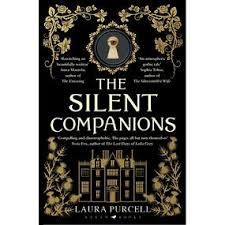
This was a holiday, ‘I need something to read that isn’t too serious’ read, but to be honest it is not the kind of novel I would usually bother with, even notwithstanding the endorsement of the Zoe Ball Book Club. This is one of those novels where the book cover and blurb tell you almost everything you need to know:

purcell
“When newly widowed Elsie is sent to see out her pregnancy at her late husband’s crumbling country estate, The Bridge, what greets her is far from the life of wealth and privilege she was expecting . . .”
I appreciate that sometimes dramatic clichés are hard to avoid. But this novel embraces them with ardour.
In Jane Austen’s satire on this genre, ‘Northanger Abbey’, the heroine Catherine Morland describes why she is not frightened to be visiting the Abbey, despite her romantic fancies:
“Besides, it has never been uninhabited and left deserted for years, and then the family come back to it unawares without giving any notice, as generally happens“.
You have guessed it, this is precisely what happens at the opening of ‘The Silent Companions’, when with her husband dead just weeks after their marriage, Elsie returns to the spooky ancestral home with only her husband’s cousin for company. Or so she thinks. The husband’s cousin has been dispossessed by the marriage and siring of an heir, so one would expect her to be a figure of suspicion when the inevitable mysterious and eerie events start to occur. But of course that never happens.

You have to wonder whether Austen would have thought her satirical observations on the gothic novel would remain relevant 200 years on?
Locked doors, painted wooden figures that bear a striking resemblance to other characters and whose eyes follow you around the room, a moody housekeeper, sullen villagers, mental asylum patients struck dumb with fear, things that almost literally go bump in the night – there really isn’t a cliché left unmined in this gothic horror story. Oh, not forgetting the shop that mysteriously appears and then can’t be found the next day – isn’t that borrowed from ‘Gremlins’?

The author never quite decides if she is writing a crime novel or a supernatural thriller. There is an entirely predictable, common-sense whodunit ending in which we are led to believe that the novel’s events are all wrapped up, but a moment’s consideration reminds the reader that many of those events have in fact not been explained, and could only have had a supernatural explanation, making the attempt to provide a realistic explanation redundant.

It will be clear by now this is not a recommended read. It is lazy generic fiction and a waste of the reader’s time.

Standard