Book review

Citizen Clem – John Bew

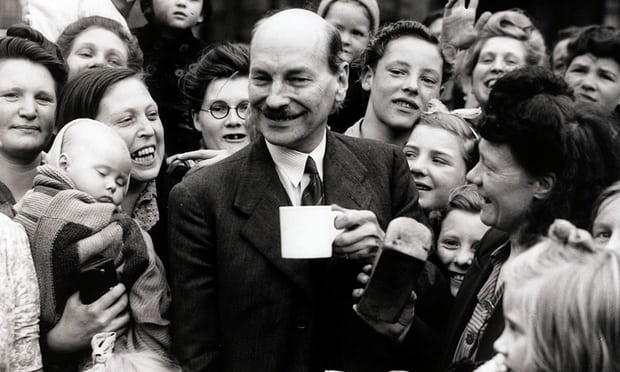
This is a good time to return to the extraordinary story of Clement Attlee’s rise to the leadership of the Labour Party, his twenty-year long period as leader (1935-1955), Deputy Prime Minister (1940-1945) and Prime Minister (1945-1951).  Attlee won two General Elections, saved the Party from the electoral wipe-out of 1931, and governed during Labour’s almost mythical post-war period in office when the Welfare State was brought to fruition.

Attlee

It is timely because the legacy and spirit of the Labour Party is once again the focus for political debate in the UK. It is possible that the party’s much better than expected performance at the 2017 General Election will have quietened that debate for the time being, but few imagine that this will not break out time and again while Jeremy Corbyn remains leader.

Rigidly chronological in structure, this biography charts Attlee’s rise to senior positions within the Labour Party, without his ever really expressing much interest in doing so – he seems to have had an amazing knack of being in the right place at the right time, never more so when he became Deputy Leader after the whitewash of 1931, when the party was reduced to fewer than 50 MPs. After a careful narrative charting Attlee’s childhood, early military career, and his discovery of his social conscience, Bew focuses on the post-war Government which delivered such an amazing legacy of legislation and reform. while at the same time falling short of many of the aspirations generated by such a resounding win.

Despite having made my way through over 500 pages of this biography, Attlee remains something of any enigma. I can’t honestly say I know the man.  You could fill a short book alone with the collected insults offered to him. Nye Bevan is said to have called him ‘a desiccated calculating machine.’ Others compared him to ‘a little mouse’, ‘a poor little rabbit’, or as George Orwell put it, “a recently dead fish, before it has had time to stiffen’. American press said he was `the dullest man in English politics’. Churchill famously said that Attlee was not only a modest man with plenty to be modest about, but ‘a sheep in sheep’s clothing’. Even when people tried to say something supportive or positive about him, they almost always prefaced their comments with another veiled insult about his reserved nature, his modest talents, his poor grasp of economics, and so on.

Bew gives us little of Attlee’s personal life, leaving the reader to conclude that it was as dull as outer appearances suggest. He draws heavily on Attlee’s letters to his brother Tom which are referenced every few pages – as if they provide some unique and previously unknown insights into Attlee’s inner thoughts, when almost always they tell us what we already know and indeed have already been told.

This book won the Orwell Prize for political writing in 2017. I have a sneaking suspicion that the author had half an eye on the prize when writing – the number of shoe-horned in references to Orwell’s work pile up, for example when comparing Attlee to Boxer, the shire horse eventually sent to the knackers’ yard. Boxer represents the ordinary Russian worker who continues to recite party slogans long after they lose all meaning, his faith in the Party unaffected by reality – in other words not at all like Attlee, who was a party faithful all his life but can hardly be described as a mindless functionary. The comparison just doesn’t work, and should have been cut – but the author obviously needed to keep every possible Orwell name-check to keep the book in the prize judges’ eyeline.

I can’t comment on whether this is the definitive Attlee biography, but I am glad I read it – I knew shockingly little about his background as a Major at Gallipoli and in France in World War one, for example, or the collapse of the second Labour Government 1929-1931, although his role in the second World War and the post war Government were naturally more familiar. I did have a couple of quibbles with the book that I can’t let slide.

First, it could have done with a closer edit. Over 500 pages there are always going to be mistakes, but this is not the first edition, and allowing sentences such as (page 144)

“For the moment, he shared the view that the obstacles to self government in India were, for the moment, insurmountable”

is unforgivable. Second, there are some moment of lazy writing. Can you spot what’s wrong with the following paragraph, for example?

(page 147) “The biggest challenge facing the second Labour Government was unemployment. Their task became extremely difficult because of events outside its control. In the last week of October (1929) the bottom fell out of the international economy, beginning with a monumental panic on the New York Stock Exchange that saw traders leap from windows in despair.

Yes, it’s the cliched way of describing the Wall Street crash featuring those leaping traders. Five minutes on Google will tell you that it didn’t happen – suicides rates actually went down during the period of the crash. But even if they didn’t, and they did, why describe the crash in this way? Is the reader supposed to think “Oh that Wall Street crash in October 1929, the one which led directly to the rise of fascism and the resurgence of the National Socialist Party in Germany , I wasn’t sure which one you meant”. If the author can’t be relied on to get simple facts like this right, how reliable is the rest of his narrative?

Standard
Book review, John Green, Turtles all the way down, Young adult

Turtles All the Way Down – John Green, 2017

Should one use the same criteria when judging young adult novels as one does when assessing full-grown adult fiction? I ask because if one were to do so, ‘Turtles’ would probably suffer by comparison, when judged on its own merits as a thoughtful novel for young adults, it is a success.

Turtles

The central character of John Green’s ‘Turtles All The Way Down’ (loving that title), Aza Holmes (‘Holmesy’) suffers from Obsessive Compulsive Disorder (OCD). This makes her extremely anxious, and she self harms as part of her control rituals, opening a wound on her hand, then being terrified it will become infected. As her condition deteriorates she takes to drinking hand sanitizer, in a deluded attempt to purge her body of infection. (NB Do not do this!). She is also haunted by thoughts that she is a fictional creation (which of course she is, although Green does nothing with this paradox). Most of the time she remains in control of her obsessive behaviour, although her internal monologue tells us that she is tortured by harmful thoughts. Despite her condition Aza is in many ways a typical, relatable American teenager – she drives to school in her beloved truck Harold, eats pizza with friends, and watches television with her mum. Green doesn’t spell it out in so many words, but we are invited to conclude that Aza’s OCD was triggered following the sudden death of her father from a heart attack when she was seven.

A fledgling romance with a neighbour whose incredibly rich father has gone missing triggers a more serious episode, and she is eventually hospitalised. The parallels with the loss of her own father are quietly underlined, and form the basis of her relapse. She eventually recovers sufficiently to overcome her anxiety and in a strange conclusion to the novel attends an art exhibition in a sewer, where she comes close to solving the mystery of the missing billionaire. I probably shouldn’t focus on this detail, but I doubt whether many OCD suffers would be prepared to go into a sewer for any price, let alone wander around in the dark in one. This ending to the novel was for me its weakest part, and fails on any level, providing an unsatisfactory ending to the ‘mystery’ element of the novel, which had a lot of potential but which Green seemed to lose interest in.

What elements do you look for in an adult novel that we can forgive being missing from a YA novel? Characterisation? Obviously not, we need the characters to be fully fledged and believable. Green does reasonably well here – some of his characters are generic, off-the shelf quirky teenagers distinguishing themselves from one another by their choice of hair style or interest in music. I quite liked Daisy, the inevitable reliable best friend, but Davis, the missing billionaire’s son, who provides the only significant romantic interest in the novel, isn’t well developed – in fact his brother Noah, who is mourning the loss of his father, but hides his grief and distress in video games, was more believable. There’s a whole missing novel there in fact – the two brothers waiting for their father to return, unable to draw any solace from their preposterous riches.

Plot? The story line in ‘Turtles’ goes missing quite early on, and never resurfaces until the hurried and unconvincing conclusion. Green starts out writing a conventional if slightly Scooby Dooish mystery, but this element fizzles out early on, and the focus shifts instead to Aza’s illness and its impact on her life.

Quality of writing. Green does a good job, so far as I can tell, in representing the voice and thoughts of a teenage OCD sufferer. His writing is straightforward and extremely easy to read – this is the kind of novel that you can polish off in a few hours easily. There are no rhetorical flourishes or difficult passages.

Originality. It would be being harsh to say Green was on auto-pilot here, but there is a very familiar clichéd feel to this novel. Angsty teenagers have mild romantic entanglements to the backdrop of a high-school experience, something easy for US teenagers to identify with from real-life, (and other readers from anyone who has watched US television) the kind of high school where you pull up in front of the school and there is always a parking space waiting; where lessons take a few minutes and time is mainly spent being cool in the cafeteria, and pupils quote Shakespeare to one another in their texts. It was as believable as Buffy the Vampire Slayer, but a bit less glamorous.

Ultimately, the answer to my opening question is a clear no. This isn’t a book that adults will be able to take much from, but younger readers (I really wouldn’t get hung up on the YA label; I would have thought pre-teens could enjoy this as well. There are some adult themes such as references to dick pics, but that is about as strong as it gets) will find it an interesting and comforting read – or in the words of the Guardian’s reviewer “It will resonate with, and comfort, anxious young minds everywhere” , which I think is spot on.

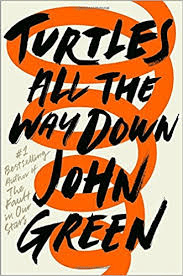
P.S. What a disappointing book cover by the way – we get it that depression is like a spiral (not that that image is in any way helpful or clear) but the missed opportunity for pictures of some turtles will hopefully be rectified in the paperback!!

Standard
Book review

Mistakes Were Made (but Not by Me): Why We Justify Foolish Beliefs, Bad Decisions and Hurtful Acts by Carol Tavris and Elliot Aronson

When I use the term “challenging” to describe a book, this is usually a euphemism for “hard to read” – either because it is badly written, or just long-winded. ‘Moby Dick’ is a challenging novel, for example. So are ‘Ulysses’ and ‘Middlemarch’, and any other number of Victorian blockbusters (I know Ulysses isn’t Victorian!)  But I found ‘Mistakes Were Made’ challenging in a very different way – it challenged some of my deeply held beliefs. Which was unusual and very refreshing. I didn’t agree with everything the authors wrote or argued, but being shown a different perspective has to be a good thing.

‘Mistakes were made, but not by me’ is a book of popular (i.e accessible, rather than academic or textbook) psychology, exploring the concept of cognitive dissonance, the mental discomfort (psychological stress) experienced by us all when we simultaneously hold contradictory beliefs, ideas, or values. Cognitive dissonance is a consequence of a person performing an action that contradicts personal beliefs, ideals, and values; and also occurs when confronted with new information that contradicts said beliefs, ideals, and values. So for example you believe the NHS I being under-funded, but when you look the statistics up you find that investment is going up above the rate of inflation. Instead of saying, how interesting, you tart to look for other statistics that will undermine this, and tell you what you really want to hear – that relative to other countries funding is down for example. This is an entirely natural response. When we experience CD we all have the impulse to minimise the uncomfortable feeling by refusing to accept the new information (“fake news”). On social media we are much more likely to be believe (and retweet or share) a post that endorses our ideas than one that challenges them. This is the reason for the so-called echo chamber phenomenon.

The authors go on to examine how cognitive dissonance causes mistakes to be made – we find it hard to accept our initial thoughts or conclusions are wrong, and seek out any number of ways to defend ourselves against the discomfort this causes, to the extent of denying or ignoring hard facts against us.

While this is a very accessible, readable account, the 40 pages of footnotes are clear evidence that this is also well-researched. Most of the examples are drawn from the United States, but that’s fine – the authors are American and write about the area they know best.

So why did I find it challenging? At the heart of the issue is the compelling section of the book about repressed memory. This really got me thinking, and reading other sources. I had accepted for a long time, without really thinking about it very much, that the repressed memory was a real thing. It’s a Freudian concept, and there is evidence (not discussed here) that the idea was not previously thought of before Freud. The authors make the familiar point that for most trauma, the challenge is forgetting the pain and distress, rather than remembering it. They also highlight research that shows how easy it is to implant false memories of childhood trauma – the so-called ‘Lost in the Mall’ experiment, where adults were easily persuaded that they had a childhood experience if being lost in a shopping centre, when they hadn’t.

So why am I still resisting the idea that repressed memory doesn’t exist? I think there are three main reasons: first, it sounds plausible. That’s obviously a cognitive dissonance coping strategy – ignore the evidence, and rather than presenting counter evidence just say that your original ideas are valid because they just are. Second, I think I have read about examples of repressed memory – but have I? Or were these fictional representations, in films or books? I have a sneaking suspicion they might have been. Lastly, while the concept of repressed memory is less widely supported than twenty years ago or so, the fact remains that large numbers of psychiatrists and psychologists still accept the concept. So I think the jury is still out, but the authors don’t have any doubts. They don’t hedge their position by referring to the evidence that suppressed memories exist – they would argue there is none. There’s obviously a baby/bathwater risk here – if all recovered repressed memories of childhood trauma or abuse are implanted or otherwise false, there is a risk that people take the wrong next step of concluding that all memories of such abuse are equally open to question or challenge? These are deep waters, and I still don’t know what I think about them – I certainly haven’t accepted the authors’ position unsceptically – but I am sure you can see why I found the book so thought-provoking.

If you are interested in how memory works, enjoy having your preconceptions challenged, and don’t mind revisiting some familiar psychological experiments, then ‘Mistakes Were Made (but not by me)’ is recommended. We can all benefit from acknowledging that we are as vulnerable to mis-remembering or making mistakes – we alone are unlikely to be infallible, while all around are prone to error – and that challenging our preconceptions (“I think I can remember that, but I might be wrong”) is a healthy reflex.

Standard
Book review

The Candidate – Jeremy Corbyn’s Improbable Path to Power by Alex Nunns

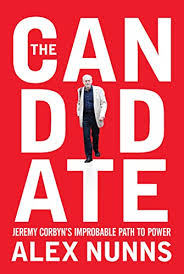
CandidateFirst, I need to declare an interest – I know and have a huge amount of respect for the author, as well as a long term interest in the subject matter. I’d like to think this hasn’t affected my review, but that’s hard for me to judge.
’The Candidate’ is, as the subtitle explains, the story of Corbyn’s improbable, almost unbelievable, ascent to the top of the Labour Party. Or as John McDonnell, Shadow Chancellor of the Exchequer, put it in endorsing the book “”This is a fascinating account of why—as well as how—Jeremy became leader of the Labour Party and transformed our politics. For anyone engaged in this movement, understanding precisely how we came to be where we are can only make us more effective as we go forward. That’s why Alex Nunns’ book is so important.”

Some events (political and otherwise) are so unlikely that no-one sees them coming, not even those closely involved. Few if any in the small group of MPs that constituted what remained of the Bennite Left in the Labour Party thought Jeremy Corbyn would be on the leadership ballot in 2015 following Ed Miliband’s resignation, let alone that he would win. His selection as a candidate was almost an afterthought, when several other potential (and with hindsight, far less suitable) candidates had been ruled out. Looking back at the events of the campaign it is easy to see Corbyn’s subsequent and almost effortless rise to power as inevitable, but Nunns’ forensic day by day, sometimes minute by minute, account, often using the present tense, makes it clear that the outcome was anything but a done deal. This is a definitive version of the extraordinary events of summer 2015, and the revolution that shook the Labour Party.

Nunns’ greatest strength is what I would characterise as myth-busting. Calmly he presents clear thoroughly researched evidence to destroy the various claims and distortions that surrounded Corbyn and his campaign, lies which continue to be recycled to this day. This is reflected in the author’s meticulous approach to research – how many other political narratives have 40 pages of footnotes?

This is not the book for you if you want to learn more about Corbyn’s Wiltshire childhood or his years on the back benches – Wikipedia covers this off pretty comprehensively. Some of the controversies that have been manufactured by his opponents – his close ‘association’ with Sinn Fein for example – are mentioned but do not form the focus of this book. Equally this is probably not the book for you if you are hostile to Corbyn, unless you are exceptionally open-minded – while Nunns is not unaware of Corbyn’s faults, or those of his campaign (for example, the initial failure to appoint any women to senior positions in the Shadow Cabinet is criticised), he doesn’t hesitate to make his allegiances clear. Nunns is particularly sharp in lancing the pomposity of the commentators, pundits and politicians who claimed Corbyn was a joke candidate who could never win, whilst simultaneously saying his victory would be a disaster for the party and the country.

I suspect that when the history of this period of the Labour Party comes to be written, ‘The Candidate’ will be considered an important reference work. Which makes the absence of an index more surprising (although I understand this was not the author’s choice). Similarly the blurb on the paperback edition, again nothing to do with the author, reads like a clumsy attempt to portray the book as a political thriller rather than a serious analysis. Minor quibbles aside, my only argument of any substance with the author would be in his treatment of the Parliamentary Labour Party. In this narrative, the PLP is characterised as monolithic and overwhelmingly Blairite, a product of an iron grip on selection in the Blair/Brown years. This overlooks the fact that Liz Kendall, the Blairite candidate – Kendall rejected this label, but given her endorsements it’s unavoidable – received just 41 MP’s nominations for the leadership, only five more than Corbyn. This perspective distorts the treatment of the 2016 ‘coup’, where the co-ordinated mass resignations from the Shadow Cabinet are characterised simply as ‘the revenge of the Blairites’ (my term). My guess is that MP’s dissatisfaction with Corbyn’s leadership and their reasons for resigning were more complex than simply an attempt to reinstate the status quo. There was widespread dismay at the outcome of the 2016 Brexit referendum, and inevitably Corbyn was the focus of some of that anger. It was not just the PLP who had their doubts, particularly as Labour’s position in the polls deteriorated – even the Guardian’s Owen Jones wrote more than once questioning the wisdom of Corbyn’s retaining the leadership, (“not good enough – his (Corbyn’s) policies are right but his leadership is clearly failing”)

It turns out of course that just about everyone called this wrong, and Labour came agonisingly close to securing victory in the 2017 general election. That campaign, and its aftermath, are the subject of a revised edition of ‘The Candidate’ which is due out early next year. I can’t wait.


Standard
Book review

Nutshell, by Ian McEwan

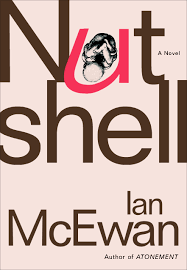
I am not going to review this novel. If you want to read an intelligent, thoughtful if slightly showy-offy review, try this or this even more florid review by Adam Mars Jones. This blog is a reading diary (hence the recent absence of content) where I record my impressions of the books I read. Usually these look at first glance quite similar to reviews, without the clarity of expression or depth of analysis you might otherwise expect.Nutshell

Nutshell’ is a curious, whimsical novel. In the last few years the Hogarth Press has been commissioning authors to write a series of novels re-imaging Shakespeare’s plays, and I thought at first that ‘Nutshell’ was a part of or inspired by this series. It appears not, it is a solo, voluntary effort.

In a nutshell, in ‘Nutshell’ McEwan takes the themes and ideas of Hamlet, and updates them to the present day. Hamlet is played by not a moody young prince, but an about to be born foetus. His mother and her brother in law lover are planning to murder his father. The unnamed and apparently unwanted baby is a passive observer of events, with much energy expended on maintaining the conceit that he can detect what is going on in the outside world through hearing, taste, and a fair amount of guesswork.

McEwan’s fierce dazzling intelligence shines through this short novel. It has an extraordinary breadth, ranging through many different genres, least successfully crime (the resolution whereby the lovers are caught by the dogged but uninspired police is appallingly clumsy). Contemporary politics, the Royal family, Brexit, Trump, are all referenced and swiftly disposed of for the more substantial feasts of philosophy, literary criticism, and absurd levels of sophistication in wine-appreciation (“No one seems to want to read aloud the label so I’m forced to make a guess, and hazard an Echézeaux Grand Cru. Put … a gun to my head to name the domaine, I would blurt out la Romanée-Conti, for the spicy cassis and black cherry alone. The hint of violets and fine tannins suggest that lazy, clement summer of 2005, untainted by heatwaves, though a teasing, next-room aroma of mocha, as well as more proximal black-skinned banana, summon Jean Grivot’s domaine in 2009”)

There is, inevitably, a ‘but’ coming. More precisely two. The first is something that seems to have only been an issue for me, and that is that the narrator character, an extraordinarily erudite and cultured baby, reminded me unavoidably of Stewie from ‘Family Guy’. Once that narrative voice got in my head that was it. Stewie, as I shall now call him, channels Jacob Rees Mogg in his social conservatism, (or is this McEwan letting loose his inner fogey?):

A strange mood has seized the almost-educated young. …A social-media site famously proposes seventy-one gender options – neutrois, two spirit, bigender…any colour you like, Mr Ford. …I declare my undeniable feeling for who I am. If I turn out to be white, I may identify as black. And vice versa. I may announce myself as disabled, or disabled in context. If my identity is that of a believer, I’m easily wounded, my flesh torn to bleeding by any questioning of my faith. Offended, I enter a state of grace. Should inconvenient opinions hover near me like fallen angels or evil djinn (a mile being too near), I’ll be in need of the special campus safe room equipped with Play-Doh and looped footage of gambolling puppies. Ah, the intellectual life! I may need advance warning if upsetting books or ideas threaten my very being by coming too close, breathing on my face, my brain, like unwholesome drugs.

The more serious issue is that McEwan is demonstrably better than this. For him to be writing a comedic novel about a ham(let)-fisted murder with a sub-Colombo style solution, constructed however cleverly around the scaffolding of the plot of Hamlet, seems such a waste of his energies and talents, almost like an academic exercise (“Rewrite Hamlet as a comic novel from the perspective of Hamlet as a foetus. No more than 200 pages, by Friday”). The jokes about the discomfort of a foetus being a few inches away from his uncle’s penis, for example, were obvious and clumsy. The novel’s anachronistic tone troubled reviewers (see for example the LRB review referenced earlier) but I think McEwan just about gets away with it, probably because the majority of his readers will share a generation with him, if not a world view.

At a shade under 200 pages, ‘Nutshell’ is an easy read with some jokes that make you chuckle, and some stunningly impressive prose. But it is not McEwan at his best, not by a long distance.

Standard
Book review

Yellow Dog, by Martin Amis, 2003

There is an undeniable trajectory to Martin Amis’s novels – downward. Not just in quality but in coherence, tone and taste. He peopled his 2003 effort ‘Yellow Dog’ with disgusting grotesques and events that made it hard to stomach. The best I can say about this novel is that it is not as bad as ‘Lionel Asbo’, but from the author of ‘Money’ this is such a fall.amis yellow dog

‘Yellow Dog’ was one of those novels that bitterly divided reviewers when it was first published. If you enjoy critical reviews, you will probably appreciate these more than the novel itself. In an industry where most reviews are by default favourable, this in itself was extraordinary. The Independent gave it both barrels:

Yellow Dog is a strange, sad stew of a novel, so aggressively unpleasant that it would perhaps be best accompanied by an author photograph of Amis flicking Vs at the reader….The fact that Yellow Dog is so bad is not a cause for celebration. Anyone interested in English fiction will be deeply saddened to see one of our country’s greatest talents produce such a purposeless novel

The Times Literary Supplement was more surgical, describing the novel as “not absolutely terrible”.

Tibor Fischer, one of Amis’s contemporaries went even further with this celebrated denunciation:

“It’s like your favourite uncle being caught in a school playground, masturbating”

If you have time you can also read numerous monsterings of the novel on Goodreads, which gives ‘Yellow Dog’ one of the lowest average scores I can remember seeing.

Plotwise the novel is a complete mess. Amis runs several storylines in parallel, tying them together at the end of the novel with a summary neatness that seems insulting, as if he just lost interest and stopped writing. We have an author assaulted in a pub, and acquiring a sexual interest in his daughter as a result; a plane slowly approaching a crash landing; a comet passing near to the earth, and a blackmail plot involving a sex tape and a princess. A tabloid journalist for the Morning Lark buzzes around doing what journalists in comic novels do, making up headlines and being offensive. None of this has any point or purpose. A visit to America to visit a porn studio is a clumsily inserted (forgive the pun) piece of repurposed journalism.

None of these plotlines are particularly interesting, devoid as they are of real characters. In fact, the image that came to mind when reading yet another set piece of absurdity was the adult comic, Viz. Joseph Andrews, the psychotically violent gangster, is surely a thinly disguised Big Vern, Henry 9th, King of England in this parallel universe, is any one of the comic’s thick but dim upper class characters; Clint Smoker is a tabloid journalist with a micro-penis. Like Viz but without the humour, Amis sets out to offend with these caricatures, the sexual violent, incestuous paedophiles that people the pages of ‘Yellow Dog’. The class hatred that seeped from the pages of ‘Lionel Asbo’ is equally obvious here. The working class are amoral, ultra-violent criminals, although in the interests of balance the upper classes don’t come off much better.

What redeemed ‘Money’ from these obvious criticisms was Amis’s ability to craft an elegant metaphor, a skill that seems to have abandoned him here. Here’s an example of a paragraph which is Money would have fizzed with vividness:

The bright sky was torn by contrails in various stages of dissolution, some, way up, as solid-looking as pipecleaners, others like white stockings, discarded, flung in the air, or light bedding after beauty sleep, others like breakers on an inconceivably distant shore.” (page 289)

Do these images work for you? Do they conjure up thoughts of a bright sky crossed by aircraft trails? I wonder how many readers will still know what a pipecleaner looks like? The ‘light bedding after beauty sleep’ simile works after a fashion, although the beauty sleep addition is pretentious. He’s working hard, and it is not bad writing, it just doesn’t impress in the way ‘Money’ did, and to redeem the other features of the novel it really needed to be magnificent. I’ve chosen one of the more innocuous passages from the novel – dip into any page and there is gratuitous often sexual violence and pretentious philosophising.

This was a 50p charity shop find – I am glad I didn’t pay more.


Standard
Book review

Pride and Prejudice in ten key paragraphs (Part 2)

austen 2Chapter 43 This chapter opens with the fateful visit to Pemberley, where Elizabeth is so anxious to avoid accidentally bumping into Darcy that she travels halfway across the country to visit his family home.

Elizabeth, as they drove along, watched for the first appearance of Pemberley Woods with some perturbation; and when at length they turned in at the lodge, her spirits were in a high flutter.

The park was very large, and contained great variety of ground. They entered it in one of its lowest points, and drove for some time through a beautiful wood stretching over a wide extent.

Elizabeth’s mind was too full for conversation, but she saw and admired every remarkable spot and point of view. They gradually ascended for half-a-mile, and then found themselves at the top of a considerable eminence, where the wood ceased, and the eye was instantly caught by Pemberley House, situated on the opposite side of a valley, into which the road with some abruptness wound. It was a large, handsome stone building, standing well on rising ground, and backed by a ridge of high woody hills; and in front, a stream of some natural importance was swelled into greater, but without any artificial appearance. Its banks were neither formal nor falsely adorned. Elizabeth was delighted. She had never seen a place for which nature had done more, or where natural beauty had been so little counteracted by an awkward taste. They were all of them warm in their admiration; and at that moment she felt that to be mistress of Pemberley might be something!

Indeed, later (ch. 59) Elizabeth tells Jane, only half joking, and in an attempt to persuade Jane that her acceptance of Darcy is sincere, that it was not until she saw Pemberley that she loved him:

“My dearest sister, now be serious. I want to talk very seriously. Let me know every thing that I am to know, without delay. Will you tell me how long you have loved him?”

“It has been coming on so gradually, that I hardly know when it began. But I believe I must date it from my first seeing his beautiful grounds at Pemberley.”

We are of course seeing Pemberley through Elizabeth’s admiring eyes. Her language predominantly uses adjectives relating to size and scale:

“very large, great variety, for some time, stretching over a wide extent, a considerable eminence, a large, handsome stone building, standing well on rising ground, swelled into greater”

No wonder that this demonstration of Darcy’s wealth and power has such a profound impact on her feelings, even if only to persuade her to accept what she has thus far been denying.

Chapter 56 – Lady Catherine comes to confront Elizabeth with the rumours of Darcy’s intentions towards her. Rudely she arrives unannounced, and ignores the rest of the family, instead asking her for a private conversation outside.

Miss Bennet, there seemed to be a prettyish kind of little wilderness on one side of your lawn. I should be glad to take a turn in it, if you will favour me with your company”.

Preserving a corner of one’s grounds for a kind of little wilderness was a Regency fashion, one which wildlife enthusiasts of today would approve. But what is interesting is Lady Catherine’s decision to stage her confrontation in this particular part of the garden, diametrically opposite the more formal manicured lawns of Longbourn. This is a gloves-off challenge, a jungle arena where the usual conventions of language and class are deliberately albeit temporarily set aside. This allows Elizabeth to tap into her inner goddess, and give Lady Catherine a furious response when she attempts to bully her into promising to reject any proposal from Darcy.

Chapter 58 The climatic renewal of Mr Darcy’s proposal:

“You are too generous to trifle with me. If your feelings are still what they were last April, tell me so at once. My affections and wishes are unchanged; but one word from you will silence me on this subject for ever.”

Darcy does not directly profess his love, and the narrator does not tell us Elizabeth’s direct response, only that she

“feeling all the more than common awkwardness and anxiety of his situation, now forced herself to speak; and immediately, though not very fluently, gave him to understand, that her sentiments had undergone so material a change, since the period to which he alluded, as to make her receive with gratitude and pleasure, his present assurances.”

The formality and clumsiness of the narrators presentation of the scene is a brilliant touch – it begins the process of pulling away from the couple and respecting their privacy, and recognises that Elizabeth is not at her most articulate at this point, choked up with emotion rather than formality. It is a wonderful end to the story arc, and shows yet again Austen’s genius in presenting this most compelling of romances.


Standard
Book review

Pride and Prejudice in ten key paragraphs (part one)

I thought I would take a different approach to writing about this classic to end all classics, by picking out ten key paragraphs from the novel and paying them some careful attention. This analysis assumes a familiarity with the key events and characters of the novel. Incidentally, despite the misleading headline description of this post, I am not suggesting that these are the only ten paragraphs that you need to read to understand P&P – that would be ridiculous. The novel is so rich and rewardingly complex that almost any ten paragraphs plucked at random would be worth studying. But these are ten that jumped out at me on a recent rereading.austen

Chapter 10 – Jane, the eldest of the five Bennet sisters, has paid a visit to nearby Netherfield, in the course of which she has been caught in a rain shower. Walking instead of going in a coach is in itself significant – the Bennet’s have a coach, but it is not available. This helps precisely locate their social status – a one-coach family. Jane inevitably catches a cold, and second daughter Elizabeth has to go to Netherfield to care for her (this time the coach is available). This is just the first of several occasions when fate conspires to bring Elizabeth and Darcy together. Elizabeth is a family guest, but one with a special status, invited to care for her sister but not otherwise part of the party. This makes her a little detached from the others. It is unusual for someone to be a house-guest (i.e. staying overnight) on such a brief acquaintance.

In the evening the company gathers for dinner, followed by witty conversation and music. Elizabeth and Darcy spar; she is aware of his reputation as a gruff, unfriendly character, which was confirmed by his rudeness about her at the recent ball. But her attitudes begin to soften during the course of their conversation:

“Elizabeth, having rather expected to affront him, was amazed at his gallantry; but there was a mixture of sweetness and archness in her manner which made it difficult for her to affront anybody; and Darcy had never been so bewitched by a woman as he was by her. He really believed that were it not for the inferiority of her connections he should be in some danger.”

It is interesting to follow Austen’s masterful use of the narrative point of view here. In the first phrase the narrator gives us Elizabeth’s perspective – she is amazed by Darcy’s gallantry, confounding her earlier perception of him as someone gruff and rude. The next phrase is a more general observation about how Elizabeth is usually perceived – as both sweet and arch. We then are given Darcy’s confession – he is bewitched by her. Although we traditionally think of this romance as one in which the characters gradually fall in love, and struggle with their feelings, the reality is quite different – their mutual attraction is apparent from an early point, and from then it is only a question of navigating the various hurdles in their way, not least Darcy’s scruples about Elizabeth’s poorly connected family.

Chapter 15. Mr Collins, heir to Longbourn, the Bennet family home, comes to visit with the explicit intention of engaging himself to one of the Bennet daughters. Two preliminary points before I come to the paragraph in question. Firstly, I suspect ‘Longbourn’ is a little joke, referencing the phrase ‘long borne’, as in long suffered or tolerated. Precisely who is long suffering is another matter – most if not all of the Bennet household would probably lay claim to the phrase. The other more complex point relates to the business of the entail of Longbourn. When Mr Bennet dies the property will be left to his cousin, Mr Collins, not his daughters. This is the infamous ‘entail’.

We are given very little information about this entail – it is presented as an unfortunate fact of life about which little can be done, and Mrs Bennet is mocked for protesting about it and not understanding the details. Commentaries (I am sure correctly) claim that the practice of leaving a property to a single male heir was intended to avoid family wealth and estates being dissipated amongst numerous heirs, or going out of the family entirely through the female line. But that explanation doesn’t really help here – the effect of this will is that the Longbourn estate while preserved in its entirety is going out of the family, to a distant cousin with a different family name. If preserving the integrity of the modest estate is critical (and it is not a grand country house, after all, so the importance of this is less than it would be for Pemberly or Netherfield, for example) then Mr Bennet could simply leave the estate to his eldest daughter. It’s also unclear precisely who has imposed the entail on the estate – some commentaries suggests that the entail is like a long lease or another condition of occupation, imposed by a long-dead ancestor. But that can’t surely be right – can entails persist across the generations in the way this implies? It must be in Mr Bennet’s legal power to change the terms of his will and bequeath his property where he sees fit.

In the end of course the point becomes moot, because both Elizabeth and Jane marry well and into money, and are likely to produce a male heir to inherit Longbourn in any event.

Nevertheless, for now Mr Collins is the heir, and he is seeking to heal family rifts and keep the property in the family by marrying one of the sisters. His fancy alights on Jane, as the eldest, but when told by Mrs Bennet that she is likely to be engaged, his change of heart is swift:

Mr Collins only had to change from Jane to Elizabeth – and it was soon done – done while Mrs Bennet was stirring the fire.

Affection is as ephemeral as that, a matter of simple choice rather than anything more complex – as long as Elizabeth is young enough to bear an heir, she will do. When she declines his kind offer the change to Charlotte Lucas is made with similar speed and as little disturbance. The casual brutality of his transferable affections here tells us all we need to know about Mr Collins, one of Austen’s great comic monsters.

Chapter 24. Jane and Elizabeth are discussing Charlotte Lucas’s marriage to the insufferable Mr Collins. Jane, as always seeing the positive in any situation, says that Charlotte “may feel something like regard and esteem for our cousin”. Elizabeth’s rejection of this is absolute

Were I persuaded that Charlotte had any regard for him (Mr Collins) I should only think worse of her understanding than I now do of her heart…Mr Collins is a conceited, pompous, narrow-minded, silly man….the woman who married him cannot have a proper way of thinking”

Charlotte Lucas’s decision to accept Mr Collins’s proposal is a pragmatic decision, in which affection, regard or esteem plays no part. She needs a husband with a reasonable income and Mr Collins is available. Aged 27, without a significant income of her own, and not being regarded as a beauty, it is hard not to see Charlotte as a portrait of the choices women, not least of course Austen herself, had to make all the time in Regency England. Not everyone was lucky enough to snare themselves an English country gentleman. Despite Elizabeth’s incredulity, the signs are that Charlotte has made a comfortable life for herself in the Rosings rectory.

Mr Collins is indeed a monster, but I don’t think the reader is invited to share Elizabeth’s judgment or condemnation of Charlotte. Charlotte’s decision to settle for Mr Collins plays an important part in the narrative, as it leads Elizabeth to re-evaluate her own attitudes towards her choice of a life partner.

Chapter 28. Elizabeth has gone to Kent to visit her newly married friend, Charlotte Collins nee Lucas. A carriage stops outside the Rectory – it contains Miss Anne de Bourgh, Lady Catherine de Bourgh’s daughter, and her governess. These are two of the numerous almost invisible and silent women that people the background of this novel. While Charlotte speaks to the carriage’s occupants, Elizabeth looks on:

“I like her appearance, said Elizabeth, struck with other ideas. “She looks sickly and cross. Yes, she will do for him very well. She will make him a very proper wife”.

That Anne is intended as Darcy’s wife, by familial arrangement rather than by way of formal engagement, is not something that has publicly discussed with Maria Lucas, so Elizabeth seems to be speaking more to herself than Maria. Darcy pops into Elizabeth’s thoughts at the sight of Anne- she refers to him as “him” here, not by name. The narrator tells us plainly that Elizabeth is in denial – while she says she like’s Anne’s appearance, she is actually “struck by other ideas”. She evaluates Anne, whether she realises it or not, as a competitor, and is pleased that she is not to be feared.

This aside almost certainly goes over the head of Maria Lucas, one of Charlotte’s younger sisters who is Elizabeth’s companion on this visit. Maria Lucas is another of the walk-on parts scattered throughout the novel, and while she is given a few lines of her own, she mainly acts as a foil to the more mature, more intelligent Elizabeth.

Chapter 31. The setting for this scene is a gathering at Rosings, Lady de Bourgh’s home. Elizabeth is playing the piano, and Mr Darcy comes over to observe her play. Archly, Elizabeth says:

“You mean to frighten me, Mr. Darcy, by coming in all this state to hear me? I will not be alarmed though your sister does play so well. There is a stubbornness about me that never can bear to be frightened at the will of others. My courage always rises at every attempt to intimidate me.”

“In all this state” is an ambiguous phrase. It could mean in an agitated state, or it could mean “in all this stateliness”. There is no indication in the text that Darcy is in any kind of a state – leaving the reader to infer either he is showing his emotions, and the narrator has chosen not to describe these, or that he is perfectly composed, but that Elizabeth is teasing him. This is the matter of fact paragraph which precedes this comment:

“Colonel Fitzwilliam reminded Elizabeth of having promised to play to him; and she sat down directly to the instrument. He drew a chair near her. Lady Catherine listened to half a song, and then talked, as before, to her other nephew; till the latter walked away from her, and making with his usual deliberation towards the pianoforte stationed himself so as to command a full view of the fair performer’s countenance. Elizabeth saw what he was doing, and at the first convenient pause, turned to him with an arch smile, and said:..

One of the reasons Elizabeth is so loved by readers, is that she stands up for herself, brilliantly and fiercely against Lady Catherine, but also here when Darcy attempts to put her off her piano playing simply by his presence. We see Elizabeth’s courage rise again when someone foolishly tries to intimidate her.

Standard
Book review

The Shrinking Man, by Richard Matheson, 1956

You may be more familiar with this novel through the film adaptation (pointlessly retitled the Incredible Shrinking Man, as if the shrinking bit was otherwise credible). It tells the story of Scott Carey, caught in one of those freak nuclear accidents that were almost unavoidable in 1950s America. Instead of imbuing him with superpowers, he begins to shrink. Every day he loses one seventh of an inch in height and overall mass. Doctors are unable to halt his inexorable decline.Shrinking Man

Matheson focuses his narrative on the end of Carey’s experience, when he is less than an inch tall, and is trapped in the family cellar, menaced by a Black Widow spider hungry for a snack. A lot of attention is paid to the practical detail of moving around when you are less than an inch tall, finding food, water and safety. In brief moments of calm Carey remembers his slow decline from a strong, six foot two husband and father, through an inverted adolescence, finally being housed in a doll’s house by his towering but ever faithful wife.

The novel cries out to be read as a parable. Carey’s emasculation, as he shrinks in both size and status, leading him to be more and more impotent, is a thoughtful commentary on the role of men in 1950’s American society. He is unable to provide for his family, and he becomes vulnerable first to a drunken paedophile and then teenage bullies. He briefly rediscovers his sexuality by spying on his daughter’s babysitter, who has a convenient propensity to remove her clothing and later has a brief affair with a fairground dwarf.

Size really does matter is the simple interpretation of this text, but to be honest I found the novel much more interesting if read as a commentary on the space race and the Cold War. Despite the seemingly impossible challenges Carey faces, he never gives up, and always ends up on top. He defeats his much larger enemies, and uses good old American pluck to win through. Each day’s shrinkage is another challenge to be confronted and beaten. At the end of the novel, he lies on his back looking up at the stars:

How beautiful they were, like blue-white diamonds cast across a sky of inky satin. No moonlight illuminated the sky. There was only total darkness, broken by the flaring pin points of the stars. And the nicest thing about them was that they were still the same. He saw them as any man saw them, and that brought a deep contentment to him. Small he might be, but the earth itself was small compared to this.”

Just at this time the USA and the USSR were both planning to launch satellites, and were contemplating the vastness of the challenge in front of them. The space race was a proxy expression of the Cold War. Matheson seems to say here that nuclear weapons will present a challenge for America, but that no matter what is thrown at it, it will survive and go on to conquer. The novel ends on a remarkably positive note in language which anticipates some of the purple prose used by the first astronauts:

“If there were other bursts of radiation, other clouds drifting across seas and continents, would other beings follow me into this vast new world? So close — the infinitesimal and the infinite. But suddenly, I knew they were really the two ends of the same concept. The unbelievably small and the unbelievably vast eventually meet — like the closing of a gigantic circle. I looked up, as if somehow I would grasp the heavens. The universe, worlds beyond number, God’s silver tapestry spread across the night. And in that moment, I knew the answer to the riddle of the infinite. I had thought in terms of man’s own limited dimension. I had presumed upon nature. That existence begins and ends in man’s conception, not nature’s. And I felt my body dwindling, melting, becoming nothing. My fears melted away. And in their place came acceptance. All this vast majesty of creation, it had to mean something. And then I meant something, too. Yes, smaller than the smallest, I meant something, too. To God, there is no zero. I still exist!

Matheson came up with a superb idea here and has created one of the seminal 1950s science fiction texts (he also wrote ‘I am Legend’). Although the narrative can get bogged down with a “how tiny me climbed the side of the chair to recover some breadcrumbs” level of detail, I wasn’t too distracted by this, and enjoyed the adventure elements of the story.

Standard
Book review

Night Watch, (Discworld 29) by Terry Pratchett, 2002

Night Watch was the 29th novel in Terry Pratchett’s extraordinary life’s work, the Discworld series. nigthwatch

The regular publication of Pratchett’s novels formed part of the background pulse of my life (and I am sure of many others), a predictable and reliable event that one looks forward to, like birthdays or Christmas. Although like all the novels in the series it can be read as a stand alone text, it is not a good entry point for those new to Discworld. This is later Pratchett, more serious, and it assumes a level of knowledge of the characters and their traditions without which  some of the jokes won’t work. An example of this happens when Sam Vimes meets Cut My Own Throat Dibbler. Dibbler is one of the numerous well realised characters who people Discworld and bring it to life. Travelling back in time, Sam meets CMOT when he is just starting out in the pie trade, and accidentally gives him his nickname. This joke doesn’t work if the reader isn’t already familiar with CMOT and his infamous ‘pies with personality.’

‘Night Watch’ is one of the darker novels in the series (although in interviews Pratchett disputed that label). Sam Vimes, commander of the Ankh-Morpork police (the Watch) is pursuing a serial killer, when he is caught in an accidental time warp, and travels back to thirty years earlier when he first joined the Watch. He mentors his younger self, teaching him all the tricks of the trade. The time travelling aspects of the story are handled adeptly, and although as with all time travel stories it won’t stand up to much scrutiny, it is cleverer than most. It is written with love for the characters and the world they live in, not least Sam Vimes the world weary copper, trying to keep the peace and do the job in front of him, struggling with the moral complexities that sometimes presents him with.

Vimes’s time travelling accident happens on the 30th anniversary of the Glorious Revolution of the Twenty-Fifth of May, a small scale over by lunchtime affair in which seven watchmen lost their lives. Each year the battle of Heroes Street is commemorated by those who were there by wearing lilac sprigs in their lapels, and visiting the graves of the fallen. This poignant memory echoes through the novel, as the inevitability of history reasserts itself, despite Sam’s interference with the events of the past. We also meet a much younger Vetinari, an apprentice of the Assassin’s Guild, who goes on to command the City. As a cleverly constructed prequel the novel is really mostly aimed at Discworld fans, rather than new readers. I have huge affection for the whole series, and pretty much everything Pratchett wrote, and his tragic death in 2015 deprived us of one of our great comic writers. But his characters are so vivid and well realised that they live on in our imaginations. In the unlikely event you haven’t discovered Discworld before now, and I know there are huge numbers of fans in the blogging community, then I can’t recommend these novels highly enough. Start at the beginning with ‘The Colour of Magic’, and just enjoy!

Standard