Book review

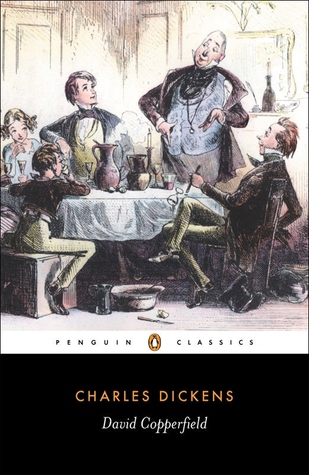
The Second Coming by John Niven, 2011

John Niven’s ‘The Second Coming’ is not for the easily offended. Yes, the second coming of the title is indeed the return of Jesus Christ to earth. God is appalled at the mess we are making of things down here and decides to send Jesus back down to have another go at sorting us out. This is not the millennial second coming of prophesy, but a rerun of the first attempt. Niven

Niven’s satirical approach is raw and uncompromising – think Frankie Boyle or Bill Hicks. God is the CEO of Heaven, a charismatic leader who despises organised religion, doesn’t need to be worshipped (why would he?), and loves gays and cannabis. His message to mankind is “Be Nice”, not the monstrously clumsy ten commandments of the Old Testament. Satan is akin to the boss of an opposing company and hell is the nightmarish vision of Dante and Bosch combined, a place where the eternal anal rape of homophobes is just a little too gleefully described. Did I mention Niven doesn’t do subtlety?

Jesus returns to earth as a New York hippie, trying to help the dispossessed and the disadvantaged, at first making very little difference. “Be Nice” is not a message that gets much traction, so Jesus enters a musical talent competition – a very thinly disguised American X Factor – masterminded by a stunningly unpleasant boss. Niven’s publisher’s lawyers must have had some sleepless nights worrying about getting a call from Simon Cowell’s legal team. At one point it looks as if Niven is going to suggest that the Cowell figure is Satan’s representative on earth – he might as well be, such is the depth of his evil – but he backs away from that idea – on counsel’s advice perhaps? I enjoyed the anarchic road-trip across the States that Jesus and his assorted disciples take and the talent content was also fun, with Jesus each week wanting to perform an indy song a long way from the classic ballads favoured by the show’s producers.

I won’t spoil the plot for you, but the ending does not come as a shock. Niven is an atheist and certainly gives organised religion both barrels, but the portrait of heaven was surprisingly sympathetic and Christ’s faith in his resurrection is touchingly absolute and unquestioning, so much so that if you had told me Niven was an unorthodox Christian I would not have been surprised. I read this novel of almost 500 pages in less than 48 hours – it has great momentum, and you want to know how it all works out, even if you really know all along.

Standard
Book review

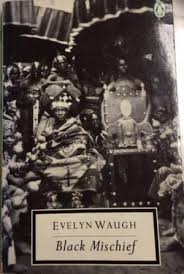
Black Mischief, by Evelyn Waugh, 1932

In many of my previous reviews I have struggled to respond to texts that either contain offensive language – that use racially insulting terms, that denigrate gay people or women, or otherwise offend my twenty-first century sensibilities. I usually try to draw a distinction between those texts that use offensive language which was in common usage in the period in which the text was written – Huckleberry Finn, for example, with its widespread use of the n-word – and texts that are more broadly offensive, that perpetuate stereotypes or go out of their way to be insulting to racial or other groups. Sometimes I find offensive novels that have not generally been considered in that category – Perfume being the obvious example, which most reviewers found harmless but which I took great exception to. 

In almost all cases however, I have been able to find redeeming features in the text. The novelist may have been reflecting outdated attitudes towards race, gender or sexuality, but they have nevertheless managed to write something worth reading. But that is mainly because I have been careful not to read those books that should be forgotten and which don’t merit a wider readership today. History has edited these novels from our bookshelves. But this is not always the case with authors who have written otherwise well thought of work, such as Evelyn Waugh’s ‘Black Mischief’. Because ‘Black Mischief‘ is an embarrassingly offensive novel. 

The events of ‘Black Mischief‘ take place mainly in the island kingdom of Azania, one of the few independent countries in Africa between the world wars. Waugh’s intention appears overt – he sets out to demonstrate that allowing African peoples to run their own countries is a ludicrous proposition that leads to profound mis-Government, chaos, and conflict. His argument is that Africans simply don’t have the intelligence, judgment or ability to run their own affairs.

Seth, emperor of Azania, inherits his role shortly after graduating from Oxford. He determines to modernise his country, but his ambitions are portrayed as utterly unrealistic – not only does he not understand what modernisation entails, but his efforts are undermined by his people, who have no interest in the modern world, and his officials, who just want to steal anything not nailed down.

Basil Seal, a feckless college friend, journeys to Azania on a whim to escape his debts in London, and is quickly appointed Minister of Modernisation. His sidekick is the Armenian businessman Yokoumian, an equally unpleasant and racist portrait. The small group of Europeans in Azania, diplomats, businessmen and missionaries, do not escape Waugh’s satire – they are all crooks and bored idiots, particularly the British consular staff headed by Sir Samson Courtenay, but there is a venom in the portraits of the Africans in the novel that is missing when the focus turns to the Europeans. 

A pageant to celebrate birth control is used as cover for the launch of a coup against Seth, with the French consul planning to install a puppet Government headed by his senile uncle Achon, who promptly dies at his coronation. In the bloodbath that follows the League of Nations steps in and claims the country as a League of Nations Mandate. The natural order with the white man running matters is restored, and Basil returns to London, where his absence has passed largely unnoticed. 

Many reviewers claim this novel is a satire. I am not sure that is right – what precisely is it satirising? Certainly not colonialism – Azania is not a colony. Modernisation? Perhaps, but it is hard to see what aspects of modernisation are problematic. Or is it modernisation in Africa? Is Waugh telling the reader that modernising Africa is pointless, because they will just use mis-use whatever modern devices or ideas we ‘give’ them (the wires used in the railway’s construction are used as jewellery, for example). The most striking example of this is the poster drawn up to advertise the benefits of birth control, showing one family wealthy and healthy with one child, and another family with many children where life is hard and poor. These posters are misunderstood by the Africans – silly people unable to understand a simple poster – and they think the single child family is the one that is being presented as the one to avoid. 

Life is cheap in Azania – people are killed casually throughout the novel – and cannibalism is widespread. There isn’t a racist stereotype untapped. There isn’t a single positive African character, not even for contrast – they are all either evil, conniving, mercenary, or murderous. Or all four. 

Waugh is not a bad writer, but I can’t help thinking that this novel should be allowed to quietly fade away. It’s not funny, the casual and incessant racism is hard to take, and the ending is callously brutal. For the first time ever I was embarrassed to be seen reading this novel (with the front cover shown above) on public transport, which probably says it all. 


Standard
Book review

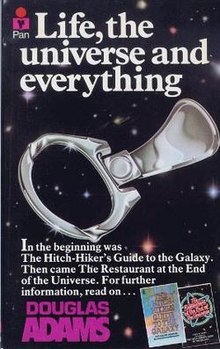
Life, the Universe, and Everything, by Douglas Adams,


The novels in the Hitchhiker series have a complex publishing history. ‘Life, the Universe and Everything’ (the answer to which is, of course, 42),  was originally an outline for a Doctor Who series, Dr Who and the Krikketmen. For some unknown reason the proposal was rejected by the BBC, and it went on to eventually become the third novel of five in the Hitchhiker trilogy. It’s never been filmed, and did not form part of the radio series, which explains why the novel had a less familiar feel than ‘Hitchhiker‘ and ‘Restaurant‘. 

When I read the first two novels each scene was like revisiting an old friend. I could see jokes coming a long way off, but they were still golden. ‘Life’, by contrast, was a lot less familiar; while I recalled the plot and the overall structure, some of the individual events were unfamiliar, and all the more enjoyable for it.

The question I can never avoid asking when reading a series is ‘When will the quality start to dip?’ When will the author start repeating themselves, or ironically referencing themselves, or even worse in a desperate attempt to avoid repetition start taking the characters into ever more unlikely situations. This last option wasn’t possible for Adams, who had already sent his characters to the restaurant at the end of the universe, and I am pleased to say that the quality of the writing, the originality of the ideas, and the jokes do not suffer by comparison with the earlier novels. Possibly the storyline is stretched a little thinly, and any peril is completely missing – Arthur and co. have been blown up and shot at so many times that we know an utterly unlikely escape route is always bound to turn up at the last minute. Plot armour in other words. But the compensation is in the high quality jokes and ideas, such as the immortal creature who decides to insult everyone in the universe, the explanation as to why the bowl of petunias thought “Not again!”, and the concept of bistromathematics.

The novel picks up where ‘Restaurant’ ends, with Arthur stranded on pre-historic Earth. Ford Prefect, his friend from Betelgeuse, arrives to take him to see the cricket at Lords. The game is interrupted, first by their arrival and then in an even more unlikely development by a squad of white robots, who steal the Ashes. On cue Slartibartfast, award-winning creator of Norwegian fjords, arrives in the starship Bistromath, and asks Ford and Arthur for help in saving the universe.

The Bistromath is more powerful than the Heart of Gold, being powered by the mathematics of Italian restaurants (this is the imagination and creativity of Douglas Adams, and if you don’t like it take a good long look at your life). As they travel, Slartibartfast uses a hologramatic film to explain that he is trying to prevent the robots from collecting the legendary Wikkit Gate, which will unlock the planet Krikket, and unleash galaxy-wide armageddon. It seems a little more plausible when Adams tells the story – not much admittedly.

Picking up Zaphod and Trillian along the way, the team fail miserably in stopping the robots collecting the various pieces of the key or unlock the time lock. Our crew instead hopelessly transport to the planet to attempt to negotiate with the Krikkit people. To their surprise, they find that the people seem to lack any desire to continue the war, and are directed to the robot and spaceship facilities in orbit about the planet. With Zaphod and Marvin’s help, the group is able to infiltrate the facilities. There are some definite Star Wars echoes here – an intrepid band of outcasts and renegades fighting to prevent the end of the world – it is a classic story I suppose. Trillian works out (the reader will have been ahead of her I think) that the Krikkiters have been manipulated into their galaxy-hatred and galaxy-destroying capability, and confronts the mastermind behind the evil plan. No, not the Sith. 

I won’t spoil the ending for you, although as Simon Brett says in the introduction to the Pan edition of the novel, “You don’t read Douglas Adams for the plots any more than you read Raymond Chandler for his”. Which might explain why with my varied reading diet of Chandler and Adams I am probably overdue something a bit more plot driven!

Origins

Standard
Book review

Hitchhiker’s Guide to the Galaxy, a trilogy in five parts, Douglas Adams, 1979

When the world is demolished to make way for an intergalatic bypass, Arthur Dent, one of only two survivors (and an alien, some dolphins, and two mice) embarks on an extraordinary journey to discover the answer to the great question of life, the universe and everything.

Re-reading ‘Hitchhiker’ after far too many years was a delight. It was like meeting an old friend for a few wonderful hours. Having grown up with the radio series, then the books, the television series, and finally the film, long stretches of the text were as familiar as a long lost childhood toy. Hitchhiker forms a central part of the cultural zeitgeist of the late 70’s and 80’s. Concepts such as the babelfish, the infinite improbability drive, Marvin the paranoid android (“I think you ought to know I’m feeling very depressed”) the Adamsrestaurant at the end of the universe, and life the universe and everything, now have their own existences far beyond the confines of this novel.
There’s a wonderful rhythm and pace to this novel which it is hard to convey from short excerpts, which provides an excellent excuse to quote the extended section from the visit to Magrathea at the end of this review. Adams is a master at setting up jokes, and is never happier than when interrupting the plot development for a bit of silliness. The premise of the guide being allowed to explain the concepts and background to the reader, rather than using character exposition, also works really well and is one of the many pleasures of this fabulous novel.

If I were to describe Hitchhiker as a science fiction novel a proportion of potential readers would switch off. Sci-fi is perceived as a male dominated arena, where character is secondary to world-building. There are certainly a lot of scientific ideas in the novel, and much of it happens in outer space, but Hitchhiker defies simple categorisation. Above all it is funny, funny in wise and interesting ways. Adams had a way of looking at the world which made it fresh, and had fun with language, such as here, when Ford Prefect, the hitchhiker from Betelguese, warns Arthur Dent, (I can never see his name without repeating the silly joke ‘Dentarthurdent’) the novel’s permanently bemused everyman, that jumping into hyperspace feels like being drunk:

What’s so unpleasant about being drunk?”

“Ask a glass of water!”

And here is a wonderful example of Adams’s silliness, combined with the ability to make the reader think, the extended quote promised earlier:

 “Another thing that got forgotten was the fact that against all probability a sperm whale had suddenly been called into existence several miles above the surface of an alien planet. And since this is not a naturally tenable position for a whale, this poor innocent creature had very little time to come to terms with its identity as a whale before it then had to come to terms with not being a whale any more. This is a complete record of its thoughts from the moment it began its life till the moment it ended it.

Ah … ! What’s happening? it thought.

Er, excuse me, who am I?

Hello? Why am I here? What’s my purpose in life?

What do I mean by who am I?

Calm down, get a grip now … oh! this is an interesting sensation, what is it? It’s a sort of … yawning, tingling sensation in my … my … well I suppose I’d better start finding names for things if I want to make any headway in what for the sake of what I shall call an argument I shall call the world, so let’s call it my stomach.

Good. Ooooh, it’s getting quite strong. And hey, what’s about this whistling roaring sound going past what I’m suddenly going to call my head? Perhaps I can call that … wind! Is that a good name? It’ll do … perhaps I can find a better name for it later when I’ve found out what it’s for. It must be something very important because there certainly seems to be a hell of a lot of it. Hey! What’s this thing? This … let’s call it a tail – yeah, tail. Hey! I can can really thrash it about pretty good can’t I? Wow! Wow! That feels great! Doesn’t seem to achieve very much but I’ll probably find out what it’s for later on. Now – have I built up any coherent picture of things yet?

No.

Never mind, hey, this is really exciting, so much to find out about, so much to look forward to, I’m quite dizzy with anticipation …

Or is it the wind? There really is a lot of that now isn’t it? And wow! Hey! What’s this thing suddenly coming towards me very fast? Very very fast. So big and flat and round, it needs a big wide sounding name like … ow … ound … round … ground! That’s it! That’s a good name – ground!

I wonder if it will be friends with me?

And the rest, after a sudden wet thud, was silence.

Curiously enough, the only thing that went through the mind of the bowl of petunias as it fell was Oh no, not again. Many people have speculated that if we knew exactly why the bowl of petunias had thought that we would know a lot more about the nature of the universe than we do now.”

(Gloriously, this quote in Goodreads has the following tags: petunias, sperm-whale).

If you haven’t read Hitchhiker’s by now, chances are you probably won’t, but I am still going to recommend you do anyway. It will only take you an afternoon, at most, and if you hate it then what have you lost? If you love it just a small fraction as much as I and so many other people do, you’re welcome.

Standard
Book review, Discworld, Equal rites, fantasy, science fiction', Terry Pratchett

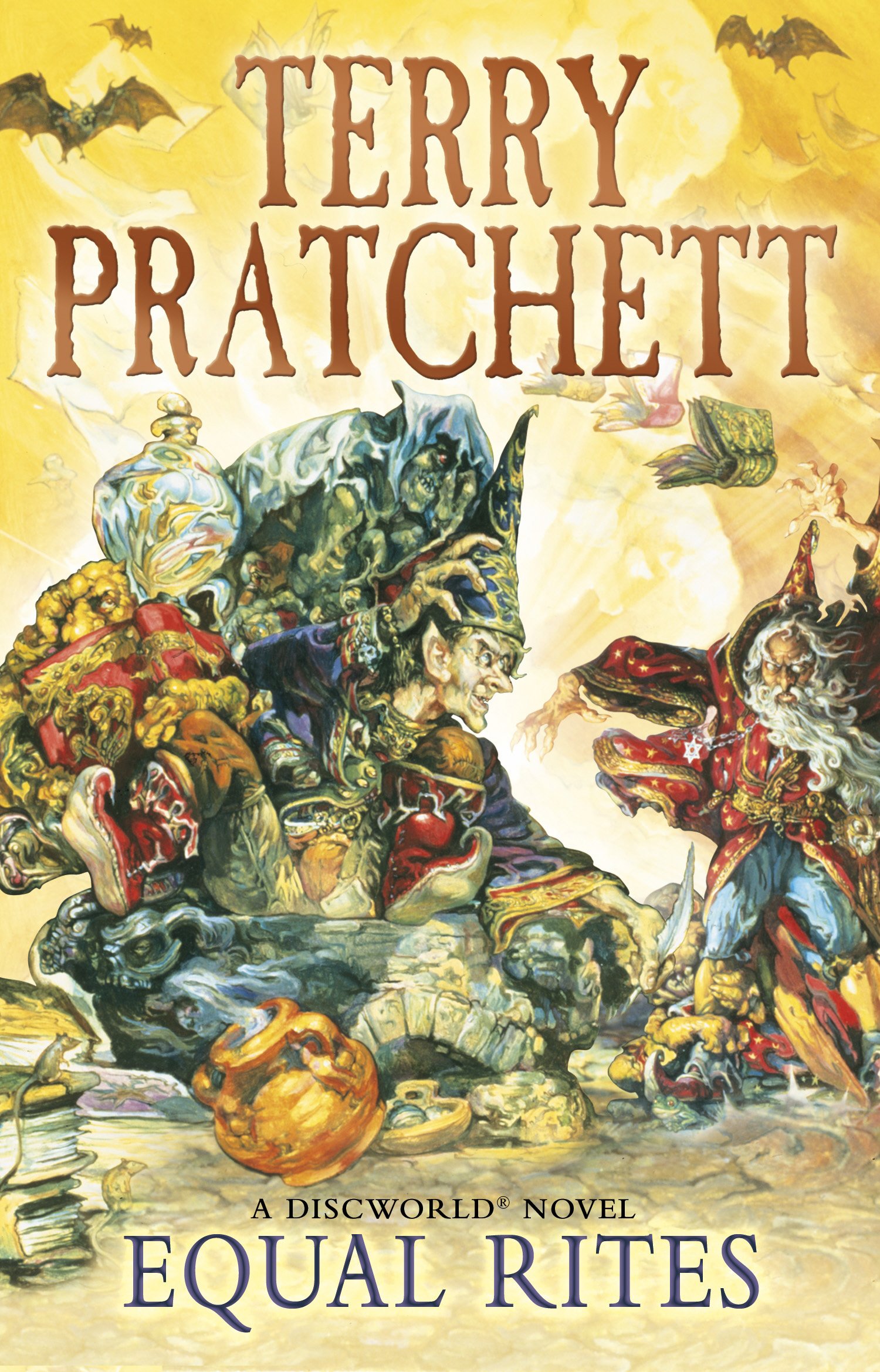
Equal Rites, (Discworld 3) by Terry Pratchett, 1987

Equal Rites’ is the third novel in the Discworld series. This is the novel where Pratchett really hits his stride. ‘The Colour of Magic’ and ‘The Light Fantastic’ are good, of course, but by comparison they felt a little childish when I was rereading them recently (see the reviews earlier in July). Some of the jokes in particular are quite crude, and the plotting is simplistic if not awkward – magic is used as the ultimate get out of jail card. Pratchett dips his toe in the waters of social issues, but quickly reverts to the frothy irreverent humour that is the trademark of these books.

Equal rites.jpg

‘Equal Rites’ is different in kind. It introduces the extraordinary, imperious Granny Weatherwax -‘I’m not a lady, I’m a witch’. This is going to sound like hyperbole, but if Terry Pratchett had not written about any other character his place in the pantheon of great writers would have been secured by his portrait of Granny Weatherwax. She is funny and kind and clever and wise and respected and seems almost a real person.

Granny Weatherwax was a witch. That was quite acceptable in the Ramtops, and no one had a bad word to say about witches. At least, not if he wanted to wake up in the morning the same shape as he went to bed.”

I also love her stubbornness:

She was also, by the standards of other people, lost. She would not see it like that. She knew where she was, it was just that everywhere else didn’t.”

Pratchett’s theory of magic – that a large part of it is in the head of the person on whom the magic is being performed – ‘headology’ – is cleverer than any system of runes mana or potions you find in other fantasy series.

“I saved a man’s life once,” said Granny. “Special medicine, twice a day. Boiled water with a bit of berry juice in it. Told him I’d bought it from the dwarves. That’s the biggest part of doct’rin, really. Most people’ll get over most things if they put their minds to it, you just have to give them an interest.”

The central question posed in ‘Equal Rites’ is why can’t a woman be a wizard? Eskarina Smith is accidentally given a wizard’s staff, and despite all efforts to the contrary is destined to be a powerful magical person – be that a witch, wizard, warlock, sourcerer, thaumaturge or otherwise. She is apprenticed to Granny Weatherwax, who soon realises the girl’s potential, and they set off on a classic road trip to try to gain access to Discworld’s only college for wizards, the Unseen University. Her application to join the university is dismissed out of hand, and a passionate battle for equal rights ensues, with only one winner ever being likely.

Given that female wizards are unheard of in Discworld, Granny has to get a bit creative, so Esk enters the university as a servant. She is reunited there with Simon, an apprentice encountered earlier on the route to Ankh-Morpork. Simon is, like Esk, a naturally talented wizard, but he loses control of his magic and accidentally opens a rift to the Dungeon Dimensions. As you can probably guess this is not a good thing. With the help of Granny Weatherwax, Archchancellor Cutangle, and Esk’s staff, Simon and Esk manage to defeat the demons and escape back to Discworld.

The ending of the novel is one of its weaker features – there is never any real sense of peril or doubt that Esk and Simon will escape unharmed from the Dungeon Dimensions – but who reads Pratchett novels for their plot? it was great to read what is in effect Granny’s origin story. I am really enjoying my rediscovery of early Discworld, watching it emerge and expand before my eyes. The next novel in the series, Mort, takes us to Death’s own domain – I can’t wait!

Standard
Book review

Yellow Dog, by Martin Amis, 2003

There is an undeniable trajectory to Martin Amis’s novels – downward. Not just in quality but in coherence, tone and taste. He peopled his 2003 effort ‘Yellow Dog’ with disgusting grotesques and events that made it hard to stomach. The best I can say about this novel is that it is not as bad as ‘Lionel Asbo’, but from the author of ‘Money’ this is such a fall.amis yellow dog

‘Yellow Dog’ was one of those novels that bitterly divided reviewers when it was first published. If you enjoy critical reviews, you will probably appreciate these more than the novel itself. In an industry where most reviews are by default favourable, this in itself was extraordinary. The Independent gave it both barrels:

Yellow Dog is a strange, sad stew of a novel, so aggressively unpleasant that it would perhaps be best accompanied by an author photograph of Amis flicking Vs at the reader….The fact that Yellow Dog is so bad is not a cause for celebration. Anyone interested in English fiction will be deeply saddened to see one of our country’s greatest talents produce such a purposeless novel

The Times Literary Supplement was more surgical, describing the novel as “not absolutely terrible”.

Tibor Fischer, one of Amis’s contemporaries went even further with this celebrated denunciation:

“It’s like your favourite uncle being caught in a school playground, masturbating”

If you have time you can also read numerous monsterings of the novel on Goodreads, which gives ‘Yellow Dog’ one of the lowest average scores I can remember seeing.

Plotwise the novel is a complete mess. Amis runs several storylines in parallel, tying them together at the end of the novel with a summary neatness that seems insulting, as if he just lost interest and stopped writing. We have an author assaulted in a pub, and acquiring a sexual interest in his daughter as a result; a plane slowly approaching a crash landing; a comet passing near to the earth, and a blackmail plot involving a sex tape and a princess. A tabloid journalist for the Morning Lark buzzes around doing what journalists in comic novels do, making up headlines and being offensive. None of this has any point or purpose. A visit to America to visit a porn studio is a clumsily inserted (forgive the pun) piece of repurposed journalism.

None of these plotlines are particularly interesting, devoid as they are of real characters. In fact, the image that came to mind when reading yet another set piece of absurdity was the adult comic, Viz. Joseph Andrews, the psychotically violent gangster, is surely a thinly disguised Big Vern, Henry 9th, King of England in this parallel universe, is any one of the comic’s thick but dim upper class characters; Clint Smoker is a tabloid journalist with a micro-penis. Like Viz but without the humour, Amis sets out to offend with these caricatures, the sexual violent, incestuous paedophiles that people the pages of ‘Yellow Dog’. The class hatred that seeped from the pages of ‘Lionel Asbo’ is equally obvious here. The working class are amoral, ultra-violent criminals, although in the interests of balance the upper classes don’t come off much better.

What redeemed ‘Money’ from these obvious criticisms was Amis’s ability to craft an elegant metaphor, a skill that seems to have abandoned him here. Here’s an example of a paragraph which is Money would have fizzed with vividness:

The bright sky was torn by contrails in various stages of dissolution, some, way up, as solid-looking as pipecleaners, others like white stockings, discarded, flung in the air, or light bedding after beauty sleep, others like breakers on an inconceivably distant shore.” (page 289)

Do these images work for you? Do they conjure up thoughts of a bright sky crossed by aircraft trails? I wonder how many readers will still know what a pipecleaner looks like? The ‘light bedding after beauty sleep’ simile works after a fashion, although the beauty sleep addition is pretentious. He’s working hard, and it is not bad writing, it just doesn’t impress in the way ‘Money’ did, and to redeem the other features of the novel it really needed to be magnificent. I’ve chosen one of the more innocuous passages from the novel – dip into any page and there is gratuitous often sexual violence and pretentious philosophising.

This was a 50p charity shop find – I am glad I didn’t pay more.


Standard
Book review

The Sellout, by Paul Beatty, 2015

I turned to Paul Beatty’s ‘The Sellout’ as some light relief after the torture that was ‘The Golden Bowl’. You can tell how bad things have got when a Booker Prize winner constitutes light relief! But it was. ‘The Sellout’ works best as an extended stand up routine – at times angry, often lyrical, usually very funny, challenging, and fast paced enough to ensure that the jokes that don’t work are quickly left behind and you are onto to the next. The Sellout

The narrator, “Me”, opens the narrative in the United States Supreme Court, where a case against him is being heard. The majority of the novel explains how the case occurred (i.e. in flashback). The narrator comes from and lives in the ‘agrarian ghetto’ of Dickens, a suburb or ghetto of Los Angeles.  He is raised by his sociologist father, who uses him as the subject of some bizarre social and racial experiments, which are hard to distinguish from child abuse (“I wasn’t fed; I was presented with lukewarm appetitive stimuli. I wasn’t punished, but broken of my unconditioned reflexes. I wasn’t loved, but brought up in an atmosphere of calculated intimacy and intense levels of commitment“). After his father is casually gunned down by the police and he inherits the family small holding, and his father’s taste for outrageous racial experiments.

The central conceit of the novel is launched when the narrator re-introduces slavery and segregation to Dickens. The segregation of bus passengers along racial lines is widely welcomed by the passengers, who are almost exclusively black in any event. Emboldened by the unlikely success of this initial experiment the narrator segregates the local all-black school, by renting a vacant lot opposite and advertising a soon-to-be-opened all-white college. Attendance and grades at the existing school quickly begin to improve. Further inventive ways of segregating an all-black community continue until the law intervenes.

This rather bald summary may make it look as if Beatty’s satire is unsubtle, if not reactionary. Is he suggesting that the position of some black people in America have not improved since the end of slavery and the struggles of the civil rights movement? The narrator is very clear that is not the point being made, however much it may appear to be the case. The Republican argument that more black children grew up with two parents during the days of slavery than they do today is comprehensively destroyed. But equally the advances in civil rights and representation since those days, such as the election of a black President, are not something that the angry voice of the novel takes for granted, or considers enough.

I’m so fucking tired of black women always being described by their skin tones! Honey-colored this! Dark-chocolate that! My paternal grandmother was mocha-tinged, café-au-lait, graham-fucking-cracker brown! How come they never describe the white characters in relation to foodstuffs and hot liquids? Why aren’t there any yogurt-colored, egg-shell-toned, string-cheese-skinned, low-fat-milk white protagonists in these racist, no-third-act-having books? That’s why black literature sucks!”

The election of the most reactionary President since I have no idea has underlined the novel’s argument that we are not yet living in a post-racial world.

While being a complex and nuanced discussion of race in America today, the novel is not for the lily-livered. The language is full-on, as above, and the n-word is used throughout the text. Some of the jokes miss their mark, such as

“Foy was no Tree of Knowledge, at most he was a Bush of Opinion”

or are predictable
“If New York is the City That Never Sleeps, then Los Angeles is the City That’s Always Passed Out on the Couch.
But these are exceptions, and virtually every page has one or more great lines, such as this description of a character “listing hard to the right like a drunken seaman with an inner ear infection” or this joke about the meaning of the word bi-monthly: “The meetings consisted mostly of the members who showed up every other week arguing with the ones who came every other month about what exactly “bimonthly” means.”
I enjoyed ‘The Sellout’. I can’t say whether it was a worthy winner of the Booker, because I haven’t read all the other short-listed novels, and I wasn’t on the jury anyway, but this is a book that will make you think, and I can’t praise it more highly than that.
Standard
100 Best Novels Guardian list, Book review

Zuleika Dobson, by Max Beerbohm, 1911

I finished this novel in something of a bad mood. It is a very bad book, and I resented the effort required to find any redeeming features. The fact that I found some in many ways made my mood worse! As I reflected on the text, I slowly came to accept that perhaps it wasn’t as bad as I originally thought. Don’t you hate it when that happens? Continue reading

Standard
Book review

David Copperfield by Charles Dickens, 1850

Subtitled “The Personal History, Adventures, Experience and Observation of David Copperfield the Younger of Blunderstone Rookery (Which He Never Meant to Publish on Any Account)”

Originally published in nineteen monthly instalments, ‘David Copperfield’ takes the form of a personal narrative, with this evocative introduction:david-copperfirled

“Whether I shall turn out to be the hero of my own life, or whether that station will be held by anybody else, these pages must show. To begin my life with the beginning of my life, I record that I was born (as I have been informed and believe) on a Friday, at twelve o’clock at night. It was remarked that the clock began to strike, and I began to cry, simultaneously.”

The largely autobiographical plot follows the young David as he is orphaned, sent to school, and slowly makes his way in the world, eventually becoming a prosperous author.   Continue reading

Standard