Book review

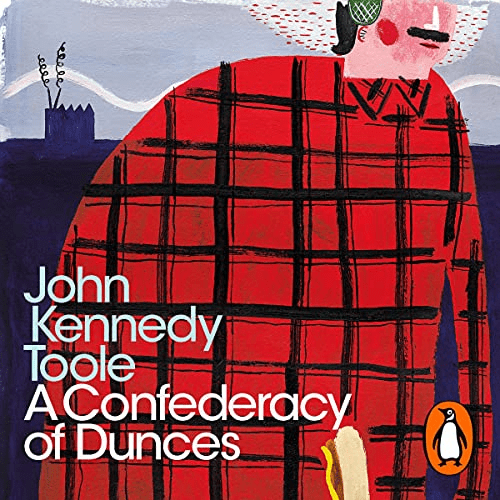
A Confederacy of Dunces, by John Kennedy Toole, 1980

I had come across A Confederacy of Dunces on various lists of ‘best’ novels without having any preconceived idea what it was about. I’m still not entirely sure to be honest. The novel follows the adventures of Ignatius J. Reilly, an obese and extraordinarily self-centred young man living with his mother is early-1960s New Orleans.

Ignatius is a “slob extraordinary, a mad Oliver Hardy, a fat Don Quixote, a perverse Thomas Aquinas rolled into one—who is in violent revolt against the entire modern age, lying in his flannel nightshirt, in a back bedroom on Constantinople Street in New Orleans, who between gigantic seizures of flatulence and eructations is filling dozens of Big Chief tablets with invective.”

He returned from college several years previously and since then done little other than bicker with his mother and her friends and neighbours. He writes in his journal, eats and masturbates. He considers himself a medievalist, although there’s little sign of him ever doing any reading on the topic.
One afternoon while shopping in town Ignatius is approached by a police officer and asked for identification, on the grounds he appears a suspicious character. Ignatius over-reacts to this request, inevitably, appealing to a gathering crowd for assistance and loudly denouncing the officer and all police. An elderly man’s attempts to help goes badly wrong when he accuses the officer of being a communist, and he is arrested, allowing Ignatius to escape with his mother into a nearby bar.

Mrs. Reilly proceeds to get drunk and on the way home she crashes her car. The bill for the accident is over a thousand dollars, and to pay the costs of the accident Mrs O’Reilly is finally pushed into forcing her son out to work. Ignatius is profoundly unsuited to any sort of responsible employment. He first finds a job in an office where the throws away all the filing he is given to do, conspires to undermine his supervisor and employer, and then writes a libellous letter in the name of his employer to a supplier. He is a nightmare of an employee:

“I have taken to arriving at the office one hour later than I am expected. Therefore, I am far more rested and refreshed when I do arrive, and I avoid that bleak first hour of the working day during which my still sluggish senses and body make every chore a penance. I find that in arriving later, the work which I do perform is of a much higher quality.”

Brief spells of ‘work’ are interrupted by regular visits to the movies, where he spends all his time berating the performances and productions:

“Filth!’ Ignatious shouted, spewing wet popcorn over rows. ‘How dare she pretend to be a virgin. Look at her degenerate face. Rape her!”

Finally dismissed from his office job, long beyond the point at which any employer would have tolerated his behaviour, Ignatius then becomes a hot dog vendor, eating many times more than he sells. The novel ends on an optimistic note with Ignatius finally breaking free from his inertia, heading off on an adventure with a college friend. The likelihood of this all ending badly and Ignatius returning home to complain for years about the discomfort or indignity of some minor aspect of his journey is high, but the reader wishes him well.

A Confederacy is one of that small group of novels where the history of its publication is as well known as the story itself. In brief, Toole killed himself before it was published, and there is reason to believe that his suicide was at least in part associated with the manuscript’s rejection by multiple publishers. It was only through the subsequent persistence of his mother that finally saw the novel published. The plot of the novel is little more than a framework for the portrait of the monstrous narcissist that is Ignatius. So you either enjoy spending time with this deeply unpleasant, but admittedly comical character, or you don’t. He is frankly an idiot, a giant toddler unable to foresee the obvious consequences of his actions, ever confident that any problem put in his way can be overcome by shouting at anyone who objects to his behaviour. Mostly this works because of his indulgent mother and employers desperate for help. The more his offences are indulged, the more he offends. I found this mildly amusing, but it quickly gets tired. The portrait of New Orleans that provides a backdrop to Ignatius’s tantrums is not one that the city should be particularly proud of, despite which a statue of Ignatius has been erected there. The author is not really interested in the city, its culture and history, and I got the impression that the novel really could have been set anywhere.

The novel has a cast of supporting characters all of whom revolve around Ignatius. The portrait of Jones, the black janitor for the “Night of Joy” who holds on to his below-minimum wage job to avoid being arrested for vagrancy tiptoed very close to racism – Jones narrates his thoughts in a stream of consciousness creole that according to some reviews captures wonderfully the authentic voice of New Orleans, or alternatively is a crude parody of the way black people speak and think:

“Look at that. She think I got siphlus and TB and a hard-on and I gonna cut her up with a razor and lif her purse. Ooo-wee.”

I’ll say this for A Confederacy – there really isn’t any other text in modern literature that does what Toole tries to do. That’s probably for a good reason – it remains a one-off, a stand alone that no-one has tried to emulate. I am still trying to decide whether I actually enjoyed the novel or not – while on the one hand I appreciate the uncompromising nature of the portrait of Ignatius, on the other he is a profoundly unpleasant person. Toole brings him vividly to life, no question, but was the effort worth it? Is this the work of genius that Toole’s suicide seems to suggest it ought to be? No, sadly not. You have to wonder what Toole would have written if he had allowed himself the chance.
A Confederacy of Dunces, by John Kennedy Toole, 1980

Aside
Book review

How They Broke Britain, by James O’Brien, 2023

How They Broke Britain comprises ten essays on familiar characters from early twenty-first century British politics, constructed round the framing device that all of those portrayed have contributed to the degradation of political life in the UK. Some are very well known – it is surprising that O’Brien found anything new to say about Rupert Murdoch for instance – others much less so, for example the recently ennobled Matthew Elliott.

Very little of what O’Brien writes will be new to anyone who has been paying attention to the news over the last thirteen years. That’s not to say it is not convenient to have so much detail collected together in this way – in some respects this will probably work better as a reference book than as an attempt to change anyone’s mind. Conservative supporters will either not read this in the first place, or will do so with the specific intention of finding flaws and weaknesses. The Telegraph review, for example, described it as a ‘wild polemic’, both weak and childish, and hilariously finds fault that O’Brien has not correctly understood the hierarchy of the English aristocracy (“He’s wrong: the rank below an earl is viscount.”)

O’Brien’s style invites disagreement, so here goes. Firstly, the breaking of Britain (and it is really difficult to argue with the proposition that the country has been deeply wounded in recent years) is not the result of the behaviours and characters of ten or so individuals. There are systemic, structural flaws in the way our nation is constructed and organised, and basing his analysis on the ten people in question means O’Brien doesn’t really have to address those structural issues. In fact there’s no real attempt at all to understand or identify what’s gone wrong other than through the characters of the people portrayed. But without an understanding of these issues then any attempt to address them is doomed – there’s every chance we will end up with another set of chancers and crooks running our country and its institutions, even if we were to clear out the existing cabal.

Second, keeping a modern political commentary up to date is admittedly really difficult, because O’Brien is charting something that is happening right now. There’s never a right time to end the analysis, never a point at which he or any other commentator can say (along with Andrew Lincoln) “enough”. This was really driven home to me when I read that Matthew Elliot, Chief Executive of the TaxPayers Alliance and latterly the Vote Leave campaign, the subject of chapter three of this book, has been nominated for a life peerage by Liz Truss in her ‘I’m no longer Prime Minister’ honours list.

Third, O’Brien argues that the bad behaviour he records, the lying, bullying, abuse of power, is all the more egregious because by and large the people doing it got away with it unpunished. This is clearly wrong. Boris Johnson and Liz Truss were both hounded from office and Johnson had to resign from Parliament when found guilty of breach of parliamentary procedure by the Privileges Committee. Johnson was also fined by the police over Partygate, as was Rishi Sunak (who doesn’t, yet, merit his own chapter, although I suspect later editions may remedy that omission). Johnson may have behaved as if he was above the rules that the rest of us had to comply with and some of his more egregious behaviour may have still to be addressed (by, for example, the Covid enquiry), but the idea he got away with everything without consequence is demonstrably incorrect. Jeremy Corbyn is a surprise inclusion in the text, perhaps thrown in for ‘balance’, but more likely because O’Brien holds him personally accountable for the Brexit referendum outcome. Corbyn never really came close to power during his five years as leader of the Labour Party, and now sits as a independent backbencher having been thrown out of the Parliamentary Labour Party – again hardly the best example of someone getting away with bad behaviour.

This is not a book for reading at one sitting. Take it a chapter at a time and allow yourself plenty of breaks to absorb the detail and for your blood pressure to reset. The piling on of fact upon fact in intense detail can at times be hard to absorb and at moments almost becomes incoherent. The overall effect can feel like being shouted at by someone almost desperate to convey their point but struggling to overcome the weight of detail and present compelling evidence and argument. History won’t be kind to Liz Truss, Boris Johnson, Dominic Cummings and Nigel Farage, all of them currently a long way from the levers of power and likely to stay that way (even though Rishi Sunak was reportedly flirting with the idea of returning Dominic Cummings to Number 10 to run the election campaign, a truly bizarre idea if ever there was one), and history may use How They Broke Britain as a reference work when judgment is being passed and obituaries are written. Until then I would recommend this book to anyone looking to get their heads around how this country has so badly lost its way, even if it won’t really help in finding any answers on how we find out way out of this mess.

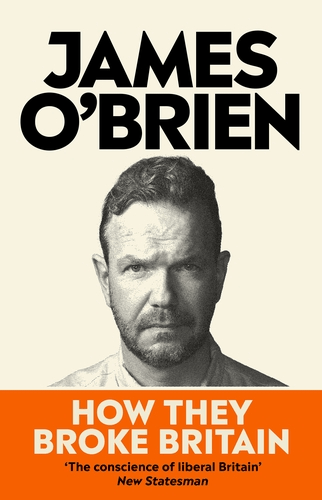
It’s worth noting that the hardback version of this book uses a large picture of O’Brien on its front cover, and a supportive quote about the author rather than the book (“The conscience of Liberal Britain” – the New Statesman). It wouldn’t have been difficult to have come up with a cover that used mugshots of the ten people featured in ‘Usual Suspects’ style (just for example – the kind of thing Private Eye front covers do so well). This approach exposes O’Brien to criticisms that this is just an ego trip, preaching from a public pulpit while unprepared to accept the same level of challenge in return, other than to rage bait callers to his LBC show. But the ‘O’Brien brand’ sells well, and How they Broke Britain will have sold by the lorry load over Christmas.

How They Broke Britain, by James O’Brien, 2023

Aside
Book review

The Midnight Library by Matt Haig, 2020

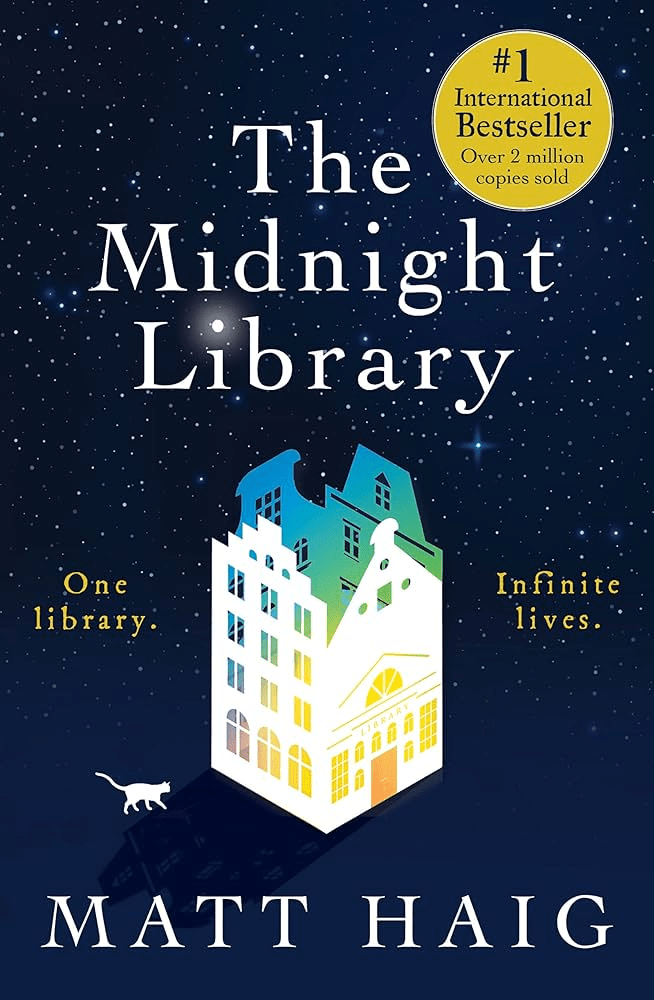
The Midnight Library is a very explicit anti-suicide book. So if it saves a single life, then it is worthwhile. Any reviewer of the novel therefore needs to make a simple choice – should the novel be treated as a work of literary fiction, or should it be considered as a self-help book, intended as therapy and advice for those in need? Of course it can be both things at once, and in the main does so successfully, but these are two very different yardsticks by which to evaluate the book. (Note to self – yardstick = dead metaphor. Presumably there sticks a yard long were once in common use to measure things, but despite them no longer being widely used, the phrase persists).

Anyone contemplating suicide must feel that life is not worth living. Haig’s mission in this novel is to persuade them otherwise. He attempts this through the story of his central character, Nora Seed (I assume the surname Seed was chosen because seeds are full of potential life). But when we first meet her, Nora feels anything but. Her cat is dead, she is alienated from her family, she has lost her job. She has recently separated from her fiancé, having changed her mind at the last minute about marriage. Her life, once full of promise and possibility, seems empty. Late one evening, she tries to kill herself.

Nora wakes up to finds herself in a library. Each book on the infinite shelves tells the story of an alternative version of her life. The core of the novel sees Nora briefly living these multiple lives. In each she is given the opportunity to change one decision she regrets making, and see how it would have affected her life. In one she becomes a rock star, having decided not to leave her brother’s band; in another she wins Olympic medals having kept up her promising swimming career; in yet another she on an Arctic research vessel studying global warming and has a close encounter with a hungry polar bear. Each version of her life is better – more interesting, more fulfilled – than what she refers to as her ‘root’ life, but every one is also in some way unsatisfactory, so she keeps doom-scrolling through endless ‘what-ifs’ searching for a version of her life in which she has not taken a wrong turn, and is happy.

If I were suicidal, being told that the choices I made in life had prevented me from becoming an Olympic athlete, a rock star, or an artic explorer might not convince me that I had nothing to regret, even if in each of these alternative lives there were also things that were not perfect. A common cause of dissatisfaction with Nora’s new lives is that in each a family member or close friend has died – her brother from an overdose, her mother from cancer, a friend in a road traffic collision, and so on. None of these deaths were a result of her choices, so seeking a life in which she took a different route and kept everyone alive seems a futile search.

The novel’s conclusion – that life is worth living, and regret at the choices we make is foolish – comes as hardly a surprise. Is this life affirming? it’s unquestionably intended as such, and literature as therapy is undoubtedly worthwhile. The popularity of this novel suggests that people find it helpful, so any dissent from me would probably be churlish. One yardstick (see what I did there?) of a novel’s success I often find useful is to ask whether you want to spend more time with the characters, to find out how their lives span out. Who would turn down the chance to read more about Elizabeth Bennet or Mr Pickwick? Sadly I can’t say the same of Nora Seed. I am glad her story ended on a positive note – but it could hardly have ended any other way in the circumstances!

The Midnight Library by Matt Haig, 2020

Aside
Book review

Capital, by John Lanchester, 2012

I’ve written quite a bit in the past about different categories of novel – most recently Newgate novels for example, nineteenth century stories about prisoners awaiting trial in Newgate. or the earlier Silver Fork novels about rich Regency people doing rich Regency people things. The problem is – where do you stop? Where do you stop creating ever finer more detailed sub-categories of novel? This problem occurred to me when reading John Lanchester’s 2023 novel Capital.

As well as obviously being about London and its inhabitants, Capital is more specifically a credit crunch novel, a literary response to the financial crash of 2008. It was published in 2012 which makes it a a relatively early response to the crash, when the full impacts of austerity had yet to be played out. In Capital people are still manically developing their houses with basements and loft extensions, even if the early seeds of doubt about the wisdom of this reckless spending are being sown; later post-Brexit crash novels (or are they a separate category?) see that this reckless spending is not without consequence. The worst that happens to a banker made redundant part way through Capital is that he has to sack his nanny and retire to the country with his money, confident that he will bounce back. Where am I going with this point? I suppose I am arguing that instead of simply being an ambitious survey of life in modern-day London, Capital is a more immediate response to political and economic circumstances that might not have the durability and longevity the author was obviously aiming for. It’s also a novel that addresses that very specific problem of gentrification, without having much to say about the issue other than vaguely suggesting it is not a good thing.

Capital follows the inhabitants of a south London street, Pepys Road, over the course of a year. The choice of name is obviously not coincidental – Pepys was a great chronicler of London-life, and it seems Lanchester aspires to do the same. Pepys Road is undergoing dramatic changes as London society responds to a influx of new residents from around the globe. As we are introduced to a series of immigrants – a Polish builder, a Hungarian nanny, a Senegalese footballer and a Zimbabwean traffic warden – one wonders whether these are much more than stereotypes? Their stories are juxtaposed with those of earlier residents, now undergoing their own diaspora as they are forced out of Pepys Road.

“Having a house in Pepys Road was like being in a casino in which you were guaranteed to be a winner. If you already lived there, you were rich. If you wanted to move there, you had to be rich. It was the first time in history this had ever been true”.

Another of the multiple threads of the novel follows stockbroker Roger Yount. Roger and family live a life of excess fuelled by the multi-million salaries and bonuses common in the City pre-Crash. Roger is an entitled and slightly thick public-school boy relying on nepotism to get along in a business he admits he does not really understand. His wife Arabella is a bit of a monster, spending her days shopping for designer nonsense and having long boozy lunches with girlfriends while her children are cared for by a series of nannies. We care little for Roger and Arabella, equally stereotypes in their own way, and celebrate their downfall as Roger first gets a disappointing five figure bonus, and is then sacked and has to rethink his life

Most of the storylines peter out – they have endings of sorts but I was insufficiently engaged with the characters to worry overly if they go on to live long and happy lives. Ends are tied up but with a conspicuous sense of ends being tied up so that the novel could finish rather than narratives being successfully concluded. A good example of this is the young African footballer who comes to the UK to play, suffers as career-ending injury, and goes back home with riches beyond imagination and still able to play football locally – a happy ending of sorts but hard to see where it fits in the overall narrative, other than being just another story of the residents of Pepys Road.

At over 600 pages this was harder work than it ought to have been. The years immediately after the Crash in which this novel is set seem a lifetime ago. If I had read Capital when it was first published it would have had an immediacy that it now lacks given how much has happened since then – it’s almost enough to make me nostalgic for 2012!

Capital, by John Lanchester, 2012

Aside
Book review

The Last Devil to Die: The Thursday Murder Club (4) by Richard Osman, 2023

I confess to being a lazy reader of murder mysteries. What I mean by that is that I am comfortable with learning whodunnit when the author is ready to let me know, and not before. Of course I spot the red herrings, the introduction of what appears to be a peripheral character who is actually a suspect, and so on. But I know that a well-written book – and Richard Osman is an author who takes care with his plot construction – will provide just enough information to make the resolution of the mystery almost impossible to guess in advance, but to appear fairly obvious once it is revealed. I don’t see mysteries as a battle between me and the author to prove who is the cleverest – the contract between us is for the author to entertain the reader, challenge them a little bit, maybe even educate them, while not making them feel inferior or stupid, and never ever cheating (untraceable poisons and the like).

I say this because I worked out ‘whodunnit’ in this, the fourth of Osman’s Thursday Murder Club series, fairly early on – avoiding spoilers, it is someone who falls into the category I describe above – and that the mystery we are presented with isn’t the real mystery after all. I explain this a little more in the section marked ‘SPOILERS’ below. But that doesn’t mean the novel wasn’t enjoyable. It is always pleasant to spend time with the club members, who Osman stubbornly refuses to kill off (despite my clear prediction in my review of the original novel in the series that he would do so early on in book two). If anything he has expanded his cast of characters, with other residents of Coopers Chase being introduced into the crime-fighting team, including an older person who knows how to use computers (bit of a patronising portrait I thought – not all old people are clueless when it comes to technology) and another who is the victim of a pretty transparent romance fraud. The relationships of the wider cast, police officers Chris and Donna, builder Bogdan and drug dealer Connie all make little or no progress – there is talk of an engagement, but nothing more. If you haven’t read the previous books in the series, or like me have a poor memory for novels read without the full beam of your attention, then you might struggle a little working out who is who – backstories are very lightly sketched.

I also struggled with the subplot involving former spy Elizabeth and her husband Stephen, as they face his advancing dementia. Again I can’t really write at any length about this thread of the novel without spoilers, so I again refer you to the text below.

As to what happens, well if you have read one Thursday Murder Club you have really read them all. Someone is murdered, other crimes follow, and the four pensioners solve the crime using unorthodox means and a considerable amount of tea and cake. Stereotypes about old age are both challenged and used as a source of comedy, particularly through the well-meaning character of Joyce, who is endlessly curious but a little adrift in the modern world.

It’s not uncommon for authors of long-running series to lose steam – Terry Pratchett being the obvious exception to the rule. I am sure there will be more Thursday Murder Club novels, but in an implicit acknowledgement of the diminishing returns from another outing of the feisty pensioners, Osman is writing about a father-in-law/daughter-in-law detective duo, which sounds sufficiently different to be interesting while in the same wheelhouse. Looking forward to it.

SPOILERS ALERT

Don’t read this unless you have already read The Last Devil to Die or have no intention to do so. Early on we are told that the heroin which goes missing is being carried in a box. The box is not described in any detail, but there’s enough to pique a curious reader’s interest – why smuggle heroin in a box? I suspected this was an example of the wheel-barrow theft operation story (A man works on an building site. Every day he walks off the site with a wheelbarrow full of sand. The security guards are suspicious and look through the sand trying to find if he was stealing anything. When he retired a guard asked him “Alright, how did you do it? We knew you were stealing, what did you hide in the sand?” “I wasn’t hiding anything in the sand, I was stealing the wheelbarrows.”) The box is described as ‘a small terracotta box, made to look old, like a tatty piece of garden junk…a boring ornament’. The obvious incongruity of using a terracotta box to smuggle heroin caught my attention at the time, and while the author works hard to downplay its significance, I was reasonably confident that we hadn’t heard the last of that box.

I am not claiming this as an example of my powers of penetration, simply suggesting that the puzzles in this novel weren’t that hard to solve. Actually, worse than that, they were pretty obvious.

I found the Elizabeth and Stephen subplot difficult, if not even a little distressing. Stephen’s dementia is accelerating and Elizabeth is slowly realising she is unable to cope with him. She is unable to leave him alone for any length of time without him putting himself in danger. He is aware at moments of his decline – at others he barely recognises her. So to cut a long story short, he kills himself with her assistance. This is presented to us as a brave choice, but it felt like patient-assisted suicide to me (because it was) which is illegal. Elizabeth is not one to care about being on the right side of the law, but anyone making a case for euthanasia simply because someone’s memory is failing (Stephen is in no physical pain or discomfort, and while obviously upset at his increasing dementia does not spend his days in acute distress) will find little support from me. It left a bad taste. Osman has given old people some dignity in these novels, revealing their strength and resourcefulness and celebrating the positive aspects of old age, but here, for me, he drops the ball badly. Old people lose their memories, but don’t deserve to die for it. He takes care to tell us that Stephen takes his own life, and is fully aware of the choice he is making, but glosses over the illegality and subterfuge required to achieve this end without prosecution.

Osman also uses Stephen’s dementia as a key point in the main plot – Stephen is the only person alive who knows where the missing heroin that everyone is being killed for is hidden, and somehow through the fog of his dementia manages to tell Elizabeth, albeit in a confused way. Because that’s what people suffering from dementia do, isn’t it – they solve crimes and locate hidden contraband. This was clumsy and a bit distasteful if I’m honest.

The Last Devil to Die: The Thursday Murder Club (4) by Richard Osman, 2023

Aside
Book review

I am reading (very slowly) Salman Rushdie’s Languages of Truth at the moment. It’s a collection of essays and other writings, and it’s quite brilliant, but I am not going to review it just yet. There was one comment however that got me thinking. Rushdie talks about when writers and authors get together; inevitably they discuss favourite books, chapters and even sentences, and that triggered a thought – what are the most memorable sentences in literature? Not the most beautiful, or wise, or inspiring, just the most memorable?

Here’s a few that occurred to me, and the reasons why. Sorry if some of these are a bit obvious:

1) “It was a bright cold day in April, and the clocks were striking thirteen.”

If you can’t tell me where that line is from then I really think you might be in the wrong place! 14 words, all short and almost all monosyllabic, but this line does so much amazing work in setting up the whole novel. We are in April, but where? Somewhere where in April the weather is bright and cold – so not hard to work out that it’s the UK with it’s consistently bad weather. It’s both bright and cold, not an oxymoron, but a precise type of day where the sun is shining but it still hasn’t warmed up. Eliot famously described April as the cruellest month, and I don’t think it is any coincidence that Orwell (for it is he) starts this dystopian novel at this point. It’s just one of those resonances that readers will either pick up on or they won’t. But so far so pedestrian – it’s a chilly day in April. But all of a sudden things get interesting, because the clocks are striking thirteen! What’s going on? First, why are there multiple clocks? We are in an urban environment where there are lots of different public clocks, and they all signal the time by striking bells. Not chiming you will note, striking, a much more violent, aggressive verb. But it’s the last word in this sentence that tells us we are somewhere at once familiar and also strange, because clocks don’t normally chime using the twenty-four hour clock system. So we are somewhere close at hand but far away – as of course the novel’s title has already told us. We want to know why this change to our approach to time-keeping has come about. So we read on.

Which leads me neatly to a haunting last line from, well, you know:

2) “So we beat on, boats against the current, borne back ceaselessly into the past.”

Nick Carraway is one of the more interesting characters in The Great Gatsby, and his final reflections on the time he met Jay Gatsby and friends is so elegiac, so perfect, I find it popping into my mind regularly at moments of mortality. We do beat on against the current which bears us back relentlessly to the past, from which we cannot escape. And even if you think this is nonsense, and that the past is the past, gone and forgotten, then you still have to admire the poetry and this line.

3) “Marley was dead, to begin with.” Just how fantastic is that for an opening line? (I know, this post is about memorable lines, not best opening lines. But try and keep this one out of any list!) The way the second half of the sentence undercuts the first is quite brilliant, and sets up the whole story. It’s just a great joke. Dickens is recognised as a great story teller, but I am not sure he is properly recognised as a great writer. But he is, and anyone who can come up with an opening line like that – who is not going to read on? – needs to be respected.

4) “From the very beginning— from the first moment, I may almost say— of my acquaintance with you, your manners, impressing me with the fullest belief of your arrogance, your conceit, and your selfish disdain of the feelings of others, were such as to form the groundwork of disapprobation on which succeeding events have built so immovable a dislike; and I had not known you a month before I felt that you were the last man in the world whom I could ever be prevailed on to marry.”

I love Elizabeth Bennet (don’t we all?) because of her fire, and it comes out full force here in this condemnation of the haughty Mr Fitzwilliam Darcy. She is in full flow and unstoppable, (this is all one sentence) and she tears him apart – “groundwork of disapprobation” – quite magnificently. And somehow Austen manages to let the reader know that underneath this anger and disdain, she doesn’t really mean it, or she does but is still attracted to him, (otherwise why the passion?) which is a point of view technique that I don’t think any author before or since has bettered.

5) Titus is wading through his childhood. A ridiculously simple line, but for me extraordinarily resonant. Childhood can be like that, something we have to endure not because it is painful (although it can be of course) but because it is so long, and the things we want to do need us to be older, richer, more empowered. The Gormenghast trilogy is a series that escapes any possible attempt to be ‘about’ anything, but Titus’s journey from his birth in that wonderful first chapter of Titus Groan reaching an incredible climax in his confrontation with Steerpike at the end of Gormenghast forms the series core. In writing about it I realise that it has been quite some time since I read the novels and might be overdue a reread.

6, “If nothing we do matters, then all that matters is what we do.” OK, I am cheating now, this line isn’t from a book, but it’s still amazing. I’m still not entirely sure I understand it, but if I have got this right it is an incredible summary of where we find ourselves in our brief time on the planet, isn’t it?

So what would your memorable line – from a book or elsewhere – be?

Memorable sentences

Aside
Book review

Less by Andrew Sean Greer, 2017

Arthur Less, a middle-aged novelist, just coming out of a long term relationship with a younger man who is now getting married, can’t face the idea of attending the wedding. To avoid having to decline an invitation he accepts an improbable series of invitations to different events around the world, just as an excuse to be out of the country on the fateful day. The improbability of all these invitations just lying around waiting to be accepted is something the reader will have to accept. Although initially intended to just skip the wedding, Less’s adventure builds into an around the world odyssey of speaking engagements, conferences, interviews and residencies. And that’s pretty much it – we follow him on this journey and he gets into the inevitable ‘scrapes’ and misunderstandings, too many sleeping pills, mistaken identity (we are led to believe that Less is a common name in the book-writing game) and incidental romantic encounters.

The first leg of Less’s odyssey is in New York, where he chairs an event for a successful and overrated science fiction writer. Then on to Mexico, where he takes part in a panel discussion about his former lover’s work – as a younger man Less was in a long-term relationship with a much older and far more respected writer. In Italy an earlier novel of his is a candidate for an obscure literary award which he improbably wins. Then on to Germany, where he teaches a writing course entitled Read Like a Vampire, Write Like Frankenstein and has a brief fling with a much younger student. Here Greer subtly introduces the thought that the previously omniscient narrator, who has revealed Less’s intimate thoughts and feelings, might be a character within the novel, or the author breaking the fourth wall. The stages of Less’s journey continue breathlessly – Paris, Morocco, Japan and India, each illustrated with local colour and touches of humour, but there is little time to breathe before we are off again.

Much of Less is essentially meta-fiction (at the risk of being patronising, I have always found it easiest to understand the use of the term ‘meta’ in virtually any context by substituting the word ‘about’. So meta-fiction is fiction about fiction). Or to put it another way this is a novel about being a novelist. Less the character is struggling to have his latest novel published. His publisher finds it simply too depressing.

“It was about a middle-aged gay man walking around San Francisco. And, you know, his … his sorrows … ”

As of course this novel might be were it to show Less struggling with his heartbreak. But he manages to persuade his publisher to accept his novel by inverting every bad or depressing thing that happens to his central character into a positive. And that’s precisely what happens to Less himself – he bumbles his way around the world and things work out well for him at each step of his journey. The gods of travel look after him to ensure he finds his way to his next destination on time however drunk or jet-lagged he may be. And the novel ends with a happy ever after that never really looked on the cards.

I found it hard to engage with Less. He is a bit anodyne, a bit Prufrockian:

“Name a day, name an hour, in which Arthur Less was not afraid. Of ordering a cocktail, taking a taxi, teaching a class, writing a book. Afraid of these and almost everything else in the world. Strange, though; because he is afraid of everything, nothing is harder than anything else. Taking a trip around the world is no more terrifying than buying a stick of gum. The daily dose of courage.”

We know from the outset this is going to be a voyage of self-discovery with a happy ever after ending, but I found the episodic structure too predictable. I wondered at one point whether the chapters had been written as columns for a magazine (as with the original version of Bridget Jones’s Diary for instance, or Armistead Maupin’s Tales of the City, which is an obvious influence on this text) but apparently not. Nevertheless it has that feel – no time to develop a character because we only have a few days to spend with them, so they never get beyond a brief sketch.

But while the novel’s plot and structure disappoints, Less was an enjoyable read – Less’s mishaps are comical, and Greer’s superb command of imagery and skill in constructing a sentence always kept me reading. On almost very page there is a brilliant simile or metaphor – it is virtually impossible to choose one or two that could represent the whole, but what about

“Bougainvillea bloomed on their porch like a discarded prom dress“;

or how’s this for the sensation of drinking exotic beer:

“…and they were having some new kind of beer that tasted like aspirin and smelled like magnolias and cost more than a hamburger.”?

The more I think about it the more I believe that Greer is a gifted writer who has yet to find (in this novel at least) a suitable vehicle for his skills. On this evidence I am sure it will happen.

Less by Andrew Sean Greer, 2017

Aside
Book review

Last year I came across a category of novels I hadn’t previously heard of – the charmingly named ‘silver-fork‘ novel. Everyday is a learning day as they say, so I was pleased to further expand my knowledge of obscure literary categories when as part of my background reading into Oliver Twist I came across another category – The Newgate Novel.

Newgate novels are an early example of what we know think of as true crime fiction. They were also known as Old Bailey novels and had their heyday in the UK in the 1820s to 1840s. Newgate was London’s principal prison for centuries, and the courtrooms built on the side of the prison slowly expanded into a complex that eventually became (and is today) the Old Bailey, London’s central criminal court. The stories of the criminals tried there were told in The Newgate Calendar, The Malefactors’ Bloody Register. Originally a monthly bulletin of executions, produced by the prison administration, the calendar’s title and content was copied by other publishers.

Newgate novels were widely seen as glamorising the lives of the criminals and were therefore as well as being hugely popular were also controversial, in that they made heroes of murderers. That still happens to this day of course – criminal behaviour is romanticised by the passage of time, and the horror of murders such as the Jack the Ripper crimes can one day be treated as light entertainment or a merchandising opportunity. very few of the Newgate Novels remain in publication to this day, although that it hardly surprising – they never pretended to be anything other than popular entertainment.

I think Oliver Twist has a strong case for not being classified as a Newgate novel. Firstly there’s no indication that it drew its inspiration from a real or reported case. Secondly the principal character is not a criminal but a victim, albeit one that is drawn into the ambit of the criminal fraternity. Finally the glamorisation of the criminals portrayed in the novel is largely missing – Sikes is a monster, Fagin not much better, and the only characters with any redeeming features are Charlie Bates, who turns in Sikes and eventually abandons a life of crime, and the Artful Dodger, who it is easy to forget is only thirteen, a pickpocket rather than a house-breaker or fence, and is clearly highly intelligent.

Newgate Novels

Aside
Book review

Oliver Twist by Charles Dickens, 1843

This year’s Dickens was an easy choice. Oliver Twist is the last of the major Dickens novel I had to (re)read, and it is such a familiar cultural artefact! The musical Oliver! is an important part of that feeling of course, and a comparison between the plot choices in the novel and the musical is illuminating. The characters Dickens created in this novel – Fagin, Sikes, the Artful Dodger and Oliver himself – are remarkably vivid and enduring.

I’ve written before about Dickens’s consistency as a novelist. It’s hard to believe that Oliver Twist was arguably his first ‘proper’ novel. The Pickwick Papers is now seen and published as a novel but at the time it was

written it was conceived and constructed as a very loose series of stories with no serious intention of publishing it as a single book. Oliver may have had a similar origin – it was published in instalments, as all Dickens’ s novels were, and there is every reason to believe that Dickens constructed all but the broadest elements of the plot as he went along, rather than having a master plan – but the final product is far more cohesive and carefully structured. It has a beginning a middle and an end, and a plot running through it joining all the parts, even if the plot is the weakest part of the whole. The publication history of Oliver is actually even more complex than I have suggested, because about two-thirds of the way of it being published in instalments Dickens fell out with the publisher and had it published in novel form as well. So the text was available as a novel before the instalments were all published.

Anyway, to the novel itself. Critics have long argued (see Orwell’s wonderful essay on Dickens for example) that Dickens’s experience of being taken out of school and sent to work in a factory at an early age was so traumatic an experience that it threw a shadow over most of his writing. Certainly there are echoes here of this experience – Oliver is left an orphan from birth and suffers at the hands of an uncaring welfare system. He survives, somehow, where many do not and is sent to work at a very early age as an undertaker’s assistant. He is bullied remorselessly in this post and to avoid having to return to the workhouse runs away to London. Here he is quickly picked up by the Artful Dodger (and the lesser remembered Charley Bates) and taken back to Fagin’s hideout, where he is trained to be a pickpocket. It is important to note that as soon as he realises what is happening – and it takes quite some time, because he is very naïve – Oliver refuses to consider any criminality at all. This is important for Dickens – he wants to keep Oliver’s conscience clear, and avoid any suggestion that criminality is an inevitable consequence of poverty. Oliver is nevertheless arrested on suspicion of picking the pocket of an elderly gentleman who is buying some books. This it turns out is Mr Brownlow, a kindly gentleman who takes Oliver in from the street and nurses him back to good health. The kindly old gentleman who helps out unfortunate children is one of those literary stereotypes that seems to have been around forever, but I am not sure there are many examples before Dickens.

Of course there are good archetypes and bad, and Fagin, consistently referred to as ‘the Jew’ in most editions (although some are sanitised) is a chilling portrait of the racist, anti-Semitic image that was largely accepted in Victorian England. When we first meet Fagin he is described as a “very old shrivelled Jew, whose villainous-looking and repulsive face was obscured by a quantity of matted red hair”. There’s no escaping the poisonous nature of this caricature, and the only thing that can be said in Dickens’s defence is that when subsequently challenged on the portrait he made attempts to apologies by writing more positive Jewish characters in his later novels. While Fagin’s Jewishness is portrayed as the source of all his character flaws, he remains a fascinating portrait of evil. The gang of child thieves shown in the stage and film musical and still consistently referred to in reference works, don’t appear in the novel – it’s just Charley Bates and the Artful Dodger, which hints at various other associates currently spending time at His Majesty’s pleasure, or even having previously paid the ultimate price. Dickens is very clear that criminality is a highly dangerous, unattractive, and not very well rewarded career choice.

Nancy is another fascinating character. Dickens never uses the word prostitute to describe her, nor any other of a thousand synonyms, but he may as well because there is no doubt whatsoever of her profession. Her’s is a sympathetic, almost affectionate portrait, and her murder is one of the most dramatic and traumatic scenes Dickens ever wrote, terrible in its domesticity and mundaneness, tragic in Nancy’s refusal to take the escape offered her time and again, and chilling in its description first by an omniscient narrator:

“It was a ghastly figure to look upon. The murderer staggering backward to the wall, and shutting out the sight with his hand, seized a heavy club and struck her down.”

then once the murder is committed, the perspective switches to Bill’s:

Once he threw a rug over it; but it was worse to fancy the eyes, and imagine them moving towards him, than to see them glaring upward, as if watching the reflection of the pool of gore that quivered and danced in the sunlight on the ceiling. He had plucked it off again. And there was the body—mere flesh and blood, no more—but such flesh, and so much blood! He struck a light, kindled a fire, and thrust the club into it. There was hair upon the end, which blazed and shrunk into a light cinder, and, caught by the air, whirled up the chimney. Even that frightened him, sturdy as he was; 

Notice that Nancy’s body becomes ‘it’, not ‘her’.

The only criminal character who Dickens seems unconcerned to paint as having a bad character and to be destined for the gallows or worse is the Artful Dodger. While his associate Charley Bates is so appalled by Nancy’s murder that he ‘shops’ Sikes and eventually gives up crime entirely, we last see Jack Dawkins controlling the courtroom where he is being committed (some have claimed Dodger is sentenced to transcription to Australia, but this was not at all clear in the Penguin Classics edition I read – possibly Dickens tidied things up in later editions. Dodger’s refusal to be cowed by the criminal justice system is quite magnificent:

‘No,’ replied the Dodger, ‘not here, for this ain’t the shop for justice: besides which, my attorney is a-breakfasting this morning with the Wice President of the House of Commons; but I shall have something to say elsewhere, and so will he, and so will a wery numerous and ‘spectable circle of acquaintance as’ll make them beaks wish they’d never been born, or that they’d got their footmen to hang ‘em up to their own hat-pegs, afore they let ‘em come out this morning to try it on upon me. I’ll—’

‘There! He’s fully committed!’ interposed the clerk. ‘Take him away.’ ‘Come on,’ said the jailer.

‘Oh ah! I’ll come on,’ replied the Dodger, brushing his hat with the palm of his hand. ‘Ah! (to the Bench) it’s no use your looking frightened; I won’t show you no mercy, not a ha’porth of it. You’ll pay for this, my fine fellers. I wouldn’t be you for something! I wouldn’t go free, now, if you was to fall down on your knees and ask me. Here, carry me off to prison! Take me away!’ With these last words, the Dodger suffered himself to be led off by the collar; threatening, till he got into the yard, to make a parliamentary business of it; and then grinning in the officer’s face, with great glee and self-approval.

(I think this is clear – Dodger is ‘fully committed’ i.e. sent for trial, not sentenced (the clerk couldn’t sentence him anyway), and after this point we do not hear from Dodger again – he is conspicuously absent from the author’s final ‘what happened next to everyone’ chapter.

It has to be said that the novel’s plot is repetitive and dull. Oliver is first kidnapped by Fagin, innocently involved in an attempted crime by two of Fagin’s associates (Charley Bates and the Artful Dodger, who both run away) rescued by kind Mr Brownlow and nursed back to health. Then the whole cycle starts again. He is (re)kidnapped by Bill and Nancy, innocently involved in the attempted burglary and rescued again by the intended victims, Mrs Maylie and her ward, Rose while his erstwhile criminal associates, Bill Sikes and Toby Crackit, run away. Each rescue is followed by a long period of recuperation and lots of Victorian charity and kindliness. Each intended victim is remarkably closely connected to Oliver’s and at the time totally unknown real family. And each time Oliver is suspected of involvement in the crime but protected by his kindly saviours. All the while ‘Monks’ lurks in the background of the plot with obvious sinister intent, although I suspect almost all readers will not care in the slightest what he is up to. All but the broadest detail of the secret inheritances, half brothers, lockets and nonsense used to tie things up and rescue Oliver from poverty and worse the curse of being working class is eminently forgettable, and it is hardly surprising that this was all excised from the musical adaptation without any impact of the story’s impact. But none of that really matters, because we still have a host of vivid characters and wonderful, haunting writing in chapters such as ‘Fagin’s Last Night‘ to savour and remember.

Oliver Twist by Charles Dickens, 1843

Aside
Book review

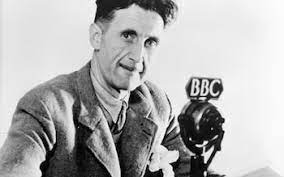
I make no claims to being an expert on the life and works of George Orwell, even though at one time or another I have read almost everything he wrote. And that’s saying something – he wrote a lot, earning his living from his journalism for much of his working life while at the same time writing novels, other books and endless letters to friends and relatives. But in reflecting on Orwell’s life and work it occurred to me that there was one distinctive feature across many periods of his life, and that was his tendency to remove himself from his social sphere and go into exile of one form or another.

The most obvious example of this was his decision to join the Burmese Imperial Police when he left Eton, instead of following the more traditional path of university. The conventional wisdom behind this choice is that it was a combination of academic failure – his tutors simply thought he was not clever enough to go to Oxford or Cambridge, and it is implied that any other university would be beyond the pale – and parental pressure. Orwell father had worked as a Sub-Deputy Opium Agent in the Opium Department of the Indian Civil Service, overseeing the production and storage of opium for sale to China. There were other family connections to the far East – his mother had grown up in Burma and there were still relatives living out there. So the traditional of working in the service of the Empire was strong in Orwell’s family, and he succumbed to this pressure in the face of limited other options. A memoir by a childhood girlfriend, Jacintha Buddicom, (Eric and Us) suggests that a failed romance may have also played a part in this decision. However it came about, Orwell spent several years in Burma, years memorably recorded in fictional form in Burmese Days and in non-fictions essays such as A Hanging and Shooting an Elephant.

His return to the UK at the end of his service didn’t last long. Unable to settle he moved to Paris where he lived and made his early attempts to make a living out of being a writer, the main result being Down and Out in Paris and London. A blizzard of casual and temporary jobs followed for several years, as Orwell lived a fairly itinerant lifestyle, always having his parents home in Suffolk to fall back on when necessary.

His journey to the north of the UK to investigate the poverty that formed the core of The Road to Wigan Pier could be seen as another form of internal exile. Certainly his decision in 1936 to move to Wallington, a small village in Hertfordshire, and open a shop can only be seen as an attempt to escape the pressures of living and working in London, but must also have left Orwell and his wife isolated from friends and family. On a map Wallington may not look that far from London, but it is still a fairly remote village with a population of less than 200, and must have been all the more remote in the 1930s. I can’t be sure how much Orwell lived in Wallington and how much he used it as a base, but I think it was a sanctuary.

Jura, where Orwell wrote 1984 and spent the final years of his life following his first wife’s death in 1945, is as remote a place as you can find in the United Kingdom, and was clearly yet another attempt to remove himself from everyday associations and allow him time to write. In terms of his health it was of course a disastrous choice, but you could not ask for anywhere more remote.

What does this mean for our understanding of Orwell’s work. Was he just someone who was socially awkward and seeking isolation? Perhaps but I don’t think that’s the whole story. He spent so long trying to escape from his class, which marked him clearly by his accent, his dress, his manners, and never wholly succeeded. To be honest I am not sure whether this urge for isolation is reflected in his work at all. His main characters are often socially isolated – look for example at Winston Smith, trapped in his own private hell, having to maintain a façade of party loyalty to his neighbours and co-workers – but is that enough? Perhaps it was more a reflection of Orwell’s personality that wasn’t translated onto the page at all. But I don’t think other readers have highlighted this feature of his life before (I appreciate that is almost certainly wrong – what I should say more accurately that a short internet search hasn’t produced any likely looking results for ‘Orwell in Exile’) and it might be an interesting lens through which to look at his work.

Orwell in Exile

Aside