Book review

One Hundred Years of Solitude, by Gabriel Garcia Marquez, 1967

“Many years later, as he faced the firing squad, Colonel Aureliano Buendía was to remember that distant afternoon when his father took him to discover ice.”

Great first line. Always going to be a tough act to follow.

There are good ways and bad ways of reading a novel. Carefully, taking one’s time, out loud, all fall in the former category. Ten minutes at a time here and there spread over a month or so is definitely the wrong way to read any book, especially one as dense and complex as Gabriel Garcia Marquez’s One Hundred Years of Solitude. This was more from force of circumstance than a conscious decision, but I wouldn’t recommend it. One practical consequence was a serious problem with following the narrative, even down to the simple task of understanding the differences between the characters. Marquez didn’t make this easy (I say this not by way of complaint – it is not the author’s job to make their novels easy to read!) by having only a handful of recurring names for the novel’s many different characters.

One Hundred Years of Solitude tells the story of seven generations of the Buendía Family in the town of Macondo in Columbia. The story opens with the family patriarch, Arcadio Buendía, facing the firing squad for crimes against the Government. The narrative then takes the reader back to the founding of Macondo by the Buendía family. Initially Macondo is isolated from the outside world, apart from an annual visit by a band of gypsies, who show the townspeople technology such as magnets, telescopes, and ice. Melquíades, the gypsy king, becomes a recurring figure in the novel and the key to its final resolution. When Macondo becomes involved in the affairs of the wider world its troubles begin. A rigged election inspires Aureliano Buendía to join the rebellion against the Conservative government. I know how he feels.

The Buendia family saga feels longer that it is. The large cast of characters grow up, fall in love, or not, then die, to be succeeded steadily by the next generation with their own challenges and successes. It could have been the disjointed way I read this novel, but I found the steady march of the years made it difficult to engage with the characters who never made it off the page and became real for me.

100 years made a huge impact when it was first published, and remains highly thought of. The magical realism motif (I think I did well to get this far without using that term) was almost revolutionary at the time – it would be wrong to say it has become passe, but it certainly doesn’t have the same impact more than fifty years on. I enjoyed the light-hearted aspects of this novel the most, the way science and magic are blended together to prove that Arthur C Clarke saying that “any sufficiently advanced technology is indistinguishable from magic”.  The people of Macondo react in alarm and wonder to things such as films where an actor who dies in one film “reappears alive” in another, but take magic carpets in their stride.

There’s lots to enjoy in this novel. Some characters will appeal, and if they don’t another (probably with the same name) will appear soon enough. The prose is poetic and usually stays the right side of over the top. Some scenes are comic, others more disturbing, but I don’t think it takes itself too seriously despite the serious themes.

Finally I leave you with this review from a reader who took the trouble to post a review online, but didn’t take a lot of trouble with the reading of the novel itself:

“(It) didn’t do much for me; just a load of people sitting on a mat, munching.”

Standard
Book review

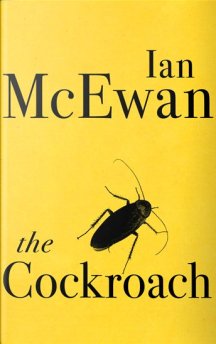
The Cockroach, by Ian McEwan, 2019

The Cockroach runs to less than 100 pages, and was obviously written quickly, in a state of intense anger. It takes as a starting point Franz Kafka’s Metamorphosis and cleverly turns it on its head – a cockroach is turned into a human being. At first he finds the cockroachclumsy nature of the body he has acquired, with its floppy limbs and internal skeleton hard to cope with. In his mouth “a slab of slippery meat lay squat and wet”. Because he no longer has compound eyes, everything appears “oppressively colourful”. His head is large, and his eyes can move. His skeleton is covered in flesh. Slowly it is revealed that this isn’t any random human that he has been turned into, but the Prime Minister, Jim Sams, who bears a profoundly close similarity to the man who is at the time of writing, but hopefully not much longer, the Prime Minister of the United Kingdom.

Kafka is fairly quickly left behind, as the new Prime Minister launches a plan to implement an economic policy so insane that only a thinly disguised President Trump can support it. The UK is driven through the looking glass into a world in which up is down, lies are truth, Parliament is the enemy of democracy, and the constitution is there to be ignored. McEwan’s solution to how Brexit could be forced through Parliament even though the Government doesn’t have a majority was inspired. For months we were told that Johnson and Cummings had a cunning plan which only four or five people had been told about, but that would see Brexit delivered on 31st October. That was all horseshit, but McEwan could have worked it for them it he had been so inclined. I bet they are kicking themselves! Job done, the cockroaches return to their previous form, but not before one is trodden on, thereby providing a tasty snack for his partners in crime.

Reviewers have consistently compared this novella to the work of Jonathan Swift, which is extraordinarily high praise indeed. Swift’s work often seems driven by anger, and here McEwan rages at the stupidity of Brexit (without mentioning it) as a massive act of national self harm which can only be rationally explained by metaphor. There are of course many economic and political explanations for the forces that led to the Brexit vote (and Trump’s election) but you won’t find any analysis of those forces here. Instead this is a cathartic rage against the forces of darkness threatening our country, forces that don’t read novels and don’t really care for reading anything else much either.

McEwan’s website helpfully summarises his motivations in The Cockroach, although we could probably have worked these out for ourselves – nevertheless the clarity is useful:

As the nation tears itself apart, constitutional norms are set aside, parliament is closed down so that the government cannot be challenged at a crucial time and ministers lie about it shamelessly in the old Soviet style, and when many Brexiters in high places seem to crave the economic catastrophe of a no deal, and English national extremists are attacking the police in Parliament Square, a writer is bound to ask what he or she can do. There’s only one answer: write. The Cockroach is a political satire in an old tradition. Mockery might be a therapeutic response, though it’s hardly a solution. But a reckless, self-harming, ugly and alien spirit has entered the minds of certain politicians and newspaper proprietors. They lie to their supporters. They express contempt for judges and the rule and norms of law. They seem to want to achieve their ends by means of chaos. What’s got into them? A cockroach or two, I suspect.

Reviewers struggled to appreciate this novel, despite it being a very simple parable and despite McEwan’s even simpler translation above. The New Statesman’s judgment was that:

“If the book cannot be considered any kind of addition to the oeuvre, it is at the very least a coda to more substantive ventures, and another clue in the ongoing quest to understand what really matters to McEwan”

This misses the point spectacularly. Literature is not a guessing game where the novelist,  slowly reveals text by text clues to “what matters” to him or her. If you manage to read The Cockroach without working out within a few pages that McEwan is angry as hell with the state of the United Kingdom in 2019 then all the clues in the world aren’t going to help you divine what matters to him. 

The Guardian had reservations about McEwan’s use of cockroaches as an image for the Cabinet:

“Comparing one’s political opponents to cockroaches is a toxic metaphor with a nasty political history and it is hard to read McEwan’s novella without a degree of discomfort.”

The Spectator, formerly edited by the Cockroach in chief himself, had similar reservations:

“For many of us, it will never be at all OK to describe democratically elected politicians as ‘cockroaches’. It was the word by which the génocidaires in Rwanda called their adherents to action”

This is the same Spectator that ran an article in 2015 headed “She’s wrong but Katie Hopkins has a right to call migrants cockroaches”. Satire may be on the critical list, but irony is not dead!

Standard
Book review

Mostly Harmless, by Douglas Adams, 1992

There’s an obvious, I might even say lazy, reading of Mostly Harmless that goes something like this:

It is well known that Adams struggled with writing these novels. His lack of interest in the process is apparent in the steady decline in quality across the series, ending with this novel in which the plot is confused, the multiverse theory is wheeled out several times to explain away any inconvenient plot holes, and the ending is the author slamming the door on any further possible sequels. (In fact this novel was published posthumously, so that wasn’t really an issue as it turned out!) The dark and frankly depressing tone of the novel is largely a feature of Adams’s melancholy mood during the time he wrote it.

And of course much of that is true. The question is not whether this is a fair summary of the novel but whether there is something more interesting to be said about it?

Mostly Harmless, the fifth book in the “increasingly inaccurately named Hitchhikers’ Trilogy” derives its title from a joke earlier in the series, when Arthur Dent discovers that the entry for Earth in The Hitchhiker’s Guide to the Galaxy representing 15 years’ worth of research by Ford Prefect, consists of the word “Harmless”, which is later updated toMostly harmless”.

Arthur Dent, the one constant throughout the series, loses the love of his life, his girlfriend Fenchurch, when she disappears into an alternative time stream during a hyperspace jump. An understandably depressed Arthur wanders the galaxy, eventually ending up stranded in yet another lonely planet, where he decides to become a sandwich maker, as one does. In a parallel storyline, Ford steals a new and as yet-unpublished version of the Hitchhiker’s Guide as an act of rebellion against the guide’s new owners. In a third strand Tricia MacMillan is tortured by the thought of what her life might have turned out to be if she had left with the alien she once met at a party who invited her to travel the galaxy with him. Finally a Trillian from a separate timeline conceives a child, Random Dent, using donated sperm from Arthur.

Now if you step back a minute there’s no doubt that this as a plot outline shows some promise. Admittedly there is a considerable amount of repetition from previous novels – being stranded on a lonely planet is pretty much where we started after all (with Ford on earth). The satire is a bit heavy-handed, and the multiverse idea isn’t exactly original. But it’s a good start nonetheless. Tricia/Trillian finally gets some serious page time being more than just arm-candy for Zaphod, and the idea of the unintended consequences of over-enthusiastic sperm-donation coming back to haunt the donor is worth pursuing. So I think what I am trying to argue is that there is a good novel here struggling to get out, but not quite making it. The re-imagining of the guide as a sinister force that can navigate through time and space, inhabiting all possible universes at the same time, takes the quite benign original concept of the guide – not much more than a book after all – and turns it into a destroyer of worlds. The ending, with Ford laughing wildly at the absurdity of the universe, and Arthur finally experiencing a “tremendous feeling of peace”, feels like an entirely fitting way of Adams’s saying goodbye to his characters. 


Mostly harmless is undeniably bleak at times. Its plotlines are often left dangling – I would really like to know what happened to Fenchurch, Zaphod and Trillian for example. But (and I am very conscious I have written this many times before, of other writers and possibly of Adams as well) a badly constructed, bleak, and confused novel by Douglas Adams is still a thing of great joy. With more time this might have been a fitting finale to the series.


Standard
Book review

So long, and thanks for all the fish, by Douglas Adams, 1984

It will not take most readers long to work out that So Long and Thanks for All the Fish, the fourth book in the Hitchhiker’s Guide to the Galaxy trilogy, is a very different type of novel from its predecessors. These were all (more or less) novelisations of other iterations of the story, mainly the radio series in which Hitchhiker first appeared. Fast paced and fizzing with ideas, these earlier novels can be consumed in one sitting. So long, on the other hand, is a much more reflexive novel. Adams tries to capture some of the spirit of Hitchhiker etc, but eventually settles down to a much more traditional, earth -bound romance. 

At the end of Book 3 in the series, Life, the Universe and Everything, Arthur Dent, Adams’s eternal everyman, and his alien friend Ford Prefect were stranded on earth millenia before the present day. Things have now obviously moved on, because Arthur and Ford are no longer together. This is really Arthur’s novel, and Ford fades into the background playing only a minor role towards the end.  Having hitchhiked across the galaxy, Arthur is dropped back on Earth, even though the planet was. as you will recall, destroyed by the Vogons to make way for a hyper-space bypass. Arthur is surprisingly calm about this, and continues to do what he knows best – hitchhike, restlessly trying to understand what has happened to restore the earth, and where all the dolphins have gone? He has a hunch the two things are connected.

On his travels he catches a lift with a man named Russell and his sister Fenchurch. Fenchurch is withdrawn and uncommunicative, and Russell hints that she is mentally unwell. It slowly becomes clear that Fenchurch’s condition is connected to the demolition of the Earth and its subsequent reappearance, which the rest of the population avoids thinking about by claiming it was mass hysteria. Arthur is fascinated by Fenchurch, partly because he is strongly attracted to her, but also because he suspects that she is one of very few people left on earth who might be able to understand what he has experienced.

As the novel unfolds their paths keep crossing and uncrossing. Arthur finds Fenchurch hitchhiking, gives her a lift, but on parting manages to lose her phone number. He then miraculously rediscovers her by searching for the cave he lived in on prehistoric Earth – her flat is on the same spot on this quasi-Earth. There is something strange about Fenchurch, and it is only when Arthur finally works it out that they are able to properly connect with one another. It transpires that Fenchurch was the woman mentioned in passing in the opening chapter of the previous novel who, moments before the earth’s demolition, had stumbled across the answer to life, the universe and everything. Someone who in the previous novel was just a throw-away gag becomes here a central character. The destruction of the earth had interrupted her epiphany, and Fenchurch is now left with a nagging sensation that a tantalising breakthrough is just out of reach – and the thought is making her ill.

Eventually, they are reunited with Ford Prefect, and they set off once again across the universe to visit the planet where God’s Final Message to His Creation is written, in the hope that it might give them some peace. On the way they encounter Marvin, the paranoid android, still as misanthropic as ever, but now some 37 times older than the known age of the universe and on his last circuits.

Neil Gaiman’s introduction reveals some of the pain Adams went through in composing So Long, but if you didn’t know it would probably still be apparent. At one point for example he retells in detail an urban legend (the one about the man sitting opposite you in a cafe who helps himself to your biscuits). It’s exquisitely told, but it’s padding nonetheless. (There was a point to this story, but it has temporarily escaped the chronicler’s mind.) Gaiman reveals that Adams’ editor moved in with him in a vain attempt to ensure that the book was completed to deadline. This might have led to some of the unevenness of tone of the novel, a feeling that every word was an effort and that the end comes as much to a relief as Adams as it did to Marvin. But a bad book by a genius can’t but help but be a work of genius, even if it is flawed. There are many moment to savour in So Long, not least the title which like many of Adams’s phrases has entered the general lexicon. This is not Adams at his best or his most inventive, and the jokes are a little dated (“There is a feeling which persists in England that making a sandwich interesting, attractive or in any way pleasant to eat is something sinful that only foreigners do.”) but it must still be treasured as part of the wider contribution he made to our culture.


Standard
Book review

Adolf Hitler, my part in his downfall, by Spike Milligan, 1971

If this blog is anything, it is at heart a reading diary, a record of the books I read and my thoughts about them. What I read is not always going to be improving or classic literature – far from it – and it follows that from time to time I will review books that would not normally feature in a book blog. But having said all that I am not in the slightest embarrassed to be re-reading Spike Milligan’s inspired Adolf Hitler, my part in his downfall once again. It seems the perfect book for these times, a quiet voice of sanity amongst the madness that is the world of today.

My Part is the first volume of Spike’s war memoirs, spanning the period from the declaration of war to when he landed in Algeria as a part of the Allied invasion of Africa. It is the first of wMilliganhat was eventually to be seven volumes of reminiscences covering his war service and the years immediately after when he was trying to resume his life and break into showbiz. The diary format used captures the immediacy of the experience of being called up to fight for one’s country, the strange combination of dread and adventure that many young people must have felt. The memories of ridiculous, outrageous adventures – Milligan obviously retained a strong sense of silliness throughout his life – and tragedy (“There were the deaths of some of my friends, and therefore, no matter how funny I tried to make this book, that will always be at the back of my mind”) combine to give the novel its unique, immensely touching tone. 

The novel opens with Spike receiving a “cunningly worded invitation to partake in World War II“. Given “a train ticket and a picture of Hitler reading “This is your enemy”‘ he sets off for war – or more specifically Bexhill-on-Sea, where he begins what seems an extraordinarily long period of training in the artillery. Training largely serves as a background to his musical interests – playing in a jazz band, and chasing girls. After more than two years of training, drinking, music and girls, all overlaid with large amounts of silliness as Spike hones his comedic skills in preparation for the career that was to follow, the inevitable order to travel overseas arrives. In January 1943 the regiment finally embarked for North Africa. Milligan describes the sunrise:

...there is no light so full of hope as the dawn; amber, resin, copper lake, brass green. One by one, they shed themselves until the sun rose golden in a white sky…I closed my eyes and turned my face to the sun. I fell down a hatchway. (p 140)

There are several moments of poetic writing such as this, always undercut by the punchline. It is here, as the reality of war begins to dawn on the very young men in Spike’s regiment, that he ends the volume,

I would hazard a guess that Milligan partly wrote these memoirs as a trip down memory lane, a way of capturing the memories before they faded too much, and partly as a convenient source of revenue – the books have always sold well, and this one was also turned into a film. It’s a curious mix of seriousness and silliness, but it works, and Milligan’s wit and humanity shines through. He’s certainly not made the hero of his own book – there are far too many confessions for that – but the reader can understand why Milligan got off so lightly so often for his misbehaviour and insubordination.

Standard
Book review

Laughter in the Dark, by Vladimir Nabokov, 1932

Laughter in the Dark is a early novel by Vladimir Nabokov that contains some of the ideas and themes that he was to return to in the later Lolita.nabokov

First, a quick plot summary: Albinus is a prosperous middle-aged art critic living in 1920’s Berlin, who in a classic mid-life crisis takes a mistress, the amoral 17-year-old Margot. Margot is interested only in Albinus’s money, and quickly engineers a split between him and his wife. Margot wants to be in the movies, and Albinus indulges this and her every other fantasy, even though she is clearly a dreadful actress. The first of a series of crises then begins to afflict Albinus. His young daughter dies from pneumonia. He unknowingly reintroduces Margot to one of her former lovers, Axel Rex, with whom she almost immediately resumes an ‘intimate’ relationship. A holiday to the south of France accompanied by Rex, who has persuaded Albinus he is gay and therefore not a threat, goes as badly as you might expect, setting them all up for a tragic (if also comic) finale.

This is a relatively slight novel.  While it contains echoes of Lolita, it has none of that novel’s power and compelling characters. This was to me a previously unknown Nabokov, which is always cause for some excitement – I think he is one of the colossus of twentieth century literature – but there is little in Laughter in the Dark to detain the reader for long. The characters do not linger in the memory – they are all either vile and amoral – Margot and Axel in particular are two-dimensional villains without a shadow of nuance – or weak and uninteresting. Even Albinus’s brother in law Paul, who shows a bit of gumption when he finds out he is being defrauded by Margot and Axel, travelling to their holiday retreat and confronting them, is ultimately unable to intervene and prevent tragedy occurring. It’s not really a tragedy however – we don’t care enough about the characters to be upset when they meet their fate – but it’s not that comic either. The scenes where Axel taunts the blinded Albinus are cruel and unsettling, and probably come closest to tragi-comedy.

I keep however coming back to those echoes between this novel and Lolita. The latter is dominated by Humbert Humbert’s lust for his step-daughter, his consuming obsession with her youthful body. Light of my loins, etc. Lolita is portrayed as being indifferent to or even a bit bored by this obsession – she is aware of Humbert’s feelings and is able to manipulate him by using them, but she doesn’t reciprocate them. Or at least that is what the narrator in Lolita, Humbert, tells the reader. In fact it is clear that this is not the case, and that Lolita is repulsed by her abuser (see my review for a lot more on this). Humbert prefers his choice of narrative because it both explains her lack of affection for him and justifies his abuse. So there are two narratives – what Humbert is telling us is happening, and what the author reveals is going on behind Humbert’s self-justification. He is honest about his lust, but dishonest in his portrait of Lolita’s response. He pretends to be harsh on himself – she never really loved me – to disguise the fact he was abusing her all the time.

The relationship between Albinus and Margot is a pale imitation of this later ‘relationship’. Margot casually reciprocates Albinus’s lust. “She on her part was always ready to respond to his lovemaking; it only refreshed her” (note the “only”).

Here she is described after a day on the beach, putting on a show for Albinus:

“In the cool room with the red-tiled floor…Margot, snake-like, shuffled off her black skin, (her swimsuit) and, with nothing on but high-heeled slippers, clicked up and down the room, eating a sibilant peach; and stripes of sunshine crossed and recrossed her body”. (chapter 14).

I can’t think of another writer who would have described the act of eating a peach, in itself obviously sexual, as “sibilant”. Margot uses sex with Albinus as a way of getting what she wants – she tells him not to lay a hand on her until he has spoken to his wife about a divorce. Lolita, several years younger, is unable to exercise this form of power, even though Humbert consistently tries to portray her as behaving that way. So the equivalence between Margot and Lolita that some readers might be tempted to make is utterly wrong, even if both men see them in the same way. Albinus and Humbert are both dirty old men tempted by much younger women, but only one is a step-parent and child-abuser. Laughter in the Dark is at the same time a simpler and less troubling novel than its successor, but doesn’t ever escape from its shadow.

Standard
Book review

Melmoth, by Sarah Perry, 2018

“Perry’s masterly piece of postmodern gothic is one of the great literary achievements of our young century and deserves all the prizes and praise that will be heaped upon it.

That was the Guardian’s lavish view of Perry’s 2018 follow up to the extraordinarily successful The Essex Serpent, although the quote is edited slightly on the front cover of the paperback edition (“One of the great achievements of our century” (see below). See what they did there, cutting out the words “literary” and “young” – I bet they thought they would get away with that, because who would check? Me!). Nevertheless, the bar had been set.Melmoth

Helen Franklin, a translator of tedious technical articles, lives in exile in Prague, trying to put her mysterious past behind her and at the same time paying penance for her unspecified sin. Her social circle is very limited, in fitting with her ascetic life of isolation, but she has two friends Thea and Karel. Karel has been researching the folklore tale of Melmoth, a mythical figure who walks the earth witnessing sin. His collection of manuscripts has begun to haunt Karel, so he leaves Prague, Thea, and pretty much the novel, for a fresh start as an activist against immigration enforcement. Yep, that’s what people do. This is shoe-horned in to make a heavy-handed point – in life we should not just witness wrong being done, but do something about it. Being a passive witness is as bad as being a participant in the offence, as stories from Karel’s collection testify.

The individual stories in this collection are compelling – scenes from the German occupation of Czechoslovakia, and the subsequent retribution towards the occupying forces; memories of the Armenian massacres/holocaust in the first world war, and Helen’s own story, eventually revealed, of a terrible crime in Malaya. But these are relatively brief testimonies that create a fractured narrative. The over-arching story – Helen and her haunting by Melmoth – is not that interesting, and I found the novel only sparked into life when the stories within the story were being told. The supernatural element of the novel left me cold – horror when well done can be effective if it draws upon our deep-rooted fears of the real world, but here it becomes predictable and unthreatening very quickly. We know Melmoth is going to be lurking around somewhere, but don’t really care.

I came extremely close to abandoning this novel at around the three-quarter point, and it was really only the knowledge that I would have to confess to doing so here, together with a dollop of stubbornness, that kept me going. I am glad I did because Helen’s tragic story, revealed toward the end of the novel, and its denouement, was worth the wait, but the effort in getting there was considerable. This novel has none of the pace or compelling characters of the Essex Serpent. It’s not a bad novel, and Perry is not a bad writer, but this misfires and allows the message to drive the story, not the other way round as it surely should be. The experiment with structure is not the problem – it is an absence of characters we have any real interest in that lets the novel down badly. The discussion element of the novel – can we be a bystander in life, or do we have to actively resist oppression, because if we don’t we become complicit in it, however unwittingly – is a serious attempt to engage in this issue, and I am sure has sparked a lot of worthy book-club discussions (this edition had “suggested topics for your book club” as an endpiece) but for me wasn’t enough to redeem the novel or drive the narrative. Sorry! I feel a bit of a cad for being so negative about this novel because there are a lot of positives in there, but the heart of the novel – an interesting story – is missing.

For getting this far, here’s a couple of cookies:

  • Melmoth the Wanderer is the name of Humbert Humbert’s car in Vladimir Nabokov’s Lolita
  • Sebastian Melmoth was a pseudonym used towards the end of his life by Oscar Wilde

And finally, I found this spoof in a Goodreads review which I thought was exquisitely well done and pricks the pomposity of the original – apologies for the plagiarism!

“Melmoth the Wanderer meets Winnie the Pooh

It is I, Melmoth, known as Melmotka, wanderer of the centuries of man’s sufferings. My child, my Winnie, whom I have longed for, from whom my eyes have never wandered, at last I am come, as you knew I must, I who have watched over you from the hour of your birth until now, that you may be delivered from torment! I, Melmoth!

“Would you like some honey?” Said Winnie, known as The Pooh. “I found it, you see, so now I am… eating it. It is nice. You could have a bit. Just a little bit.”

Melmoth the Wanderer meets Mary Poppins

It is I, Melmoth, known as Melmotka, wanderer of the centuries of man’s sufferings. My child, my Mary, whom I have longed for, from whom my eyes have never wandered, at last I am come, as you knew I must, I who have watched over you from the hour of your birth until now, that you may be delivered from torment! I, Melmoth!

“Well now, Mrs did you say Melmoth? It’s an odd name you know. Please don’t stand there like a large fish with legs. You are welcome to accompany us to the Botanical Gardens but you’ll have to move a little faster than that.”

Melmoth the Wanderer meets Shrek

It is I, Melmoth, known as Melmotka, wanderer of the centuries of man’s sufferings. My child, my Shrek, whom I have longed for, from whom my eyes have never wandered, at last I am come, as you knew I must, I who have watched over you from the hour of your birth until now, that you may be delivered from torment! I, Melmoth!

“So let me get this straight. You’re jist gonna stand there and watch me? Well, are ye quite sure about that? Because your likely going to be seeing some pretty disgusting things if you do. You know, I knew a Melmoth once. Oh no, right, I knew Mel the Moth. He was a moth.”

Standard
Book review

A Town Like Alice, by Nevil Shute, 1950

In the early 1950’s the world was full of survivors. Everyone had their own story about the second world war. Many people just wanted to get on with their lives. The UK was being rebuilt and a very different world was emerging. Some people didn’t like the direction the UK was going and decide to start new lives in Australia. A Town Like Alice is Nevil Shute’s response to that period and process.Alice

Jean Paget, a secretary in a leather goods factory, inherits a substantial legacy from her uncle. The money is put in trust until she is 35 – her uncle did not believe young women could be trusted with large sums of money – and it is managed by her solicitor, the novel’s narrator. Jean decides to use her windfall to repay the kindness shown her during the war by some Malay villagers, by building them a well. Jean is aware that the burden of manual work falls upon the women villagers, and she wants to lighten their load, describing the well as “a gift by women, for women”.

This idea leads to an extended flash-back in which she recounts her experiences in the war as a prisoner of the Japanese forces. She leads a group of women and children who are marched across the Malayan countryside. This route-march leaves many of the elderly and children dead of starvation, disease, and exhaustion. During this exodus, based on a true story, Jean meets an Australian soldier, Joe Harman. Joe is also a prisoner of war. He drives a lorry for the Japanese and wants to help Jean and her group. He steals food and medicines for them, but is caught and in a form of punishment said to be widely used by the Japanese he is crucified. The women are marched out of town to their next destination, believing that he is dead.

Back in the present, the well is built, and during its construction Jean learns Joe did not die. She travels to Australia to find him. She visits Alice Springs, the ‘Alice’ of the novel’s title, and is struck by the high quality of life there. (There is a constant emphasis in all her conversations with Australians about the poor rationed diet in the UK. Every meal Jean eats is opulent in the extreme. Shute is trying a little too hard to stress the riches of Australia). She journeys on to Willstown in the Queensland outback, where Joe is manager of a cattle station. Willstown is a shocking contrast to Alice – poor, struggling, almost deserted, with only one general store and a bar. The weather is always stiflingly hot. Joe meanwhile has been on his own journey to find Jean, travelling to the UK to find her once he realises she is single (she carried a toddler when they met, the surviving child of one of their party, so he assumed she was married. Despite Jean bringing this child up for three years he is handed back to his father and the end of the war and heard from no more.)

The third section of the novel records Joe and Jean’s relationship and marriage, and Jean’s attempts to turn Willstown into a ‘town like Alice’. She uses her legacy, which originally derived from gold-prospecting in Australia, to bring life back to the town, opening a small leather goods factory, an ice cream bar, and a number of other businesses. The novel closes three years on with the expansion plans coming along nicely, with Willstown flourishing.

In some respects Alice is a fairly progressive novel. The lead female character is strong and independent, demonstrating that her uncle’s concerns about women’s ability to make business or financial decisions were unfounded. She deals with the trauma of the war in a no-nonsense manner. The Japanese are portrayed as largely honourable soldiers, with the guards helping to carry the children among the party during their long journey. Shute also makes a persuasive case for inward investment into Australia, positioning it as a return for the use of the country’s resources.

But elsewhere the novel’s attitudes towards racial issues will be to a modern sensibility. Aborigines are described using pejorative, insulting terms. They only speak pidgin English, and are given menial jobs suited to what the author appears to believe is their limited intelligence. Aborigines and white people are segregated even in the consumption of ice-cream – Jean’s ice-cream bar has separate rooms for while and aborigine customers. A mixed race marriage is described as a source of humiliation. The earlier war section of the novel is more progressive in its description of racial characteristics. Jean adopts Malay ways of dressing and behaving because they are suitable to her situation, and is quick to abandon expat attitudes and behaviours, particularly the assumption of superiority. She bargains with a Malay village leader citing the Koran to make her point and offering to help with the rice cultivation. It is interesting that Joe behaves differently towards Jean when she is wearing Western dress – he can’t touch her – but when she puts on a sarong she is left bruised by his ‘ardour’.

At its heart Alice is an optimistic book – the war leaves its mark on survivors, in Joe’s case quite literally – but they come through it into a period of prosperity where technology and modernisation holds all the answers. If only Australia’s problems were really all that simple.

Standard
Book review

Maskerade (Discworld 18) by Terry Pratchett, 1995

Regular readers of this blog (should there are any) will notice a pattern emerging in which I alternate between a classic/serious novel and the next book in the Discworld series. Today is a Discworld day, more specifically the wonderful Maskerade. And the good news is that this is one of the best, featuring the extraordinary witches of Lancre.Mask

The plot is a simple parody of the Phantom of the Opera. Agnes Nitt, destined to become a country witch leaves sleepy Lancre to seek fame and fortune at the Ankh-Morpork opera house. (It is perhaps surprising that a city as violent and lawless as Ankh-Morpork has its own opera house, but Discworld is anything but predictable). At the same time the wonderful Granny Weatherwax finds out that the equally wonderful Nanny Ogg has written a popular cookbook – but has not received any royalties from the publisher. They set out for Ankh-Morpork on a mission to collect what Nanny is owed, with an understanding that they will probably pop in and visit Agnes along the way, and if she agrees to join their coven in a firmly junior position that would all work out fine as well (“You needed at least three witches for a coven. Two witches was just an argument.”). There is nothing as definite as a plan here. 

The stage is set for what is a surprisingly tightly written mystery story – although I had read the book before I couldn’t easily work out whodunnit – as well as a wonderfully comic novel. While Pratchett always has a serious point in the back of his mind, here the seriousness never gets in the way of the fun – for example the scene where the senior witches stay in Madame Palm’s house for ladies of negotiable affection, and manage somehow to make it even more disreputable, is glorious!

Maskerade is fantastic. It features two of my favourite characters in the whole of fiction, Nanny Ogg here finally stepping out from the shadow of Esme Weatherwax with her own special brand of magic (in essence, being nice and talking to people), and of course Esme herself. The witches have been on a road trip before, (Witches Abroad) but here they can play uninhibitedly in Ankh-Morpork. Pratchett clearly had a huge amount of affection for these characters – they are immensely endearing and believable. (Re-reading what I have written there I can’t help notice the abundance of superlatives, but it’s a fair reflection of how I feel about the novel.)

Nanny Ogg is a complete nihilist –  her philosophy of life is summarised as “do what seemed like a good idea at the time, and do it as hard as possible.” She gets some great lines, such as:

“Can you identify yourself?
-Certainly. I’d know me anywhere.”
Is it me or is there a hint of the Marx brothers in that joke? This is after all a night at the opera?
There is no reverence whatsoever for the seriousness of the setting:
Well, basically there are two sorts of opera,”
said Nanny, who also had the true witch’s ability to be confidently expert on the basis of no experience whatsoever.
“There’s your heavy opera, where basically people sing foreign and it goes like “Oh oh oh, I am dyin’, oh I am dyin’, oh oh oh, that’s what I’m doin'”, and there’s your light opera, where they sing in foreign and it basically goes “Beer! Beer! Beer! Beer! I like to drink lots of beer!”, although sometimes they drink champagne instead. That’s basically all of opera, reely.”
The quality of the jokes, is as ever, both terrible and wonderful at the same time – such as here when describing Nanny Ogg’s cookbook
“What about this one? Maids of honour?”
“Weeelll, they starts out as maids of honour…but they ends up tarts.”

:

Standard
Book review

The Old Devils, by Kingsley Amis, 1986

It is only human nature to assume that reasonable people will agree with you. So when I finished The Old Devils I looked for reviews in the expectation that they would broadly align with my thoughts – that the novel had stolen the 1986 Booker prize from The Handmaid’s Tale, that it was the work of an embittered writer at the end of his career publicly working out many of his frustrations and grievances with the modern world and his own mortality, and that time would not have been kind to critical reception of the novel.

But I was wrong.

When it was first published The Old Devils was lauded with praise, winning the aforementioned Booker but also being widely recognised as a late-flowering of Amis’s comic genius. John Bayley wrote an extraordinary florid paean to the novel in the London Review of Books which is worth reading in full for its hyperbole, its use of obscure language (fauteuil, donnée), its name dropping (Elizabeth Bowen, William Trevor, Anthony Powell, Henry James, Patrick Hamilton, Jane Austen (whom Amis has never much cared about”), A.N. Wilson and a “long ago purveyor of Gothic novels, Mrs Barbauld” are all name-checked) all without ever managing to put his finger on the elusive nature of Amis’s comic genius.

More recently a reviewer in the Guardian’s book column in 2010 wrote

“Kingsley Amis’s success at the 1986 Booker prize seems like the natural culmination of a long and distinguished writing career. One of the finest comic writers of his generation – century even – had done the natural thing and written a bloody brilliant book”

The Wales Art Review (? me neither) called the novel

“his greatest single creative achievement” and (together with Lucky Jim)

“Two of the greatest novels of the twentieth century without doubt”

V.S. Prichett, writing in The New Yorker described the novel as being in

the old, robust masculine tradition of British comedy from Fielding and Smollett”.

And of course son Martin thought that the novel

stands comparison with any English novel of the century.”

Would that weight of critical opinion sway me?

Not a vast amount happens in The Old Devils. Alun Weaver, a writer and minor celebrity, (we are told he is a writer, but he doesn’t seem to have written very much, and the extent of his celebrity is very much open to debate) returns to his native Wales with his wife, Rhiannon. Many years ago before the Weavers left Wales their friendship group had gone through the various re-configurations that happen among younger people. In particular Rhiannon had once been loved by Alun’s old friend and now enormously, comically fat Peter Thomas. Alun and Rhiannon resume life with their close knit group of friends almost as if they have never been away – there is no suggestion they would look for other social groups – which stirs up long dormant feelings amongst former lovers. That’s pretty much it. Time is spent drinking heroic amounts of alcohol that in the non-fictional world would leave people falling over drunk in a fraction of the time sustained here. not least because there seems little else to do. Amis concludes the novel with a death and a wedding, the latter between two younger characters who have been largely ignored during the previous chapters.

I have always thought of Amis as a good bad writer, one who writes clumsy, poorly constructed sentences simply as a way of drawing attention to their deliberate awkwardness. Take this sentence for example:

“As they stood, or with some minor surgery, they were supposed to be, he had striven to make them, his devout hope was that they were, the opening section of the only really serious piece of prose he had written since his schooldays.”

These are the faltering thoughts of Alun Weaver considering the opening pages of a novel he has just started, and which turns out to be, by consensus, rubbish. No doubt it took a lot of care and craft to make the sentence so unclear and scrappy, and it does admittedly reflect Alun’s thoughts and apparently his gifts as an author. But it’s still a horrible sentence, no matter how many times you read it.

Here’s another example:

All sorts of stuff, for instance what had been taking place a little earlier, seemed much as before, or at any rate not different enough to start making a song and dance about. This state of affairs might well not last for ever, but for the moment, certainly, the less it changed the more it was the same thing, and the most noticeable characteristic of the past, as seen by him, at least, was that there was so much more of it now than formerly, with bits that were longer ago than had once seemed possible.

Ultimately you can choose to read this as a gentle meditation on aging, or the cliche-ridden (song and dance, state of affairs) muttering of someone growing old disgracefully.

The humour in the novel is intended to derive from Amis’s portraits of flawed human nature. People are pompous, lecherous, complacent, stupid, and all manner of human weakness is on display for our entertainment. But I really struggled to care about these largely unpleasant people. There were several points in the novel where I was unable to work out who was speaking in a passage of dialogue, and then suddenly realised it didn’t really matter because I didn’t care.

Here’s Amis’s unflattering portrait of Malcolm, one of the group of friends, dressed to impress an old flame:

“When he had got out of his very shiny bright-blue car and at a second attempt shut its driver’s door, Malcolm revealed himself to be wearing a hacking jacket in dark red, green and fawn checks that were too large by an incredibly small amount, cavalry-twill trousers he must have been uncommonly fond of, a pale green I’m-going-out-for-the-the-day-with-my-old-girlfriend cravat or ascot, and, thank goodness, a plain shirt and ordinary brown lace-up shoes.”

Is this brilliantly observant, or crudely done? Older people don’t dress very smartly, even when they are trying hard to impress. The point of view judgment in this analysis comes from Rhiannon, the old-girlfriend in question, who gives thanks for the plain shirt and ordinary shoes. Amis deploys these subtle changes of point of view with the skill of an experienced writer, unquestionably, but I am not convinced that there is much humour here, even if there is less spite than earlier late Amis either.

I appreciate I am edging round the question of whether I actually thought The Old Devils was any good. Let’s put it this way – I have my doubts. Without question the praise I have referenced earlier in the post is over the top. This is not a classic or a masterpiece or anything like it. Most of the time I managed a wry smile, at best, and much of the time I was bored. The characters are hard to like – Amis goes out of his way to make them unattractive and unappealing, and they are poorly delineated, particularly the women who Amis struggles to distinguish between other than by their physical features.

My principal source of irritation with this novel is its dishonesty. Amis had at this point in his career developed a reputation as a declining writer focused on personal themes – his serial adultery, his alcoholism, his declining health. He has sketched out a series of characters with these qualities or attributes, then ventriloquized through them on his tired personal and political hobby-horses – homosexuality, the ridiculousness of compulsory Welsh/English language public signage, faux-Welshness, trade-unionists and so on. Of course one must always be careful to distinguish between the personal views of an author and their characters, but there is a strong case for concluding that Amis shares many of the prejudices his characters articulate – he repeats these views consistently in a series of later novels, he attempts to make the characters articulating these views sympathetic and invariably shows only the reasons why they are justified in these views – opposing views are ignored. Reviewers seem relieved that this is not the openly misogynistic rant of Stanley and the Women or Jake’s Thing, but that doesn’t make it Lucky Jim either.

Finally, and for me most seriously, there is what I think of as the “shagger” issue. (apologies for the language but it seems appropriate in the context, and any euphemism wouldn’t quite meet the mark). There is a recurring character in many of Amis’s novels who is an appalling chauvinist with nevertheless a mysterious and limitless powers of seduction. He is always on the lookout for an opportunity for random sexual encounters, however inappropriate or untimely, always “up for it” irrespective of time, place or situation. He will sleep with anyone at anytime, and inexplicably has the power to persuade the women in his life, invariably married to someone else – to sleep with him with the minimum of seduction/persuasion/courtship. They just jump into bed with him – because the narrator can portray them doing so, not because these powers are in any way realistic or believable. So Alun Weaver has not been back in Wales many hours before he pops in to visit Sophie, wife of an old-friend, in the expectation of a casual encounter. The conversation is initially hostile but Alun charms his way into Sophie’s bedroom, and slowly the quotation marks are interrupted by rows of dots suggesting intimacy is underway. They only confirmation that the seduction has succeeded is the phrase “Much too late to spoil it the telephone-bell rang on the landing”, “it” in this context being Amis’s coy euphemism for sex.

This is all a long-winded way of explaining why I think the critics I cited earlier in this post were wrong, and why this novel has aged poorly. I looked at the Goodreads reviews for this novel to see if contemporary opinion of the lay reader was closer to mine. This is obviously a question of me seeking evidence for a previously determined position, because if these statistics had not confirmed my conclusions I would probably not have included them, but here they are. Goodreads reviewers gave The Old Devils an average score of 3.33 out of 5. That’s below average for most Booker prize winning novels. I sampled a number of others at random and only Anne Enright’s The Gathering scored lower at 3.07. (Full results as follows:)

The Sense of an Ending Julian Barnes 3.72

The Sea John Banville 3.51

White Tiger Aravind Adiga 3.73

Life of Pi Yann Martell 3.90

How Late it was, how late James Kelman 3.57

Paddy Clarke, Ha, Ha, Ha Roddy Doyle 3.76

Wolf Hall Hilary Mantel 3.86

The Seige of Krishnapur J.G. Farrell 3.90

A Brief History of Seven Killings Marlon James 3.87

The Milkman Anne Burns 3.61

The Sellout Paul Beatty 3.77

Lincoln on the Bardo George Saunders 3.77)

So on average the good readers of Goodreads agree with me, which is a comfort, of sorts.

Standard