Book review

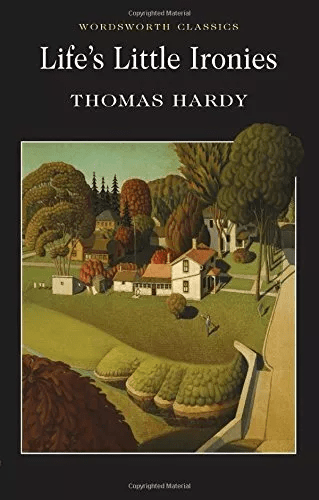
Life’s Little Ironies by Thomas Hardy, 1894

I confess I’ve never been a particular fan of Hardy. I’ve not really worked out why, but I don’t think his novels have aged well, even if various film and television adaptations have postponed any risk of obscurity. I thought I would try some of his short stories to see if they could offer something different. Life’s Little Ironies is a collection put together by the author and his publisher shortly before Hardy published his last novel (Jude the Obscure) and went into self-imposed poetical exile. All the stories had originally been published in various Victorian magazines and this is reflected in their length and subject matter.

If you didn’t know this collection was by Hardy it would take a matter of seconds to work it out. The settings are very familiar – Melchester, Casterbridge, etc – and the characters are all eminently recognisable – honest, hard-working rural folk prone to making unfortunate choices. The theme that links the stories, we are invited to accept, is that they are sketches of ironic moments in people’s lives, although the irony is quite often hard to identify.

An Imaginative Woman opens the collection with the story of a woman who conducts an affair with a young writer entirely in her imagination, but does so so convincingly that her husband strongly suspects her of having cuckolded him. Ella Marchmill is bored in her marriage to an older, unsympathetic man, and when she finds out that the previous tenant of the seaside rooms they are renting was an author she admires, she begins to spin a fantasy in which they meet and run away together. Despite her tentative efforts to reach out to the writer they never actually meet, but she leaves enough clues behind her when she dies in childbirth to cause her husband to suspect that the child is not his and to reject him. Is this ironic? Contrived certainly, depending on “a known but inexplicable trick of Nature (whereby) there were undoubtedly strong traces of resemblance to the man Ella had never seen...” What trick of nature is that then? Surely the author’s convenient plot device trick?

The Son’s Veto is again quintessential Hardy. It’s a complex little tale of disappointed love, with the main character’s happiness being frustrated by the wishes of her son. (hence the title). The story is also about class, and how marrying outside of one’s class can cause complications. It’s a polished, densely packed story barely longer than ten pages, and one of the stronger, more complete tales of the collection.

For Conscience’ Sake is another tale in which the central character has left Wessex and returns to complete unfinished business, in this case driven by his conscience. Mr Millbourne left Wessex when he fled from a relationship, leaving the young woman alone and pregnant – “the old story”. Pregnancy out of wedlock is a theme Hardy returns to frequently, but here the protagonist is determined to right the wrong even though many years have passed. Sadly he learns that the past cannot be rewritten and some wrongs cannot be righted.

A Tragedy of Two Ambitions follows two dour young men trying to carve out a career in the priesthood. Their ambitions are frustrated by their drunken reprobate of a father. How they deal with him when his appearance threatens to ruin them is rather predictable but becomes a heavy burden for them to bear.

On the Western Circuit could easily have been expanded into a novel. It tells of Charles Bradford Raye a London lawyer who while travelling to courts in the Western Circuit (for judicial purposes England and Wales is divided into six or seven ‘circuits’ i.e. regions) meets Anna, a pretty young servant girl, something of a Hardy stereotype. Normally he would not have considered Anna a suitable wife, and instead pursues her for less honourable purposes, but while they are apart her letters persuade him she is far more educated and sophisticated than she actually is – her letter are drafted for her by her employer, Mrs. Edith Harnham, the wife of a wine merchant, who is attracted to Raye and uses these letters as a form of literary infidelity. Raye finds out too late that he has been fooled and accepts his fate with resignation. This is a variant of the Cyrano de Bergerac story in which someone falls in love with a false representation of their partner, although in fact the Hardy story actually pre-dates the French play. It is a sophisticated and complex story which once again features an out of wedlock pregnancy, euphemistically described thus: “she made confession that the result of her relations with her lover it would soon become necessary to disclose”. The story also pivots around class differences – Raye would never consider marrying his lover if he knew she was a barely literate working girl as it would seriously impede his career, as if eventually does.

To Please his Wife is a short tragic story in which a seaman chooses a wife unwisely, and pays the price. Another unhappy marriage ending in tragedy – not a collection of stories to cheer anyone up!

The Fiddler of the Reels. The concept of a fiddler with quasi-demonic powers, able to charm people into dancing manically or against their will, can be found in folk-lore. Hardy draws on this idea to weave a tale of a fiddler who uses his mastery of his instrument to be seduce young women. This folk element of the story is interwoven with an account of a local mechanic who, disappointed in love, leaves rural Wessex to go and work in London, his young lady having become besotted with Wat ‘Mop’ Ollamoor, the charismatic fiddle player. This happens at the time the great Exhibition of 1851 is on in London, and this event is described as more than a background to event, but as a central marker in the country’s history, as important as the Norman Conquest. Several years later he receives a letter from his young lady, asking for a second chance, but it is only when she arrives (by an open-carriage train) that he discovers she has a young daughter, the result of an affair with Mop: “I was so unlucky to be catched the first time he took advantage o’ me“. Nevertheless he accepts the proposed reconciliation, marries her and accepts the child as his own. When they eventually return to Wessex a re-encounter with Mop is inevitable, although the precise outcome is unexpected and troublingly ambiguous.

A Few Crusted Characters concludes the collection and is comprised of a series of recollections of local characters and the often mysterious events of their lives. The stories are told by the passengers on a stage coach – there is a nod to Chaucer in the structure of the work. Each has a slightly incomplete feel, as if they were drafts of intended longer works that had been set aside but kept just in case they were to be of any use, and are finally set to work here.

Overall, these stories don’t improve on Hardy’s status as an author, but neither do they diminish it. They didn’t make me want to rush back to the novel and they lack of variety in the subject matter and themes was a little disappointing. As an introduction to Hardy you could do a lot worse.

Life’s Little Ironies by Thomas Hardy, 1894

Aside
Book review

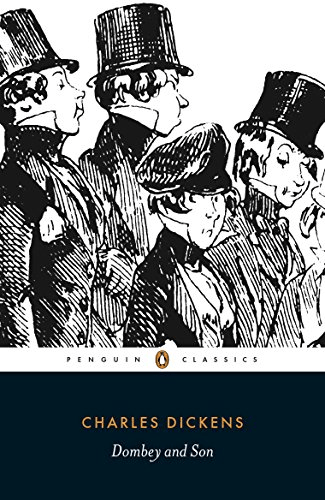
Dombey and Son by Charles Dickens, 1846-1848

Any reader of Dombey and Son is presented with a puzzle – why isn’t it any good? I knew before I started it that the novel was one of Dickens’ ‘lesser’ works: not lesser in length, unfortunately – it runs to nearly 1000 pages – but poorly thought of, by both critics and general readers alike. It is not widely read any more (it has 1,000 reviews on Goodreads, but Great Expectations has 22,000!) doesn’t appear on many academic reading lists, and has never been filmed. Even Andrew Davies abandoned an attempt to turn it into a television series despite having made successes of less obvious material. So as I read I was looking out for the flaws or weaknesses that would explain this lack of popularity. I didn’t have to look far.

(Incidentally, I am aware that this might seem a very negative way of reading any novel. Surely it would be better to be positive, to look for the novel’s strength and good points? Of course. But I’d make two points about this: a) I can’t unknow what I know about the novel and b) I am simply being honest about my mindset – this blog is not about presenting myself as some kind of idealised reader, burning their way through the classics, but an honest description of the books I read and what I think about them. I did look for the positives in Dombey and Son – nothing would have given me more pleasure than to have discovered an overlooked Dickens masterpiece, but that isn’t what happened. Because it isn’t.)

The plot is very limited despite the novel’s length. Not much happens, and the small number of events that do occur are heavily telegraphed. For example: Walter, an office boy sent to work overseas by his company (Dombey and Son) goes missing when his ship capsizes in a storm. There can’t have been a reader on the planet who did not expect Walter to re-emerge – the only surprise was just how long it took Dickens to bring him back. Similarly when Walter first meets the novel’s proto-heroine, Florence, his uncle Sol and his uncle’s friend Captain Cuttle both predict what will happen – that one day Walter and Florence will marry. And guess what?

Everything you expect to find in a typical Dickens novel is present. A huge cast of characters (over 50), long rambling plot lines that are sewn together conveniently at the end, comic scenes of extreme behaviour, all set in a foggy London that is undergoing rapid change due to the arrival of the railways. In fact the parts of the novel describing the arrival of the railways are some of the most interesting in the book:

“The first shock of a great earthquake had, just at that period, rent the whole neighbourhood to its centre. Traces of its course were visible on every side. Houses were knocked down; streets broken through and stopped; deep pits and trenches dug in the ground; enormous heaps of earth and clay thrown up; buildings that were undermined and shaking, propped by great beams of wood. Here, a chaos of carts, overthrown and jumbled together, lay topsy-turvy at the bottom of a steep unnatural hill; there, confused treasures of iron soaked and rusted in something that had accidentally become a pond. Everywhere were bridges that led nowhere; thoroughfares that were wholly impassable; Babel towers of chimneys, wanting half their height; temporary wooden houses and enclosures, in the most unlikely situations; carcases of ragged tenements, and fragments of unfinished walls and arches, and piles of scaffolding, and wildernesses of bricks, and giant forms of cranes, and tripods straddling above nothing. There were a hundred thousand shapes and substances of incompleteness, wildly mingled out of their places, upside down, burrowing in the earth, aspiring in the air, mouldering in the water, and unintelligible as any dream. Hot springs and fiery eruptions, the usual attendants upon earthquakes, lent their contributions of confusion to the scene. Boiling water hissed and heaved within dilapidated walls; whence, also, the glare and roar of flames came issuing forth; and mounds of ashes blocked up rights of way, and wholly changed the law and custom of the neighbourhood.

In short, the yet unfinished and unopened Railroad was in progress; and, from the very core of all this dire disorder, trailed smoothly away, upon its mighty course of civilisation and improvement.”

This is Dickens giving it both barrels, over-writing to the extreme, but just about getting away with it. Despite this characterisation of the railway as a destructive phenomenon, later descriptions show the positive benefits of the coming of rail – in particular the Toodles family prosper from its construction. Later still the railway is to have a decisive role in the fate of the novel’s principal villain, Mr Carker.

The plot centres on the hubris of the industrialist, financier and merchant Paul Dombey. Dombey wants a son to continue the family name and business. He is obsessed with this ambition and as a result neglects his daughter simply because her sex, particularly once his second child, a son, is born. However Paul junior is a weak and sickly child who eventually dies a characteristically Dickensian death, fading away slowly but inevitably. Having lost his wife in Paul’s birth Dombey disastrously remarries. His second wife, Edith, is effectively sold by her mother on the marriage market, and can’t stand her new husband, and refuses to make any pretence at doing so. We can safely assume their marriage is loveless and unconsummated. He uses Carker to act as a go-between between himself and his new wife, to disastrous effect. As a villain, Carker is a failure. He plots and schemes and positions himself at the heart of Dombey’s business, but then has no real plan other than adultery, and that fails miserably. If he is driven by passion rather than a Machiavellian cunning then there is no sign of it.

Dombey is a deeply unpleasant character, proud and arrogant, and devoid of any love or affection. He doesn’t have a convincing redemption story – he is eventually reconciled with his daughter, and is shown being affectionate towards his grandchildren, but for the reader this is far too little too late. His second wife, Edith, is equally proud and unrelenting, and her (step)maternal bond with Florence is all too brief. Both characters are brought low by their pride.

The novel’s principal sub-plot tells the story of Walter Gay and his uncle Solomon Gills, owner of a profoundly unsuccessful nautical instruments shop, and Sol’s friend, an old seaman named Captain Cuttle. Walter and family act largely as a counterpoint to the emotionally sterile Dombey household, but also provide most of the comedic scenes of the novel. There is another, lightly sketched and under-developed sub-plot involving Mr Carker’s older brother, his sister, and one of Carker junior’s former lovers. This sub-plot fizzles out with a resolution, of sort, but not one the reader feels in any way invested in. It is clearly intended as a counterpoint to the main Dombey/Edith storyline, but fails to do anything other than simply echo it.

Were there any redeeming features in the novel, anything to recommend it? The minor characters are entertaining, including those already mentioned, to which I would add the endearing Mr Toots and the indefatigable Susan Nipper, who almost alone amongst the novel’s characters is prepare to give Mr Dombey a piece of her mind. The railway descriptions are interesting records of the first flourishes of the age of steam. But that’s pretty much it. There are unquestionably many better Dickens’ novels and I can really only recommend Dombey for completists. Its reputation is unfortunately justified.

Dombey and Son by Charles Dickens, 1846-1848

Aside
Book review

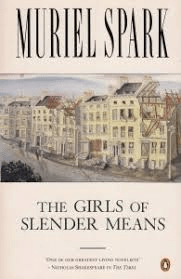
The Girls of Slender Means, by Muriel Spark, 1963

Utterly wonderful. Truly superb and written with extraordinary economy, so that even every word of the title is working hard. I haven’t read anything close to this this good in the novella format since J L Carr’s A Month in the Country.

That’s the short review: the full review is going to be a bit longer. I’ve written before about how when one summarises ‘what happens’ in a novel the tendency is to present it as a chronological sequence of events, a straightforward ‘this happens then that happens’ narrative. But of course many novels simply aren’t like that at all and such summaries while useful in some respects do the novel a disservice. They undermine the complexity of the structure and in this case the extremely clever way Spark slowly reveals her plot. It’s so well done that this is one of those novels that you immediately turn to the opening pages once you have finished (which doesn’t take long, this is less than 140 pages) and start again, looking at the text in a completely different light. I don’t want to spoil that experience for you, so if you have any intention of reading this one I’d avoid the section of this review marked ‘Spoilers’ – but it would be great if you would come back once you have read it and see if you agree with what I have said.

Muriel Spark is one of those writers whose books I always buy if I come across them in second-hand or charity stores. She is always interesting. The Girls of Slender Means was her next novel after The Prime of Miss Jean Brodie, and I am convinced it is its equal – perhaps Jean Brodie gets the accolades because of the exceptional film version. It is set in the May of Teck Club, a hostel for young women, just after the end of the war in Europe in 1945. It follows the adventure of the residents of the hostel, young women navigating life in a suddenly changed world, in which the carelessness and danger of the war years is being replaced by something less clear. The election of Attlee’s radical Labour Government is mentioned and forms a backdrop to the novel, but it’s not just politics that is changing. The role of women in society changed radically during the war years – young women went out to work and had romantic adventures – but it is not obvious whether these changes will be sustained or whether things will go back to the way they were. Against this backdrop the small dramas of the women’s lives unfold and come to a crisis point focussing on, of all things, the bathroom window that leads to the secluded rooftop shared with the hotel next door. Only the slenderest of girls can manage to wriggle through this window onto the rooftop but this seemingly insignificant fact goes on to become a key turning point in the story.

This is a gem of a novel, perfectly formed and full of interesting things to say about the changing role of women in society, religion, sex, and so much more. I can’t recommend it highly enough, and it definitely has found its way into the top ten or even five best novellas that I have read. Admittedly not much happens before the crisis that it has been leading up to and arguably some of the characters are only lightly sketched, and well, those are the only minor negatives I can come up with! Against that the novel sparkles with wit and interest and humour.

Spoilers

I wanted to talk about some of the techniques Spark uses to draw the reader into the novel. It opens with a description of the club and some of its residents. There’s some heavy foreshadowing in the opening paragraph:

“The streets of the cities were lined with buildings in bad repair or in no repair at all, bomb-sites piled with stony rubble, houses like giant teeth in which decay had been drilled out, leaving only the cavity. some bomb-ripped buildings looked like the ruins of ancient castles until, at a close view, the wallpapers of various quite normal rooms would be visible, room above room, exposed, as on a stage, with one wall missing; sometimes a lavatory chain would dangle over nothing from a fourth or fifth-floor ceiling”.

It’s no coincidence that the narrator notices a lavatory chain dangling from a fourth floor – the key moments of the novel happen in just such a room. Later, on the novel’s second page, there is more ominous foreshadowing:

The May of Teck Club stood …in one of a row of tall houses which had endured, but barely; some bombs had dropped nearby, and in a few back gardens, leaving the buildings cracked on the outside…but habitable for the time being.

Although we are encouraged to see this as a slightly flippant comment on life in post-Blitz, war weary London, the threat of unexploded ordnance was very real, even in the time of the novel’s publication (1963) and was to be for a long time afterwards. (Unexploded bombs still crop up from time to time, especially during construction and tunnelling works.)

Once the scene is set the text is then broken by that most cryptic of punctuation marks, the asterisk. The following paragraph starts thus:

*

“‘I’ve got something to tell you’ said Jane Wright, the woman columnist.” (Interesting that she is the woman columnist, not just the columnist, suggesting that women in these roles is still something of a novelty.) Jane speaks on the telephone to a friend, Dorothy “owner of the flourishing model agency” (again, ‘the’ not ‘a’) about a third friend, Nicholas Farringdon, who has been killed while on a missionary mission in Haiti. They knew him when he came to the May of Teck Club “just after the war“. A careful reader will put some pieces together at this point and conclude that the asterisk marked a time jump, and that this conversation is being held years after the setting of the first paragraphs. Another asterisk takes us straight back to 1945, and an announcement by the club’s management about the new wallpaper in the drawing room, setting off a faint echo of the exposed and torn wallpaper mentioned in the description of the bombed buildings that the novel opens with.

At one point a pretentious poet, commenting on the end of the war, quotes the Greek poet C F Cavafy:

“Now what’s going to happen to us without barbarians? Those people were a kind of solution.”

We are invited to mock the young man with his now rather redundant copy of Peace News and his condescending manner, but the point is actually a very serious one – the war against the Nazis did give the country a purpose, a ‘kind of a solution’ and the future was uncertain at that moment after the certainties of total war.

We are introduced to a series of characters in the opening chapters, and it’s easy to just assume we will get to know these characters better as the novel progresses. Another interpolated paragraph marked by asterisks records a phone call from Jane, this time to ‘Anne’, repeating the news about Nicholas. Anne asks if ‘Selina’ has been told the news, but “You know what Selina is like these days, she won’t answer the phone personally, you have to go through thousands of secretaries or whatever they are“. So whoever Selina is, and we will meet her in 1945 shortly, she has done well for herself.

Amongst the detailed description of the Club we are told about the top floor of the house:

“Nothing but the rooftops lay above this floor, now inaccessible by the trap-door in the bathroom ceiling – a mere useless square since it had been bricked up long ago before the war after a girl had been attacked by a burglar or a lover who had entered by it – attacked or merely confronted unexpectedly, or found in bed with him as some said“. The fact this closes off an escape route is noticed: “‘If there was a fire we’d be stuck'” said Selina Redwood who was exceedingly beautiful.” Selina and the others are reassured that there is a fire escape, so the bricked up trap-door is left closed.

The last quarter of the novel is compressed into a few minutes, as the returns on all this development – the unexploded bombs, the bricked up trapdoor and the bathroom window so narrow that only the slenderest of girls can squeeze through – come together in an unlikely yet breathlessly dramatic finale.

You will have worked out by now that I loved this novel. It’s intelligent, interesting, daring, and challenging. I will definitely be looking out for more of her novels.

The Girls of Slender Means, by Muriel Spark, 1963

Aside
Book review

The Fraud, by Zadie Smith, 2023

I have the whimsical notion that Zadie Smith was one day reading a novel combining two plot lines across different time scales (Possession, perhaps, or Alias Grace) and thought “hold my coat”. Because The Fraud combines three different plot and time lines. Firstly and centrally we have the fascinating story of the ‘fraud’ of the title, also known as ‘the claimant’ or ‘the Tichborne heir’. This is Arthur Orton, who in 1866 came forward to claim to be the missing heir to the Tichborne baronetcy and the estate that came with the title.

Roger Tichborne, heir to the family’s title and fortunes, went missing after the ship he was travelling in in South America was shipwrecked with the loss of all on board. His mother refused to believe her son was dead, and after hearing rumours that he had survived and somehow travelled to Australia, she advertised for him in Australian newspapers, offering a reward. Years later a butcher from Wagga Wagga came forward claiming to be Tichborne. He was accepted by Lady Tichborne as her son, although other family members were unconvinced. Imposters claiming to be long lost nobility are nothing new, but this story had just the right combination of elements, at just the right time. It quickly because a case people identified with, a battle between the ‘common man’ and ‘the establishment’. This is of course bizarre, because if Orton was Tichborne as he claimed he was a quintessential part of the establishment, but then again that hasn’t stopped Donald Trump portraying himself as an outsider or Nigel Farage as a man of the people. (In the additional material provided in the Waterstones edition of the hardback, Smith specifically mentions Trump as a source of inspiration for the novel, and while she isn’t explicit about this it is surely in the hysterical way people support Trump/Tichborne no matter how outrageous his lies). Because the striking things about the Tichborne claimant was the profound unlikelihood of his claim. He was strikingly different from every report of the heir including in his dramatically different appearance, the languages he spoke, and his knowledge of his early life and family. His claim in other words was laughably implausible, but that didn’t stop thousands of people believing in him utterly, donating large amounts of money to his cause, travelling to his public rallies, and agitating on his behalf. The more his lies were exposed the more people believed in him, seeing every bit of evidence against him as further proof of a grand conspiracy to deprive him of his legacy. As well as the comparisons with Trump there are also similarities with the flat-earth conspiracy theorists who see every photograph of the curvature of the earth as proof of NASA’s far-reaching ability to control ‘fake news’.

The story of the Tichborne case is told from the perspective of Mrs Touchet, a regular attendee at his two, long-running trials, first to hear his original claim to the baronetcy, and subsequently his criminal trial for perjury. This is our way into the second storyline, following the history of the family of the (real) Victorian novelist William Ainsworth. Ainsworth was a contemporary of Dickens, Thackeray, Disraeli, Walter Scott and a host of other figures from Victorian literary society. Mrs Touchet is his cousin, housekeeper and occasional lover. By the time of the trial Ainsworth is a forgotten figure, still churning out worthless novels (he had over 40 published in his lifetime). Mrs Touchet portrays him as rather pathetic by this stage, even though authors such as Thackeray wrote large numbers of novels largely for the income they provided without becoming a figure of ridicule. Several extracts from his novels are held up to the reader for examination with the implication that they are terrible. This felt unfair – taken out of context this is not a difficult trick to play on just about any author. Every generation will have their jobbing writers whose work fades away quickly after their death, and sometimes before. But you would never know from reading Mrs Touchet’s account that Ainsworth remains in print to this day and first editions of his better known works are available from booksellers for thousands of pounds. Not the cringingly bad literary failure she describes him as, a judgment in which Smith seems to concur – nothing is ever offered by way of corrective to Mrs Touchet’s criticisms.

Mrs Touchet is a widow, and sees in the Tichborne trials (although she is convinced Orton/Tichborne is a fraud) some reflections of her own, rather diminished situation, always in the shadow of her child-like cousin. Mrs Touchet is a political radical and a passionate supporter of the anti-slave trade movement, which continued to campaign long after slave trading was abolished across the British Empire (initially slave trading was abolished, and it was not until several years later that slave ownership was criminalised). One of the Claimant’s long-standing advocates was a former slave and then manservant working for the Tichborne family, Mr Andrew Bogle. Mrs Touchet takes him for lunch and slowly persuades him to tell his story, which becomes the third element of the novel – an account of slavery on a Jamaican plantation in the years either side of abolition. This segment of the novel felt a bit disconnected from the main narrative, dropped into the central storyline as an extended cutaway – and I did wonder if this was a separate work that the author decided to include in this novel simply in order to use it?

Apart from the extended diversion into the Jamaican section of the novel, the other narrative threads are woven tightly together. The novel jumps lightly from one time period to another and back again. If there is a ‘now’ it is the 1870’s and the time of the criminal Tichborne trial, by which time Mrs Touchet is a slightly cranky widow, often looking back nostalgically on the times when Ainsworth was a much more successful and popular novelist (we are reminded more than once that his novel Jack Shephard in its day outsold Oliver Twist) and could afford a higher standard of living. She also suffers with forbearance his new and much younger wife who is very common and a source of some slapstick comedy. Her internal monologue drives most of the narrative – she is cynical and more than a little embittered, frustrated by the lack of opportunities available for women, especially those such as herself on the brink of independence, but never quite ready to take that final step (she has an additional inheritance of £100 a year, doubling her income, which she never claims unless to finally give it away).

The novel ends on something of an anti-climax. Ainsworth dies never really having expressed any further feeling for his cousin who has loved him for decades without hope or expectation, watching his literary talents dwindle away without him ever realising it. The novel portrays him as a failure compared to his literary peers, which as I have said felt unfair. The trial ends in the claimant’s conviction for perjury, a long prison sentence, and an ignominious death in poverty. Of the protagonists it is probably Bogle who lives the most rewarding life, ironically given his origins as a slave.

That’s what happens, but the question you probably came her for is whether the novel is any good? It’s not a demanding read – there’s never much doubt as to who is narrating, what’s happening, who is sleeping with who and so on. The storyline moves on quickly enough and the writing is unobtrusively good, without ever being demonstrative or flashy. I didn’t warm to Mrs Touchet, which would have helped, and her cynical digs at her cousin, Dickens, Cruickshank and the whole Victorian literary circle seemed mean spirited. Perhaps it was a boy’s club that never really confronted the main social issues of the day, but the idea that there was therefore no literary merit in their work (as is suggested) is uncharitable. The claimant himself remains an elusive presence in the novel, barely speaking and only ever described through his supporters or companions. There may well still be a novel to be written about Tichborne/Orton that centralises his story and tries to understand its strange grip on Victorian England rather than just using it as background ‘colour’.

The Fraud, by Zadie Smith, 2023

Aside
Book review

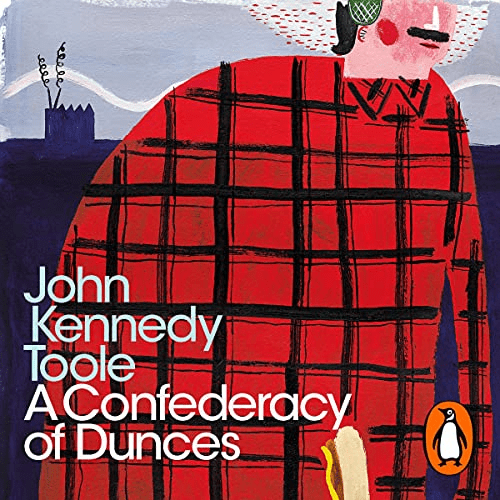
A Confederacy of Dunces, by John Kennedy Toole, 1980

I had come across A Confederacy of Dunces on various lists of ‘best’ novels without having any preconceived idea what it was about. I’m still not entirely sure to be honest. The novel follows the adventures of Ignatius J. Reilly, an obese and extraordinarily self-centred young man living with his mother is early-1960s New Orleans.

Ignatius is a “slob extraordinary, a mad Oliver Hardy, a fat Don Quixote, a perverse Thomas Aquinas rolled into one—who is in violent revolt against the entire modern age, lying in his flannel nightshirt, in a back bedroom on Constantinople Street in New Orleans, who between gigantic seizures of flatulence and eructations is filling dozens of Big Chief tablets with invective.”

He returned from college several years previously and since then done little other than bicker with his mother and her friends and neighbours. He writes in his journal, eats and masturbates. He considers himself a medievalist, although there’s little sign of him ever doing any reading on the topic.

One afternoon while shopping in town Ignatius is approached by a police officer and asked for identification, on the grounds he appears a suspicious character. Ignatius over-reacts to this request, inevitably, appealing to a gathering crowd for assistance and loudly denouncing the officer and all police. An elderly man’s attempts to help goes badly wrong when he accuses the officer of being a communist, and he is arrested, allowing Ignatius to escape with his mother into a nearby bar.

Mrs. Reilly proceeds to get drunk and on the way home she crashes her car. The bill for the accident is over a thousand dollars, and to pay the costs of the accident Mrs O’Reilly is finally pushed into forcing her son out to work. Ignatius is profoundly unsuited to any sort of responsible employment. He first finds a job in an office where the throws away all the filing he is given to do, conspires to undermine his supervisor and employer, and then writes a libellous letter in the name of his employer to a supplier. He is a nightmare of an employee:

“I have taken to arriving at the office one hour later than I am expected. Therefore, I am far more rested and refreshed when I do arrive, and I avoid that bleak first hour of the working day during which my still sluggish senses and body make every chore a penance. I find that in arriving later, the work which I do perform is of a much higher quality.”

Brief spells of ‘work’ are interrupted by regular visits to the movies, where he spends all his time berating the performances and productions:

“Filth!’ Ignatious shouted, spewing wet popcorn over rows. ‘How dare she pretend to be a virgin. Look at her degenerate face. Rape her!”

Finally dismissed from his office job, long beyond the point at which any employer would have tolerated his behaviour, Ignatius then becomes a hot dog vendor, eating many times more than he sells. The novel ends on an optimistic note with Ignatius finally breaking free from his inertia, heading off on an adventure with a college friend. The likelihood of this all ending badly and Ignatius returning home to complain for years about the discomfort or indignity of some minor aspect of his journey is high, but the reader wishes him well.

A Confederacy is one of that small group of novels where the history of its publication is as well known as the story itself. In brief, Toole killed himself before it was published, and there is reason to believe that his suicide was at least in part associated with the manuscript’s rejection by multiple publishers. It was only through the subsequent persistence of his mother that finally saw the novel published. The plot of the novel is little more than a framework for the portrait of the monstrous narcissist that is Ignatius. So you either enjoy spending time with this deeply unpleasant, but admittedly comical character, or you don’t. He is frankly an idiot, a giant toddler unable to foresee the obvious consequences of his actions, ever confident that any problem put in his way can be overcome by shouting at anyone who objects to his behaviour. Mostly this works because of his indulgent mother and employers desperate for help. The more his offences are indulged, the more he offends. I found this mildly amusing, but it quickly gets tired. The portrait of New Orleans that provides a backdrop to Ignatius’s tantrums is not one that the city should be particularly proud of, despite which a statue of Ignatius has been erected there. The author is not really interested in the city, its culture and history, and I got the impression that the novel really could have been set anywhere.

The novel has a cast of supporting characters all of whom revolve around Ignatius. The portrait of Jones, the black janitor for the “Night of Joy” who holds on to his below-minimum wage job to avoid being arrested for vagrancy tiptoed very close to racism – Jones narrates his thoughts in a stream of consciousness creole that according to some reviews captures wonderfully the authentic voice of New Orleans, or alternatively is a crude parody of the way black people speak and think:

“Look at that. She think I got siphlus and TB and a hard-on and I gonna cut her up with a razor and lif her purse. Ooo-wee.”

I’ll say this for A Confederacy – there really isn’t any other text in modern literature that does what Toole tries to do. That’s probably for a good reason – it remains a one-off, a stand alone that no-one has tried to emulate. I am still trying to decide whether I actually enjoyed the novel or not – while on the one hand I appreciate the uncompromising nature of the portrait of Ignatius, on the other he is a profoundly unpleasant person. Toole brings him vividly to life, no question, but was the effort worth it? Is this the work of genius that Toole’s suicide seems to suggest it ought to be? No, sadly not. You have to wonder what Toole would have written if he had allowed himself the chance.

A Confederacy of Dunces, by John Kennedy Toole, 1980

Aside
Book review

The Midnight Library by Matt Haig, 2020

The Midnight Library is a very explicit anti-suicide book. So if it saves a single life, then it is worthwhile. Any reviewer of the novel therefore needs to make a simple choice – should the novel be treated as a work of literary fiction, or should it be considered as a self-help book, intended as therapy and advice for those in need? Of course it can be both things at once, and in the main does so successfully, but these are two very different yardsticks by which to evaluate the book. (Note to self – yardstick = dead metaphor. Presumably there sticks a yard long were once in common use to measure things, but despite them no longer being widely used, the phrase persists).

Anyone contemplating suicide must feel that life is not worth living. Haig’s mission in this novel is to persuade them otherwise. He attempts this through the story of his central character, Nora Seed (I assume the surname Seed was chosen because seeds are full of potential life). But when we first meet her, Nora feels anything but. Her cat is dead, she is alienated from her family, she has lost her job. She has recently separated from her fiancé, having changed her mind at the last minute about marriage. Her life, once full of promise and possibility, seems empty. Late one evening, she tries to kill herself.

Nora wakes up to finds herself in a library. Each book on the infinite shelves tells the story of an alternative version of her life. The core of the novel sees Nora briefly living these multiple lives. In each she is given the opportunity to change one decision she regrets making, and see how it would have affected her life. In one she becomes a rock star, having decided not to leave her brother’s band; in another she wins Olympic medals having kept up her promising swimming career; in yet another she on an Arctic research vessel studying global warming and has a close encounter with a hungry polar bear. Each version of her life is better – more interesting, more fulfilled – than what she refers to as her ‘root’ life, but every one is also in some way unsatisfactory, so she keeps doom-scrolling through endless ‘what-ifs’ searching for a version of her life in which she has not taken a wrong turn, and is happy.

If I were suicidal, being told that the choices I made in life had prevented me from becoming an Olympic athlete, a rock star, or an artic explorer might not convince me that I had nothing to regret, even if in each of these alternative lives there were also things that were not perfect. A common cause of dissatisfaction with Nora’s new lives is that in each a family member or close friend has died – her brother from an overdose, her mother from cancer, a friend in a road traffic collision, and so on. None of these deaths were a result of her choices, so seeking a life in which she took a different route and kept everyone alive seems a futile search.

The novel’s conclusion – that life is worth living, and regret at the choices we make is foolish – comes as hardly a surprise. Is this life affirming? it’s unquestionably intended as such, and literature as therapy is undoubtedly worthwhile. The popularity of this novel suggests that people find it helpful, so any dissent from me would probably be churlish. One yardstick (see what I did there?) of a novel’s success I often find useful is to ask whether you want to spend more time with the characters, to find out how their lives span out. Who would turn down the chance to read more about Elizabeth Bennet or Mr Pickwick? Sadly I can’t say the same of Nora Seed. I am glad her story ended on a positive note – but it could hardly have ended any other way in the circumstances!

The Midnight Library by Matt Haig, 2020

Aside
Book review

Capital, by John Lanchester, 2012

I’ve written quite a bit in the past about different categories of novel – most recently Newgate novels for example, nineteenth century stories about prisoners awaiting trial in Newgate. or the earlier Silver Fork novels about rich Regency people doing rich Regency people things. The problem is – where do you stop? Where do you stop creating ever finer more detailed sub-categories of novel? This problem occurred to me when reading John Lanchester’s 2023 novel Capital.

As well as obviously being about London and its inhabitants, Capital is more specifically a credit crunch novel, a literary response to the financial crash of 2008. It was published in 2012 which makes it a a relatively early response to the crash, when the full impacts of austerity had yet to be played out. In Capital people are still manically developing their houses with basements and loft extensions, even if the early seeds of doubt about the wisdom of this reckless spending are being sown; later post-Brexit crash novels (or are they a separate category?) see that this reckless spending is not without consequence. The worst that happens to a banker made redundant part way through Capital is that he has to sack his nanny and retire to the country with his money, confident that he will bounce back. Where am I going with this point? I suppose I am arguing that instead of simply being an ambitious survey of life in modern-day London, Capital is a more immediate response to political and economic circumstances that might not have the durability and longevity the author was obviously aiming for. It’s also a novel that addresses that very specific problem of gentrification, without having much to say about the issue other than vaguely suggesting it is not a good thing.

Capital follows the inhabitants of a south London street, Pepys Road, over the course of a year. The choice of name is obviously not coincidental – Pepys was a great chronicler of London-life, and it seems Lanchester aspires to do the same. Pepys Road is undergoing dramatic changes as London society responds to a influx of new residents from around the globe. As we are introduced to a series of immigrants – a Polish builder, a Hungarian nanny, a Senegalese footballer and a Zimbabwean traffic warden – one wonders whether these are much more than stereotypes? Their stories are juxtaposed with those of earlier residents, now undergoing their own diaspora as they are forced out of Pepys Road.

“Having a house in Pepys Road was like being in a casino in which you were guaranteed to be a winner. If you already lived there, you were rich. If you wanted to move there, you had to be rich. It was the first time in history this had ever been true”.

Another of the multiple threads of the novel follows stockbroker Roger Yount. Roger and family live a life of excess fuelled by the multi-million salaries and bonuses common in the City pre-Crash. Roger is an entitled and slightly thick public-school boy relying on nepotism to get along in a business he admits he does not really understand. His wife Arabella is a bit of a monster, spending her days shopping for designer nonsense and having long boozy lunches with girlfriends while her children are cared for by a series of nannies. We care little for Roger and Arabella, equally stereotypes in their own way, and celebrate their downfall as Roger first gets a disappointing five figure bonus, and is then sacked and has to rethink his life

Most of the storylines peter out – they have endings of sorts but I was insufficiently engaged with the characters to worry overly if they go on to live long and happy lives. Ends are tied up but with a conspicuous sense of ends being tied up so that the novel could finish rather than narratives being successfully concluded. A good example of this is the young African footballer who comes to the UK to play, suffers as career-ending injury, and goes back home with riches beyond imagination and still able to play football locally – a happy ending of sorts but hard to see where it fits in the overall narrative, other than being just another story of the residents of Pepys Road.

At over 600 pages this was harder work than it ought to have been. The years immediately after the Crash in which this novel is set seem a lifetime ago. If I had read Capital when it was first published it would have had an immediacy that it now lacks given how much has happened since then – it’s almost enough to make me nostalgic for 2012!

Capital, by John Lanchester, 2012

Aside