This Boy, by Alan Johnson, 2013
It’s traditional for politicians to write their memoirs after the end of their Parliamentary career. Alan Johnson was a senior figure in the Blair administration, but nonetheless This Boy had to be something special to stand out from the host of other post-Blair/Brown government autobiographies, diaries and memoirs. And it is. What makes this narrative so exceptional is its unsentimental portrait of a childhood of quite profound poverty and deprivation. That fact that the scenes Johnson describe date from the late 1950’s and early 1960’s, not some Dickensian nightmare, make them all the more extraordinary.
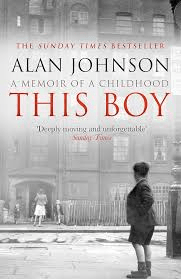
How bad was it; just how poor was his family? He regularly went without meals; his social housing in North Kensington, now considered part of trendy Notting Hill, was condemned; he didn’t have an indoor toilet or bathroom until he was in his teens. He faced the daily humiliation of free school meals (when everyone knew who received the free meals and who didn’t) and having to ask shop owners for ‘tick’ (credit). Coal was bought one day at a time because it couldn’t be afforded any other way and the Johnson household was usually bitterly cold, especially during the harsh winters of the early 1960’s.
But despite all that, this is not a misery memoir. These facts are recorded honestly but Johnson doesn’t dwell on them unnecessarily, and rarely seems to feel sorry for himself. (I think his older self feels sad for his younger self, but recognises that at the time he was often happy, especially when his father wasn’t around). Growing up in the 60’s Johnson sees and feels a small part of the immense social change that swept the country as it emerged from a post-war period and the 1964-70 Labour Governments introduced a host of progressive legislation.
Racism disfigured society of the period and Johnson also witnessed more than his fair share of that, as North Kensington saw terrible scenes of abuse of the Windrush generation. It’s not hard to trace the roots of the Labour politician Johnson became in the childhood of this boy.
You often see debates in the media and online about the definition of poverty. Lots of families live in households where the family income is below 60% of the median national income, the most widely used statistical definition, without suffering anything like the deprivation Johnson faced. Some of these families, it is sometimes claimed, are relatively affluent – they don’t go without daily necessities, can afford holidays and things that the middle class might consider luxuries such as mobile phones, cigarettes and flat screen televisions. So what we mean by poverty changes over time, it is relative, and the situation Johnson faced as he grew up was perhaps not as dire as that of the previous generation. The threat of eviction never seems present, social housing however poorly constructed is almost always available (including on several occasions the offer of new housing in the suburbs, most often declined) and jobs seemed to be extremely easy to walk into. If Johnson’s father had contributed to the family finances then a reasonable standard of living was within reach – certainly Johnson describes other family members and friends living in relative comfort. The safety net of the welfare state may not have protected everyone, but it did a pretty good job compared to the absolute poverty of fifty years or so earlier. That aspect of the narrative – that Johnson’s story is one of exceptional hardship, rather than a typical West London boyhood – was often lost in many of the reviews of the book at the time it was originally published. Johnson has corrected this narrative to some extent with his subsequent memoirs covering his early years as a postman, when life was comfortable by comparison.
Johnson’s sister Linda and mother Lily emerge as the heroines of this memoir. Lily worked numerous part-time jobs to keep the family afloat both before and after her husband Steve left, despite her serious health issues which took her life in her early forties. Linda, just three years older than Alan, kept the family together after Lily’s death and showed a remarkable maturity in dealing with the challenges of being orphaned and looking after her younger brother.
This book is written with a refreshing honesty and simplicity. It is obvious from the first page that it is not ghost-written, and the clumsiness of the text is easy to excuse when set beside the rawness of the content. It’s a hard read at times, although knowing that things turn out well for Johnson and his sister helps at lot.
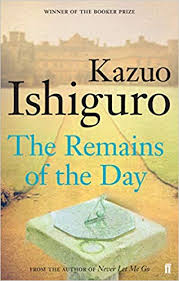 ails of the story emerge in the gaps between what the narrator tells us, and what we can perceive is actually happening. Here Ishiguro pushes the flawed narrator concept even further – Stevens’s memories are carefully layered to reveal a portrait of a man profoundly reserved and out of touch with his feelings, who comes to fear that he has wasted his life, and worse still will waste what remains to him. Several memories are revisited more than once in the course of the novel, with Stevens’s revisions and corrections revealing each time further insights into his decisions and thought processes.
 It would be hard to write a boring history of the Knight’s Templars. They were a Christian military order originally founded during the early years of the Crusades to protect pilgrims travelling to Jerusalem and other holy sites in the very dangerous lands of the Middle East. The Order’s story is inextricably linked with that of the Crusades, and you accidentally learn a lot about the latter just by reading this account of the former. It is hardly surprising then that the Templars have had a strong grip on popular imagination, from the Da Vinci Code to Indiana Jones. They also had a flair for iconography and symbolism, such as the big red cross they wore on their cloaks.