Book review

Left Out: The Inside Story of Labour Under Corbyn by Gabriel Pogrund and Patrick Maguire, 2020

For Labour Party supporters in the UK, the wounds of the 2019 General Election (and the equally disastrous local and European elections earlier that year) are still pretty raw. 2017 raised hopes that a significant left-ward shift in UK politics was possible. The journey from highs of 40% in the polls and the strains of “Oh, Jeremy Corbyn” at Glastonbury in 2017 to the losses of the Red Wall – possibly for a generation – and brutal defeat in 2019 was a collapse in slow time that looking back on is hard to bear. Revisiting the painful recent history of the end of the Corbyn era might even seem masochistic. But there are some important lessons for the Party which it needs to take on board more than ever as we start to navigate the post-Covid landscape, with a General Election widely forecast to be less than two years away, and with the Party still consistently lagging behind the Tories in the opinion polls.
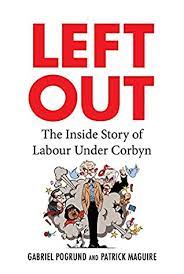
Left Out was written by Pogrund and Maguire, two political journalists, in the aftermath of the 2019 election, and is based on hundreds of interviews with many of the key participants of the troubled period of the Party’s recent history. It specifically focusses on the 30-month period between the 2017 and 2019 elections. Although initially published in 2020, this edition was updated in summer 2021 with an epilogue covering the months after Jeremy Corbyn’s departure from the leadership of the Labour Party, touching briefly on the start of the pandemic, publication of the EHRC’s report into anti-Semitism within the party and Corbyn’s subsequent suspension and loss of the whip.

With all histories, it’s hard to find a precise starting point. The roots of Labour’s electoral disaster in 2019 go back a very long way. But the decline from 2017 to 2019 was dramatic. Labour performed better at the 2017 general election than just about anyone expected, coming very close to deposing Theresa May and forming a Government, albeit one that would have not had a working majority, even with the support of the smaller parties. It had campaigned on a platform which included acceptance of the result of the 2016 Brexit referendum. Logic therefore suggests it was the party’s change of policy on Brexit, to support a second referendum, that was responsible for its historic defeat. Furthermore, as Keir Starmer was Shadow Brexit Secretary and therefore responsible for the change of policy, it seems fair to conclude that he was wholly responsible for the party’s losses.

Left Out makes it clear this analysis is overly simplistic. Firstly, most Labour gains in 2017 were in remain-leaning university towns and in London. It made almost no progress in what were to later be called the Red Wall seats. The 2019 local and European elections emphasised that for Labour to embrace Brexit in the way it had in 2017 would be electorally calamitous – polling later in August 2019 showed Labour losing dangerously high levels of votes to the Liberal Democrats due to its apparent equivocation on Brexit/second referendum. (A short personal anecdote might fit here. While canvassing during the European elections I asked a colleague who worked in the Leader of the Opposition’s office what we should say on the doorstep if asked about Brexit, which of course was bound to come up. His reply was “As little as possible”). The pollster’s forecast was that Labour would drop to 138 seats. As it turned out the 200 seats it did win was therefore strangely a relief – it could have been a lot worse. In many cases the intervention of the Brexit Party (mentioned only in passing in this text) served to peel just enough votes away from the Conservatives to allow the Labour candidate to escape with their seat (Ian Lavery’s seat in Wansbeck, Northumberland being a good example of this).

It’s always tempting to try to find a single, simple solution to a losing party’s problems, but I am as sure as I can be that once the UK voted to leave the EU there weren’t any pain-free options for Labour: support Brexit and lose votes to the Greens and Liberal Democrats; oppose Brexit and lose votes to the Brexit Party and the Conservatives; try to sit on the fence (which was Corbyn’s tactic for a long time) and lose votes to both. So re-fighting the 2019 election with different Labour positions on Brexit is always going to be a losing game. That’s not to say defeat of the scale we saw was inevitable – there were clearly many catastrophic mistakes made along the way.

The picture that emerges from the minutiae of the factional and personal battles within LOTO (Leader of the Opposition) and Party HQ in Southside is one of little more than chaos, to which Corbyn struggled to bring some kind of order. He had a number of trusted deputies who kept things afloat for him for as long as possible, but even that couldn’t last. Personal criticisms of Corbyn himself here are fairly muted – this definitely isn’t a hatchet job – but at the same time it is impossible to read this account without getting the impression that he was out of his depth. Shadow Chancellor John McDonnell’s relationship with Corbyn was central to the initial success of ‘The Project’, the euphemistic name given to the ambitions of Corbyn and his core group of supporters. Once that relationship began to fray it was probably the beginning of the end for The Project. McDonnell seems to have been gradually distanced from Corbyn, firstly over the ever-problematic issue of Brexit (McDonnell was an early enthusiast for a second referendum and for Labour supporting Remain, despite the many claims that this policy shift was solely down to Starmer’s influence) and then subsequently over the role of individuals in LOTO’s office.

Left Out’s detailed accounts of the left’s favourite pastime, Judean People’s Front-style factional warfare, introduces us to many characters who now sit on the sidelines of political life, throwing stones via twitter at Starmer’s remodelling of the party. Director of strategy and communications Seumas Milne, Chief of Staff Karie Murphy, and an array of other characters who fought one another as hard as the Tories while the UK imploded crowd the pages. At the centre of it all sits Corbyn himself, worshipped by his followers (some of whom seemed to have joined the Jeremy Corbyn Party rather than the Labour Party), loathed by others who happily took the short walk to political oblivion via Change UK/The Independent Group rather than stay one minute longer in the same party as him. If you are in either camp then this book isn’t going to change your mind. Being pro-or anti-Corbyn seems a redundant exercise given the finality of the outcome of the election.

Inevitably given the context, the history of the Labour party 2017-2019 is one of mis-steps and missed opportunities. Certainly the response to the Shripal poisoning was a horribly mis-handled. When the news of the poisoning broke Corbyn suggested that the toxic substance that the police had gathered from the scene be sent to Moscow for testing. John McDonnell’s response is recorded here as “That’s fucking going to cost us the election! That’s fucking stupid. Who the fuck does stuff like that?” Another even darker theme was the issue of antisemitism. The many allegations against both him personally and against his supporters seems to have caused Corbyn much personal grief, but the presence in the party’s membership of people who were insensitive at best and plainly anti-Semitic at worst, combined with the leadership’s apparent tolerance anti-Semites, was condemned by first Jewish community representatives and subsequently the EHRC investigation. To his most fervent supporters Corbyn’s response to the EHRC, suggesting that the extent of anti-Semitism in the Party had been exaggerated and weaponised by his opponents, was principled and correct; to most others outside this group it looked insensitive and stubborn.

In the unlikely event you are undecided about Corbyn’s fitness for high office then this book, despite the attempts to be even-handed, will not have convinced you that he was the right man for the job, whether it be leadership of the warring factions of the Labour Party, or Prime Minister itself. This is not a book that attempts to understand the phenomenon that was Corbynism but to chart its defeat. Whether you can do one without the other is a fair question. But it is important to acknowledge that the polite revolution Corbynism threatened was not just what happened in Westminster. Corbynism was always more than that. The thousands of people that rushed into the Labour party before and after his election as leader were predominantly driven by a desire to make politics less cynical and unkind than previously. They joined for the best reasons; one of the tragedies of 2019 is how many have now left the party.

Perhaps the authors spoke too soon when they wrote in their epilogue: “Keir Starmer won power [if leadership of the Labour Party can accurately be said to wield any power] by embracing Corbynism rather than repudiating it. The Project’s legacy is a Parliamentary left that can no longer be ignored. “ (360). There are those that interpret Starmer’s every move since taking over as Labour leader as part of a careful plan to move the party away from Corbynism – certainly events at Labour Party conference 2021 and immediately after would suggest that he is now ready to make that break more definitely than previously.
Standard
Book review

Harold Wilson, by Ben Pimlott, 1992

Harold Wilson was Prime Minister of the United Kingdom from 1964 to 1970, and again from 1974 until his retirement in 1976. In that time he won four general elections, making him the most successful ever leader of the Labour Party. His Governments were characterised by a series of progressive social reforms set against a background of Image result for harold wilson ben pimlottchallenging economic circumstances. Wilson was a pragmatic politician usually seen as coming from the left of the party when he first emerged from the diverse group of new MPs elected in 1945, although over time, as the political centre shifted, he became more associated with the traditional centre of Labour politics. He is now looked back on as a relatively slight figure, buffeted by external forces which he was never really able to control, rather than the dominant force in British politics that he was for so many decades.

Continue reading

Standard
Book review

A Walk-on Part, Diaries 1995-1999 by Chris Mullin, 2011

Chris Mullin, MP for Sunderland South for 23 years, had a lot more than a walk-on part (a minor role, a metaphor drawn from the theatre) in the New Labour years. These can be dated from the death of John Smith in 1994, and the ascendancy of Tony Blair from that date, which is where this, his third volume of diaries, starts.

Mullin first entered Parliament in 1987, and at the time was widely perceived as a Bennite, that is to say on the hard left of the party. This was a misconception that slowly changed and he would now more typically attract the label “soft-left”, generally supporting the Labour Government but occasionally rebelling on points of principle. His description of himself as having a walk-on part in the political affairs of these years is undermined by the fact that he was appointed (admittedly to the lowest rung of Government) as a Parliamentary Under-Secretary of State at the Department of the Environment, Transport, and the Regions in July 1999, then Parliamentary Under-Secretary for the Department for International Development in 2001, and lastly in June 2003, as a Parliamentary Under-Secretary at the Foreign Office. In addition he chaired the Home Office Select Committee for several years, all of which gave him a ring-side seat for the roller-coaster ride that was New Labour.

Mullin identifies very early on the “fault lines which would come to haunt New Labour in the years ahead – control freakery, a soft spot for rich men, the obsession with spin”. Although astute he is probably being too kind here on New Labour – there was more than a soft spot for rich men for example. He deflects a lot of his concern about the political direction of New Labour on to Peter Mandelson, for whom he has a particular aversion. Like many others in the party at the time Mullin was charmed by Blair and time after time gives him the benefit of the doubt on the basis of his personal persuasion.

Another early entry in January 1997 records Blair addressing the Parliamentary party:

“On top form. Passionate, witty, positive…We had plenty to offer…He listed commitments – work, education or training for 250,000 young people; an end to the internal market in the NHS; reduced class sizes; and end to nursery vouchers; an extension of protection in the workplace; we will sign up to the EU Social Chapter; the right to join and be represented by a union; a minimum wage; a Freedom of Information Act; the incorporation of the European Convention on Human Rights into law.”

This is a useful summary of the relatively modest aspirations of new Labour in opposition. By my count most if not all of those commitments were met, and more, even if there were some major compromises along the way. The events of these years are sufficiently fresh in my memory, and the editing is sufficiently ruthless to make the pages zip past quite quickly. One minor point of interest is to spot early appearance of characters who were to go on and play a much larger role in politics in years to come appear briefly – he meets David Cameron for example, a smooth-skinned self confident advisor to Michael Green at Carlton Communications.

Mullin is relatively astute, but he doesn’t always accurately foresee what way the wind is blowing. Some of the clumsier judgments were no doubt edited out, but his editor Ruth Winstone, who also edited Tony Benn’s diaries, left in his comment We are going to lose. Blair knows it too, I can see it in his eyes” written just two weeks before Labour’s landslide in 1997.

The control-freakery that Mullin diagnoses is evident throughout these years, not least in the ruthless control of candidate selection. A good example appears on late April 1997 with the last minute parachuting-in of a candidate in Dudley where the incumbent was persuaded to take a job in the House of Lords (p271). The machismo atmosphere of New Labour is also apparent. Early on in the first Blair administration a decision was made to restrict single parent benefits. It is interesting to look back on how single parents were demonised at the time and regularly identified as a particular source of society’s ills – now they are almost forgotten as a group. Blair forced through this cut even though there was no evidence it would deliver any savings and possibly ended up keeping this group on benefits longer. Mullin resignedly notes “It is no longer a question of resources, but of virility”. (282). The absence of Cabinet Government is another criticism of Blairism that is fully evidenced here – “Tony has practically abandoned cabinet government. All key decisions are taken by the small cabal around his – Alastair Campbell, Jonathan Powell, Peter Mandelson, and (sometimes) Gordon Brown.” (282/3)

Mullin regularly agonises about the pointlessness of his role as a backbench MP. Factories are closed down in his constituency and all he can do is lobby Government for support. Constituents come to him with intractable personal and social problems – anti-social behaviour and the welfare culture of his area stand out in particular – which he can do little about. The war in Kosovo kicks off and all he can do is vote in favour of the NATO bombing campaign which sparks a refugee crisis. His personal crusades against Freemasonry in public office (especially the police and the judiciary) and for scrutiny of the work of the Security Services are both kicked into the long grass and effectively abandoned by the time he is elevated into junior office.

This is a fascinating inside look at the early Blair years from someone who was very close to the action. It confirms the popular consensus judgment on New Labour, but is no less valuable for that.

Standard
Book review

The Remains of the Day, Kazuo Ishiguro, 1989

The Remains of the Day is a subtle, detailed portrait of a life of self-control, restraint and sacrifice. It is narrated by Mr Stevens, an ageing butler, who in 1956 takes a road trip to the West Country, to visit a former colleague, Mrs Dean, formerly Miss Kenton. In the course of his largely uneventful trip he reminisces freely about his long career of service. It has been a prestigious career at the height of his profession, or at least so he claims, but there has been a price to pay for this commitment to the demands of his role.

We are used to flawed narrators in modern literature, in which the detRemainsails of the story emerge in the gaps between what the narrator tells us, and what we can perceive is actually happening. Here Ishiguro pushes the flawed narrator concept even further – Stevens’s memories are carefully layered to reveal a portrait of a man profoundly reserved and out of touch with his feelings, who comes to fear that he has wasted his life, and worse still will waste what remains to him. Several memories are revisited more than once in the course of the novel, with Stevens’s revisions and corrections revealing each time further insights into his decisions and thought processes.
The ostensible purpose of his road trip emerges over the course of the novel. Initially we are told that Stevens is planning to ask Miss Kenton to return to Darlington Hall, the scene of his long years of service to Lord Darlington, and more recently to an American employer, Mr Farraday. Darlington Hall was once a large prestigious establishment, but is now sadly reduced with large areas of the hall closed up, and only a skeleton staff. Stevens has received a letter from Miss Kenton which he chooses to interpret as indicating that she wants to return to her post as housekeeper. At this time we know little about their relationship, and Stevens only gives us unreliable glimpses of the past, but he slowly builds a picture of a warm friendship which could easily have become something more. Later he confesses that he may have read too much into her letter, and that his visit has more a more personal agenda. He mentions several other former acquaintances that he has lost touch with over the course of the years, and it becomes apparent that this trip is, for Stevens, (although he would never admit it) a last attempt to rekindle an old flame and recapture some of the former glories of his past. Stevens is an expert at self deception, and his explanations for his conduct – for example when he pretends to the villagers he meets when his car breaks down that he is a gentleman, rather than a servant – are always plausible but ultimately unconvincing.

In parallel with this personal account of his life, Stevens reveals the story of his former employer, Lord Darlington. Lord Darlington, it slowly becomes apparent, was a Nazi-sympathiser and supporter of appeasement, and after the outbreak of the second world war was publicly disgraced. Stevens avoids admitting that he was butler to Lord Darlington in the post-war present, even though privately in the confines of his personal narrative he defends his former employer as having been well-intentioned if ultimately misled by those he trusted. In one scene he recounts the story of his being asked by Lord Darlington to fire two servants because they are Jewish. He does so despite the passionate protests of Miss Kenton, taking the approach that it is not his role to question his employer’s decision.

The pace of the novel and the lack of incident in the present have led to some reviewers expressing frustration with this novel. Stevens’s buttoned-up, restrained personality, and his habit of expressing himself with precise, non-committal language that never expresses his true feelings. When his father dies for example, we can only tell he is upset because someone notices he is crying, something he would never admit to doing himself.

Certainly there are no car-crashes, chases or fist-fights in ‘The Remains of the Day’. If you are looking for dramatic incident, look elsewhere. This is a novel of subtle details, precisely chosen words, and delicate portraits. The reader needs to invest in the narrative – if they do so the rewards are worth it.

Did you enjoy ‘Remains’? Did you prefer the film, which was undoubtedly brilliant, but arguably placed too much emphasis on the romantic aspects of the novel? Or was the lack of incident a problem for you? Would really like to know what you thought.


Standard
Book review

Animal Farm by George Orwell, 1945

Why reread ‘Animal Farm‘? I could spin you a line that the novel has a new importance in our post-Brexit world, but the honest answer is that my list of reviews looks a bit sparse without this novel. I can’t really claim to have read extensively across the great novels written in English without including ‘Animal Farm’ can I?AF

At the same time I was interested to see how it had changed. To be clear, I don’t mean the words on the page will have changed, of course. But all literature exists in a specific cultural context, and as that context has changed dramatically since ‘Animal Farm’ was first published, and even since I first read it (in the 70’s, I guess) the novel is bound to be different. Continue reading

Standard
Book review, China Meiville, Crime, The City and the City, Weird fiction

The City and the City, by China Meiville, 2009

When reading this review, if you do, please remember my policy on spoilers – which is that I will probably use them. I don’t do so deliberately, I just find it hard to write comprehensively about something I have read without writing about the things that other readers might consider spoilers (bearing in mind of course that there is no meivilleuniversally agreed definition of what constitutes a spoiler in the first place). ‘The City and the City‘ is particularly difficult to review without reference to the central concept. If you avoid blurbs, plot summaries, reviews, tv adaptations etc, and read this novel without any preconceptions (I would agree by the way that a ‘pure’ approach to reading any novel is impossible – the reader will be influenced by their knowledge of the author, the cover illustration, etc) you become slowly aware that there is something unusual about the setting.
The central concept in this otherwise orthodox police procedural novel is extraordinary. Inspector Borlú, of the Extreme Crime Squad in the central European country of Besźel, investigates the murder of a foreign student. The victim was involved in debates about the complex relationship between Besźel and its neighbour and rival Ul Qoma. From early on there are some unusual aspects of Borlu’s narration. He talks about ‘unseeing’ a passerby, with no explanation of what this means. Borlu is Beszel born and bred, so his instincts as a native are deeply ingrained – he sees nothing out of the ordinary in what follows. Slowly, the true nature of Beszel and Ul Qoma’s unique relationship is revealed. The cities occupy the same geographical space, but preserve their separation through rigid adherence to ‘unseeing’ – being aware of but refusing to acknowledge the existence of the other – its buildings, vehicles, citizens and so on. This practice is enforced by a sinister entity known as Breach. Separation is assisted by differences between the city and the city – clothing, architecture, even gait. Residents are taught from childhood to recognise things belonging to the other city without actually seeing them. Ignoring the separation, even by accident, is called “breaching” – a serious and swiftly punished crime.

I suspect Meiville drew inspiration for this separate but the same concept from the situation in the former Yugoslavia in the 1980s and 90s, where neighbouring countries fought bitterly over small areas of land. This separation could have arisen from this kind of conflict, although we are told it dates to before recorded European history. Inevitably there are many complications to this way of life. The cities have areas where ownership is unclear, and where people of both cities walk and drive alongside one another. The only way one can legally pass from one city to another is through border control – even though such journeys involve returning to the same physical space one has just left.

Meiville’s construction of this world is thorough – he thinks through all the practical aspects (what if there is a traffic collision between cars from the different cities?) – this is not just a whimsical concept but a fact of everyday life for the citizens of the two cities, which make investigation of cross-border crime a logistical and conceptual nightmare.

Within this world, the murder investigation unfolds, and it is not a criticism to say that in this respect the novel is a traditional police procedural. Suspects are interviewed, other crimes are discovered, hidden forces interfere with the investigation, all in a routine manner. This is not of course a simple murder, even if where it was committed had been a less complex environment. A conventional buddy relationship develops between Borlu and his Ul Qoma partner, and Borlu’s sidekick does what every good sidekick does, providing back-up and insight without stealing the limelight.

In crossing genre boundaries, any author runs the risk of pleasing fans of neither original genre. Meiville does what he can to mitigate this risk, but his weird fiction fans are the most likely to have been disappointed – other than the setting or context, this is a very recognisable world. I really enjoyed it, and while I recognise it is probably not typical of Meiville’s work, I will be interested to see to what extent that is true, or whether my fairly uninformed impressions of this author are correct.

Standard
Book review

Citizen Clem – John Bew

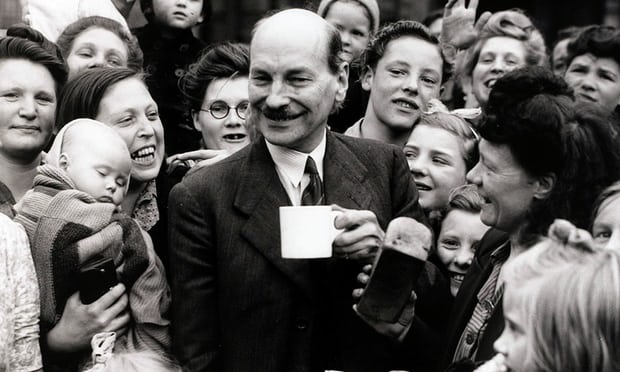
This is a good time to return to the extraordinary story of Clement Attlee’s rise to the leadership of the Labour Party, his twenty-year long period as leader (1935-1955), Deputy Prime Minister (1940-1945) and Prime Minister (1945-1951).  Attlee won two General Elections, saved the Party from the electoral wipe-out of 1931, and governed during Labour’s almost mythical post-war period in office when the Welfare State was brought to fruition.

Attlee

It is timely because the legacy and spirit of the Labour Party is once again the focus for political debate in the UK. It is possible that the party’s much better than expected performance at the 2017 General Election will have quietened that debate for the time being, but few imagine that this will not break out time and again while Jeremy Corbyn remains leader.

Rigidly chronological in structure, this biography charts Attlee’s rise to senior positions within the Labour Party, without his ever really expressing much interest in doing so – he seems to have had an amazing knack of being in the right place at the right time, never more so when he became Deputy Leader after the whitewash of 1931, when the party was reduced to fewer than 50 MPs. After a careful narrative charting Attlee’s childhood, early military career, and his discovery of his social conscience, Bew focuses on the post-war Government which delivered such an amazing legacy of legislation and reform. while at the same time falling short of many of the aspirations generated by such a resounding win.

Despite having made my way through over 500 pages of this biography, Attlee remains something of any enigma. I can’t honestly say I know the man.  You could fill a short book alone with the collected insults offered to him. Nye Bevan is said to have called him ‘a desiccated calculating machine.’ Others compared him to ‘a little mouse’, ‘a poor little rabbit’, or as George Orwell put it, “a recently dead fish, before it has had time to stiffen’. American press said he was `the dullest man in English politics’. Churchill famously said that Attlee was not only a modest man with plenty to be modest about, but ‘a sheep in sheep’s clothing’. Even when people tried to say something supportive or positive about him, they almost always prefaced their comments with another veiled insult about his reserved nature, his modest talents, his poor grasp of economics, and so on.

Bew gives us little of Attlee’s personal life, leaving the reader to conclude that it was as dull as outer appearances suggest. He draws heavily on Attlee’s letters to his brother Tom which are referenced every few pages – as if they provide some unique and previously unknown insights into Attlee’s inner thoughts, when almost always they tell us what we already know and indeed have already been told.

This book won the Orwell Prize for political writing in 2017. I have a sneaking suspicion that the author had half an eye on the prize when writing – the number of shoe-horned in references to Orwell’s work pile up, for example when comparing Attlee to Boxer, the shire horse eventually sent to the knackers’ yard. Boxer represents the ordinary Russian worker who continues to recite party slogans long after they lose all meaning, his faith in the Party unaffected by reality – in other words not at all like Attlee, who was a party faithful all his life but can hardly be described as a mindless functionary. The comparison just doesn’t work, and should have been cut – but the author obviously needed to keep every possible Orwell name-check to keep the book in the prize judges’ eyeline.

I can’t comment on whether this is the definitive Attlee biography, but I am glad I read it – I knew shockingly little about his background as a Major at Gallipoli and in France in World War one, for example, or the collapse of the second Labour Government 1929-1931, although his role in the second World War and the post war Government were naturally more familiar. I did have a couple of quibbles with the book that I can’t let slide.

First, it could have done with a closer edit. Over 500 pages there are always going to be mistakes, but this is not the first edition, and allowing sentences such as (page 144)

“For the moment, he shared the view that the obstacles to self government in India were, for the moment, insurmountable”

is unforgivable. Second, there are some moment of lazy writing. Can you spot what’s wrong with the following paragraph, for example?

(page 147) “The biggest challenge facing the second Labour Government was unemployment. Their task became extremely difficult because of events outside its control. In the last week of October (1929) the bottom fell out of the international economy, beginning with a monumental panic on the New York Stock Exchange that saw traders leap from windows in despair.

Yes, it’s the cliched way of describing the Wall Street crash featuring those leaping traders. Five minutes on Google will tell you that it didn’t happen – suicides rates actually went down during the period of the crash. But even if they didn’t, and they did, why describe the crash in this way? Is the reader supposed to think “Oh that Wall Street crash in October 1929, the one which led directly to the rise of fascism and the resurgence of the National Socialist Party in Germany , I wasn’t sure which one you meant”. If the author can’t be relied on to get simple facts like this right, how reliable is the rest of his narrative?

Standard
Book review

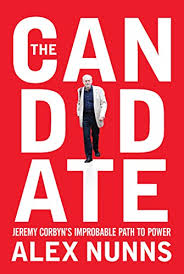
The Candidate – Jeremy Corbyn’s Improbable Path to Power by Alex Nunns

CandidateFirst, I need to declare an interest – I know and have a huge amount of respect for the author, as well as a long term interest in the subject matter. I’d like to think this hasn’t affected my review, but that’s hard for me to judge.

’The Candidate’ is, as the subtitle explains, the story of Corbyn’s improbable, almost unbelievable, ascent to the top of the Labour Party. Or as John McDonnell, Shadow Chancellor of the Exchequer, put it in endorsing the book “”This is a fascinating account of why—as well as how—Jeremy became leader of the Labour Party and transformed our politics. For anyone engaged in this movement, understanding precisely how we came to be where we are can only make us more effective as we go forward. That’s why Alex Nunns’ book is so important.”

Some events (political and otherwise) are so unlikely that no-one sees them coming, not even those closely involved. Few if any in the small group of MPs that constituted what remained of the Bennite Left in the Labour Party thought Jeremy Corbyn would be on the leadership ballot in 2015 following Ed Miliband’s resignation, let alone that he would win. His selection as a candidate was almost an afterthought, when several other potential (and with hindsight, far less suitable) candidates had been ruled out. Looking back at the events of the campaign it is easy to see Corbyn’s subsequent and almost effortless rise to power as inevitable, but Nunns’ forensic day by day, sometimes minute by minute, account, often using the present tense, makes it clear that the outcome was anything but a done deal. This is a definitive version of the extraordinary events of summer 2015, and the revolution that shook the Labour Party.

Nunns’ greatest strength is what I would characterise as myth-busting. Calmly he presents clear thoroughly researched evidence to destroy the various claims and distortions that surrounded Corbyn and his campaign, lies which continue to be recycled to this day. This is reflected in the author’s meticulous approach to research – how many other political narratives have 40 pages of footnotes?

This is not the book for you if you want to learn more about Corbyn’s Wiltshire childhood or his years on the back benches – Wikipedia covers this off pretty comprehensively. Some of the controversies that have been manufactured by his opponents – his close ‘association’ with Sinn Fein for example – are mentioned but do not form the focus of this book. Equally this is probably not the book for you if you are hostile to Corbyn, unless you are exceptionally open-minded – while Nunns is not unaware of Corbyn’s faults, or those of his campaign (for example, the initial failure to appoint any women to senior positions in the Shadow Cabinet is criticised), he doesn’t hesitate to make his allegiances clear. Nunns is particularly sharp in lancing the pomposity of the commentators, pundits and politicians who claimed Corbyn was a joke candidate who could never win, whilst simultaneously saying his victory would be a disaster for the party and the country.

I suspect that when the history of this period of the Labour Party comes to be written, ‘The Candidate’ will be considered an important reference work. Which makes the absence of an index more surprising (although I understand this was not the author’s choice). Similarly the blurb on the paperback edition, again nothing to do with the author, reads like a clumsy attempt to portray the book as a political thriller rather than a serious analysis. Minor quibbles aside, my only argument of any substance with the author would be in his treatment of the Parliamentary Labour Party. In this narrative, the PLP is characterised as monolithic and overwhelmingly Blairite, a product of an iron grip on selection in the Blair/Brown years. This overlooks the fact that Liz Kendall, the Blairite candidate – Kendall rejected this label, but given her endorsements it’s unavoidable – received just 41 MP’s nominations for the leadership, only five more than Corbyn. This perspective distorts the treatment of the 2016 ‘coup’, where the co-ordinated mass resignations from the Shadow Cabinet are characterised simply as ‘the revenge of the Blairites’ (my term). My guess is that MP’s dissatisfaction with Corbyn’s leadership and their reasons for resigning were more complex than simply an attempt to reinstate the status quo. There was widespread dismay at the outcome of the 2016 Brexit referendum, and inevitably Corbyn was the focus of some of that anger. It was not just the PLP who had their doubts, particularly as Labour’s position in the polls deteriorated – even the Guardian’s Owen Jones wrote more than once questioning the wisdom of Corbyn’s retaining the leadership, (“not good enough – his (Corbyn’s) policies are right but his leadership is clearly failing”)

It turns out of course that just about everyone called this wrong, and Labour came agonisingly close to securing victory in the 2017 general election. That campaign, and its aftermath, are the subject of a revised edition of ‘The Candidate’ which is due out early next year. I can’t wait.


Standard