Book review

Youth (1898) and The End of the Tether (1902) by Joseph Conrad

Youth was first published in Blackwood’s Magazine in 1898. Four years later it was republished in novel format in the collection Youth, A Narrative; and Two Other Stories in 1902, best known because one of the ‘two other stories’ is arguably Conrad’s most significant work, Heart of Darkness. These are still published together in the Penguin Modern Classics edition of the collection. The stories are grouped in this way to provide a young/middle-aged/old structure to the seafaring stories, on which more later.

Youth opens with several older merchant navy men sharing stories, very reminiscent of the opening of Heart of Darkness. One of them, Marlow, tells an anecdote about his first voyage to the East on board the Judea. The ship is carrying a load of coal from England to Thailand. The voyage begins to go disastrously wrong almost from the off, with a gale nearly sinking her, followed by a collision with a steamer, which takes weeks to repair. On the next attempted journey another storm hits which almost destroys the ship, leaving the crew having to work at the pumps constantly to keep the ship afloat. After a total refit and a new crew the journey is restarted, and the ship gets as far as the coast of Western Australia, when yet another disaster strikes – the coal they are carrying catches fire and eventually explodes. Although to all intents and purposes destroyed the ship stays afloat. The captain is determined to rescue either some of the cargo, the hulk of the ship, or the ship’s gear to prove to insurers that every effort had been made to save the ship. The Judea is finally abandoned and the crew salvage what they can and decant into the ship’s longboats. Somehow they make it into port and eventually back to England. For Marlow, with the irrepressibility of youth, this has all been an adventure. As such, Youth provides a striking contrast with the ominous, oppressive atmosphere of Heart of Darkness.

The End of the Tether provides the other bookend to HoD, telling the story of an old merchant navy captain, Henry Whalley. He is coming to the end of his career. In his prime he had been famous as ‘dare-devil Harry Whalley’, captain, explorer and adventurer. When we meet Whalley he has just lost all his savings in an unfortunate investment, and is considering his options. A letter from his daughter pleading for help prompts him to sell his ship, sending her most of the money and saving only a modest sum to live on. To provide an income (and I think an occupation) he buys a working share in a steamer, Sofala. This ship’s owner, Massy, is an irascible man who enjoys firing crew members. Massy has a gambling addiction which makes him paranoid, fearing everyone is trying to rob him, but he can’t fire Whalley because of the contract they have signed. However, Whalley begins to lose his sight, and has to hide this fact in case he loses his investment, relying on his knowledge of the route and the help of his crew to navigate safely. When this strategy finally lets him down he faces the most difficult of decisions.

The most difficult of the voyages described in these three stories is undoubtedly that of the Judea in Youth, but Marlow’s youthful fortitude makes it seem a jolly adventure. The journey in Heart of Darkness is for the most part relatively untroubled, but the menacing nature of the setting and the destination is what Marlow finds most challenging. The journey in The End of the Tether is by comparison straightforward and Whalley has made this trip many times before, with the most difficult element being some feats of navigation which he can manage almost literally with his eyes closed. Putting up with the boorish Massy is more difficult, but he can bear it for the sake of his daughter. (Whalley’s strategy for dealing with Massy is to totally and contemptuously ignore him, which of course winds Massy up all the more), These stories form a strong coherent whole and I am really glad that the Penguin Modern Classic series continues to print them together despite Heart of Darkness obviously being the best known stand alone story. Like most works of art, being seen/read in its original context helps with the reader’s understanding of the text. Marlow’s reaction to Kurtz’s descent into madness is easier to understand when seen in this setting.

Originally these stories would have been read as adventure stories of far distant lands and seafaring voyages. While of course they can still be read in this way, on its own Heart of Darkness is an important commentary on imperialism and empire. As a collection however they read in yet another way, as a reflection on age. It is wonderful that texts can be revived simply by reframing (or more correctly by a restoration of the original framing) in this way.

Youth (1898) and The End of the Tether (1902) by Joseph Conrad

Aside
Book review

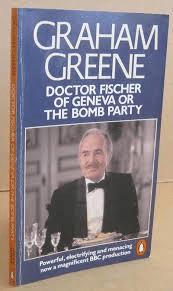
Dr Fischer of Geneva, or The Bomb Party, by Graham Greene, 1980

Graham Greene was arguably the senior British novelist of the post-war period. He was nominated for the Nobel Prize for Literature and probably would have won it if not for the objections of a couple of key Swedish judges. But since his death in April 1991 his reputation has faded and faded quite quickly. According to an essay in Prospect magazine this is because ” the world has moved on to another century and other fashions”. Adaptations of his work, such as Neil Jordan’s film of The End of the Affair (1999) and Phillip Noyce’s The Quiet American (2002) only served to emphasis the outdated nature and period settings of his novels rather than keep him in the public eye. I’d struggle to find any concrete evidence for this fading popularity, but my feeling is that his work is read very little nowadays. He certainly is conspicuously missing from many of the ‘100 best novels written in the 20th Century’ lists that pop up from time to time.

So, as always, the question has to be asked, why did I read Dr Fischer of Geneva? The BBC made a television movie of the book in 1984, with Alan Bates, James Mason (in his final screen performance) and Greta Scacchi in the leading roles and with Barry Humphries rather hilariously miscast as the alcoholic womanising film star Richard Deane. The edition I read had a still from this adaptation on the front cover and the impression was inescapably that I was looking at a late version of one of Roald Dahl’s corny ‘Tales of the Unexpected’. (For people of my generation that reference will immediately summon up a lot of memories and meaning – for others please refer to the internet!) Perhaps it was that association, combined with the promising brevity of the novella, that encouraged me to read this text to while away the time on a short journey.

The novella is narrated by Alfred Jones, a translator for a Swiss chocolate company. A note of inauthenticity is immediately introduced – did even the largest chocolate companies have their own in-house translators? It does seem something of a luxury. Jones lost his left hand while working as a fireman during the Blitz and is a widower in his fifties. In Geneva Jones meets the much younger Anna-Luise Fischer, the estranged daughter of the eponymous Dr Fischer and quickly experiences a mutual if unlikely attraction. Her father, Dr Fischer, has become rich after inventing a perfumed toothpaste. He is now known for his notorious dinner parties which attract the rich and famous. Alfred and Anna-Luise are married after a very short courtship and the problem of how to tell her father is one they eventually have to confront.

Jones finally plucks up the courage to go and see Fischer to tell him about the marriage, but Fischer is indifferent to the news. However, he later invites Jones to one of his slightly sinister and infamous dinner parties. Anna-Luise begs him not to go – the suggestion is that the parties will in some way corrupt him – but she relents, and out of curiosity Jones goes to one of the parties. At the party, Fischer sets out the ‘rules’: if a dinner guest does as she or he is instructed they will receives a valuable present at the end of the meal. This is simply a way for Fischer to humiliate his guests. Desperate for their reward they go only with the rules, pretending to find the experience amusing. Jones of course refuses to take part.

This would have been the last of their relationship with Dr Fischer and his ludicrous parties, but Anna-Luise is tragically killed in a skiing accident. Jones is devastated and considers suicide. He tells Fischer about his daughter’s death, but he needs unconcerned. When unexpectedly another party invitation arrives from Dr Fischer he decides to attend to vent his anger at his father-in-law’s indifference to his wife’s death by attending the dinner party and telling him precisely what he thinks of him and his ‘friends’.

This is of course the “Bomb Party” of the novel’s alternative title. Dr. Fischer explains the rules – he has hidden cheques for two million francs apiece within five crackers. Inside the sixth is a small bomb likely to kill whoever opens it. The guests are expected to chose a cracker and open it. A form of Russian roulette in other words. Most of the guests accept the challenge, partly suspecting that Dr Fischer would not really kill one of his guests. Jones, still feeling suicidally reckless, opens several of the crackers. I won’t spoil the ending for you but it was neither surprising nor satisfying.

Greene is quite clumsily discoursing on wealth and morality, but I am not convinced he had anything particularly interesting to say. Fischer is a monster who uses his wealth to abuse his ‘friends’, and they are sufficiently avaricious to allow him to treat them like that. Rich people aren’t very kind to one another. Who would have known? By contrast the romance at the heart of the novel is sweet albeit brief. Jones’s first person narration warns the reader early on that it is not going to last, so Anna-Luise’s death does not come as a shock. But we lose the more interesting character – Jones never really emerges as a convincing persona: having lost his hand in the war he has no expectation of a romance in later life, let alone with someone as exuberant as Anna-Luise. After her death he reverts to existing rather than living.

This was a late Greene novella, not much more than an extended short story. It passed away a short journey, but I doubt it will linger long in the memory, nor encourage me to continue trying with Greene.

Dr Fischer of Geneva, or The Bomb Party, by Graham Greene, 1980

Aside
Book review

Orwell’s Roses, by Rebecca Solnit, 2021

There is a scene is Stella Gibbons’s near-perfect Cold Comfort Farm where the heroine, Flora, meets the appalling Mr Mybug in a tea shop. She tries to avoid him but he is unshakeable and tries to impress her by talking about his latest project. He is convinced Branwell Bronte wrote Wuthering Heights and in his research has found three letters from him to an aunt in Ireland. These letters are “little masterpieces of repressed passion.  They are full of tender little questions… he asks her how is her rheumatism…has her cat, Toby, ‘recovered from the fever?’ … what is the weather like at Derrydownderry…?’” This portrait, of a pseudo-intellectual taking an obscure fact from the life of an author and blowing it up into a profound insight into their life and work, cannot be bettered, but in Orwell’s Roses, Rebecca Solnit gives it a good go.

In the mid-1930’s Orwell rented a small cottage in Wallington, Hertfordshire. He ran the local shop from the front room of the cottage and tended the small garden, planting fruit trees, vegetables, and roses. Those roses may or may not be still flowering in the cottage garden, although this seems both improbable and unimportant. In the course of the many thousands of articles, reviews, essays and letters he wrote he inevitably also referenced roses from time to time. But the idea that this scant piece of information can tell us anything significant about Orwell, either as a man or as a writer, is ludicrous. Although sceptical I was genuinely prepared to be persuaded I was wrong. I expected Solnit to have dug up some long-forgotten essay or letter in which Orwell wrote about the significance of roses to his world view, perhaps using their connection to England’s heritage as a metaphor for, well, anything. But of course he didn’t write any such thing and this left the author struggling mightily to make any kind of case. Chapters are devoted to the commercial rose growing industry in Columbia for example, in which unsurprisingly workers rights are undermined and working conditions are tough (although it is hardly a dark satanic mill situation). The author draws clumsy parallels between these hot greenhouses full of roses with Orwell’s exploration of the British mining industry in the 1930’s, but almost any third-world factory or sweatshop would have delivered the same set of comparisons.

A few years ago, shortly after lockdown, I was browsing in my local bookshop with one of my sons. Knowing my admiration for all things Orwell, he pointed this book out. My initial reaction probably seemed a little churlish (I do hope not, but fear it might have been) – that this felt like the scraping of a barrel. All of Orwell’s primary influences – Empire, class, the BBC, literature, politics etc – have been documented and investigated at length, so here was someone writing about his love of gardening. Gardening might have made it into the top ten of a list of Orwell’s interests, perhaps, but did it tell us anything we didn’t already know about the author, his works and his politics? I hazarded that the answer was no, and decided not to invest the £20 or so that the hardback would have cost me. A second-hand bookshop bargain made the decision a lot easier more recently, but my initial judgment – that this was a really tenuous thesis that it would be hard to sustain – was vindicated. There’s no questioning that the author makes a strong effort in arguing that there was some significant connection between Orwell and floristry, but effort doesn’t equal success in this case. See here for example:

“He (Orwell) went on to classify flowers among hobbies, and hobbies among the characteristics of people who valued liberty and private life, but he had opened a door for a room he hadn’t gone into, or perhaps a door onto something much larger than a room. If you do go through this door marked aesthetics and Orwell, you wander toward the very center of his life’s pursuits. (188).

No you don’t. And even if you do, roses are entirely peripheral to that room/area of interest.

Solnit writes at length about the significance of flowers to our lives. There are times where she seems to forget that the book is supposed to be about Orwell, only dragging him back into the text unconvincingly in chapter-ending summaries. But when she does write about Orwell, particularly in the book’s final chapters looking at the extraordinary productivity at the end of his life, she writes well. It is rewarding to spend time revisiting this period of his life, when he took the bizarre decision to move to Jura with his very young son, shortly after his wife Eileen had died, but carried on writing ferociously. The text ends with a chapter on Orwell’s significance today and she rightly points out that the word Orwellian has a resonance in these times that even words like Shakespearean or Dickensian do not. I was expecting the text’s final peroration to see roses drawn back into the discussion, but I was really pleased to see that in the end this didn’t (and probably couldn’t) happen. Solnit writes so much more interestingly about Orwell when she isn’t struggling to tie his work to her poorly-conceived theme.

Orwell’s Roses, by Rebecca Solnit, 2021

Aside
Book review

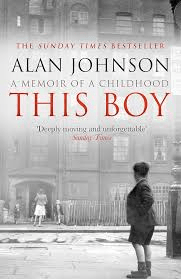
This Boy, by Alan Johnson, 2013

It’s traditional for politicians to write their memoirs after the end of their Parliamentary career. Alan Johnson was a senior figure in the Blair administration, but nonetheless This Boy had to be something special to stand out from the host of other post-Blair/Brown government autobiographies, diaries and memoirs. And it is. What makes this narrative so exceptional is its unsentimental portrait of a childhood of quite profound poverty and deprivation. That fact that the scenes Johnson describe date from the late 1950’s and early 1960’s, not some Dickensian nightmare, make them all the more extraordinary.

How bad was it; just how poor was his family? He regularly went without meals; his social housing in North Kensington, now considered part of trendy Notting Hill, was condemned; he didn’t have an indoor toilet or bathroom until he was in his teens. He faced the daily humiliation of free school meals (when everyone knew who received the free meals and who didn’t) and having to ask shop owners for ‘tick’ (credit). Coal was bought one day at a time because it couldn’t be afforded any other way and the Johnson household was usually bitterly cold, especially during the harsh winters of the early 1960’s.

But despite all that, this is not a misery memoir. These facts are recorded honestly but Johnson doesn’t dwell on them unnecessarily, and rarely seems to feel sorry for himself. (I think his older self feels sad for his younger self, but recognises that at the time he was often happy, especially when his father wasn’t around). Growing up in the 60’s Johnson sees and feels a small part of the immense social change that swept the country as it emerged from a post-war period and the 1964-70 Labour Governments introduced a host of progressive legislation.

Racism disfigured society of the period and Johnson also witnessed more than his fair share of that, as North Kensington saw terrible scenes of abuse of the Windrush generation. It’s not hard to trace the roots of the Labour politician Johnson became in the childhood of this boy.

You often see debates in the media and online about the definition of poverty. Lots of families live in households where the family income is below 60% of the median national income, the most widely used statistical definition, without suffering anything like the deprivation Johnson faced. Some of these families, it is sometimes claimed, are relatively affluent – they don’t go without daily necessities, can afford holidays and things that the middle class might consider luxuries such as mobile phones, cigarettes and flat screen televisions. So what we mean by poverty changes over time, it is relative, and the situation Johnson faced as he grew up was perhaps not as dire as that of the previous generation. The threat of eviction never seems present, social housing however poorly constructed is almost always available (including on several occasions the offer of new housing in the suburbs, most often declined) and jobs seemed to be extremely easy to walk into. If Johnson’s father had contributed to the family finances then a reasonable standard of living was within reach – certainly Johnson describes other family members and friends living in relative comfort. The safety net of the welfare state may not have protected everyone, but it did a pretty good job compared to the absolute poverty of fifty years or so earlier. That aspect of the narrative – that Johnson’s story is one of exceptional hardship, rather than a typical West London boyhood – was often lost in many of the reviews of the book at the time it was originally published. Johnson has corrected this narrative to some extent with his subsequent memoirs covering his early years as a postman, when life was comfortable by comparison.

Johnson’s sister Linda and mother Lily emerge as the heroines of this memoir. Lily worked numerous part-time jobs to keep the family afloat both before and after her husband Steve left, despite her serious health issues which took her life in her early forties. Linda, just three years older than Alan, kept the family together after Lily’s death and showed a remarkable maturity in dealing with the challenges of being orphaned and looking after her younger brother.

This book is written with a refreshing honesty and simplicity. It is obvious from the first page that it is not ghost-written, and the clumsiness of the text is easy to excuse when set beside the rawness of the content. It’s a hard read at times, although knowing that things turn out well for Johnson and his sister helps at lot.

This Boy, by Alan Johnson, 2013

Aside
Book review

The Bachelors, by Muriel Spark, 1960

Muriel Spark’s The Bachelors revolves around a group of single young(ish) men in 1950’s London. The plot centres on a case of fraud against a bogus spiritualist Patrick Seton. Seton, a leading member of spiritualist group, The Wider Infinity, is accused (and is clearly guilty of) forging a letter from his landlady, to explain his embezzlement of £2,000. Barrister Martin Bowles is prosecuting Seton, and friend Ronald Bridges, a handwriting expert, is going to be an expert witness in the trial. Other minor characters have bit-arts including an art-critic, a journalist and a teacher.

While the story is ostensibly about the men in the novel, the women play an equally central role – the novel could easily have been called ‘The Bachelors and the Spinsters’. I suspect the choice of title reflects the women’s apparent lack of agency – they are usually subservient to and manipulated by the men, in particular Alice, Patrick’s pregnant and vulnerable girlfriend. The novel takes a sinister turn from the mildly comic when it becomes apparent that he is planning to kill her by depriving her of the insulin she needs to stay alive.

And I will release her from this gross body. He looks with justification at the syringe by her bedside, and is perfectly convinced about how things will go in Austria (all being well), since a man has to protect his bread and butter, and Alice has agreed to die, though not in so many words.

Worse, one of his fellow bachelors suspects his plot but does little to prevent it. Patrick is something of a psychopath – his murderous intentions are not really financial but sadistic, possibly triggered by Alice’s refusal to abort the baby she is carrying. She gullibly believes Patrick’s assurances that they will marry as soon as his divorce is made final. Elsie, her friend, distrusts Patrick, and seeks to secure his conviction in the forgery/fraud case to help Alice escape his malign influence.

Modern (that is to say, 1950’s) spiritualism is a central theme of the novel, and it doesn’t come particularly well out of it, as you can probably imagine. It is a means to manipulate and defraud the simple-minded. Seton, an obvious villain, is protected his supporters within the Society, who are convinced he is a genuine medium, and his trial is the satisfying climax of the novel, where just desserts are granted.

The Bachelors is a quite dark novel, despite the overall jaunty tone. Ronald’s epilepsy is presented as a parallel to the spiritualists’ attempts to contact the ‘other side’ (they use the same drugs for example) in a way I couldn’t quite understand. I appreciate epilepsy as a condition was looked at very differently in the 1950’s compared to the way it is now – it was still under the shadow of the idea of possession, more part of the middle ages than a twentieth century attitude.

This wasn’t one of Spark’s stronger novels. The characters, especially the minor ones, are not clearly defined, and I think most readers will share my experience of struggling at times to work out who is speaking and what there relationships are to the other characters present. The reader has to do a lot of the work, and while sometimes that is justified, here is simply felt frustrating. The humour doesn’t always land and the portrait of living with epilepsy as if it were a curse was depressingly out of date.

I remain convinced that Spark is an under-appreciated writer who is always worth the short time it takes to read her very condensed novels, but overall this was a miss for me.

The Bachelors, by Muriel Spark, 1960

Aside
Book review

Switch Bitch by Roald Dahl, 1974

A few years ago I reviewed Patrick Suskind’s Perfume. It’s fair to say I didn’t like it very much. One commenter pointed out the similarities between Suskind’s novel and Bitch, a much earlier short story by Roald Dahl. So when I finally got round to reading Switch Bitch, the collection of four Dahl stories that includes Bitch (and apologies for the misogynistic language by the way, on which more later) there was the resounding and much-delayed sound of a penny dropping. Because Perfume isn’t just inspired by Bitch, it robs it of its central premise unashamedly. Dahl’s story tells of a scientist who develops a scent that robs men of all sexual inhibition whatsoever – they become animals who have only one thought in their heads, to have sex with the nearest available woman. Nothing, including a gun to the head, can stop them. The scent triggers an animalistic response long-buried in our Neanderthal brains. Sounds familiar? This is the central concept of Perfume. Just one more reason, were it needed, to despise Suskind’s novel.

As well as sharing a central idea, both stories are profoundly sexist. If you didn’t know it you nevertheless could easily guess that the Dahl story was written for Playboy, a soft porn magazine from the days when there were such things as soft porn magazines, which included occasional stories to give readers a break from the soft-focus photography. Their purpose was solely to titillate the invariably male reader. Dahl’s writing for adults is often characterised by unexpected endings – this was the whole premise of the long-running television series “Tales of the Unexpected” which were originally based on his short stories of the same name. But there’s an obvious problem with this structure = once it’s established the twist to each tale becomes more and more obvious. The same problem applies to the stories in this collection – there is no real surprise when the denouement of each is revealed. As the reader has known for some time, Bitch ends with the scent being accidentally discharged. This leads to a profoundly unattractive woman being ravaged, and apparently enjoying the experience. It’s horrible.

There are three other stories in this collection. In The Visitor the narrator’s uncle Cornelius, (by his own account) a preposterously successful philanderer, finds himself stranded in Egypt while on his way to Jerusalem. He is offered a room for the night by a local businessman who has built a luxurious mansion in the desert. Cornelius suspects his car has been tampered with to cause him to be stranded and meet the businessman, although why is unclear. While there Cornelius meets the man’s wife and daughter and sets out to seduce them – he likes a challenge. The inevitable sexual encounter that night happens in silence and complete darkness, (of course it does) leaving Cornelius unsure which woman he has ‘bedded’. If you don’t work out who he actually sleeps with you haven’t been paying much attention.

Our understanding of what constitutes sexual assault has evolved a lot in recent years. At the time it was published I don’t think many people would have understood that the central premise of The Great Switcheroo, in which two men devise a (profoundly improbable) plan whereby each man has sex with the other’s wife (without either wife realising the deception) is clearly a case of rape, rather than some ‘light-hearted’ fun. The sting in the tail/tale – that one wife enjoys the sex with her neighbour so much more than she does with her husband – is in part intended to ameliorate the grossness of the husband’s behaviour. He finds out his wife has hated having sex with him all their married life, so the ‘joke’ is on him. This is a modern version of the bed-trick, (which Dahl had already employed in a more conventional form in The Visitor) the principal difference being that in traditional literature it is almost always the woman who is substituted for another (the implication being that men are unable to tell who they are having sex with as long as it is dark). When this story was first published, again in a soft porn magazine, the idea of a husband tricking his wife into having sex with another man, only for the plan to blow up in his face, was mildly whimsical – some fifty years on it is appalling, distressing and hard to read. The story is told from the perspective of the husband who initiates the plan (his neighbour goes along with it enthusiastically) and ends up finding out he is a dud in bed, an anti-hero who we are invited to laugh at rather than a proto-rapist.

In The Last Act a widow reconnects with the man she left for her husband years earlier. The man is a gynaecologist, recently separated, and harbours a grudge for her breaking off their relationship. He seduces and humiliates her, and it is suggested that this makes her commit suicide. This is another appalling story – even Dahl’s biographer said it should have been scrapped.

Charlie and the Chocolate Factory had been published in 1964, well before these stories were published in Playboy. I mention this because I can almost understand a working writer selling cheap, tawdry stories to a men’s magazine simply to pay the bills. But Dahl obviously wasn’t in that position, and even if he was he could have chosen not to subsequently publish the stories in this format in 1974, by when he was also writing for films and obviously very well off.

Don’t read Switch Bitch. I always reject the idea that you can tell what an author was like as a person by his or her works, but sometimes the challenge of joining the dots between the two is almost irresistible.

Switch Bitch by Roald Dahl, 1974

Aside
Book review

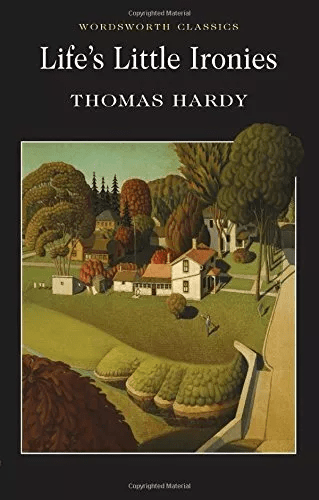
Life’s Little Ironies by Thomas Hardy, 1894

I confess I’ve never been a particular fan of Hardy. I’ve not really worked out why, but I don’t think his novels have aged well, even if various film and television adaptations have postponed any risk of obscurity. I thought I would try some of his short stories to see if they could offer something different. Life’s Little Ironies is a collection put together by the author and his publisher shortly before Hardy published his last novel (Jude the Obscure) and went into self-imposed poetical exile. All the stories had originally been published in various Victorian magazines and this is reflected in their length and subject matter.

If you didn’t know this collection was by Hardy it would take a matter of seconds to work it out. The settings are very familiar – Melchester, Casterbridge, etc – and the characters are all eminently recognisable – honest, hard-working rural folk prone to making unfortunate choices. The theme that links the stories, we are invited to accept, is that they are sketches of ironic moments in people’s lives, although the irony is quite often hard to identify.

An Imaginative Woman opens the collection with the story of a woman who conducts an affair with a young writer entirely in her imagination, but does so so convincingly that her husband strongly suspects her of having cuckolded him. Ella Marchmill is bored in her marriage to an older, unsympathetic man, and when she finds out that the previous tenant of the seaside rooms they are renting was an author she admires, she begins to spin a fantasy in which they meet and run away together. Despite her tentative efforts to reach out to the writer they never actually meet, but she leaves enough clues behind her when she dies in childbirth to cause her husband to suspect that the child is not his and to reject him. Is this ironic? Contrived certainly, depending on “a known but inexplicable trick of Nature (whereby) there were undoubtedly strong traces of resemblance to the man Ella had never seen...” What trick of nature is that then? Surely the author’s convenient plot device trick?

The Son’s Veto is again quintessential Hardy. It’s a complex little tale of disappointed love, with the main character’s happiness being frustrated by the wishes of her son. (hence the title). The story is also about class, and how marrying outside of one’s class can cause complications. It’s a polished, densely packed story barely longer than ten pages, and one of the stronger, more complete tales of the collection.

For Conscience’ Sake is another tale in which the central character has left Wessex and returns to complete unfinished business, in this case driven by his conscience. Mr Millbourne left Wessex when he fled from a relationship, leaving the young woman alone and pregnant – “the old story”. Pregnancy out of wedlock is a theme Hardy returns to frequently, but here the protagonist is determined to right the wrong even though many years have passed. Sadly he learns that the past cannot be rewritten and some wrongs cannot be righted.

A Tragedy of Two Ambitions follows two dour young men trying to carve out a career in the priesthood. Their ambitions are frustrated by their drunken reprobate of a father. How they deal with him when his appearance threatens to ruin them is rather predictable but becomes a heavy burden for them to bear.

On the Western Circuit could easily have been expanded into a novel. It tells of Charles Bradford Raye a London lawyer who while travelling to courts in the Western Circuit (for judicial purposes England and Wales is divided into six or seven ‘circuits’ i.e. regions) meets Anna, a pretty young servant girl, something of a Hardy stereotype. Normally he would not have considered Anna a suitable wife, and instead pursues her for less honourable purposes, but while they are apart her letters persuade him she is far more educated and sophisticated than she actually is – her letter are drafted for her by her employer, Mrs. Edith Harnham, the wife of a wine merchant, who is attracted to Raye and uses these letters as a form of literary infidelity. Raye finds out too late that he has been fooled and accepts his fate with resignation. This is a variant of the Cyrano de Bergerac story in which someone falls in love with a false representation of their partner, although in fact the Hardy story actually pre-dates the French play. It is a sophisticated and complex story which once again features an out of wedlock pregnancy, euphemistically described thus: “she made confession that the result of her relations with her lover it would soon become necessary to disclose”. The story also pivots around class differences – Raye would never consider marrying his lover if he knew she was a barely literate working girl as it would seriously impede his career, as if eventually does.

To Please his Wife is a short tragic story in which a seaman chooses a wife unwisely, and pays the price. Another unhappy marriage ending in tragedy – not a collection of stories to cheer anyone up!

The Fiddler of the Reels. The concept of a fiddler with quasi-demonic powers, able to charm people into dancing manically or against their will, can be found in folk-lore. Hardy draws on this idea to weave a tale of a fiddler who uses his mastery of his instrument to be seduce young women. This folk element of the story is interwoven with an account of a local mechanic who, disappointed in love, leaves rural Wessex to go and work in London, his young lady having become besotted with Wat ‘Mop’ Ollamoor, the charismatic fiddle player. This happens at the time the great Exhibition of 1851 is on in London, and this event is described as more than a background to event, but as a central marker in the country’s history, as important as the Norman Conquest. Several years later he receives a letter from his young lady, asking for a second chance, but it is only when she arrives (by an open-carriage train) that he discovers she has a young daughter, the result of an affair with Mop: “I was so unlucky to be catched the first time he took advantage o’ me“. Nevertheless he accepts the proposed reconciliation, marries her and accepts the child as his own. When they eventually return to Wessex a re-encounter with Mop is inevitable, although the precise outcome is unexpected and troublingly ambiguous.

A Few Crusted Characters concludes the collection and is comprised of a series of recollections of local characters and the often mysterious events of their lives. The stories are told by the passengers on a stage coach – there is a nod to Chaucer in the structure of the work. Each has a slightly incomplete feel, as if they were drafts of intended longer works that had been set aside but kept just in case they were to be of any use, and are finally set to work here.

Overall, these stories don’t improve on Hardy’s status as an author, but neither do they diminish it. They didn’t make me want to rush back to the novel and they lack of variety in the subject matter and themes was a little disappointing. As an introduction to Hardy you could do a lot worse.

Life’s Little Ironies by Thomas Hardy, 1894

Aside
Book review

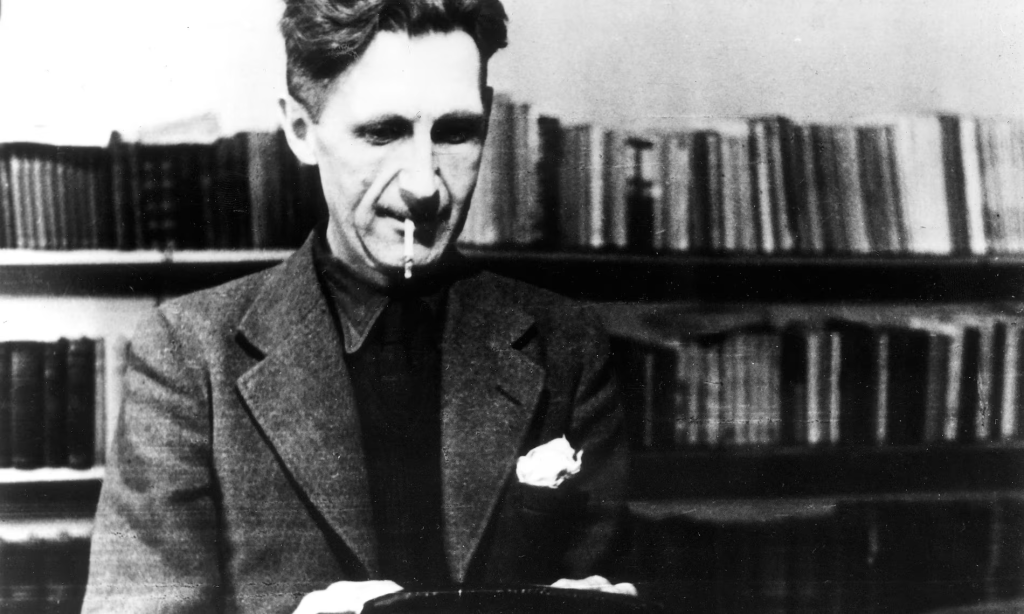
Orwell – the New Life by D J Taylor, 2023

It was a real pleasure to spend some more time getting to know the genial, flawed and very human genius that was George Orwell. I was broadly familiar with the structure of Orwell’s life – India, prep school, Eton, Burma and so on – but Taylor draws these events together into a coherent whole. So when I say this, it needs to be seen in that context: Orwell remains as much a mystery to me now as he ever was. This edition quotes John Sutherland on the dust-jacket as saying “He (Taylor) presents the ‘living’ Orwell as well as anyone will be able to”. That may be the case, but to me Orwell remains enigmatic, hidden, and incomplete. I’ll try and explain why.

There are so many aspects of Orwell’s life that remain puzzling to me. Some of the things we don’t really know about him include:

Why didn’t he go to university?

Why did he leave his post in the Burmese Imperial police, after more than five years of service?

Why didn’t he get a conventional job and write in his spare time?

What did he do for money – was he living off his parents, figures who also don’t really emerge into the light in this book.

Almost everything about his relationship with his first wife, Eileen

Let’s take those in order. The traditional explanation of his decision to join the Burmese Imperial Police instead of going to university is that his grades at Eton weren’t good enough. Certainly he wasn’t a star pupil and financial pressures to get a proper job, one following in the family traditions of Imperial service, would have been compelling. But that’s just speculation – we don’t really know for certain what led him to this decision. Having made it he stuck at the job for several years (five and a half) – this wasn’t just the equivalent of a brief period of national service – but on returning to the UK he made the key decision in his life – to become a writer. Where did that decision come from? Were there any signs prior to this that Orwell aspired to the life of an author? Had he been writing out in Burma? If so there’s no record of it. And what a strange way to start the life of a writer – instead of using the five years of experience in Burma (which he was later to use of course) he instead decides almost out of the blue to go tramping? Why? Even in the context of going ‘undercover in the under-classes’, something earlier writers had done, this still seems such a sudden and mysterious choice. Collecting material is something some writers feel compelled to do, but there seems few less promising areas to mine for content for a novel than tramps. Orwell did of course use this content, both in essays and in A Clergyman’s Daughter, but it still seems a very random choice.

When asked later in life about his decision to quit the Burmese police Orwell always cited his opposition to imperialism, and texts such as A Hanging and Shooting an Elephant certainly support that idea. I can’t suppress the suspicion that this was a simplification of his reasons (which is fair enough, most life decisions are complex and when explaining them to other people we often reduce them to one or two elements).

Orwell did have conventional jobs, lots of them. He worked in Parisian kitchens and hotels, he sold books, he was a tutor, briefly a headmaster (in a private school with a teaching staff of two, where his CV as an Old Etonian would have helped) and during the war he worked for the BBC. I think he never stayed in a job for much more than two years. Was this because he couldn’t settle at a job for any length of time, getting bored and disenchanted with the value of his work very quickly, or was it because work was always supplementary to his writing, something that paid the rent and kept the bailiffs away, always secondary to his ‘real’ work? Once again we simply don’t have any definitive evidence that explains this nomadic lifestyle which was reflected in his relentless moving from address to address, never staying in the same place for more than a year or two – a full list of Orwell’s residences would fill an address book.

Despite making a reasonable income from his journalism, his publishing, and his various jobs, I suspect Orwell often relied on his parents and wealthier friends for financial support. I admittedly have no real evidence for this, just another suspicion – he did keep going back to his parents’ house in Southwold when he first started out as a writer. Certainly he had that middle class carelessness with money, putting up with considerable hardship when necessary and always assuming that something would come up to help out. You really can only live that life if you know there is always some support available as a last resort – Orwell was never going to find himself homeless.

And finally there is the closed book that is his relationship with Eileen. They married in 1936 after a relatively brief courtship (their very modest wedding was held in Wallington, the hamlet where Orwell ran the village stores), she went with him to Spain to support him in the civil war, and she died in 1945 just after the end of the war in Europe, and very shortly after having adopted their son, Richard. Taylor speculates the marriage was reasonably happy although hints at affairs on both sides – other biographers have been much more categorical about their infidelities, and certainly Orwell left some deeply incriminating letters. Lots of people who knew the couple wrote about them, but none seem to have understood the real dynamic of the relationship, what attracted one to the other, what made them tick as a couple. Why did Eileen put up with being a junior partner in the relationship despite her many talents, indeed why did she put up with living in the cottage in Wallington for so long with its outdoor privy, no heating and cramped rooms.

What is all the more extraordinary about this mysteriousness of the real Orwell is that he was a journalist, was famous after Animal Farm, was interviewed many times and had many writers as friends who left memoirs. A surprising number of people he wrote to preserved his letters, even when he asked them not to. Yet no recording of his voice exists, and I believe there is no film of him either, despite his working for a year and half at the BBC!

Another point that comes across vividly in this text is the tragedy of Orwell’s early death. He published his first novel, Burmese Days, in 1934, and was dead less than sixteen years later. In that time he did an extraordinary amount of work, and living, for a man in such poor health. He published six novels and three full-length pieces of non-fiction, got married, fought in the Spanish Civil War, worked at the BBC, served in the Home Guard, wrote a prodigious amount of journalism, reviews, diaries and journals, essays, opinion pieces, and letters, finding the time somehow to adopt a child and then remarry in the final weeks of his life. Dying aged 46, it is striking just how incredibly truncated his life was – cramming all those novels and experiences into little more than a decade dominated by the rise of fascism and the second world war.

If you are not a fan of Orwell you probably won’t become one on reading this biography. Taylor is honest about Orwell’s shortcomings and flaws. What doesn’t emerge clearly from these pages is Orwell the politician. There’s no real account of Orwell’s personal political journey from Old Etonian and imperial policeman to avowed socialist. The Spanish Civil War was obviously a turning point, but the transition was much more complex than just changing his views after being shot at (and of course, shot). His membership of the Independent Labour Party, a left-wing off-shoot of the Labour Party, is barely mentioned, and although his friendships and acquaintances within the Attlee Government are referred to there is no sense of Orwell the political animal, which was such a central part of his identity.

The chronological narrative is broken up from time to time with short thematic chapters – Orwell on faces, rats, anti-Semitism, homophobia, and so on. These essays felt like a way of using left-over material (and many of them did appear in the original version of this biography) and felt strangely out of place. If I was editing this book I would have put a line through all of them and suggested they be sent to the Orwell Society for publication.

The attempt early on to draw comparisons with St Cyprians, Orwell’s prep school (a private, fee-paying school where the middle classes sent their children to prepare them for public school examinations) and Oceania are absurd. Similar ill-thought through comparisons could have easily been made between Oceania and the BBC or Eton or the Burmese Imperial Police Force – the idea that an author’s literary ideas must all have their origins in childhood experiences or institutions is as ridiculous as it is demeaning, undermining the ability of an author to – you know – make things up.

There were a couple of other things that bugged me about this book and should really be fixed in the next edition:

a) Eileen’s war-time job. See if you can spot why this paragraph irked me? Chapter 20 ‘The Melting Iceberg’ describes Orwell’s account to find a role in the overall war effort. On page 366 Taylor, quoting a letter from Orwell to his literary agent, tells us that

“The letter to Moore notes ‘my wife has already got a job in a government office’ as if Eileen’s rapid deployment were the most natural thing in the world. But it might be wondered just exactly how, in the paranoiac conditions that prevailed in Whitehall corridors circa 1939, the wife of a writer regarded as an ‘extremist’ by the India Office, suspected of importing contraband material and already on MI5’s radar, could have fetched up in such a sensitive part of the wartime bureaucracy”.

I reread this sentence several times thinking “What sensitive part of the wartime bureaucracy”? What was her job, and why was it such a matter of surprise that she was given it. It’s not until page 375 that we learn what it was – she worked in the Censorship Department. An editor should have caught this omission and made the minor changes required for the narrative to make sense. A similar thing happens in:

b) Chapter 26 ‘Pain in Side Very Bad’ is prefaced by two quotes dated 1948. The text itself then starts with this sentence:

“The Blair party left for Jura on the afternoon of 10 April, went by overnight train to Glasgow, and then flew on to Islay. By the evening of 11 April they were back in Barnhill.”

What year is this? We are in the closing years of Orwell’s life – every year matters. The previous chapter is one of the rather irritating filler essays – this one is on Orwell and anti-Semitism – so the reader can be forgiven for not knowing or remembering that Taylor is picking up where he left off the preceding chapter. It’s just unnecessary and irritating, when a year after the first reference to April would make everything clear.

These are minor, fixable points.

I opened this review with a comment on one of the observations from critics quoted on the book’s dust-jacket, so I am going to close with one as well. Hilary Spurling from the Daily Telegraph apparently wrote

“A persuasive and profoundly moving exploration of the ways in which Orwell’s work was constructed from the stones of a ruined life”.

I know he had health issues, died early, and lost his first wife, but despite all that I never thought of Orwell’s life as ruined. There are sad moments in his story but it is not a tragedy – he lived, wrote and achieved more in his 46 years than many of us manage in 70. And while his early works draw upon his life experiences, the idea that Animal Farm and 1984 are in any way autobiographical (or ‘constructed from the stones’ of his life) is preposterous. This instinct, to try and find the seeds of a writer’s creativity in their life stories, actually ends up diminishing their ability to tell stories and work with ideas. That’s one reason why Orwell was so dismissive of his early novels in later life, to the extent of not allowing them to be republished on the back of the popularity of Animal Farm in particular. What led to that late blooming of creativity and inventiveness remains yet another mystery about this extraordinary author.

Orwell – the New Life by D J Taylor, 2023

Aside