
The power to transform the human body using advances in scientific understanding. 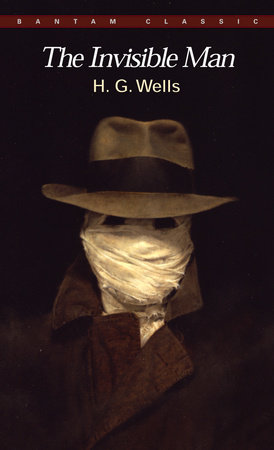 This was the theme that captured the imagination of many nineteenth century writers, including, among others, Mary Shelley in ‘Frankenstein‘, Robert Louis Stevenson in ‘Dr Jekyll and Mr Hyde‘, and H.G. Wells in ‘The Invisible Man‘. In this late Victorian novella, Wells explores the idea of what would happen if someone, somehow, managed to make themselves invisible. Continue reading
The City and the City, by China Meiville, 2009
When reading this review, if you do, please remember my policy on spoilers – which is that I will probably use them. I don’t do so deliberately, I just find it hard to write comprehensively about something I have read without writing about the things that other readers might consider spoilers (bearing in mind of course that there is no  universally agreed definition of what constitutes a spoiler in the first place). ‘The City and the City‘ is particularly difficult to review without reference to the central concept. If you avoid blurbs, plot summaries, reviews, tv adaptations etc, and read this novel without any preconceptions (I would agree by the way that a ‘pure’ approach to reading any novel is impossible – the reader will be influenced by their knowledge of the author, the cover illustration, etc) you become slowly aware that there is something unusual about the setting.
The central concept in this otherwise orthodox police procedural novel is extraordinary. Inspector Borlú, of the Extreme Crime Squad in the central European country of Besźel, investigates the murder of a foreign student. The victim was involved in debates about the complex relationship between Besźel and its neighbour and rival Ul Qoma. From early on there are some unusual aspects of Borlu’s narration. He talks about ‘unseeing’ a passerby, with no explanation of what this means. Borlu is Beszel born and bred, so his instincts as a native are deeply ingrained – he sees nothing out of the ordinary in what follows. Slowly, the true nature of Beszel and Ul Qoma’s unique relationship is revealed. The cities occupy the same geographical space, but preserve their separation through rigid adherence to ‘unseeing’ – being aware of but refusing to acknowledge the existence of the other – its buildings, vehicles, citizens and so on. This practice is enforced by a sinister entity known as Breach. Separation is assisted by differences between the city and the city – clothing, architecture, even gait. Residents are taught from childhood to recognise things belonging to the other city without actually seeing them. Ignoring the separation, even by accident, is called “breaching” – a serious and swiftly punished crime.
I suspect Meiville drew inspiration for this separate but the same concept from the situation in the former Yugoslavia in the 1980s and 90s, where neighbouring countries fought bitterly over small areas of land. This separation could have arisen from this kind of conflict, although we are told it dates to before recorded European history. Inevitably there are many complications to this way of life. The cities have areas where ownership is unclear, and where people of both cities walk and drive alongside one another. The only way one can legally pass from one city to another is through border control – even though such journeys involve returning to the same physical space one has just left.
Meiville’s construction of this world is thorough – he thinks through all the practical aspects (what if there is a traffic collision between cars from the different cities?) – this is not just a whimsical concept but a fact of everyday life for the citizens of the two cities, which make investigation of cross-border crime a logistical and conceptual nightmare.
Within this world, the murder investigation unfolds, and it is not a criticism to say that in this respect the novel is a traditional police procedural. Suspects are interviewed, other crimes are discovered, hidden forces interfere with the investigation, all in a routine manner. This is not of course a simple murder, even if where it was committed had been a less complex environment. A conventional buddy relationship develops between Borlu and his Ul Qoma partner, and Borlu’s sidekick does what every good sidekick does, providing back-up and insight without stealing the limelight.
In crossing genre boundaries, any author runs the risk of pleasing fans of neither original genre. Meiville does what he can to mitigate this risk, but his weird fiction fans are the most likely to have been disappointed – other than the setting or context, this is a very recognisable world. I really enjoyed it, and while I recognise it is probably not typical of Meiville’s work, I will be interested to see to what extent that is true, or whether my fairly uninformed impressions of this author are correct.
Mort, (Discworld 4) by Terry Pratchett, 1987
If you are still counting, ‘Mort’ is the fourth novel in the Discworld series. It is also the first novel in the series where Death is a central character – some people read the books thematically like that (i.e Death 1, 2 etc.).
Anyway, experiencing the need to get out a bit more and live, Death takes an apprentice, Mortimer, aka Mort (see what he did there?) to help with the harvesting of souls. And mucking out Binky’s stable. There is also the nod and a wink promise in the unwritten job description of taking over the family business when Death finally retires, however unlikely that sounds. (If that is the bit that sounds unlikely, whereas Death taking an apprentice you are OK with, then I would question your grip on reality!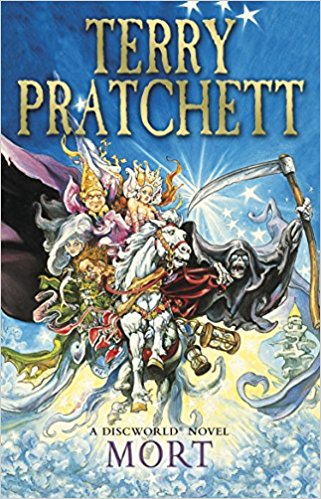 )
)
One of the things readers of the Discworld novels know is that Sir Terry was a bit of a philosopher. He had important insights into the way the world works, and shared them with us through the medium of humour. ‘Mort’ includes plenty of examples of this, because there are few more serious or profound issues to meditate on than death itself (or indeed, Death himself). Death doesn’t kill people, he is just there when they die, and eases their passage into the beyond. People react to Death’s arrival in a range of ways, from anger to annoyance, surprise, resignation, and occasionally with a welcome. Sir Terry’s insights range across all of life’s big issues, and most of the small ones – this sentence jumped out at me for example:
“People don’t alter history any more than birds alter the sky, they just make brief patterns in it”.
Which is a bit wonderful don’t you think?
A quick plot synopsis for those of you who expect that kind of thing in a book review. Once his initial stable cleaning duties have been completed, Mort gets to accompany Death on ‘the duties’. In Sto Lat King Olerve is due to be assassinated, but in the course of their otherwise successful visit Mort falls heavily for the King’s daughter, Keli. Later on a unscheduled half day off Mort tries to return to Sto Lat to find out whether the princess really saw him, in the course of which he meets Igneous Cutwell, a young wizard, whom he hopes can help explain his developing tendency to manifest magical powers such as walking through walls. We can tell that Mort is becoming like his master, but he remains blithely unaware of it, for now.
Death then decides that Mort is ready to perform the Duty on his own, and sends him to collect three lives. Goodie Hamstring, a witch from Lancre is very understanding about his inexperience, as is Abbot Lobsang, from the Listening Monks who is destined to be perpetually reincarnated. As soul collections go these are ideal learning deaths. But the training wheels come off with a big when Mort finds out that the third death is to be that of Princess Keli, due to be assassinated on the orders of her uncle. Mort can’t bring himself to do it, thus creating a rift in reality that is going to cause some serious issues when time catches up with it.
Keli, suffering a temporal anomaly in which everyone thinks she is dead, appoints Cutwell as Royal Recogniser. In a badly timed move, Death decides to take some more time off, leaving Mort in charge. He tries drinking, gambling, partying and fishing before finally taking a job as a short order chef in Ankh-Morpork. Mort tries to keep the show on the road, but in doing so he slowly becomes more and more like Death, including the capitalised speech. Reality is beginning to assert itself now, for example by changing a pub sign from The Quene’s Head to The Duke’s Head. Finally, after the intervention of a very ancient wizard, (and a brief reappearance by Rincewind) Death discovers Mort’s mistake, and in a climatic scene they duel as the old reality closes in on the Princess.
Pratchett’s “and they all lived happily ever after” endings can sometimes feel a bit forced, but the resolution to this clash is well managed, and well, they all live happily ever after. If Death can’t adjust reality just a tweak to make matters right, then who can? The old universe (in which the Princess dies) becomes a wedding present which will expand into another universe once the current one dies. Which I thought was rather neat.
P.S. You will recall, because I have written about it before, that the way Sir Terry chose to notify people of his death in 2015 was the extraordinary tweet “AT LAST, SIR TERRY, WE MUST WALK TOGETHER”. Of the thousands of comments this tweet received, one of the earliest was by an account in the name of the ‘Death of Rats’ (aka The Grim Squeaker) which went “Squeak, squeak, squeak”. For reasons known only to themselves, Microsoft offers the option to “translate this tweet” – sadly the link doesn’t work. But I think we know what he was trying to say.
The Influential Mind, What the Brain Reveals About Our Power to Change Others, by Tali Sharot, 2017
As a break from the recent relentless Pratchettery I have managed to finish this book of popular science written by Tali Sharot, a neuroscientist who also wrote ‘The Optimism Bias’. This is timely because the paperback version comes out on 2 August in the UK, and I suspect you will see piles of this book in your local bookstores.
The author is a serious scientist: she is a Ted talker, director of the Affective Brain Lab at University College London and a Wellcome Trust Fellow and has been published on various topics including the neuroscience of optimism, emotional memories and cognitive dissonance in journals such as Nature. In other words this is more than just one of those light hearted copy and paste books on science that tell you little more than you will find on Wikipedia – this is a review of the literature and science of influence, albeit presented in an accessible fashion. Why influence? Well it’s key to understanding why people behave the way they do, and surely this world needs a bit more understanding and empathy at the moment.
 ‘The Influential Mind will make you gasp with surprise – and laugh with recognition. Many of our most cherished beliefs about how to influence others turn out to be wrong; Sharot sets them right. Packed with practical insights, this profound book will change your life. An instant classic’ Cass R. Sunstein, bestselling co-author of Nudge
No it won’t, no they aren’t, and no it isn’t.
It is understandable that the publishers chose this review to illustrate this book’s entry on their website and adorn the hardback edition’s front page. This is a classic case of log-rolling – two minutes on Google told me that Sunstein has co-authored papers with Sharot – but it is also an extreme example of hyperbole. The only way this book would change your life is if you tripped over it at the top of a stairwell. I have no recollection whatsoever of gasping as I read it – maybe the occasional slow nod of recognition at a point well made – and there are few if any laughs in here either. This is a serious book, and it really does it no favours to pretend it is life-changing or ground breaking – it is no more nor less than a thoughtful review of the existing research into this subject, presented in an accessible fashion. Popular science in other words, perhaps not at its finest but no worse than the rest of what is becoming a crowded field.
The most striking example the author cites when discussing the importance of understanding how influence works relates to the vexed topic of hand washing in hospitals. A study of how frequently doctors and nurses in US hospitals wash their hands found shocking failure rates, leading directly to infections. Monitoring the staff remotely via video had no impact – as long as they knew they weren’t going to face any punishment they simply did not change their behaviour. What had a dramatic impact however was publishing hand washing rates in real time on a screen in the staff restroom. Rates shot up. Sharot speculates that this was because positive feedback on performance was perceived by staff as a non-pecuniary reward. In other words, rewarding people can influence their behaviour. Who knew? So far as I know there were no similar punishment trials where people had a % of their salary deducted each time they failed to wash their hands, but I guess it would have had the same results.
Elsewhere this book hits more topical and predictable targets. Trump and his power to persuade based on emotion rather than logic, the anti-vaccine movement and how to counter it (don’t try to address the lies in the anti-vaxx case, just emphasise the positives of vaccination i.e. the avoidance of death) and the times when the wisdom of crowds can be misleading. This is all packaged in an engaging and relatively short book which you will find interesting if you are looking for an introduction to this topic.
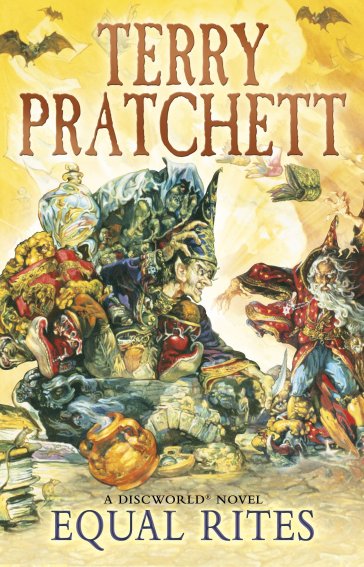
Equal Rites, (Discworld 3) by Terry Pratchett, 1987
Equal Rites’ is the third novel in the Discworld series. This is the novel where Pratchett really hits his stride. ‘The Colour of Magic’ and ‘The Light Fantastic’ are good, of course, but by comparison they felt a little childish when I was rereading them recently (see the reviews earlier in July). Some of the jokes in particular are quite crude, and the plotting is simplistic if not awkward – magic is used as the ultimate get out of jail card. Pratchett dips his toe in the waters of social issues, but quickly reverts to the frothy irreverent humour that is the trademark of these books.
‘Equal Rites’ is different in kind. It introduces the extraordinary, imperious Granny Weatherwax -‘I’m not a lady, I’m a witch’. This is going to sound like hyperbole, but if Terry Pratchett had not written about any other character his place in the pantheon of great writers would have been secured by his portrait of Granny Weatherwax. She is funny and kind and clever and wise and respected and seems almost a real person.
“Granny Weatherwax was a witch. That was quite acceptable in the Ramtops, and no one had a bad word to say about witches. At least, not if he wanted to wake up in the morning the same shape as he went to bed.”
I also love her stubbornness:
“She was also, by the standards of other people, lost. She would not see it like that. She knew where she was, it was just that everywhere else didn’t.”
Pratchett’s theory of magic – that a large part of it is in the head of the person on whom the magic is being performed – ‘headology’ – is cleverer than any system of runes mana or potions you find in other fantasy series.
“I saved a man’s life once,” said Granny. “Special medicine, twice a day. Boiled water with a bit of berry juice in it. Told him I’d bought it from the dwarves. That’s the biggest part of doct’rin, really. Most people’ll get over most things if they put their minds to it, you just have to give them an interest.”
The central question posed in ‘Equal Rites’ is why can’t a woman be a wizard? Eskarina Smith is accidentally given a wizard’s staff, and despite all efforts to the contrary is destined to be a powerful magical person – be that a witch, wizard, warlock, sourcerer, thaumaturge or otherwise. She is apprenticed to Granny Weatherwax, who soon realises the girl’s potential, and they set off on a classic road trip to try to gain access to Discworld’s only college for wizards, the Unseen University. Her application to join the university is dismissed out of hand, and a passionate battle for equal rights ensues, with only one winner ever being likely.
Given that female wizards are unheard of in Discworld, Granny has to get a bit creative, so Esk enters the university as a servant. She is reunited there with Simon, an apprentice encountered earlier on the route to Ankh-Morpork. Simon is, like Esk, a naturally talented wizard, but he loses control of his magic and accidentally opens a rift to the Dungeon Dimensions. As you can probably guess this is not a good thing. With the help of Granny Weatherwax, Archchancellor Cutangle, and Esk’s staff, Simon and Esk manage to defeat the demons and escape back to Discworld.
The ending of the novel is one of its weaker features – there is never any real sense of peril or doubt that Esk and Simon will escape unharmed from the Dungeon Dimensions – but who reads Pratchett novels for their plot? it was great to read what is in effect Granny’s origin story. I am really enjoying my rediscovery of early Discworld, watching it emerge and expand before my eyes. The next novel in the series, Mort, takes us to Death’s own domain – I can’t wait!
Supplementary: The Mystery of Sherlock Holmes
If you read the comments on my recent post about ‘The Adventures of Sherlock Holmes’ you may have seen I postulated that there is a paradox at the core of how we perceive Sherlock Holmes. On the one hand he is (and so far as I can make out, always has been) enormously popular; on the other his stories are formulaic and (in the words of Bookertalk) “preposterous”.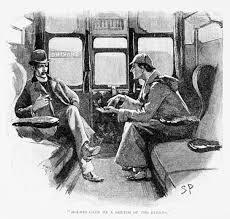
The case for the prosecution is easily made. The Holmes stories are rigidly structured – Holmes and Watson are chatting, Holmes casually tosses over a letter he has received from his most recent client, telling him they will call at a certain hour which precisely arrives at the moment their initial assessment of the case has concluded.
“DEAR MR. HOLMES:—I am very anxious to consult you as to whether I should or should not accept a situation which has been offered to me as governess. I shall call at half-past ten to-morrow if I do not inconvenience you. Yours faithfully, “VIOLET HUNTER.”
“Do you know the young lady?” I asked.
“Not I.”
“It is half-past ten now.”
“Yes, and I have no doubt that is her ring.” (The Adventure of the Copper Beeches).
Holmes performs his parlour trick of determining the visitor’s background – “Beyond the obvious facts that he has at some time done manual labour, that he takes snuff, that he is a Freemason, that he has been in China, and that he has done a considerable amount of writing lately, I can deduce nothing else.” – (The Red-Headed League)
The game is then afoot, and Holmes quickly resolves the mystery by dint of some off-camera background research, investigations using a disguise or two, and a good dose of luck. I pointed out in my previous post that the resolution of each case is often not what the client hoped for. Of the twelve stories in ‘The Adventures’, one case fails completely (A Scandal in Bohemia), in another the client is murdered and the murderers escape (The Five Orange Pips) and in yet another Holmes solves the mystery but decides not to reveal the solution to his client (A Case of Identity).
Beyond this rigid structure, there are other issues. Apart from Holmes and Watson few other characters are brought to life – certainly not in the way they are in Sherlock for example, where they are given complex and interesting back stories. The writing is nothing out of the ordinary, and the author frequently ‘cheats’ by way of undetectable poison or by withholding information key to the resolution of the case until the last moment. Some if not many of the situations are indeed preposterous – for example in ‘The Adventure of the Speckled Band’ a bell pull is installed in the victim’s bedroom, but it is not connected to anything (did people have bell-pulls in their bedrooms anyway? Perhaps the senior aristocracy who needed help dressing, but not in a small household as in this story).
The case for the defence would probably point out that the Holmes stories are some of the best loved in literature. Holmes has inspired many other writers, film-makers and artists, and the rich range of secondary characters in the books, from Mrs Hudson to Irene Adler, Lestrade, and of course not forgetting Moriarty may indeed be sketched briefly but are powerfully brought to life. The defence would also mention Conan Doyle’s virtual invention of the detective story, the cleverness of many of his plots, the inventiveness of Holmes’s deductions, and the strength of his enduring relationship with Watson. Descriptive writing may not be Conan Doyle’s strength, but London is brilliantly evoked.
Thus far a fairly balanced case. But I think the enduring power of the Holmes stories lies elsewhere. Holmes was one of the earliest super heroes. He has enormous strength – he can straighten a bent poker. He is utterly fearless. He has almost super-human powers of observation, deduction and intelligence, and well as a vast array of scientific and other information at his fingertips. He fights for the poor and the oppressed as well as the prosperous. He is a master of disguise, and sometimes wears a cloak. He lives among us, but apart. The country would fall without him. Yes, he’s Victorian Batman.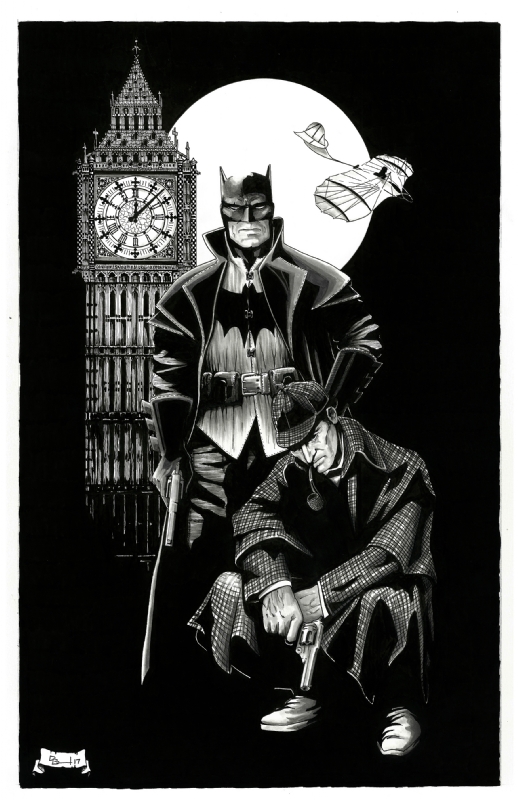
And we all love a good super hero. The MCU franchise is not the most successful series of films in Hollywood history for nothing. What is more we need heroes. In Victorian England the readers of the Strand magazine would have felt threatened by trade unions, rising crime, the poor, suffragettes, and Germans, not in any particular order. Today we fear rising crime, lawlessness, terrorism, Trump. We still need Holmes out there stopping the bad guys, which is why we still have him.
Being a conscientious blogger I always try and find out if what I think is an original observation is just a cliche, and no surprise – I am not the first person by a long way to draw this parallel. Apologies, but I think the point still stands. Incidentally I don’t think it is important to get hung up on the specific super hero – the point is he plays the same role in society, offering hope to the vulnerable and scared. Which is why Holmes has developed such a rich life outside the Conan Doyle stories, and why he will remain a source of fascination and inspiration for many decades to come. Inevitably the original source material might look a little jaded in this context, but that would be to miss the point. Which I think, in my previous post, I did.
Conan Doyle’s ‘The Adventures of Sherlock Holmes’ contains 12 short stories, all originally published in the Strand magazine between June 1891 and July 1892. Some are better known than others, but all follow a fairly rigid format – a curious case is brought to Holmes’s attention by a flustered individual, often incognito, Watson’s support is engaged, and the case is then swiftly resolved. Disguises are often deployed, trusty service revolvers are pocketed, and Lestrade is ritually humiliated. In every story Holmes performs the deductions which are his hallmark, usually at the opening of the story, although rarely if ever are these deductions anything to do with the case in point.
A Scandal in Bohemia is the story in which Irene Adler, ‘the woman’, makes her one and only appearance in Conan Doyle’s stories. It is a simple case of blackmail which is resolved without Holmes’s assistance, because Irene marries and decides not to pursue her victim. Holmes counts it as one of his very few failures, which suggests his definition of success is somewhat flexible, but there is no suggestion of any attraction between the two, more a mutual respect.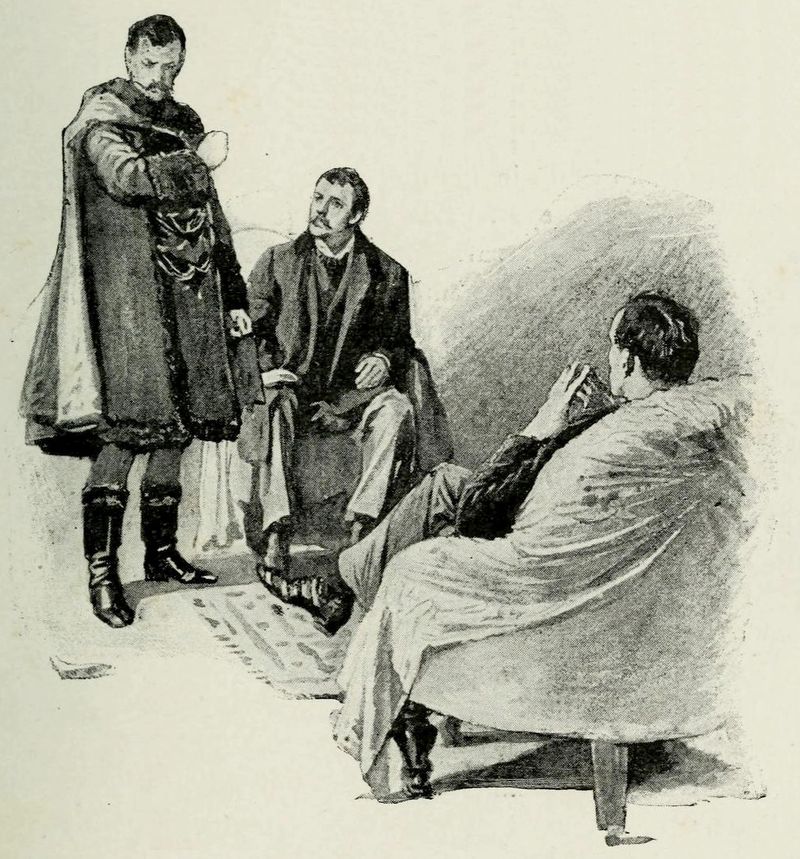
The Red-Headed League is one of Holmes’s more ridiculous cases. A pawn broker is duped into leaving his store all day for several weeks to allow a tunnel to be dug from the premises to a nearby bank. The bank robbers could surely have found easier ways to do this than the invention of the League, which would have drawn a lot of attention to themselves, left clues all over the place, cost a lot of time and effort to establish, and could have fallen apart at any time.
A Case of Identity is one in which someone assumes a flimsy disguise, which Holmes sees through but fails to tell his client he has resolved the case. See ‘The Man with the Twisted Lip’
The Boscombe Valley Mystery. In this story Holmes bizarrely allows a murderer to go free, and a guilty man to spend months in prison, simply because the murderer is dying.
The Five Orange Pips sees Holmes allow his client to be brutally murdered and the murderers to escape the country, if not justice. Another great success!
The Man with the Twisted Lip. Someone assumes a flimsy disguise which Holmes sees through, again.
The Adventure of the Blue Carbuncle. In this story Holmes starts with the missing gem falling into his lap, and then working back to find out who stole it – an easier approach than the other way round I would have thought.
The Adventure of the Speckled Band. Conan Doyle thought this his finest Holmes story, but it is riddled with preposterous plot points.
The Adventure of the Engineer’s Thumb. A good headline, but a story in which Holmes detects absolutely nothing. Perhaps explains why this has not been an adaptor’s favourite.
The Adventure of the Noble Bachelor. A missing person story depending for its resolution of a previous relationship in America – the States is the setting for several of Holmes’s client’s backstories.
The Adventure of the Beryl Coronet. I think the real mystery – why a member of the royal family comes to pawn an incredibly valuable coronet for a fraction of its value – is ignored, instead focusing on whodunit in which footprints in the snow provide all the answers.
The Adventure of the Copper Beeches. A governess is recruited at highly inflated wages to impersonate a kidnapped heiress. Another case where the villains employ ridiculously complex means to pursue their villainy, when many other simpler options are available.
To Victorians, Holmes’s deductions and flashes of brilliance must have been dazzling, and to this day there are readers who hold Holmes in the highest possible regard. He is not the character most often portrayed on film for nothing. In recent years ‘Elementary’ and ‘Sherlock’ have given new life and new depths to the character. For me Holmes probably works best in this short story format where the weaknesses in his deductive method and approach aren’t too visible.
The Adventures of Sherlock Holmes, by Arthur Conan Doyle 1892
The Light Fantastic, (Discworld 2) by Terry Pratchett, 1986
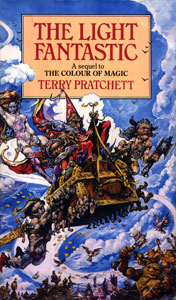
‘The Light Fantastic’ concludes the adventures of Rincewind, the failed wizard, and Twoflower, the curious tourist from the Agatean Empire, who were left at the end of ‘The Colour of Magic’ falling in some style off the edge of the world (the world being, of course, disc-shaped, said disc being on the back of four giant elephants who in turn are perching on the shell of the Great A’Tuin, a celestial turtle). Hope you got that.
Reading back over my review of ‘The Colour of Magic’ I think on reflection I may have not clearly conveyed my awe at the wonder that was Terry Pratchett. He was a creative and comic genius, and my admiration of his body of work is tinged with sadness that he will no longer be adding to it. As comic writers go I would put him almost on a par with Douglas Adams – I can think of no higher praise.
Of course this isn’t just a fan-blog, these are intended as above all things honest reviews, so there’s no point in self-censoring observations that are less than adulatory – what would be the point? But there’s equally no point in just listing the minor flaws in a novel, and ignoring the gems. So if I got the balance wrong with ‘The Colour..’ then apologies, not least to TP. Continue reading

Noughts and Crosses by Malorie Blackman, 2001
 ‘Noughts and Crosses’ is set in an alternative society in which the dark skinned people of the world conquered and enslaved the lighter skinned. As a consequence, although slavery has now been abolished, black people are prosperous, have good schools and hospitals and hold senior positions through society, white people are disenfranchised, hold most menial jobs, and are economically disadvantaged. Relationships between noughts and crosses are frowned upon – they are not unheard of, but still considered transgressive and likely to lead you to end up being assaulted. Critics have called this society dystopian (“relating to or denoting an imagined place or state in which everything is unpleasant or bad, typically a totalitarian or environmentally degraded one”), but I am not so sure about that – I think Blackman intended it to be as realistically close to our own as possible.
This inversion of society and race is an inspired way of encouraging people to look at the power relationships in society, and the many ways in which black and minority ethnic people are still treated as second-class citizens, despite the progress that has been made in some areas. Certain scenes, such as when four “blanker” children (‘blanker’, we can deduce, is a shockingly offensive term similar to way the n-word is used in our own society) are allowed to attend a “Cross” school, are based on incidents in the Civil Rights movement in the United States in the 1950s and 60s. However a knowledge of this history is in no way essential for an appreciation of the novel.
One reason why this is not simply a dystopian nightmare is that there is some evidence that society is in transition. There appears to be a democratic Government, albeit one in which Crosses dominate, and an international organisation, the Pangean Economic Community, which promotes racial equality. Noughts can now attend cross schools. There is hope that the oppression of noughts is being eased, albeit slowly.
This world is portrayed through the eyes of two teenagers, Sephy, (short for Persephone) a prosperous Cross, and the son of her nanny, Callum, a nought. Callum and Sephy narrate alternative chapters in the novel, similar to the turns taken in a game of noughts and crosses. Their fledgling romance is disrupted when Callum’s mother is spitefully dismissed by Sephy’s mother for failing to provide an alibi for one of her affairs. Callum’s father and older brother Jude are slowly drawn into the dangerous world of the nought resistance movement, the Liberation Militia. As you can probably guess, things don’t go well for the star-crossed youngsters. I will eschew my normally strict policy on spoilers; suffice to say this is not the traditional teen romance the opening chapters might have led the reader to expect.
The target readership for ‘Noughts and Crosses’ is finely calibrated. Readers need to be young enough to forgive the simplistic structure, the use of clichéd scenarios (spurned young love, letters read moments too late, parental neglect, etc.) and the reliance of heavy handed narration in which teens sigh a lot and complain about how no-one understands them:
“I pulled him closer to me, wrapping my arms around him, kissing him just as desperately as he was kissing me. Like if we could just love long enough and hard enough and deep enough, then the world outside would never, could never hurt us.”
“That’s why I started crying. That’s why I couldn’t stop. For all the things we might’ve had and all the things we’re never going to have”.
However, the caution on the novel’s front cover – “Not suitable for younger readers” – is a warning that this is more than a teenage romance novel. The characters a bit wooden, even two dimensional, and in particular Jude is the world’s worst terrorist, but this is nevertheless a challenging novel of ideas where easy answers are avoided.
It is difficult for adults to review books written specifically for children and young adults. If we point out their bland characterisation, flaccid language, and clichéd storylines, we miss the point – children are looking for different things in their fiction, such as strong themes, identifiable characters, and just the right amount of danger. ‘Noughts and Crosses’ is a modern children’s classic, but there’s no doubt I would have enjoyed it so much more if I had read it as a teenager.
The Tenant of Wildfell Hall, by Anne Bronte, 1848
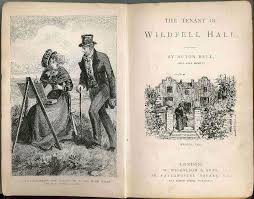
It is quite rare for me to open a classic Victorian novel and have almost no idea what it is going to be about. But that was the case here – I have somehow avoided television and radio adaptations, reviews, blogposts etc – and the kindle edition even removes the clues provided by the blurb and illustrations of the sort shown here. So what is ‘The Tenant’ as I shall now refer to it, about?
It is a traditional three part novel, with a narrative structure that may seem clumsy to a reader used to omniscient narration. Gilbert Markham, a gentleman farmer, writes to a friend about the arrival of a new tenant for the nearby and near derelict Wildfell Hall.. The novel’s opening subverts that used in ‘Pride and Prejudice’, in that instead of a male tenant arriving in a community and being the cause of local gossip and interest, here a mysterious widow, Mrs Helen Graham, is the newcomer. Mrs Graham fascinates and attracts Markham, even though she is the focus for local scandal, the detail of which is never spelt out explicitly but relates to an implied relationship with her landlord, Mr Lawrence.
The central section of the novel is recounted in Helen’s diaries, given to Gilbert to dispel his suspicions about her ‘affair’ with Lawrence, and presumably carefully transcribed by him into his letters. Helen is a much more moralistic character than Gilbert. She tells the history of her relationship with and marriage to Arthur Huntingdon. Huntingdon is a rake, and does little to disguise his flaws from Helen, who foolishly thinks she will be able to reform him. He boasts openly of his dissolute former life with its seductions and affairs:
“His favourite amusement is to sit or loll beside me on the sofa and tell me stories of his former amours, always turning upon the ruin of some confiding girl or the cozening of some unsuspecting husband”. (Chapter 24)
The birth of their son, also called Arthur, exacerbates the problems with their relationship. Helen can stand Huntingdon’s drunkenness and openly conducted affairs, but when he encourages Arthur junior to drink and swear she begins to plan her escape.
The final section of the novel starts after Gilbert’s reading of the diary. By now his ardour for Helen is at full pitch, and the news that she is still married does not deter him. Her moralistic sermons have the desired affect however, and he promises to leave her alone, for six months at least. He complies but is shocked to find out, from her brother, that she has returned to her husband who has fallen seriously ill. Huntingdon dies a squalid if convenient death, leaving the path open for a reconciliation between the now rich widow and the farmer. Despite some minor confusions and misunderstandings, the lovers marry, retire to the country and live happily ever after. It is only at the novel’s conclusion that we learn that the letters have been written to Gilbert’s brother-in-law, a Mr Halford, in the form of a memoir.
In many way ‘The Tenant’ is a conventional romance, with a happy ever after marriage and children at the end of a complex courtship, where the characters slowly discover their feelings for one another. The long separation in the middle of the novel, followed by the reconciliation at the end, is reminiscent of the structure of ‘Jane Eyre’, where Jane exiles herself to avoid temptation. Helen is an extraordinarily strong woman, determined to keep her marriage vows, when she can, care for and protect her son, and keep true to her faith. True love is her reward for these sacrifices. Critics have long identified her defiance of her husband – albeit after years of psychological torment and abuse, including his conduct of an affair openly before her – as the actions of a proto-feminist. She’s certainly a strong determined character, but I think it is important to remember that she returns to her husband as soon as he needs her, putting duty to him above her personal interests, and remains faithful to him despite everything.
I had hoped that the wonderfully named Wildfell Hall would play a central role in the novel, and the portrait of it given by Markham in the novel’s opening chapter promises much:
“Near the top of this hill, about two miles from Linden-Car, stood Wildfell Hall, a superannuated mansion of the Elizabethan era, built of dark grey stone, venerable and picturesque to look at, but doubtless cold and gloomy enough to inhabit, with its thick stone mullions and little latticed panes, its time-eaten air holes and its too lonely, too unsheltered situation – only shielded from the war of wind and weather by a group of Scotch firs, themselves half-blighted with storms, and looking as stern and gloomy as the Hall itself”.
The narrator then goes on to tell the reader how the garden has run to seed, and all the topiary bush animals have “spouted into such fantastic shapes as resembled nothing in heaven or earth but presented…a goblinish appearance that harmonised well with the ghostly legions and dark traditions…of the haunted hall”.
Who can read that portrait and not expected a traditional gothic novel to follow, with things that go bump in the night and half a dozen or more mad-women locked in the attic? If so they will have been disappointed, because Wildfell Hall is a minor character in the story, a haven for the escaping Helen rather than the venue for any Scooby-Doo style antics. Instead we have a disturbing story of unhappy marriages and domestic violence which must surely have been all the more shocking and transgressive when first published – rich people really didn’t do such things within the confines of marriage, or if they did we certainly didn’t read about it. We are not surprised when Heathcliff is violent towards animals, but when Huntingdon hits out at his favourite cocker spaniel – “He struck it off with a smart blow; and the poor dog squeaked, and ran cowering back to [Helen]. When he woke up half an hour after, he called it to him again; but Dash only looked sheepish and wagged the tip of his tail. He called again, more sharply, but Dash only clung closer to [Helen], and licked [her] hand as if imploring protection. Enraged at this, his master snatched up a heavy book and hurled it at its head” – the violence is a thinly veiled metaphor for domestic violence. This in many ways is more troubling for being hinted at rather than directly portrayed, for example in this sinister description of the casual violence of one of Huntingdon’s debauched friends towards his own wife: (chapter 32)
“I love thee Milicent, but I don’t adore thee’. In proof of his affection he clutched a handful of her light brown ringlets, and appear to twist them unmercifully. “Do you really Ralph?” murmured she, with a faint smile beaming through her tears, just putting up her hand to his, in token that he pulled rather too hard.”
Is ‘The Tenant of Wildfell Hall’ a good novel? Well of course it is a classic, but at the same time it is usually ranked below ‘Wuthering Heights’ and ‘Jane Eyre’. It shares many features with these novels, the slightly awkward narrative structures, the dark secrets, and troubled love affairs. But a distinct aroma of sanctimoniousness pervades ‘The Tenant’. Helen is rarely very loveable or off her guard, and goodness doesn’t she love to preach!
(Chapter 45) – We are children now; we feel as children, and we understand as children; and when we are told that men and women do not play with toys, and that our companions will one day weary of the trivial sports and occupations that interest them and us so deeply now, we cannot help being saddened at the thought of such an alteration, because we cannot conceive that as we grow up our own minds will become so enlarged and elevated that we ourselves shall then regard as trifling those objects and pursuits we now so fondly cherish, and that, though our companions will no longer join us in those childish pastimes, they will drink with us at other fountains of delight, and mingle their souls with our in higher aims and nobler occupations beyond our present comprehension, but not less deeply relished or less truly good for that, while yet both we and they remain essentially the same individuals as before”.
The supporting cast of minor characters is also weaker in ‘The Tenant’ – they tend to blur into one another and are less clearly differentiated. None of which really detracts from the overall power of the novel.
Two other brief observations. Firstly, this short scene caught my attention. It happens when Helen is running her fingers through Huntingdon’s hair:
“The head looked right enough, but when he placed my hand on the top of it, it sunk in a bed of curls, rather alarmingly low, especially in the middle”.
I can’t find that any critics have picked up on this description (which is not referred to again), but I find it hard to read any other way than that the author is suggesting Huntingdon has an ‘alarming’ depression in his cranium. What the Victorian pseudo-science of phrenology, referred to more extensively by Charlotte in ‘Jane Eyre’ would have made of that depression I can only imagine, but it surely is a heavy hint of the moral depravity to be exposed as the novel progresses, or possibly a propensity to addictive behaviours.
Finally, I am pretty sure I spotted a mistake in the novel’s portrait of the English countryside. In chapter 29 we are told “On a bright…day, in the beginning of July, I had taken little Arthur into the wood that skirts the park … and having gathered a handful of bluebells and wild-roses…”. Anne knew full well that bluebells are a spring flower, having written a poem in their praise, so is this just a simple slip, or something more interesting?

